

Wireless vs. Wired TENS: Comparing Convenience, Power, and Battery Life
ALT: Wireless and wired TENS units compared side by side for convenience, power, and battery life in drug-free pain relief
Wireless vs. Wired TENS: Which Type of TENS Unit Is Right for Your Lifestyle?
Key Conclusion: Choosing between a wireless and wired TENS unit comes down to your lifestyle, treatment goals, and where you use your device. Wireless TENS units offer unmatched freedom of movement and discreet, on-the-go pain relief, while wired TENS units typically deliver more consistent power output and longer session capability — making them a reliable choice for home-based, clinical-grade electrotherapy. Understanding the trade-offs in convenience, power delivery, and battery performance will help you select the right TENS therapy solution for long-term, drug-free pain management.
For anyone managing chronic pain, recovering from injury, or simply trying to get through the day without reaching for medication, a TENS unit — or Transcutaneous Electrical Nerve Stimulation device — can be a transformative tool. But with so many options now available, one of the most common questions users ask is: should I go wireless or wired?
The answer isn't one-size-fits-all. Both technologies have distinct strengths and limitations. In this guide, we break down the core differences across three critical dimensions — convenience, power delivery, and battery life — so you can make a confident, informed decision aligned with your pain management and recovery needs.
Who Should Read This Guide?
✅ Applicable Scenarios:
- Adults managing chronic pain (back pain, arthritis, nerve pain) who want flexible, drug-free relief at home or on the go
- Post-surgical or post-injury recovery patients working through physical rehabilitation and evaluating TENS therapy options
- Fitness enthusiasts and athletes seeking portable muscle recovery tools to use before or after training sessions
- Women exploring pelvic floor rehabilitation options, including those curious about electrotherapy-adjacent devices for incontinence support
❌ Not Applicable/Cautions:
- Individuals with implanted electronic devices (e.g., pacemakers, spinal cord stimulators) — TENS therapy is generally contraindicated without physician approval
- Those seeking a substitute for professional medical diagnosis or treatment — this guide is educational in nature and does not replace clinical advice
- Users who have not yet consulted a qualified healthcare provider about whether TENS therapy is appropriate for their specific condition
Why the Wireless vs. Wired Debate Matters More Than Ever
The global TENS market has expanded rapidly as more consumers seek alternatives to pharmaceuticals for pain management. According to a report from the National Center for Complementary and Integrative Health, non-pharmacological pain management tools — including electrotherapy — are gaining mainstream acceptance among both clinicians and patients. This shift has driven innovation in TENS device design, with manufacturers now offering everything from compact wired tabletop units to ultra-discreet wireless patches that fit under clothing.
Understanding how TENS units stimulate nerve fibers to block pain signals to the brain helps clarify why device quality and consistency of electrical output matter so much. The therapeutic mechanism relies on precise, calibrated electrical impulses — which means that any compromise in power delivery or electrode contact can directly impact treatment outcomes.
For everyday users — whether managing lower back pain, recovering from knee surgery, or coping with arthritis — the choice between wireless and wired isn't merely about aesthetics. It affects how consistently you'll use the device, how effectively it performs, and how well it integrates into your daily routine. If you're also exploring broader electrotherapy options, the guide on TENS + EMS Combo Machines Explained: When to Use Each Mode offers valuable context for understanding how different device types serve different therapeutic goals.
The TENS landscape in 2024 and beyond is one of increasing choice — which makes educated decision-making more important than ever.
Wireless vs. Wired TENS: A Complete Breakdown
Getting Started: How to Evaluate Your TENS Options in Three Steps
Step 1: Assess Your Primary Use Case
Before comparing specifications or prices, identify when and where you plan to use your TENS unit most often. Do you need relief during work hours when discretion matters? Are you primarily treating a specific area at home in the evenings? Do you plan to use it during light activity or post-workout recovery? Your use case — stationary vs. active, single-area vs. multi-area — will immediately narrow your options and help you prioritize the features that matter most. This step takes only a few minutes but dramatically clarifies your decision.
Step 2: Evaluate Your Treatment Frequency and Session Length
Consider how often you plan to use your TENS unit and for how long each session. Users who rely on TENS therapy daily, or who require extended sessions for chronic conditions, should pay close attention to battery performance and power consistency. Wireless devices may need more frequent recharging if used intensively, while wired units tethered to a reliable power source can sustain longer or more frequent sessions without interruption. Most clinicians recommend sessions lasting 20–30 minutes, though individual needs vary.
Step 3: Consider Electrode Placement and Treatment Area Complexity
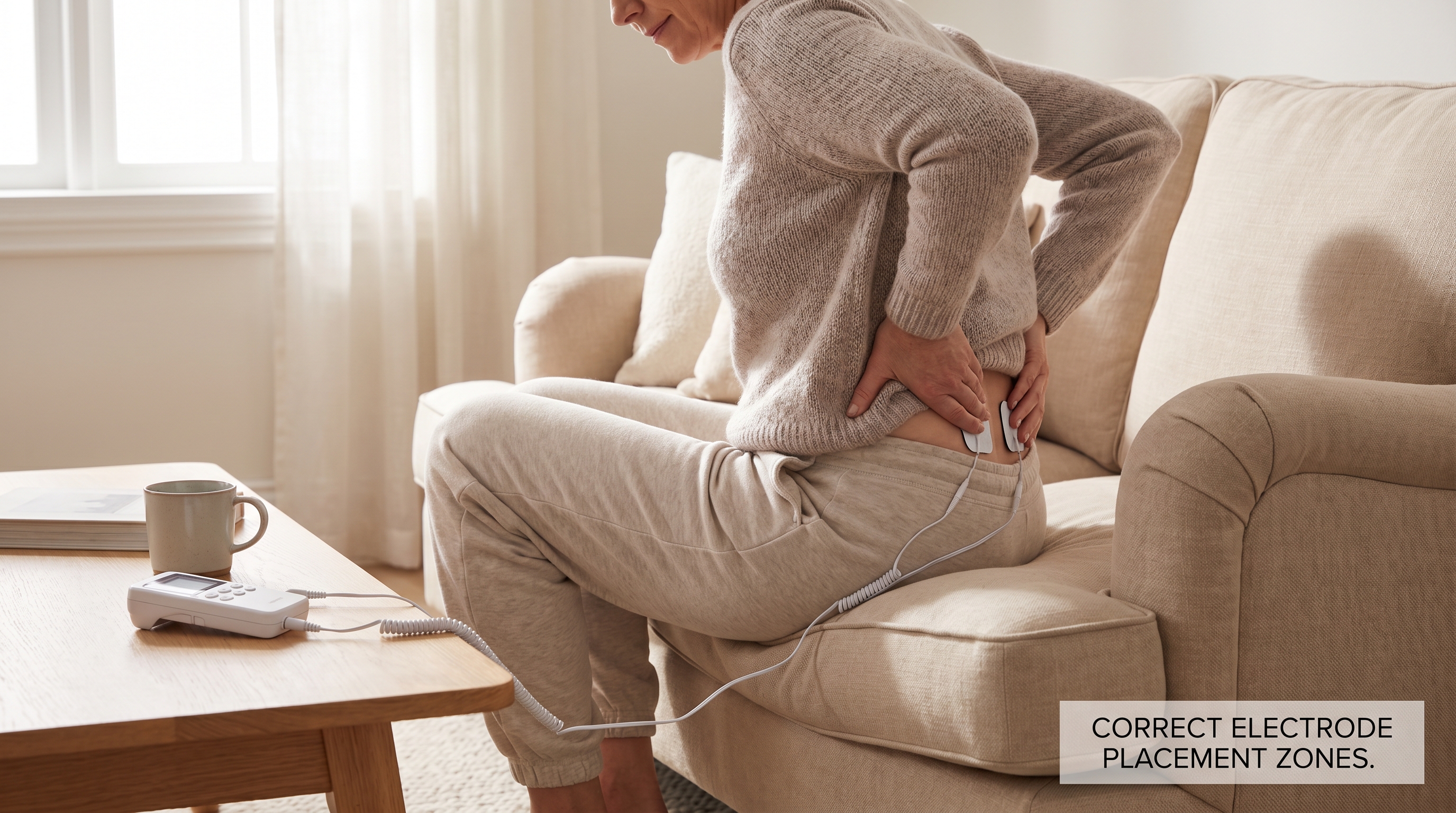
Effective TENS therapy depends heavily on proper electrode placement. For straightforward single-area treatment (e.g., lower back or knee), both wireless and wired units typically perform well. For multi-area treatment or complex placement patterns, wired units with multiple channels offer greater flexibility. Review resources like the Full Body TENS Electrode Placement Reference: 10 Common Treatment Sites to understand best practices for safe TENS unit placement and electrode positioning before beginning therapy.
Head-to-Head Comparison: Wireless vs. Wired TENS Units
When choosing between wireless and wired TENS devices, it helps to view the comparison across multiple practical dimensions. The table below summarizes how these two categories typically differ — keeping in mind that specific performance will vary by model and manufacturer.
| Comparison Dimension | Wireless TENS | Wired TENS | Hybrid/Combo Units |
|---|---|---|---|
| Convenience & Portability | High — discreet under clothing, no cords | Moderate — best for stationary home use | Variable — depends on design |
| Power Delivery Consistency | Variable — depends on battery charge level | High — consistent output throughout session | High — typically wired-powered with wireless pads |
| Battery Life | Rechargeable; varies by model and intensity | Usually AA/AAA or USB-rechargeable; longer runtime at lower draw | Consult provider |
| Electrode Placement Flexibility | Limited to pad-integrated design | High — multiple channel options available | High with multi-pad design |
| Discretion During Use | Excellent — wearable under garments | Low — visible leads and unit | Moderate |
| Session Customization | Moderate — preset modes common | High — broader intensity and mode range | High |
| Ease of Use for Beginners | High — simplified controls | Moderate — more setup involved | Moderate |
| Typical Price Range | Moderate to high | Moderate | Higher |
| Best For | Active users, workplace use, travel | Home therapy, chronic conditions, clinical-grade treatment | Multi-area treatment, advanced users |
Understanding the Trade-Offs in Depth
Convenience: Freedom vs. Control
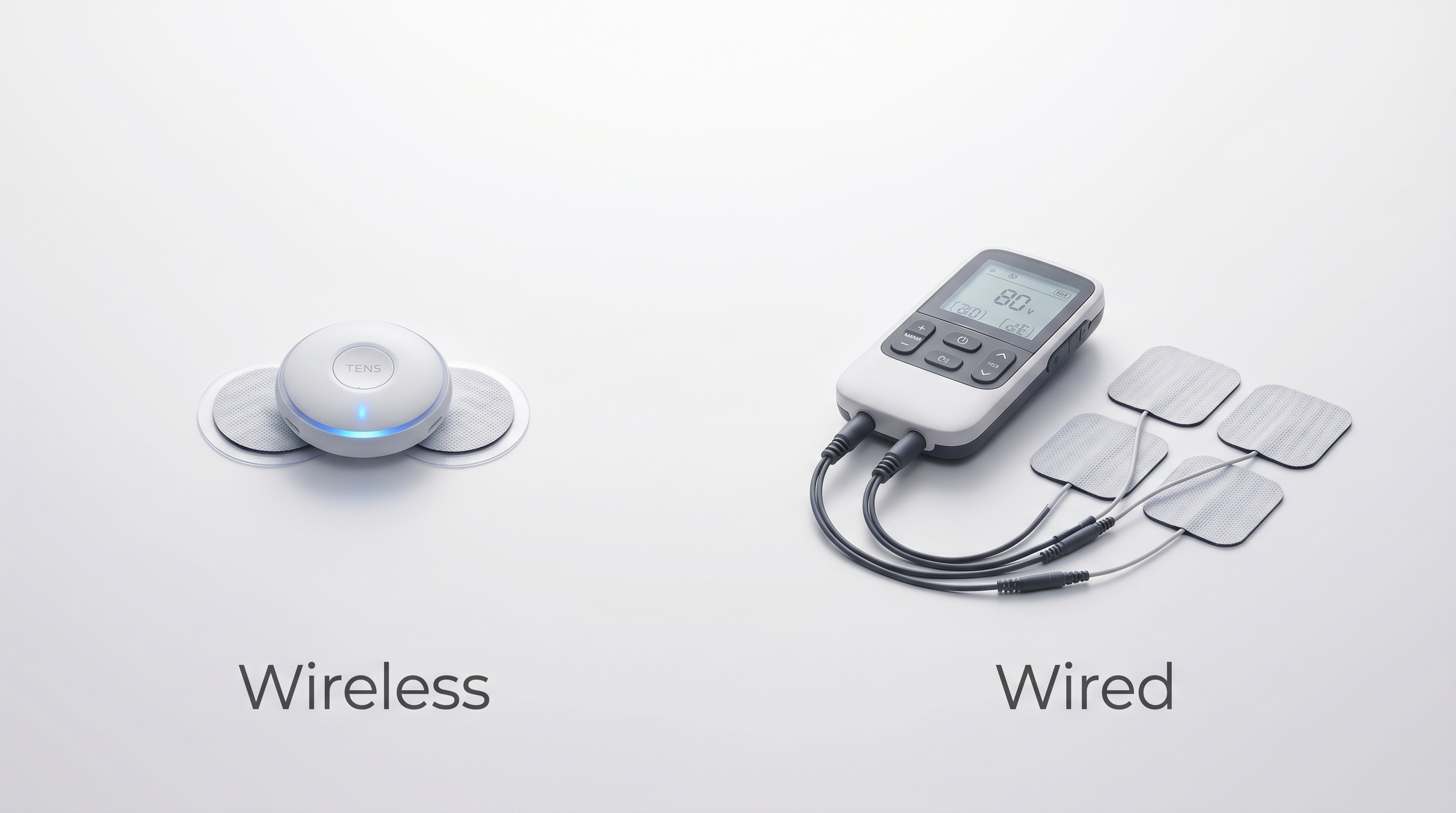
Wireless TENS units have revolutionized the way people integrate electrotherapy into their lives. These compact, cord-free devices typically attach directly to the skin via adhesive electrode pads, often connecting via Bluetooth to a smartphone app. For someone managing lower back pain during a workday or a commuter seeking relief on public transport, the ability to use a TENS device without visible leads or a bulky controller is genuinely life-changing.
However, wireless convenience comes with design constraints. Because the electronics — including the stimulation circuitry, Bluetooth module, and battery — must all be housed within a small wearable unit, the form factor can limit electrode size, channel count, and intensity range. Users seeking highly customizable therapy for complex pain patterns may find wireless devices less accommodating.
Wired TENS units, by contrast, place the processing power in a dedicated controller connected to electrode pads via lead wires. This separation allows for more robust circuitry, broader intensity ranges, and multi-channel configurations that can treat several areas simultaneously. For home users following a structured rehabilitation protocol — such as post-surgical recovery or physical therapy maintenance — wired units typically offer the depth of customization that serious therapeutic use demands.
For athletes and fitness-focused users, understanding how electrical stimulation benefits performance and recovery is equally important. The article on EMS for Athletes: How Professional Sports Teams Use Electrical Muscle Stimulation explores how professionals leverage these devices — insights that apply directly to selecting the right electrotherapy format for your recovery goals.
Power Delivery: The Clinical Importance of Consistent Output
One of the most underappreciated differences between wireless and wired TENS units is power delivery consistency. Effective TENS therapy requires stable, calibrated electrical impulses. When battery charge drops on a wireless unit, the output intensity may decrease subtly, potentially reducing therapeutic effectiveness — though many modern devices include voltage regulation to minimize this effect.
Wired units connected to a stable power supply (or larger battery packs) are less susceptible to this variability, making them the preferred choice in clinical settings and for users who require precise, repeatable stimulation parameters. This matters particularly for those managing conditions like arthritis, where consistent stimulation settings are key to managing joint pain effectively over time.
It's also worth noting that TENS therapy is not a one-size-fits-all intervention. As explored in depth in the resource on TENS vs. Prescription Pain Medication: A Non-Invasive Alternative Explained, the efficacy of TENS therapy depends on appropriate device selection, correct electrode placement, and individualized parameter settings — all of which are better served by devices with robust power and customization capabilities.
Battery Life: Recharging Cycles and Real-World Reliability
Battery performance is a practical concern that often gets overlooked during initial purchasing decisions. Wireless TENS units are almost universally rechargeable via USB — convenient, but requiring regular charging discipline. Heavy users who rely on multiple daily sessions will need to factor charging time into their routines. Running a wireless device on low battery not only risks reduced effectiveness but may lead users to abandon sessions prematurely.
Wired TENS units vary in their power sources. Many use standard alkaline batteries, which offer a familiar and predictable replacement cycle — no charging required, and replacements are available anywhere. Higher-end wired units increasingly offer USB recharging for their main controller. For users in rehabilitation settings, or elderly patients managing pain at home (a scenario where remote monitoring and ease of use are priorities), the simplicity of standard battery replacement in a wired unit can be a meaningful advantage.
The key takeaway: consider your daily usage volume before choosing. Occasional users will find wireless battery life more than sufficient. Daily therapeutic users should evaluate the full charge cycle and backup power options carefully.
ALT: Home user applying wired TENS electrodes for chronic back pain relief following safe TENS unit placement guidelines
Advanced Considerations: Special Situations and Common Misconceptions
Special Situation 1: Pelvic Floor Rehabilitation
For women focused on pelvic floor health — whether addressing urinary incontinence after childbirth, managing symptoms of pelvic organ prolapse, or pursuing preventative strengthening — electrotherapy devices designed specifically for pelvic floor stimulation operate under different parameters than standard TENS units. These devices typically use intravaginal probes and specialized waveforms. If you're exploring options in this space, iStim's dedicated Kegel stimulation devices are specifically engineered for this purpose. For detailed guidance, the How to Use the iStim V2 Kegel Exerciser: A Complete Setup and Usage Guide provides step-by-step instructions and safety protocols for effective pelvic floor stimulator usage — a critical resource for anyone beginning this type of therapy.
Special Situation 2: Multi-Area Treatment
Users managing pain or rehabilitation across multiple body regions simultaneously should look carefully at channel count. Standard wired TENS units often support two or four independent channels, allowing simultaneous treatment of, say, both knees or the lower back and neck. Most wireless units are single-area by design. This is a meaningful limitation for users with widespread pain conditions or those following comprehensive rehabilitation protocols.
Special Situation 3: Electrode Pad Compatibility
Not all electrode pads are interchangeable across device types. Wireless devices typically require proprietary pads integrated with the stimulator module, while wired units use standard snap-connector or pin-connector pads available in a wide range of sizes and materials. Reviewing the TENS Electrode Pad Buyer's Guide: Sizes, Materials, and Compatibility Explained before purchasing helps ensure your device and pads work optimally together — and that replacement costs remain manageable over time.
Common Misconception: "Wireless Means Less Effective"
A persistent myth in the TENS community is that wireless devices are inherently less powerful or therapeutic than wired alternatives. This is not categorically true. Modern wireless TENS units can deliver clinically relevant stimulation intensities. The key variable is not the presence or absence of a wire — it's the quality of the device's circuitry, the precision of its waveform delivery, and how consistently it maintains output across a charge cycle. Always evaluate devices based on their clinical credibility and manufacturing standards, not merely their form factor.
Frequently Asked Questions FAQ
Q1: How do I know if my TENS electrode placement is correct and safe?
Proper TENS unit placement and electrode positioning is essential for both safety and therapeutic effectiveness. Electrodes should generally be placed on or near the area of pain, avoiding the spine, head, neck arteries, broken skin, and areas over the heart. For guidance on common treatment sites, consult resources like the Full Body TENS Electrode Placement Reference and always follow your device's included instructions. When in doubt, a physical therapist or pain management specialist can provide personalized placement guidance during an initial session.
Q2: Is a wireless TENS unit safe to use while moving or exercising?
Most wireless TENS units are designed for use during light activity — walking, gentle stretching, or sedentary desk work. They are generally not recommended for vigorous exercise, as movement may dislodge electrode pads and alter stimulation delivery. Additionally, using any TENS device while operating machinery or driving is unsafe and strongly discouraged. For athletic recovery and muscle stimulation during performance contexts, EMS devices designed for active use are more appropriate. Always review your device's specific safety guidelines before use.
Q3: How long do wireless TENS unit batteries typically last per charge, and how does this affect daily use?
Battery duration in wireless TENS units varies by model, intensity settings, and usage patterns — qualitatively, most modern rechargeable wireless units support multiple standard sessions (20–30 minutes each) per charge. However, users who require frequent daily sessions may find themselves recharging every day or every other day. For high-frequency therapeutic use, a wired unit with replaceable batteries may offer more uninterrupted reliability. Always check the manufacturer's stated battery specifications and factor your personal usage volume into your purchasing decision.
Summary
Choosing between a wireless and wired TENS unit is ultimately a lifestyle decision as much as a clinical one. Three core insights should guide your choice:
- Convenience matters — but don't sacrifice therapeutic quality for it. Wireless TENS units excel at discreet, on-the-go pain relief and are ideal for users who need to manage pain during work or daily activity. Wired units offer deeper customization, consistent power delivery, and greater versatility for home-based therapeutic use.
- Power consistency and battery performance directly impact outcomes. For chronic pain management and structured rehabilitation, stable, predictable output is non-negotiable. Evaluate battery life and power regulation carefully, particularly if you plan to use your device daily.
- The right device is the one you'll actually use. The best TENS unit is one that fits seamlessly into your life — whether that means a discreet wireless patch you wear under your shirt at work or a robust wired unit you use during your evening recovery routine. Adherence to a consistent therapy schedule is one of the strongest predictors of positive outcomes.
Your next step is clear: reflect on your primary pain management goals, your daily schedule, and the level of customization you need. Then explore your options with those priorities in mind.
Ready to Find Your Ideal TENS Solution?
Ready to experience drug-free pain relief and muscle stimulation from the comfort of your home? Visit iStim at https://istim.com/ to explore their full lineup of professional-grade TENS, EMS, and Kegel devices — each engineered to ISO-certified standards and trusted by over 20,000 satisfied customers. Take the first step toward a healthier, pain-free lifestyle with iStim's clinically backed electrotherapy solutions today.
References
- National Center for Complementary and Integrative Health (NCCIH). "Chronic Pain: In Depth".
https://www.nccih.nih.gov/health/chronic-pain-in-depth - American Physical Therapy Association (APTA). "TENS for Pain Management".
https://www.apta.org/ - U.S. Food and Drug Administration (FDA). "Information for Patients: Electrical Stimulation Devices for Pain".
https://www.fda.gov/medical-devices/consumer-products/electrical-stimulation-devices-pain-relief - Mayo Clinic. "Transcutaneous Electrical Nerve Stimulation (TENS)".
https://www.mayoclinic.org/tests-procedures/tens/about/pac-20384884 - National Institutes of Health (NIH) — MedlinePlus. "TENS: Transcutaneous Electrical Nerve Stimulation".
https://medlineplus.gov/ency/article/007473.htm
Note: Standards and clinical guidelines may be updated. Please check the latest official documents or consult a qualified healthcare professional for the most current recommendations.
About iStim
iStim is a Los Angeles-based electrotherapy brand specializing in professional-grade TENS, EMS, and Kegel devices engineered for safe and effective home use. Backed by ISO-certified Taiwanese manufacturing and trusted by 20,000+ Amazon customers, iStim is committed to delivering drug-free pain relief and muscle stimulation solutions you can count on.
This article is produced in partnership with iStim. The content is intended for informational and educational purposes only and does not constitute medical advice. Always consult a qualified healthcare professional before beginning any new treatment or therapy. © iStim. All rights reserved.
About the Author / Disclaimer
About iStim
iStim is a Los Angeles-based electrotherapy brand specializing in professional-grade TENS, EMS, and Kegel devices engineered for safe and effective home use. Backed by ISO-certified Taiwanese manufacturing and trusted by 20,000+ Amazon customers, iStim is committed to delivering drug-free pain relief and muscle stimulation solutions you can count on.
This article is produced in partnership with iStim. The content is intended for informational and educational purposes only and does not constitute medical advice. Always consult a qualified healthcare professional before beginning any new treatment or therapy. © iStim. All rights reserved.
Leave a comment