

Which iStim Neck Traction Device Should You Buy?

ALT: Person using iStim neck traction device at home for cervical decompression and drug-free pain relief
Which iStim Neck Traction Device Is Right for You?
Key Conclusion: Choosing which iStim neck traction device best fits your needs depends on your specific condition, lifestyle, and therapy goals. iStim's WeTrac line is designed to bring clinical-quality cervical decompression into the home setting — offering a drug-free, non-invasive solution for people dealing with neck pain, stiffness, herniated discs, or postural strain. Understanding the differences between available options is the first step toward lasting relief.
Neck pain is one of the most prevalent musculoskeletal complaints among adults today, affecting desk workers, athletes, post-surgery patients, and seniors alike. Whether your discomfort stems from long hours at a computer, an old injury, or degenerative disc changes, the right cervical traction device can make a meaningful difference in your daily quality of life.
iStim has built a reputation around professional-grade electrotherapy and mechanical therapy devices engineered specifically for safe, effective home use. Their neck traction offerings reflect that same commitment — combining clinical-level design with consumer-friendly operation so you don't need a clinic visit every time your neck flares up.
Who Should Consider a Cervical Traction Device?
✅ Applicable Scenarios:
- Individuals experiencing chronic or recurring neck pain, stiffness, or tension headaches related to poor posture or prolonged screen time
- People diagnosed with cervical herniated discs, pinched nerves, or degenerative disc disease seeking non-pharmaceutical decompression relief
- Post-rehabilitation patients transitioning from clinical care to home-based maintenance therapy
- Athletes and active adults managing neck muscle tightness after training or sports activity
- Seniors seeking gentle, consistent decompression to ease age-related cervical stiffness
❌ Not Applicable/Cautions:
- Individuals with acute cervical fractures, severe osteoporosis, spinal instability, or recent neck surgery should not use cervical traction without explicit clearance from a qualified healthcare provider
- People experiencing symptoms of vertebrobasilar insufficiency, myelopathy, or severe neurological compromise should consult a physician before use
- Those who are pregnant or have been advised against spinal traction by a medical professional should avoid use until cleared
Why Cervical Traction at Home Has Become a Mainstream Solution
Neck pain affects a staggering proportion of the adult population. According to the Global Burden of Disease study, neck pain ranks among the leading causes of disability worldwide, with prevalence rising sharply due to the increased use of smartphones, laptops, and sedentary desk-based work environments. The resulting conditions — cervical disc compression, muscle tension, nerve impingement — are not merely uncomfortable; they can significantly limit mobility, sleep quality, and productivity.
Traditionally, cervical traction was administered exclusively in clinical settings: physical therapy clinics, chiropractic offices, or hospital rehabilitation departments. Specialized equipment, professional supervision, and recurring appointment costs placed this therapy out of reach for many people who needed ongoing maintenance support. That gap is exactly where home cervical traction devices have stepped in.
The market for at-home neck traction has expanded considerably over the past decade, driven by consumer demand for accessible, drug-free solutions that can be used on a flexible schedule. When evaluating your options, it pays to understand not just the product features, but the underlying mechanisms and how they align with your specific needs. Our in-depth guide on Best Cervical Traction Device for Home Use offers a broader overview of what to look for across the category.
iStim's approach to cervical traction follows the same philosophy that drives their electrotherapy line: bring clinical-quality therapy home, without sacrificing safety or efficacy. Their WeTrac devices are built on established traction principles — applying gentle, controlled decompressive force to the cervical spine — using ISO-certified manufacturing standards and thoughtful ergonomic design.
For desk workers specifically, the connection between prolonged forward head posture and cervical disc compression is well documented. If your neck pain is closely tied to your work habits, you may also find value in reading about the Best Neck Stretcher for Desk Workers to understand how stretching and traction can work together as part of a comprehensive neck care routine.
How to Choose the Right iStim Neck Traction Device: A Step-by-Step Approach
Quick Start: Three Steps to Identify Your Best Option
Step 1: Assess Your Primary Neck Health Goal
Before browsing product specifications, get clear on what you're trying to achieve. Are you seeking relief from chronic compression and disc-related pain? Managing tension headaches from postural strain? Supporting post-physical-therapy maintenance? Or addressing muscle tightness after athletic training? Each goal may favor a slightly different device type or usage approach. Write down your top two or three symptoms and how frequently they occur — this will guide every subsequent step.
Step 2: Consider Your Lifestyle and Usage Preferences
Think about when, where, and how often you plan to use a neck traction device. Do you need something compact enough for travel or office use? Are you comfortable following a structured therapy schedule, or do you need something quick and intuitive for on-demand relief? How much setup complexity can you tolerate before and after sessions? Your honest answers to these practical questions matter as much as clinical features when choosing a device you'll actually use consistently.
Step 3: Review Compatibility with Your Health History
Consult your physician or physical therapist — especially if you have a diagnosed cervical condition, prior neck surgery, or any neurological symptoms such as radiating arm pain, numbness, or tingling. A qualified professional can confirm whether cervical traction is appropriate for your situation and recommend an appropriate starting intensity. Once cleared, you can approach the iStim product lineup with confidence and select the option that best matches your needs.
Comparing iStim Neck Traction Options: What the Differences Mean for You
iStim's neck traction lineup centers around its WeTrac series, which applies the principle of cervical decompression through controlled, sustained traction force. While specific variant names and configurations should be confirmed directly on the iStim website, here is a practical framework for how different feature emphases translate into real-world benefits:
| Comparison Dimension | Basic/Entry-Level Option | Mid-Range Option | Advanced/Feature-Rich Option |
|---|---|---|---|
| Primary Use Case | General neck tension relief, first-time traction users | Moderate cervical compression, post-rehab maintenance | Chronic disc conditions, targeted clinical-style decompression |
| Adjustability | Standard traction angle | Adjustable traction angle and force | Multi-position, precision-adjustable settings |
| Portability | Lightweight, compact for travel | Moderate portability | Designed for dedicated home use station |
| Ease of Use | Minimal setup, intuitive operation | Moderate setup, guided by manual | Structured protocol recommended |
| Ideal User Profile | Beginners, mild tension, desk workers | Intermediate users, ongoing cervical care | Experienced users, diagnosed conditions |
| Professional Guidance Needed | Recommended but not mandatory for mild cases | Recommended for optimal results | Strongly recommended |
Note: Consult the iStim product pages or a healthcare provider for confirmed model-specific specifications. The table above reflects general category guidance rather than confirmed individual product data.
For a deeper dive into how to systematically evaluate cervical traction devices before making a purchase decision, the iStim guide on How to Compare Neck Traction Devices Before Buying walks through the key dimensions in detail.
Understanding the WeTrac Design Philosophy and What It Means for Your Neck
The Science Behind Cervical Decompression
Cervical traction works by applying a gentle pulling force along the axis of the spine, creating space between compressed vertebrae, relieving pressure on intervertebral discs, and allowing surrounding muscles and ligaments to relax. When performed consistently and correctly, this mechanism can reduce nerve impingement, ease muscle spasm, and improve range of motion — all without medication or invasive intervention.
The WeTrac devices from iStim are engineered to replicate this clinical mechanism in a home-friendly format. The design prioritizes controlled, repeatable force application — meaning your decompression session delivers consistent results rather than variable manual pressure that's difficult to standardize at home.
Ergonomic Positioning and Comfort
One of the most critical factors in cervical traction efficacy is proper head and neck positioning during the session. An improperly angled traction device can reduce effectiveness or, in rare cases, cause discomfort rather than relief. iStim's WeTrac design incorporates thoughtful ergonomic geometry to support appropriate cervical angle during use, reducing the guesswork for home users who don't have a physical therapist guiding each session.
Comfort during traction also matters for compliance — you're more likely to stick with a therapy routine if the experience is pleasant rather than tolerable. The WeTrac line uses materials and padding designed for sustained contact comfort, making it realistic to complete full recommended session durations without interruption.
Durability and Build Quality
As with all iStim products, the WeTrac devices benefit from ISO-certified manufacturing. This quality assurance standard speaks to consistent production quality, materials integrity, and safety testing — factors that matter when a device is being used regularly over months or years. A well-built cervical traction device will maintain its mechanical properties and structural integrity across hundreds of sessions, delivering reliable decompression force session after session.
If you're also comparing iStim's offering against other brands available online, you may find it helpful to review what distinguishes quality devices from less reliable alternatives in our cluster resource: Best Neck Traction Device on Amazon: What to Look For.
Combining Traction with Electrotherapy
One unique advantage of choosing within the iStim ecosystem is the potential to complement cervical traction with TENS or EMS therapy. While the WeTrac device handles mechanical decompression, iStim's TENS units can address surrounding muscle tension through targeted electrical nerve stimulation — a dual-modality approach that many physical therapists use in clinical practice. This combination can address both the structural (disc/vertebrae) and soft tissue (muscle/fascia) contributors to neck pain simultaneously, offering more comprehensive relief than either approach alone.
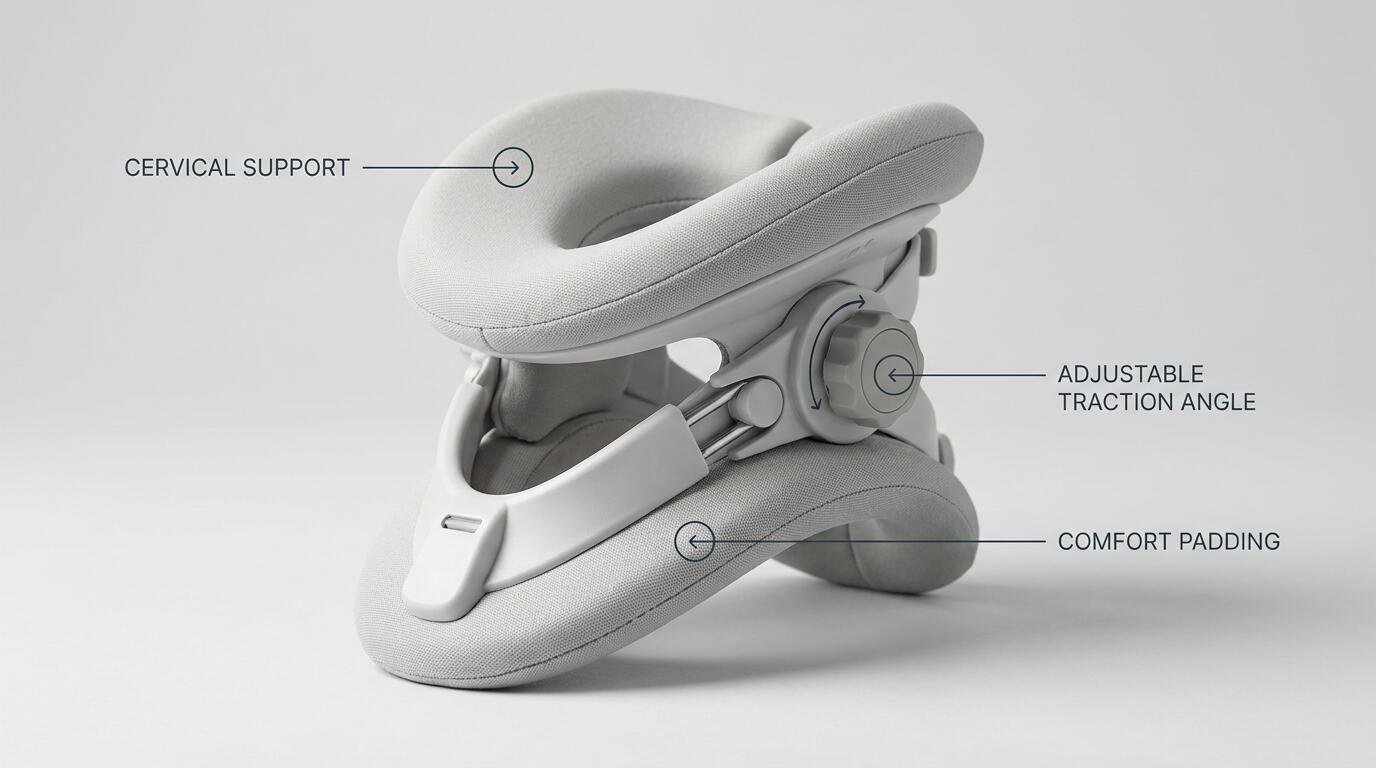
ALT: Close-up of iStim WeTrac neck traction device demonstrating proper home cervical decompression positioning and ergonomic design for pain relief
Advanced Considerations Before You Buy
Handling Special Situations
If you have a diagnosed herniated disc: Cervical traction can be beneficial for herniated cervical discs, but the appropriate traction angle and force depend heavily on the level and severity of the herniation. Always obtain physical therapist or physician guidance on appropriate parameters before starting — and consider beginning with shorter sessions at lower force levels to gauge your response.
If you are in an acute pain flare: During acute episodes of severe neck pain, it may be advisable to wait until the initial inflammation subsides before initiating traction. Applying traction during an active inflammatory phase can occasionally aggravate symptoms. Gentle heat, rest, and consultation with a healthcare provider are typically the first-line approach during acute flares.
If you are a senior with age-related cervical changes: Older adults may have more pronounced vertebral bone changes, reduced disc hydration, or underlying conditions such as osteoporosis that influence traction safety and appropriate force levels. A physician or geriatric physical therapist should be consulted to establish safe parameters before home use.
Common Misconceptions About Cervical Traction Devices
Misconception 1: "More traction force means faster results." This is not true. Excessive traction force can actually strain muscles, ligaments, and joints rather than decompress them. Clinical traction protocols are carefully calibrated — the goal is gentle, sustained decompression, not aggressive pulling. Start conservatively and increase gradually only as directed.
Misconception 2: "One session is enough to feel a difference." Cervical traction, like most physical therapies, works best as a consistent practice over time. Many users notice improvement after several sessions, but lasting structural and symptomatic benefits typically require a committed routine over weeks.
Misconception 3: "A cervical traction device replaces physical therapy." Home traction is a powerful complement to professional care, but it does not replace the assessment, manual therapy, exercise prescription, and monitoring that a qualified physical therapist provides. The iStim WeTrac buying guide always encourages professional consultation as part of a complete care plan.
Frequently Asked Questions FAQ
Q1: How do I know which iStim neck traction product is right for me?
The best way to identify the right iStim cervical traction device starts with clarifying your primary symptom — whether that's chronic disc compression, general tension, post-rehab maintenance, or athletic recovery — and then matching that goal to the device's design emphasis. Reading the detailed product descriptions on the iStim website and consulting your physical therapist or physician for confirmation is the most reliable path to a well-matched choice. When in doubt, starting with a versatile, adjustable option gives you the most flexibility.
Q2: Is it safe to use a cervical traction device at home every day?
For most users with mild to moderate cervical conditions, daily use at appropriate force levels and session durations can be safe and beneficial. However, frequency and intensity should be guided by how your body responds. If you experience increased pain, dizziness, or neurological symptoms during or after use, stop immediately and consult a healthcare provider. Most clinical protocols recommend daily or near-daily sessions initially, then adjusting based on therapeutic response and professional guidance.
Q3: How long does it typically take to notice results from cervical traction therapy?
Results vary by individual, condition severity, and consistency of use. Some users report noticeable relief from muscle tension within the first few sessions. For disc-related conditions or more chronic presentations, meaningful improvement may take several weeks of consistent use. Clinical research on cervical traction suggests that a multi-week protocol — typically used in conjunction with exercise and other therapies — tends to produce the most durable outcomes. Patience and consistency are key factors in long-term success.
Summary
Choosing the right cervical traction device is a genuinely important health decision — one that deserves careful thought rather than an impulsive purchase. Here are the three core takeaways from this guide:
1. Match the device to your specific condition and goals. Not every neck pain presentation is the same. A desk worker managing postural tension has different needs than a post-rehabilitation patient managing a herniated disc. Understanding your primary goal helps you prioritize the right features — whether that's portability, adjustability, or clinical-grade decompression force.
2. Prioritize quality, safety, and professional guidance. ISO-certified manufacturing, ergonomic design, and consistent force application are non-negotiable factors in a cervical traction device you'll depend on for ongoing therapy. And while iStim devices are engineered for safe home use, a conversation with your physician or physical therapist before starting is always the right first step.
3. Think long-term and complementary. Cervical traction works best as part of a consistent, multi-modal approach that may include stretching, posture correction, and — within the iStim ecosystem — TENS or EMS therapy for surrounding muscle care. Commit to a routine, track your progress, and adjust with professional input.
Your neck health is worth investing in thoughtfully. The right device, used correctly and consistently, can offer meaningful, drug-free relief that fits into your daily life.
Ready to Find Your iStim Neck Traction Device?
Ready to take control of your neck pain naturally and without drugs? iStim offers a full range of professional-grade TENS, EMS, and cervical traction devices designed for safe, effective home use. Visit https://istim.com/ to explore the complete product lineup and find the right therapy solution for your needs.
References
- GBD 2019 Diseases and Injuries Collaborators. "Global Burden of 369 Diseases and Injuries in 204 Countries and Territories, 1990–2019." The Lancet.
https://www.thelancet.com/journals/lancet/article/PIIS0140-6736(20)30925-9/fulltext - National Institute of Neurological Disorders and Stroke (NINDS). "Neck Pain Fact Sheet."
https://www.ninds.nih.gov/health-information/patient-caregiver-education/neck-pain - American Physical Therapy Association (APTA). "Neck Pain: Physical Therapist's Guide to Cervical Traction and Manual Therapy."
https://www.choosept.com/guide/physical-therapy-guide-neck-pain - Cochrane Database of Systematic Reviews. "Traction for Low-Back Pain with or without Sciatica and Neck Pain Systematic Reviews."
https://www.cochranelibrary.com/ - Cleveland Clinic. "Cervical Traction: What It Is, Types & How It Works."
https://my.clevelandclinic.org/health/treatments/cervical-traction
Note: Standards and clinical guidelines may be updated. Please check the latest official documents or consult a qualified professional for current recommendations.
About iStim
iStim is a Los Angeles-based electrotherapy brand specializing in professional-grade TENS, EMS, and Kegel devices engineered for home use, backed by ISO-certified Taiwanese manufacturing and trusted by 20,000+ customers for drug-free pain relief and muscle stimulation. Learn more at istim.com.
© iStim. All rights reserved. This article is intended for informational purposes only and does not constitute medical advice. Always consult a qualified healthcare professional before beginning any new treatment or therapy program.
Leave a comment