

Which Electrode Pads Are Compatible with iStim EV-805, EV-804, and X1?
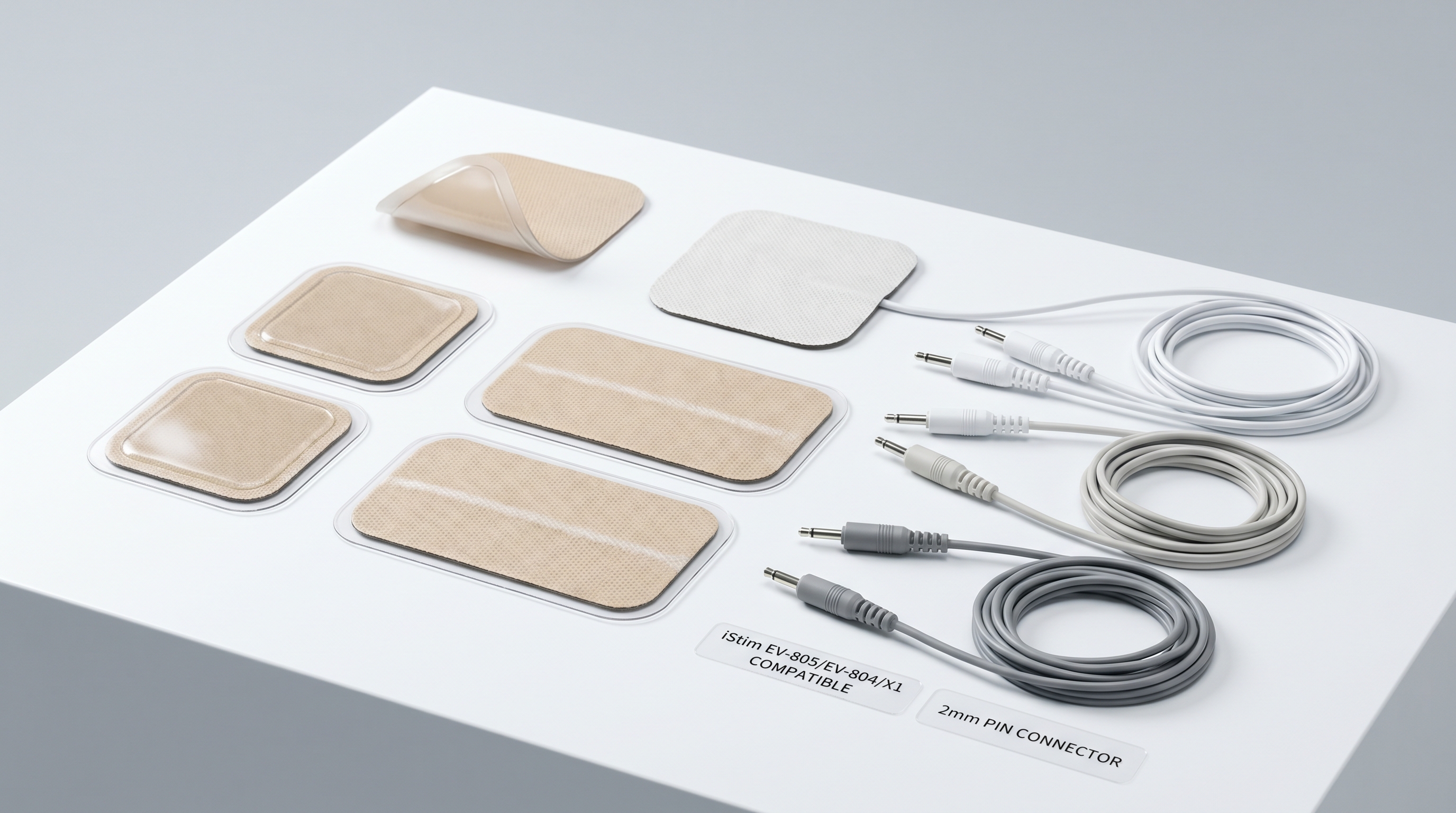
ALT: Compatible electrode pads for iStim EV-805, EV-804, and X1 TENS and EMS devices for pain relief
Finding the Right Electrode Pads for Your iStim EV-805, EV-804, and X1 Devices
Key Conclusion: Choosing the correct electrode pads for your iStim EV-805, EV-804, or X1 device is essential for safe, effective TENS and EMS therapy at home. Compatible pads ensure optimal electrical conductivity, secure skin adhesion, and consistent stimulation quality — directly affecting your pain relief or muscle recovery outcomes. This guide covers everything you need to know about electrode pad compatibility, placement, and best practices to get the most from your iStim device.
If you've invested in a professional-grade iStim TENS or EMS device, you already understand the value of drug-free, clinically backed electrotherapy. But even the best device can underperform if paired with the wrong electrode pads. Pad compatibility isn't just a technical detail — it determines how effectively electrical impulses are delivered to your nerves and muscles, and how safely therapy is conducted on your skin.
In this comprehensive guide, we'll walk you through which electrode pads are compatible with the iStim EV-805, EV-804, and X1 models, how to use them correctly, and what to watch out for when purchasing replacements. Whether you're managing chronic back pain, recovering from a sports injury, or exploring pelvic floor rehabilitation, having the right pads is the foundation of effective electrotherapy.
Who This Guide Is For: Applicable Scenarios and Cautions
✅ Applicable Scenarios:
- Existing iStim EV-805, EV-804, or X1 users looking to replace or upgrade their electrode pads
- New users setting up their iStim device for the first time and unsure which accessories to purchase
- Individuals using TENS therapy for chronic pain conditions such as lower back pain, arthritis, or nerve pain
- Athletes or active recovery patients using EMS to support muscle repair and strengthening
- Women exploring pelvic floor rehabilitation through electrical stimulation therapy
❌ Not Applicable/Cautions:
- This guide does not cover electrode pads designed exclusively for other brands' proprietary connectors — always verify connector type before purchasing third-party pads
- Users with pacemakers, implanted electrical devices, or open wounds should not use TENS/EMS therapy without explicit medical clearance
- Electrode pads should never be placed over the head, throat, chest (across the heart), or directly on inflamed or broken skin
Why Electrode Pad Compatibility Matters for TENS and EMS Therapy
When most people think about electrotherapy devices, they focus on the unit itself — the intensity levels, modes, and programming options. What's often overlooked is the critical role of electrode pads in bridging the device's electrical output with your body. The pad is the final interface between technology and tissue, and its quality directly determines your therapeutic results.
Electrode pad compatibility encompasses several factors: the connector type (snap vs. pin), pad size relative to the treatment area, gel adhesive quality, and the conductive material used. A mismatch in any of these factors can result in poor conductivity, skin irritation, inadequate stimulation, or even equipment damage.
For iStim devices like the EV-805, EV-804, and X1, the stakes are particularly high because these are professional-grade units engineered to deliver precise, consistent electrical impulses. Using substandard or incompatible pads undermines the precision engineering built into every iStim device.
The broader electrotherapy market has seen rapid growth in recent years, with more consumers turning to at-home TENS and EMS solutions as part of a shift toward drug-free pain management. As explored in our guide on TENS vs. Prescription Pain Medication: A Non-Invasive Alternative Explained, electrotherapy offers a compelling, evidence-backed alternative for individuals seeking to reduce reliance on pharmaceutical interventions — and pad quality is a cornerstone of that experience.
Understanding the technical requirements of your specific iStim model empowers you to make confident purchasing decisions and maintain therapy quality over time. For a broader foundation on the subject, the TENS Electrode Pad Buyer's Guide: Sizes, Materials, and Compatibility Explained provides an excellent overview of how to evaluate pads across all dimensions before buying.
How to Set Up Your iStim Device with Compatible Electrode Pads
Getting Started: Three Simple Steps
Step 1: Identify Your Connector Type
Before purchasing any replacement or additional electrode pads, confirm the connector type used by your specific iStim model. The EV-805, EV-804, and X1 all use a standard 2mm pin connector — the most common connector type in professional TENS/EMS devices. This is good news: it means a wide range of high-quality electrode pads are compatible with these models. Check your lead wires (the cables connecting pads to the device) to visually confirm the pin size, and always purchase pads that explicitly state 2mm pin connector compatibility. Allow about five minutes for this verification step before ordering.
Step 2: Select the Appropriate Pad Size for Your Treatment Area
Electrode pad size significantly affects how electrical current is distributed across your skin and underlying tissue. Smaller pads (such as 2" x 2") concentrate stimulation and are ideal for targeted areas like the wrist, knee, or elbow. Larger pads (such as 2" x 4" or 3" x 5") distribute current more broadly and are preferred for larger muscle groups like the lower back, quadriceps, or hamstrings. For the iStim EV-805, EV-804, and X1, both small and large pad sizes are compatible — the key is matching pad size to your specific treatment zone for optimal coverage and comfort. Take a moment to review the treatment area before selecting your pad dimensions.
Step 3: Apply Pads Correctly and Prepare the Skin
Proper skin preparation and pad placement are essential for effective therapy. Begin by cleaning and drying the treatment area — oils, lotions, and sweat reduce adhesion and conductivity. Peel the pad backing gently and press firmly onto the skin, smoothing from center outward to eliminate air pockets. Connect the lead wire pin into the snap on the pad before turning on the device. For placement guidance specific to different body areas, the resource on Full Body TENS Electrode Placement Reference: 10 Common Treatment Sites provides detailed, illustrated guidance to ensure you're positioning pads correctly every session.
Comparing Compatible Electrode Pad Options for iStim EV-805, EV-804, and X1
Not all electrode pads are created equal, even when they share the same connector type. Understanding the differences between pad categories helps you choose the right option for your therapy goals, skin sensitivity, and budget.
The three primary categories of compatible electrode pads for iStim devices are standard self-adhesive gel pads, premium reusable pads, and specialty pads (such as those designed for targeted joint or spinal areas). Each has distinct advantages depending on your use case.
| Comparison Dimension | Standard Self-Adhesive Gel Pads | Premium Reusable Pads | Specialty/Contoured Pads |
|---|---|---|---|
| Connector Compatibility | 2mm pin (compatible with EV-805, EV-804, X1) | 2mm pin (compatible with EV-805, EV-804, X1) | 2mm pin (compatible with EV-805, EV-804, X1) |
| Best Use Case | General pain relief, routine daily use | Frequent users, long-term cost savings | Targeted joint, spine, or specialty areas |
| Typical Lifespan | Shorter (replace when adhesive weakens) | Longer with proper care and storage | Varies by design |
| Skin Sensitivity | Standard gel formula | Often hypoallergenic options available | Designed for specific anatomical contours |
| Cost Efficiency | Lower upfront cost | Higher upfront, lower long-term cost | Mid-range, purpose-specific |
| Ideal User | Casual or new users | Daily therapy users, athletes | Users with specific anatomical needs |
When evaluating pads, prioritize those that explicitly list compatibility with 2mm pin connectors and that use a conductive hydrogel formulation — this gel type ensures consistent electrical current distribution and gentle adhesion that protects skin integrity during repeated use.
Understanding Pad Materials, Adhesion, and Conductivity
The science behind electrode pad performance comes down to three interrelated properties: material composition, adhesion strength, and electrical conductivity. Each affects your therapy in meaningful ways.
Material Composition
Professional-grade electrode pads typically use a carbon film or conductive fabric base layer. Carbon film pads offer uniform current distribution across the entire pad surface — important for preventing "hot spots" that can cause skin irritation or discomfort. Conductive fabric pads tend to be more flexible and are often preferred for areas with complex contours, such as the shoulder or knee. iStim recommends using pads designed for medical or clinical-grade devices to ensure they meet the conductive requirements of the EV-805, EV-804, and X1 systems.
Adhesive Gel Quality
The hydrogel layer on the pad surface serves a dual purpose: it maintains electrical contact between the pad and skin, and it adheres the pad securely to the body during movement. Low-quality gel degrades quickly, leading to uneven stimulation and potential skin reactions. High-quality hydrogel, by contrast, maintains consistent conductivity across multiple uses and releases cleanly from skin without residue. When reusing pads, store them on their original backing film in a sealed bag to preserve gel integrity.
Conductivity and Skin Preparation
Even the best electrode pads perform poorly on poorly prepared skin. Hair, lotion, and dry skin cells all act as resistors between the pad and your body. For users seeking more advanced understanding of how electrical impulses travel through tissue, our article on How TENS Units Stimulate Nerve Fibers to Block Pain Signals to the Brain explains the underlying neurophysiology in accessible detail.
Pad Placement for EMS and Muscle Recovery
For EMS users targeting muscle strengthening and recovery — particularly athletes and post-injury patients — electrode placement follows different logic than TENS pain relief applications. With EMS, pads should be positioned directly over the motor points of the target muscle to elicit effective contractions. This is especially relevant for iStim X1 users who may be combining TENS and EMS modes in a single session. Understanding how EMS for Athletes: How Professional Sports Teams Use Electrical Muscle Stimulation applies motor point targeting can help everyday users optimize their pad placement for faster recovery and strength gains.
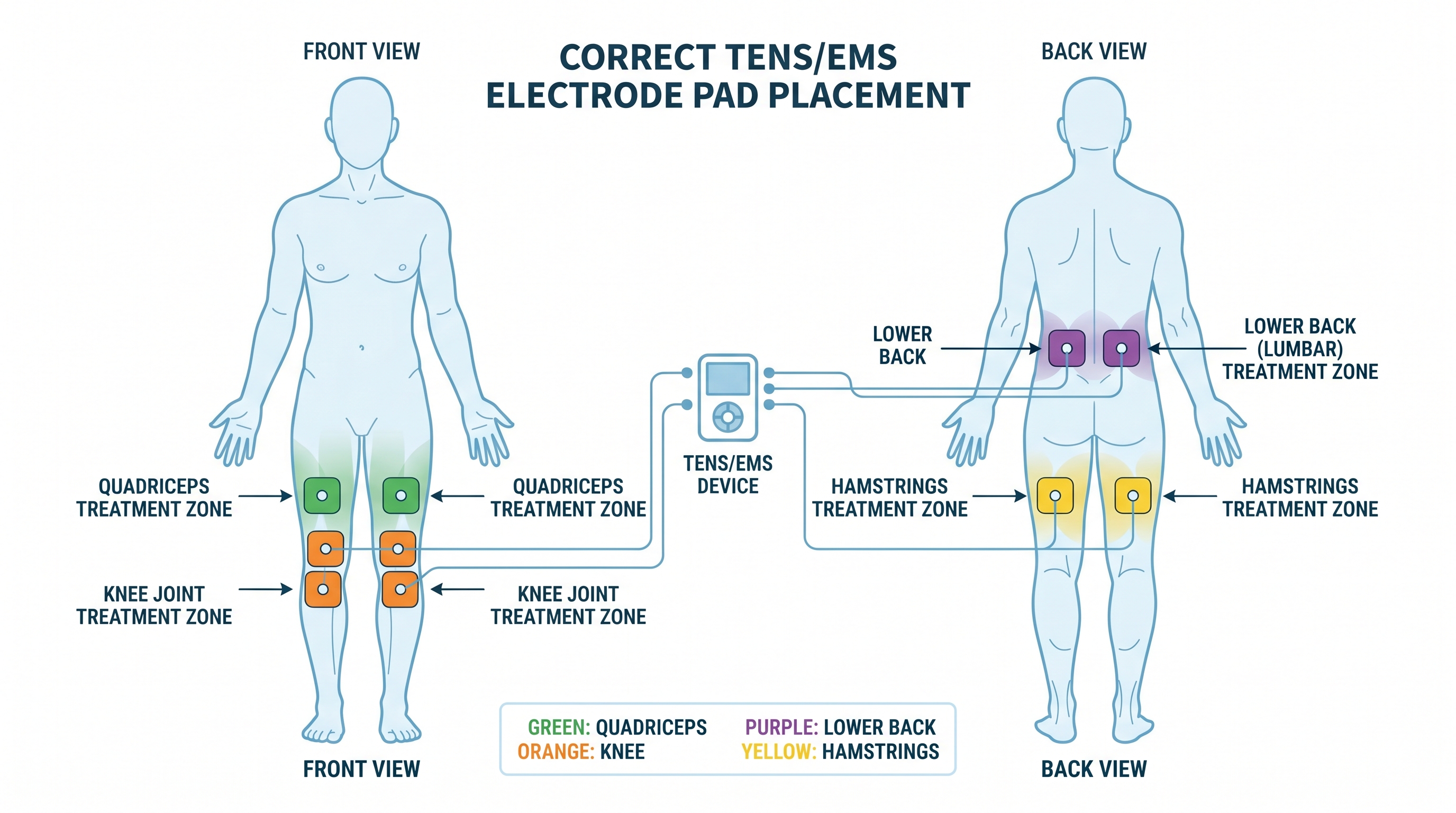
ALT: Diagram showing correct electrode pad placement on the body for iStim EV-805, EV-804, and X1 TENS EMS therapy targeting back and leg pain relief
Advanced Considerations: Specialty Applications and Common Misconceptions
Specialty Pad Applications
While standard rectangular electrode pads cover the vast majority of TENS and EMS applications, some users have specific needs that benefit from specialty pad configurations:
Pelvic Floor Therapy: The iStim X1 and EV-805 can support pelvic floor stimulation when used with appropriate internal probe accessories — not standard surface electrode pads. Women exploring postpartum recovery or treatment for urinary incontinence should note that pelvic floor applications use dedicated probes rather than adhesive pads. If you're addressing pelvic floor concerns, reviewing the signs of dysfunction through our resource on Signs of a Weak Pelvic Floor: How to Recognize the Symptoms can help you identify whether pelvic floor stimulation is appropriate for your situation — and which iStim accessories best support that goal.
Joint and Contoured Areas: For treatment of knees, wrists, elbows, and cervical spine, butterfly-shaped or pre-cut contoured pads often provide better conformity and adhesion than flat rectangular pads. These specialty shapes reduce edge lifting and maintain contact during movement, which is important for sessions targeting mobility-related pain.
Multi-Channel Sessions: The EV-805 supports multiple output channels, enabling simultaneous treatment of more than one body area. When using multiple pad sets in a single session, ensure all pads are of equivalent quality and condition — mixing aged pads with new ones can create imbalanced impedance and uneven stimulation intensity across channels.
Common Misconceptions About Electrode Pad Compatibility
Misconception 1: "Any TENS pad will work with any TENS device."
This is false. While the 2mm pin connector is widely used, connector sizes vary across brands. Additionally, pad impedance characteristics must align with the device's output specifications. Always verify connector compatibility and pad quality specifications before purchasing.
Misconception 2: "Pads are single-use only."
Most professional-grade self-adhesive hydrogel pads are designed for multiple uses. With proper care — clean skin before application, store on backing film after use, avoid exposure to heat and sunlight — pads can maintain effective adhesion and conductivity across many sessions. However, when adhesive noticeably weakens or gel dries out, replace the pads promptly.
Misconception 3: "Larger pads are always better."
Pad size should match treatment area size. Oversized pads on small areas can inadvertently stimulate unintended muscle groups or nerves, while undersized pads on large muscle groups deliver concentrated, potentially uncomfortable stimulation. Match pad size to the anatomical target zone.
Frequently Asked Questions FAQ
Q1: How do I know when it's time to replace my electrode pads for the iStim EV-805, EV-804, or X1?
The clearest signs that electrode pads need replacement include weakened adhesion (pads lifting at edges during sessions), reduced stimulation sensation at the same intensity settings (indicating degraded conductivity), visible deterioration of the gel surface, or skin irritation that wasn't present with new pads. As a general rule, once a pad no longer adheres firmly and flatly to clean, dry skin, it has reached the end of its effective lifespan and should be replaced to maintain therapy quality and skin safety.
Q2: Are third-party electrode pads safe to use with iStim EV-805, EV-804, and X1 devices?
Third-party pads can be compatible and safe provided they meet two criteria: they use a 2mm pin connector and are manufactured to medical-grade quality standards. However, quality varies significantly among third-party suppliers. iStim's own electrode pads are engineered specifically for their devices and undergo quality assurance aligned with the brand's ISO-certified manufacturing standards. For the most reliable therapy experience, using iStim-branded or iStim-recommended pads is the safest choice — particularly for users with sensitive skin or those using devices for clinical-grade therapy protocols.
Q3: How long do electrode pads typically last with regular iStim device use?
The lifespan of electrode pads depends on usage frequency, skin preparation habits, and storage practices. With daily use and proper care — applying to clean skin, storing on backing film in a cool, dry place — most professional-grade self-adhesive hydrogel pads provide reliable performance across multiple weeks of regular sessions. Users who prepare skin thoroughly before each session and store pads correctly consistently report longer pad life. Replacing pads proactively rather than waiting for complete adhesive failure also protects skin health and ensures consistent therapy quality throughout their use.
Summary
Choosing compatible electrode pads for your iStim EV-805, EV-804, or X1 device isn't a trivial accessory decision — it's a foundational element of effective, safe electrotherapy at home. Three key takeaways stand out from this guide:
1. Connector and quality compatibility are non-negotiable. The EV-805, EV-804, and X1 all use standard 2mm pin connectors, giving users flexibility in pad selection — but quality matters enormously. Medical-grade hydrogel pads with proper conductive properties are essential for consistent, comfortable therapy.
2. Pad size should match your treatment area. Using the right pad dimensions for the anatomical zone you're treating — whether a small joint or a large muscle group — directly impacts the effectiveness of your session and your comfort during therapy.
3. Proper skin preparation and pad storage extend performance. Clean, dry skin before application and careful post-session storage on original backing film are the two simplest habits that meaningfully extend pad life and maintain therapy quality.
Taking these principles seriously means you get the full benefit of your iStim device — whether that's drug-free pain relief, accelerated muscle recovery, or progressive strength training. The right pads transform a good device into a highly effective personal therapy tool.
Ready to Optimize Your iStim Experience?
Ready to experience drug-free pain relief and muscle stimulation from the comfort of your home? Visit iStim at https://istim.com/ to explore their full lineup of professional-grade TENS, EMS, and Kegel devices — each engineered to ISO-certified standards and trusted by over 20,000 satisfied customers. Take the first step toward a healthier, pain-free lifestyle with iStim's clinically backed electrotherapy solutions today.
References
- U.S. Food and Drug Administration (FDA). "Transcutaneous Electrical Nerve Stimulators (TENS) — Device Classification."
https://www.fda.gov/medical-devices/physical-medicine-devices/transcutaneous-electrical-nerve-stimulators-tens - National Institutes of Health (NIH) — National Library of Medicine. "Transcutaneous Electrical Nerve Stimulation (TENS) for Pain Management."
https://www.ncbi.nlm.nih.gov/books/NBK539803/ - American Physical Therapy Association (APTA). "Electrophysical Agents: Contraindications and Precautions."
https://www.apta.org/ - National Institute of Neurological Disorders and Stroke (NINDS). "Pain: Hope Through Research."
https://www.ninds.nih.gov/health-information/patient-caregiver-education/hope-through-research/pain-hope-through-research - Cleveland Clinic. "Electrical Muscle Stimulation (EMS): What It Is and How It Works."
https://my.clevelandclinic.org/health/treatments/electrical-muscle-stimulation
Note: Standards may be updated, please check the latest official documents or consult professional advisors.
About iStim
iStim is a Los Angeles-based electrotherapy brand specializing in professional-grade TENS, EMS, and Kegel devices engineered for safe and effective home use. Backed by ISO-certified Taiwanese manufacturing and trusted by 20,000+ Amazon customers, iStim is committed to delivering drug-free pain relief and muscle stimulation solutions you can count on.
This article is produced in partnership with iStim. The content is intended for informational and educational purposes only and does not constitute medical advice. Always consult a qualified healthcare professional before beginning any new treatment or therapy. © iStim. All rights reserved.
Leave a comment