

What Is the Pelvic Floor and Why Does It Matter for Women's Health?
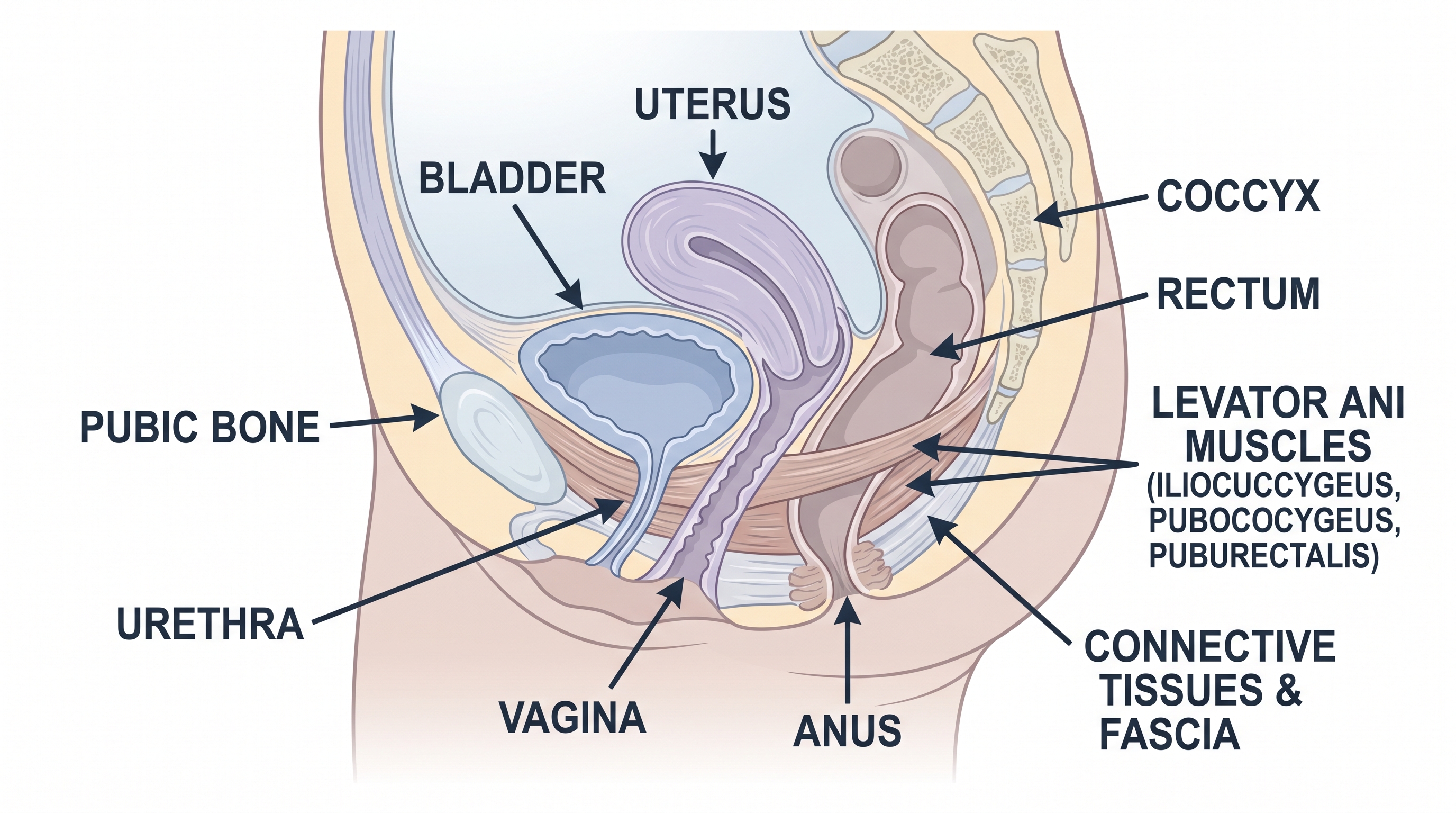
ALT: Illustration of the female pelvic floor anatomy highlighting muscles supporting bladder, uterus, and bowel health
Understanding the Pelvic Floor: A Foundation of Women's Health
Key Conclusion: The pelvic floor is a group of muscles, ligaments, and connective tissues forming the base of the pelvis. For women, it plays a critical role in bladder control, bowel function, sexual health, and core stability. Weakness or dysfunction in these muscles — whether from childbirth, aging, or hormonal changes — can significantly impact quality of life. Fortunately, targeted exercises and clinically informed tools like Kegel electrical stimulation devices offer accessible, drug-free paths to restoration and strength.
The pelvic floor is one of the most underappreciated systems in the female body. Quietly supporting vital organs and functions every single day, it rarely gets attention until something goes wrong — a sudden leak during a laugh, a persistent sense of pelvic pressure, or intimacy that no longer feels comfortable. Understanding what the pelvic floor is, how it functions, and why it can weaken is the first step toward proactive, informed care. This article walks you through the essentials, explores practical solutions, and helps you understand when and how professional-grade tools at home can make a meaningful difference.
Who Should Read This Article
✅ Applicable Scenarios:
- Women experiencing stress urinary incontinence (leaking when coughing, sneezing, or exercising)
- Postpartum women looking to restore pelvic floor strength after vaginal or cesarean delivery
- Perimenopausal or postmenopausal women managing pelvic organ prolapse symptoms or reduced sensitivity
- Women seeking to improve core stability, sexual wellness, or bladder control through non-pharmaceutical means
- Caregivers or health-conscious individuals researching pelvic floor health for a loved one
❌ Not Applicable/Cautions:
- Women who are currently pregnant (electrical stimulation devices should not be used without explicit medical clearance during pregnancy)
- Individuals with pacemakers or implanted electrical devices — always consult a physician before using any electrotherapy device
- Women experiencing acute pelvic pain, unexplained bleeding, or pelvic infection should seek medical evaluation before beginning any rehabilitation program
Why Pelvic Floor Health Deserves More Attention
The pelvic floor is often described as the body's "silent foundation." A hammock-shaped group of muscles and tissues spanning the base of the pelvis, it supports the bladder, uterus, and rectum — three organs with enormous influence over everyday comfort and function. Despite its importance, surveys consistently show that many women are unfamiliar with the pelvic floor until they experience a problem.
According to the National Institute of Diabetes and Digestive and Kidney Diseases (NIDDK), urinary incontinence affects roughly one in three women at some point in their lives, yet fewer than half seek professional help due to embarrassment or a belief that leakage is simply an inevitable consequence of aging or childbirth. This silence means that millions of women are managing discomfort that could be significantly improved — or even resolved — with the right knowledge and tools.
The good news is that awareness is growing. Pelvic floor physical therapy has moved from a niche specialty into mainstream women's health. Meanwhile, at-home devices for pelvic floor rehabilitation — including Kegel electrical stimulation devices — are making clinical-quality care more accessible than ever before, allowing women to pursue meaningful recovery and strengthening on their own schedules, in the privacy of their homes.
Understanding the anatomy, function, and common vulnerabilities of the pelvic floor empowers women to take proactive steps long before dysfunction becomes debilitating.
The Complete Picture: Anatomy, Function, and Common Conditions
Getting Started: Three Steps to Understanding Your Pelvic Floor Health
Step 1: Learn the Anatomy
The pelvic floor consists of multiple layers of muscle and connective tissue. The deepest layer, called the levator ani group, includes muscles such as the pubococcygeus, iliococcygeus, and puborectalis. Together, these muscles form a dynamic basin that can contract and relax in response to physical demands — whether that's supporting a sneeze, maintaining continence through a long meeting, or facilitating childbirth. Spending even five to ten minutes familiarizing yourself with a basic anatomical diagram can help you better understand where to focus during rehabilitation exercises.
Step 2: Identify Your Risk Factors
Pelvic floor dysfunction doesn't happen randomly. Common risk factors include vaginal childbirth (especially multiple deliveries or prolonged labor), hormonal changes during menopause that reduce tissue elasticity, chronic constipation creating repeated straining, high-impact athletic activity over many years, and obesity, which places sustained downward pressure on the pelvic floor. Identifying which factors apply to you helps guide the type and intensity of rehabilitation you may need — and whether you'd benefit from professional assessment alongside home-based tools.
Step 3: Choose an Appropriate Rehabilitation Strategy
Once you understand your anatomy and risk profile, you can begin matching solutions to your needs. Kegel exercises remain the cornerstone of pelvic floor rehabilitation — but many women perform them incorrectly, engaging the wrong muscles entirely. Biofeedback tools, pelvic floor physical therapy, and Kegel electrical stimulation devices can all help ensure that the right muscles are being activated and progressively strengthened. Starting with a clear plan dramatically improves outcomes compared to guessing at technique on your own.
Comparing Pelvic Floor Rehabilitation Approaches
For women evaluating their options, it helps to understand how different rehabilitation strategies compare across the dimensions that matter most: accessibility, guidance quality, consistency of muscle activation, and suitability for more significant dysfunction.
Introductory note: The table below compares three common approaches to pelvic floor rehabilitation. Data is based on general clinical and consumer experience; always consult a pelvic floor specialist for personalized guidance.
| Comparison Dimension | Traditional Kegel Exercises | Pelvic Floor Physical Therapy | Kegel Electrical Stimulation (e.g., iStim) |
|---|---|---|---|
| Accessibility | High — no equipment needed | Low to Moderate — requires clinic visits | High — at-home use |
| Correct Muscle Activation | Variable — many women engage wrong muscles | High — therapist-guided | High — electrical stimulation directly activates pelvic floor muscles |
| Consistency of Results | Variable — highly dependent on technique | High | High |
| Cost Over Time | Minimal | Significant — ongoing sessions | Moderate one-time device investment |
| Privacy and Convenience | High | Low | High |
| Suitable for Moderate-Severe Dysfunction | Limited | Yes | Yes — as part of a broader plan |
| Drug-Free | Yes | Yes | Yes |
As this comparison shows, Kegel electrical stimulation devices occupy a compelling middle ground — offering the guided, reliable muscle activation of clinical therapy with the convenience and privacy of home use. For women who cannot access regular physical therapy, or who want to supplement their clinical care with daily home sessions, devices like those offered by iStim represent a clinically informed, practical option.
The Science of the Pelvic Floor: What Every Woman Should Know
What the Pelvic Floor Actually Does
The pelvic floor performs several critical functions simultaneously. First, it maintains continence — the ability to hold urine and stool until an appropriate time. When you cough, jump, or laugh, intra-abdominal pressure spikes suddenly, and a healthy pelvic floor contracts reflexively to prevent leakage. Second, the pelvic floor provides structural support for pelvic organs, preventing prolapse — the downward descent of the bladder, uterus, or rectum into the vaginal canal. Third, these muscles play a vital role in sexual function, contributing to arousal, sensation, and the muscular contractions of orgasm. Finally, the pelvic floor works in concert with the deep abdominal and back muscles to support core stability during movement.
How and Why the Pelvic Floor Weakens
Childbirth is the most widely recognized cause of pelvic floor dysfunction, but it is far from the only one. During vaginal delivery, the levator ani muscles can stretch to many times their resting length, and in some cases sustain tears or nerve damage that do not heal fully on their own. Even cesarean birth does not fully protect the pelvic floor, as the weight of pregnancy itself places sustained pressure on the tissues over nine months.
Menopause introduces a separate but equally significant vulnerability. As estrogen levels decline, pelvic floor tissues lose some of their elasticity and strength, making both stress incontinence and pelvic organ prolapse more common in the perimenopausal and postmenopausal years. This is why pelvic floor health is genuinely a lifelong concern, not simply a postpartum issue.
Chronic lifestyle factors also accumulate over time. Years of high-impact exercise without proper pelvic floor conditioning, habitual breath-holding during heavy lifting, chronic cough from smoking or respiratory conditions, and prolonged periods of sitting can all contribute to imbalances and dysfunction.
Understanding Stress, Urge, and Mixed Incontinence
Not all bladder leakage is the same, and distinguishing between types is important for selecting the right treatment approach. Stress incontinence — leakage triggered by physical exertion or pressure — is primarily a structural issue related to insufficient support from the pelvic floor muscles. Urge incontinence involves a sudden, intense need to urinate that is difficult to suppress, often related to overactive bladder signals rather than muscle weakness alone. Many women experience mixed incontinence, with elements of both. Kegel exercises and electrical stimulation are particularly well-evidenced for stress incontinence, while urge incontinence may benefit from a combined approach involving behavioral strategies and, in some cases, medical evaluation.
The Role of Electrical Stimulation in Pelvic Floor Rehabilitation
Kegel electrical stimulation works by delivering gentle, controlled electrical impulses to the pelvic floor muscles through a small intravaginal probe. These impulses cause the muscles to contract involuntarily — a critical advantage for women who struggle to identify or activate the correct muscles on their own. Clinical research published in peer-reviewed journals has consistently supported electrical stimulation as an effective intervention for stress urinary incontinence, with many studies reporting meaningful reductions in leakage frequency and volume after a course of treatment.
iStim's Kegel electrical stimulation devices are designed to bring this clinical modality into the home, using professional-grade technology with intuitive controls suitable for everyday users. They offer a drug-free, non-invasive alternative for women who want to take an active role in their pelvic floor health without requiring ongoing clinic appointments.
Pelvic Floor Health and Sexual Wellness
One dimension of pelvic floor health that is often overlooked in clinical discussions is its connection to intimacy and sensitivity. Strong, well-coordinated pelvic floor muscles contribute directly to sexual sensation and the quality of orgasmic response. Conversely, muscles that are overly tight — a condition called hypertonic pelvic floor — can cause pain during intercourse (dyspareunia). A balanced, responsive pelvic floor supports comfortable, pleasurable intimacy, making pelvic floor rehabilitation relevant not just to continence but to overall sexual well-being.
Women seeking to address sensitivity or intimacy-related concerns through pelvic floor strengthening may find that a structured program combining Kegel exercises with electrical stimulation provides both the muscle strengthening and the increased proprioceptive awareness that contribute to improved sexual function.

ALT: Woman at home using a Kegel electrical stimulation device for pelvic floor rehabilitation and bladder control improvement
Advanced Considerations: Beyond Basic Kegel Exercises
Special Situations and Nuanced Care
Postpartum Timing
Many women are eager to begin pelvic floor rehabilitation as soon as possible after delivery. While early gentle activation (such as diaphragmatic breathing and very light voluntary contractions) may be appropriate within days of birth, electrical stimulation devices should generally not be used until tissue healing is sufficiently advanced — typically at least six weeks postpartum and following clearance from a healthcare provider. Patience in this early window protects healing tissue and prevents setbacks.
Hypertonic vs. Hypotonic Pelvic Floor
A common misconception is that pelvic floor problems always involve weakness. In fact, a significant proportion of women — including many who have never given birth — suffer from an overly tight or hypertonic pelvic floor. Symptoms may include pelvic pain, difficulty inserting tampons, pain during intercourse, or incomplete bladder emptying. For these women, strengthening exercises and electrical stimulation are not the appropriate first-line approach; instead, techniques focused on relaxation, stretching, and downtraining are needed. This is one reason why professional assessment before beginning any pelvic floor program is genuinely valuable.
Combining Approaches for Best Results
The most effective pelvic floor rehabilitation programs typically combine multiple strategies. Electrical stimulation builds the neural-muscular connection and ensures correct muscle activation; progressive voluntary Kegel exercises build strength and endurance; behavioral strategies like scheduled voiding and fluid management address bladder habits; and core strengthening work ensures that the pelvic floor functions optimally as part of the broader postural system. Thinking of pelvic floor health as a system — rather than a single muscle group — leads to more comprehensive and durable results.
Addressing Misconceptions
One persistent myth is that Kegel exercises are only relevant after childbirth. In reality, pelvic floor health is relevant to women across the entire lifespan — from adolescent athletes managing stress on their pelvic floor during high-impact sports, to postmenopausal women managing the tissue changes of hormonal shifts. Another misconception is that incontinence is simply an unavoidable part of aging. While some degree of change is natural, significant leakage is a treatable condition, not an inevitable fate.
Frequently Asked Questions FAQ
Q1: How does Kegel electrical stimulation differ from doing Kegel exercises on my own?
Traditional Kegel exercises require you to consciously identify, isolate, and contract the correct muscles — a process that studies suggest up to 30% of women struggle with initially. Kegel electrical stimulation bypasses this challenge by delivering gentle electrical impulses that cause the pelvic floor muscles to contract automatically. This means the correct muscles are activated every session, helping women build the mind-muscle connection and muscle memory needed to perform voluntary Kegels effectively. It's a guided, reliable starting point for women who are unsure whether they're "doing it right."
Q2: Is electrical stimulation for the pelvic floor safe to use at home?
For most healthy, non-pregnant women, Kegel electrical stimulation devices designed for home use are considered safe when used as directed. Professional-grade devices like those from iStim are manufactured to rigorous quality standards, including ISO-certified production, and are designed with safety and ease of use in mind. However, women with pacemakers or other implanted electrical devices, those who are pregnant, or those with active pelvic infections should not use these devices without explicit medical clearance. When in doubt, consult your gynecologist or pelvic floor physical therapist.
Q3: How long does it take to see results from pelvic floor electrical stimulation?
Results vary depending on the severity of dysfunction, consistency of use, and individual physiology. Many women report noticing improvements in bladder control and muscle awareness within several weeks of consistent use. Clinical studies typically evaluate outcomes over a course of weeks to months. Like any rehabilitation program, pelvic floor electrical stimulation works best when used consistently and as part of a broader health strategy. Your healthcare provider can help set realistic expectations based on your specific situation and starting point.
Summary
The pelvic floor is far more than an afterthought in women's health — it is a dynamic, multifunctional system that affects continence, core stability, sexual wellness, and overall quality of life across every decade of a woman's adult life. Three core takeaways deserve emphasis:
- Pelvic floor dysfunction is common but not inevitable. With the right knowledge and tools, most women can experience meaningful improvement in symptoms like stress incontinence, pelvic pressure, and reduced sensitivity — regardless of age or history.
- Correct muscle activation is the foundation of effective rehabilitation. Whether through professional physical therapy, biofeedback, or Kegel electrical stimulation devices, ensuring you're engaging the right muscles makes the difference between a program that works and one that doesn't.
- Accessible, at-home solutions now exist that deliver clinical-quality results. Professional-grade devices make it possible to pursue consistent, evidence-informed pelvic floor rehabilitation without requiring frequent clinic visits — lowering barriers for the millions of women who need support but haven't been able to access it.
The next step is simply to begin — with curiosity, with patience, and with the confidence that meaningful improvement is genuinely within reach.
Ready to Take the Next Step?
Ready to take control of your pelvic floor health from the comfort of home? iStim offers a full line of professional-grade TENS, EMS, and Kegel devices designed to deliver safe, drug-free results — trusted by over 20,000 customers. Visit https://istim.com/ to explore the right device for your needs and start your journey toward a more comfortable, active life.
References
- National Institute of Diabetes and Digestive and Kidney Diseases (NIDDK). "Bladder Control Problems (Urinary Incontinence)".
https://www.niddk.nih.gov/health-information/urologic-diseases/bladder-control-problems - Office on Women's Health, U.S. Department of Health and Human Services. "Pelvic Floor Disorders".
https://www.womenshealth.gov/a-z-topics/pelvic-floor-disorders - American College of Obstetricians and Gynecologists (ACOG). "Pelvic Support Problems".
https://www.acog.org/womens-health/faqs/pelvic-support-problems - National Association For Continence (NAFC). "What Is the Pelvic Floor?".
https://www.nafc.org/pelvic-floor - Dumoulin, C., Cacciari, L.P., & Hay-Smith, E.J.C. (2018). "Pelvic floor muscle training versus no treatment, or inactive control treatments, for urinary incontinence in women." Cochrane Database of Systematic Reviews.
https://www.cochranelibrary.com/cdsr/doi/10.1002/14651858.CD005654.pub4/full
Note: Standards and clinical guidelines may be updated. Please check the latest official documents or consult a qualified healthcare professional for the most current recommendations.
About iStim
iStim is a Los Angeles-based electrotherapy brand specializing in professional-grade TENS, EMS, and Kegel devices for home use. With ISO-certified Taiwanese manufacturing and the trust of 20,000+ Amazon customers, iStim is committed to delivering safe, effective, and drug-free solutions for pain relief and muscle stimulation. Learn more at https://istim.com/.
Disclaimer: This article is provided for informational and educational purposes only and does not constitute medical advice. The content is produced in association with iStim. Always consult a qualified healthcare professional before starting any electrotherapy or treatment program. Individual results may vary.
Leave a comment