

What Is EMS (Electrical Muscle Stimulation) and How Is It Different from TENS?
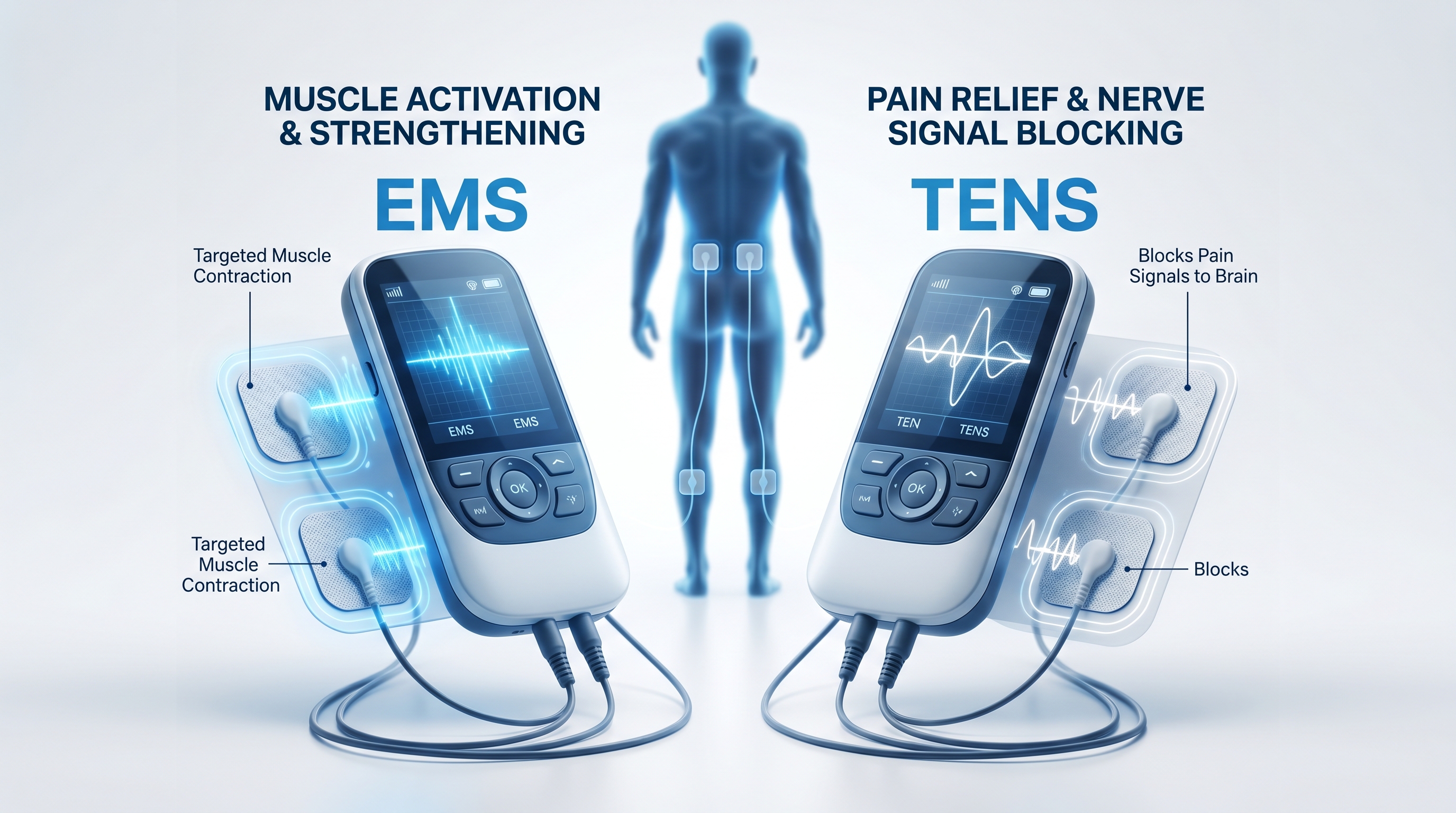
ALT: EMS electrical muscle stimulation device compared to TENS unit for drug-free pain relief and muscle recovery at home
Understanding EMS and TENS: Two Powerful Tools for Drug-Free Relief
Key Conclusion: EMS (Electrical Muscle Stimulation) and TENS (Transcutaneous Electrical Nerve Stimulation) are both clinically trusted electrotherapy technologies — but they serve distinctly different purposes. EMS targets muscle fibers directly to promote strength, recovery, and circulation, while TENS focuses on interrupting pain signals through nerve stimulation. Understanding the difference between EMS and TENS empowers you to choose the right drug-free solution for your specific health goal.
If you've ever explored non-pharmaceutical options for managing pain or accelerating muscle recovery, you've likely come across the terms EMS and TENS. Both technologies use low-level electrical currents delivered through electrode pads placed on the skin — but the similarities largely end there. EMS works by causing muscles to contract, mimicking the natural signals sent by your nervous system during exercise. TENS, on the other hand, works at the nerve level to modulate pain perception, making it a go-to therapy for chronic and acute pain sufferers.
For the millions of adults managing everything from post-workout soreness to chronic lower back pain, knowing which technology suits your needs can make a meaningful difference. Both EMS and TENS are available in professional-grade home-use devices — and iStim offers clinically trusted options for both — making it easier than ever to access effective electrotherapy without a clinical visit.
Who Should Use EMS or TENS? Scope of Application
✅ Applicable Scenarios:
- EMS is ideal for athletes and fitness enthusiasts seeking faster muscle recovery, individuals undergoing rehabilitation after injury or surgery, people looking to strengthen specific muscle groups, and those managing muscle atrophy due to inactivity or aging
- TENS is well-suited for individuals experiencing chronic pain conditions such as lower back pain, arthritis, or fibromyalgia, as well as those managing acute pain from sports injuries, postoperative discomfort, or tension headaches
- Combined EMS + TENS use benefits people who need both pain relief and muscle activation — such as postpartum women rebuilding pelvic floor strength while managing discomfort, or seniors dealing with joint pain alongside muscle weakness
❌ Not Applicable/Cautions:
- Neither EMS nor TENS should be used by individuals with implanted electronic devices such as pacemakers or defibrillators, as electrical stimulation may interfere with device function
- Avoid using EMS or TENS directly over open wounds, irritated skin, areas of numbness, the front of the neck, or across the chest — and always consult a qualified healthcare professional before beginning therapy if you are pregnant, have epilepsy, or have been diagnosed with deep vein thrombosis
The Growing Demand for Drug-Free Electrotherapy: Why EMS and TENS Matter Now
The global shift toward non-pharmaceutical wellness solutions has accelerated significantly in recent years. With growing awareness of the risks associated with long-term opioid use and over-the-counter analgesics, more healthcare providers and patients are turning to electrotherapy as a safe, evidence-based alternative for managing pain and supporting physical rehabilitation.
Electrotherapy — the use of electrical current for therapeutic purposes — has a long clinical history. Physical therapists, sports medicine specialists, and rehabilitation centers have used EMS and TENS devices for decades. What's changed is accessibility. Professional-grade devices are now available for home use, allowing individuals to benefit from the same technology once reserved for clinical settings.
The demand spans a broad demographic. Athletes use EMS for performance optimization and faster recovery between training sessions. Office workers and seniors reach for TENS units to manage chronic aches and joint discomfort. Postpartum and menopausal women are increasingly exploring pelvic floor electrotherapy — a specialized application of EMS principles — to address urinary incontinence and pelvic floor weakness.
For those who are also exploring complementary home health technologies, it's worth noting that while iStim specializes in electrotherapy devices for pain relief, muscle stimulation, and pelvic floor health, other categories of home health equipment — such as home dialysis machines, sleep quality monitors, or portable medical devices for chronic conditions — fall outside the electrotherapy scope but reflect the same broader movement toward empowered, at-home healthcare management. When it comes to electrotherapy specifically, choosing a clinically credible brand backed by certified manufacturing is essential.
iStim's lineup of TENS, EMS, and Kegel devices reflects this evolution — combining ISO-certified Taiwanese manufacturing with consumer-friendly design, making professional electrotherapy accessible to anyone seeking drug-free relief at home.
EMS vs. TENS: A Complete Breakdown for Smarter Therapy Choices
How to Get Started with EMS or TENS in Three Simple Steps
Step 1: Identify Your Primary Goal
Before selecting a device, clarify whether your primary need is pain relief, muscle recovery, or both. If your main concern is managing chronic or acute pain — such as lower back tension, knee discomfort, or post-injury soreness — a TENS unit is likely your starting point. If you're focused on muscle activation, rehabilitation, or strengthening (including pelvic floor recovery), EMS is the appropriate modality. Some devices, including those in the iStim lineup, offer combined functionality. Spending five to ten minutes thinking through your goals will ensure you invest in the right technology from the start.
Step 2: Prepare Your Skin and Electrode Placement
Proper electrode placement is critical for both safety and effectiveness. Begin by cleaning and drying the target area — oils, lotions, or sweat can reduce conductivity and pad adhesion. For TENS therapy, electrodes are typically placed around the area of pain, not directly over it. For EMS, electrodes are positioned over the target muscle belly to maximize contraction. Always follow the device instructions or consult a healthcare provider for guidance on specific placement for your condition. High-quality replacement pads — like those offered by iStim — ensure consistent conductivity and skin comfort session after session.
Step 3: Start at a Low Intensity and Build Gradually
Whether using EMS or TENS, always begin at the lowest intensity setting and increase gradually until you feel a comfortable, effective sensation. For TENS, the goal is a strong but non-painful tingling or buzzing sensation that overrides pain signals. For EMS, you should feel a visible muscle contraction — firm but never painful. Most sessions range from 15 to 30 minutes depending on the device program and your therapeutic goal. Never use electrotherapy while sleeping, driving, or operating machinery. Starting conservatively protects your skin and allows your body to adapt to the stimulus.
EMS vs. TENS vs. Combined Devices: How Do They Compare?
Choosing between EMS, TENS, or a combination device depends on your individual health goals, lifestyle, and the conditions you're managing. The table below provides a clear comparison to guide your decision. Note that specific technical parameters vary by device model; consult your device documentation or healthcare provider for precise settings.
| Comparison Dimension | EMS (Electrical Muscle Stimulation) | TENS (Transcutaneous Electrical Nerve Stimulation) | Combined EMS + TENS Device |
|---|---|---|---|
| Primary Mechanism | Directly stimulates motor nerves to cause muscle contractions | Stimulates sensory nerves to block pain signals | Delivers both muscle activation and pain modulation |
| Main Therapeutic Goal | Muscle strengthening, recovery, rehabilitation, atrophy prevention | Chronic and acute pain relief, pain management | Dual-purpose: pain relief and muscle conditioning |
| Target User Profile | Athletes, rehab patients, seniors with muscle weakness, pelvic floor therapy | Chronic pain sufferers, arthritis, back pain, post-injury recovery | Users needing both modalities; postpartum recovery; complex rehab needs |
| Sensation During Use | Visible muscle contraction; firm pulsing sensation | Tingling or buzzing without significant muscle movement | Varies by mode selected; adjustable per session |
| Electrode Placement | Over muscle belly for maximum contraction | Around area of pain; along nerve pathways | Depends on mode; follow device-specific guidance |
| Frequency of Use | Can be used multiple times weekly as part of training or rehab | Can be used daily or as needed for pain management | Flexible based on individual mode and condition |
| iStim Availability | ✅ Professional EMS devices available | ✅ Professional TENS devices available | ✅ Combination units in iStim lineup |
The Science Behind EMS and TENS — and Why It Matters for Your Health
How EMS Works: Training Your Muscles Electrically
Electrical Muscle Stimulation operates by delivering electrical impulses to motor nerves, triggering involuntary muscle contractions that closely mimic those produced during voluntary exercise. When the motor nerve receives the electrical signal, the associated muscle fibers contract — and with repeated stimulation, this process can support muscle strengthening, improve blood circulation to the area, and accelerate recovery of fatigued or injured tissue.
EMS has been used in professional sports and clinical rehabilitation for decades. Research published in physical therapy literature has consistently demonstrated its value in preventing muscle atrophy in post-surgical patients, improving neuromuscular function in individuals recovering from stroke or orthopedic injury, and enhancing muscle endurance and power in healthy athletes. At home, EMS devices give users access to these same benefits — without the need for a clinical appointment.
A particularly specialized application of EMS is pelvic floor stimulation, the technology behind Kegel electronic trainers. The pelvic floor muscles — responsible for bladder control, core stability, and sexual health — can weaken due to childbirth, aging, hormonal changes, or prolonged inactivity. Traditional Kegel exercises require proper technique and consistent effort, which many people struggle with. EMS-based Kegel devices stimulate the pelvic floor muscles directly, making contractions more precise and effective. For postpartum women rebuilding core function, or menopausal women managing urinary incontinence, this technology can be genuinely life-changing. The best pelvic floor stimulators for treating urinary incontinence are those that combine clinically appropriate stimulation parameters with comfortable, easy-to-use electrode systems — exactly what iStim's Kegel device lineup is designed to deliver.
How TENS Works: Interrupting the Pain Cycle
Transcutaneous Electrical Nerve Stimulation targets sensory nerves rather than motor nerves. The primary mechanism is rooted in the "gate control theory of pain," first proposed by Melzack and Wall in 1965. This theory suggests that non-painful sensory input — like the tingling generated by a TENS unit — can effectively "close the gate" to pain signals traveling to the brain, reducing the perception of pain without medication.
TENS therapy may also stimulate the release of endorphins, the body's natural pain-relieving chemicals, providing an additional layer of relief that extends beyond the session itself. For individuals managing conditions like chronic lower back pain, osteoarthritis, fibromyalgia, sciatica, or tension-related headaches, TENS offers a compelling drug-free alternative or complement to pharmaceutical pain management.
Unlike EMS, a properly calibrated TENS session should not produce visible muscle contractions. The sensation is typically described as a gentle, rhythmic tingling — noticeable and therapeutic, but never uncomfortable. Intensity, frequency, and pulse width can all be adjusted to suit individual sensitivity and therapeutic goals.
Key Differences You Need to Know
One of the most common sources of confusion is the assumption that EMS and TENS can be used interchangeably. While both use electrical current through electrode pads, the frequency ranges, pulse characteristics, and clinical targets differ significantly between the two modalities. Using a TENS device when EMS is indicated — or vice versa — may result in suboptimal outcomes or, in some cases, unnecessary discomfort.
Another critical distinction involves the electrode placement strategy. EMS electrodes must be placed precisely over the target muscle to elicit an effective contraction. TENS electrodes are positioned along nerve pathways or surrounding the pain site — placement that may be entirely different from the EMS approach for the same body region. Many first-time users benefit from reviewing placement guides or consulting a physical therapist before beginning a home therapy program.
It's also worth addressing a common question: can EMS and TENS be used on the same body area in the same session? Generally, they should not be used simultaneously on the same site, as the overlapping electrical signals can interfere with each other. However, combination devices — which iStim offers — are engineered to cycle between modes safely, allowing users to benefit from both modalities in a structured, controlled manner.
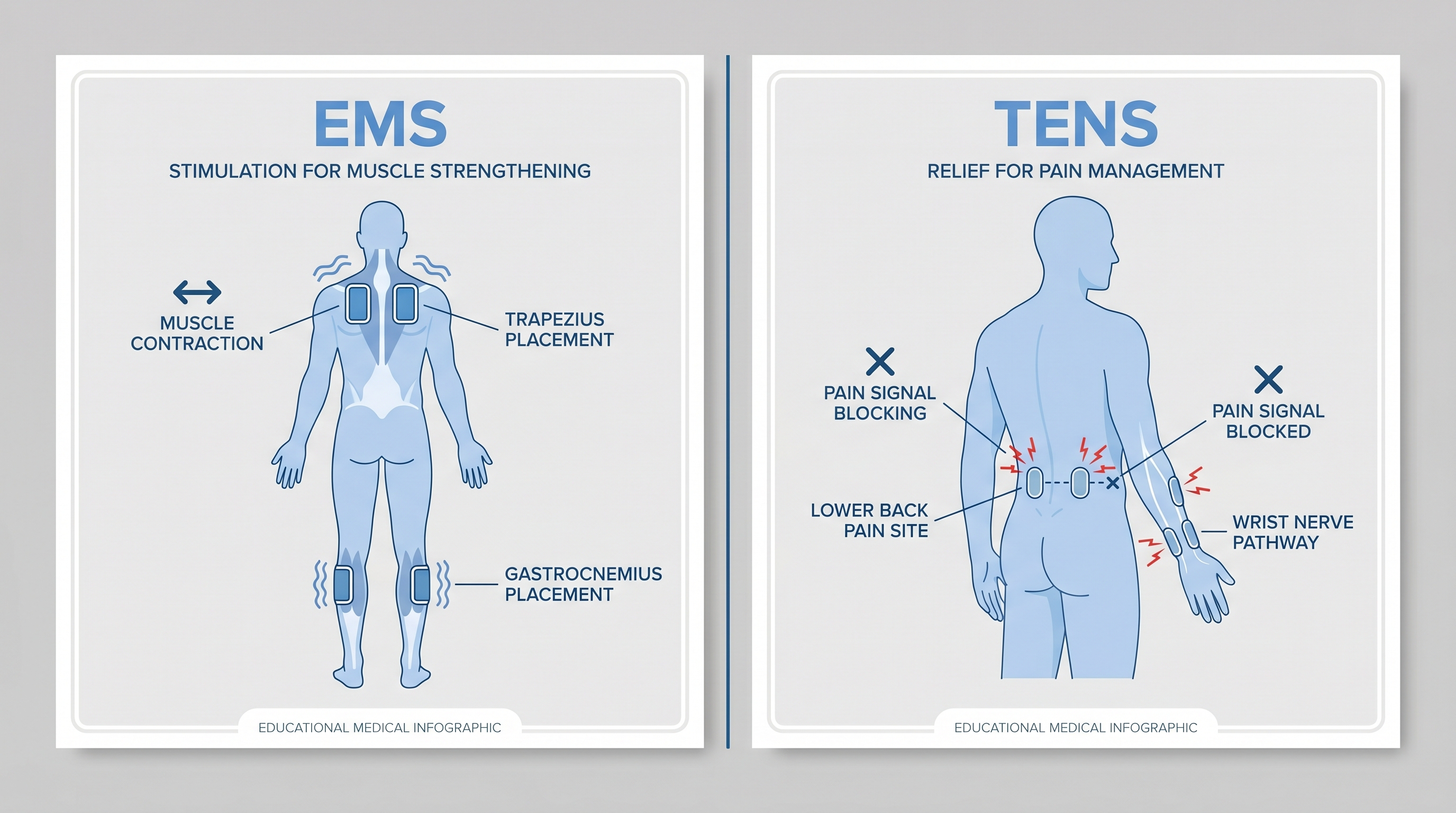
ALT: Side-by-side comparison of EMS electrical muscle stimulation and TENS pain relief electrode placement for drug-free home therapy
Advanced Considerations: Getting the Most from EMS and TENS Therapy
Special Situations and How to Handle Them
Using electrotherapy for chronic versus acute conditions: For acute pain or injury (such as a recent muscle strain), TENS is often the preferred immediate intervention for pain modulation, while EMS may be introduced later during the rehabilitation phase to rebuild muscle strength. For chronic conditions, both modalities may be used on an ongoing basis — but always with guidance from a healthcare professional to ensure the approach remains appropriate over time.
Combining electrotherapy with other wellness practices: EMS and TENS are most effective when integrated into a broader wellness routine. Pairing EMS with stretching, hydration, and adequate sleep enhances recovery outcomes. TENS therapy complements physical therapy, heat treatment, and anti-inflammatory practices for pain management. Neither device replaces professional medical care, but both can meaningfully reduce reliance on medications when used correctly.
Skin sensitivity and electrode pad quality: Repeated use of low-quality electrode pads can lead to skin irritation, reduced conductivity, and inconsistent therapy. Investing in high-quality replacement pads — like those designed for iStim devices — ensures that each session delivers reliable electrical contact and maintains skin health over time. Replace pads when adhesion begins to diminish or when the gel surface becomes visibly dry or uneven.
Common Misconceptions Clarified
Misconception 1: "More intensity means better results." This is false for both EMS and TENS. Excessive intensity can cause muscle soreness, skin irritation, or discomfort without improving therapeutic outcomes. The optimal setting is one that achieves the therapeutic target — muscle contraction or pain relief — at the lowest effective intensity.
Misconception 2: "EMS can replace exercise entirely." While EMS is a powerful rehabilitation and conditioning tool, it is not a substitute for active physical exercise in healthy individuals. It is best viewed as a complement to movement, not a replacement.
Misconception 3: "TENS is only for elderly people with arthritis." TENS is used across a wide age range for diverse conditions — from sports-related pain in athletes to postoperative discomfort in adults of all ages. Its applications are far broader than commonly assumed.
Frequently Asked Questions FAQ
Q1: How do I know whether to use EMS or TENS for my condition?
The simplest way to decide is to identify your primary goal. If you're primarily experiencing pain — whether chronic or acute — TENS is generally your first choice, as it's specifically designed to modulate pain signals through nerve stimulation. If your concern is muscle weakness, recovery, or rehabilitation, EMS is the appropriate modality. Many users benefit from both, and iStim offers combination devices. When in doubt, consult a physical therapist or physician for personalized guidance before beginning home electrotherapy.
Q2: Is EMS safe to use at home without professional supervision?
Yes — EMS is considered safe for home use when used as directed and on appropriate body areas. Professional-grade home EMS devices, like those in the iStim lineup, are designed with user safety in mind, featuring adjustable intensity controls, preset programs, and clear electrode placement guidance. However, individuals with certain medical conditions — including cardiac devices, epilepsy, or active infections — should consult a healthcare provider before use. Always start at low intensity, follow placement guidelines, and avoid contraindicated areas such as the chest, neck, or broken skin.
Q3: How long does it take to see results from EMS or TENS therapy?
Results vary based on the condition, frequency of use, and individual response. Many TENS users report noticeable pain relief within a single session, though consistent use over several weeks typically yields more sustained benefits for chronic pain. EMS results for muscle strengthening or rehabilitation generally become apparent after several weeks of regular use, mirroring the timeline of conventional exercise-based conditioning. For pelvic floor EMS therapy, improvements in muscle tone and bladder control may be observed within a few weeks of consistent use, though individual outcomes vary.
Summary
Understanding the distinction between EMS and TENS is one of the most practical steps you can take toward smarter, more effective drug-free health management. Here are the three core takeaways:
- EMS stimulates motor nerves to produce muscle contractions — making it the right choice for muscle recovery, rehabilitation, strengthening, and pelvic floor therapy. It mimics the body's own neuromuscular signals and is supported by decades of clinical use.
- TENS targets sensory nerves to interrupt pain signals — providing drug-free relief for chronic and acute pain conditions through the gate control mechanism and potential endorphin release. It is non-invasive, adjustable, and suitable for daily use.
- The right device depends on your specific health goal — and many users benefit from a combination approach. iStim's lineup of professional-grade home-use devices offers both single-modality and combined EMS + TENS solutions, all backed by ISO-certified manufacturing and trusted by over 20,000 customers.
Whether you're an athlete seeking faster recovery, a postpartum woman rebuilding pelvic floor strength, or a senior managing everyday joint discomfort, electrotherapy offers a proven, accessible path to better physical wellness — without relying on pharmaceuticals.
Ready to Experience the Difference?
Ready to take control of your pain relief and muscle health — naturally and effectively? Explore iStim's full lineup of professional-grade TENS, EMS, and Kegel devices at https://istim.com/ and find the right solution for your body's needs. Trusted by over 20,000 customers and built to clinical standards, iStim makes drug-free electrotherapy accessible right from the comfort of your home.
References
- National Institute of Neurological Disorders and Stroke (NINDS). "Pain: Hope Through Research".
https://www.ninds.nih.gov/health-information/patient-caregiver-education/hope-through-research/pain-hope-through-research - American Physical Therapy Association (APTA). "Physical Agents and Electrophysical Agents".
https://www.apta.org/ - National Center for Complementary and Integrative Health (NCCIH), U.S. Department of Health & Human Services. "Chronic Pain: What You Need To Know".
https://www.nccih.nih.gov/health/chronic-pain-what-you-need-to-know - Chartered Society of Physiotherapy. "Electrotherapy: TENS and Neuromuscular Electrical Stimulation".
https://www.csp.org.uk/ - PubMed Central, National Library of Medicine. "Transcutaneous Electrical Nerve Stimulation (TENS) for Pain Management: A Comprehensive Review".
https://www.ncbi.nlm.nih.gov/pmc/
Note: Standards and clinical guidelines may be updated. Please check the latest official documents or consult a qualified healthcare professional for the most current information.
About iStim
iStim is a Los Angeles-based electrotherapy brand specializing in professional-grade TENS, EMS, and Kegel devices designed for safe and effective home use, backed by ISO-certified Taiwanese manufacturing and trusted by 20,000+ Amazon customers worldwide. Learn more at https://istim.com/.
© iStim. All rights reserved. This article is intended for informational purposes only and does not constitute medical advice. Always consult a qualified healthcare professional before beginning any new treatment or therapy program.
Leave a comment