

What Is an EMS Kegel Trainer and Who Should Buy One?

ALT: Woman using an EMS Kegel trainer device for pelvic floor muscle stimulation and drug-free rehabilitation at home
What Is an EMS Kegel Trainer — and Why Are So Many People Talking About It?
Key Conclusion: An EMS Kegel trainer is an electronic muscle stimulation device specifically designed to activate and strengthen the pelvic floor muscles using gentle electrical impulses. Unlike traditional manual Kegel exercises, this technology delivers targeted, consistent muscle contractions — making it especially valuable for individuals who struggle to correctly engage their pelvic floor, or who need accelerated rehabilitation after childbirth, surgery, or age-related muscle weakening.
Pelvic floor health is one of those topics that doesn't get enough open conversation — yet it affects an enormous number of people across all life stages. From postpartum mothers dealing with bladder leakage to older adults experiencing prolapse symptoms, the need for accessible, effective pelvic floor therapy is both widespread and underserved. The good news is that technology has caught up with the problem.
EMS-based pelvic floor trainers represent a meaningful shift in how we approach this type of rehabilitation. Rather than relying solely on willpower and anatomical awareness to perform Kegels correctly, users can now benefit from a device that does a significant portion of the "activation work" for them — with clinical-grade precision. In this article, we'll break down exactly what these devices do, who stands to benefit most, how to get started, and what to watch out for when choosing one.
Who Should (and Shouldn't) Use an EMS Kegel Trainer
✅ Applicable Scenarios:
- Postpartum women experiencing urinary incontinence, pelvic organ prolapse, or general pelvic floor weakness following vaginal or cesarean delivery
- Perimenopausal and postmenopausal women dealing with hormonal changes that reduce pelvic muscle tone and contribute to bladder control issues
- Individuals recovering from pelvic surgery (such as hysterectomy or prostatectomy) who need supervised muscle re-engagement as part of their rehabilitation protocol
- People who struggle with manual Kegels — those who cannot isolate or feel their pelvic floor muscles contracting correctly without external feedback
- Active adults and fitness enthusiasts looking to improve core stability, sexual function, or athletic performance through pelvic floor strengthening
❌ Not Applicable/Cautions:
- Pregnant individuals: Electrical stimulation to the pelvic region is generally contraindicated during pregnancy — always consult your OB-GYN before use
- People with pacemakers, implanted electrical devices, or active infections in the pelvic region: The electrical impulses may interfere with implanted devices or aggravate existing conditions
- Those with undiagnosed pelvic pain or acute inflammation: Using electrical stimulation without a proper diagnosis may mask or worsen underlying issues — seek medical guidance first
The Science Behind Pelvic Floor Weakness and Why EMS Changes the Game
The pelvic floor is a group of muscles and connective tissues that stretch like a hammock across the base of the pelvis. These muscles support the bladder, bowel, and uterus (in women), and they play a critical role in urinary and bowel control, sexual function, and core stability.
Despite their importance, these muscles are remarkably easy to neglect — and incredibly common to injure or weaken. According to research published by the National Institutes of Health, urinary incontinence affects between 25% and 45% of women globally, with prevalence increasing significantly after childbirth and menopause. In the U.S. alone, it's estimated that one in three women will experience some form of pelvic floor dysfunction in her lifetime.
The traditional solution — performing manual Kegel contractions — has been recommended by healthcare professionals for decades. Developed by gynecologist Dr. Arnold Kegel in the late 1940s, the exercise involves voluntarily contracting and relaxing the pelvic floor muscles. However, research consistently shows that up to 30% of women perform Kegels incorrectly even after receiving verbal instructions, often engaging abdominal or gluteal muscles instead. Without biofeedback or physical guidance, results are inconsistent at best.
This is precisely where electrical muscle stimulation enters as a clinically validated alternative. EMS works by delivering low-level electrical impulses directly to the target muscle group, causing involuntary contractions that mirror — and in many cases exceed — the engagement achieved through voluntary exercise. For pelvic floor rehabilitation, this means the muscles contract fully and correctly, regardless of whether the user can consciously feel or isolate them.
The clinical use of EMS for pelvic floor rehabilitation has been documented in physical therapy and urogynecology settings for years. What's changed in recent years is the accessibility: devices that once required a clinic visit and professional supervision are now available in compact, home-use formats — without sacrificing therapeutic quality. For a deeper look at how EMS compares to manual training, Best Kegel Trainer for Women: EMS vs Manual Kegels offers a thorough breakdown of both approaches.
How to Get Started with an EMS Kegel Trainer: A Three-Step Framework
Getting Started with Your Device
Step 1: Select the Right Device and Understand Your Goals
Before purchasing or beginning any EMS pelvic floor program, identify what you're trying to address. Are you managing stress urinary incontinence (leakage during coughing or exercise)? Recovering from childbirth? Working on general pelvic floor toning? Different programs and intensity levels may be appropriate for different goals. Read the device manual thoroughly and, if possible, consult with a pelvic floor physical therapist to establish a baseline. Allow roughly 10–15 minutes for your initial setup and goal-setting session.
Step 2: Prepare, Position, and Begin Your First Session
Most EMS Kegel trainers use an intravaginal or external probe to deliver the electrical stimulus. Ensure the probe is properly cleaned, lubricated if required by the manufacturer, and correctly inserted or positioned according to device instructions. Start at the lowest intensity setting and gradually increase until you feel a clear but comfortable muscle contraction — not pain. A typical beginner session lasts between 15 and 30 minutes. Many devices include preset programs; for your first session, use the lowest-intensity or "beginner" program if available.
Step 3: Build a Consistent Routine and Track Progress
EMS pelvic floor therapy works through progressive adaptation — your muscles strengthen over repeated sessions, just as they would with any other form of resistance training. Most rehabilitation protocols recommend sessions several times per week over a period of weeks to months before significant changes in muscle tone and function are observed. Keep a simple log of your sessions, noting intensity levels, duration, and any subjective changes in symptoms (such as fewer leakage episodes). Consistency is the single most important predictor of outcomes.
Comparing Your Pelvic Floor Strengthening Options
When deciding how to address pelvic floor weakness, most people are choosing between three main approaches: manual Kegel exercises, passive Kegel exerciser tools (like weighted balls), and active EMS-based electronic trainers. Each has its place — but they're not equally effective for all situations.
| Comparison Dimension | Manual Kegel Exercises | Kegel Balls / Weighted Trainers | EMS Kegel Trainer |
|---|---|---|---|
| Correct muscle activation | Depends on user technique | Requires voluntary engagement | Device-guided, involuntary contraction |
| Suitable for severe weakness | Limited — requires baseline strength | Limited — requires some muscle tone | Highly suitable — works even with minimal tone |
| Learning curve | Moderate to high | Moderate | Low — device does the work |
| Consistency of stimulation | Variable | Variable | Consistent and measurable |
| Clinical backing | Decades of research | Moderate evidence | Strong clinical evidence in PT settings |
| At-home usability | High | High | High (modern home devices) |
| Cost | None | Low to moderate | Moderate to higher upfront investment |
| Recommended for postpartum rehab | Yes, with guidance | Use with caution early postpartum | Yes, after medical clearance |
As the table illustrates, an EMS Kegel trainer isn't necessarily a replacement for all other methods — it's often most powerful when used as a foundational tool for those who lack the muscle awareness or tone to benefit from manual exercises alone. If you're unsure which option fits your situation, Best Pelvic Floor Trainer with Adjustable Intensity offers guidance on matching device features to individual rehabilitation needs.
What to Look for in a Quality EMS Kegel Trainer
Intensity Control and Program Variety
One of the most important features in any EMS pelvic floor device is adjustable intensity. Pelvic floor rehabilitation is not a one-size-fits-all process. A user in the early stages of postpartum recovery needs very different stimulation parameters than someone using the device for long-term toning or athletic performance. Look for devices that offer multiple intensity levels and a range of preset programs — ideally ones that progress from gentle stimulation to more demanding contractions as your muscle strength improves.
Probe Design and Safety Standards
The electrode probe — the component responsible for delivering stimulation — should be made from body-safe, medical-grade materials. For comfort and hygiene, ease of cleaning is a non-negotiable feature. Beyond materials, safety certifications matter significantly. Devices manufactured to ISO-certified standards, like those produced by iStim, offer a meaningful layer of quality assurance that distinguishes clinical-grade home devices from lower-quality consumer electronics.
Portability and Ease of Use
Adherence to any therapy program is directly related to how convenient it is to integrate into daily life. A compact, intuitive device with a clear interface encourages regular use — which, as noted above, is the key to results. If the controls are complicated or the device is cumbersome, it will quickly find its way to the back of a drawer. Prioritize clean design and straightforward operation.
Credibility and Customer Validation
With any device you're using internally for health purposes, brand reputation is paramount. Look for devices backed by verifiable customer reviews, transparent manufacturing disclosures, and a track record of consistent user outcomes. iStim, for example, is trusted by over 20,000 Amazon customers and backed by ISO-certified manufacturing — a credibility baseline that matters when you're making decisions about your pelvic health. For a detailed real-world evaluation of one of iStim's flagship pelvic devices, the iStim V2 Review: Who Is It Best For? is a helpful resource before making a purchasing decision.
For those specifically focused on bladder control, it's also worth exploring how a structured EMS routine can be integrated into daily habits — the guide on Best Pelvic Floor Trainer for Bladder Control Routines provides practical program recommendations.
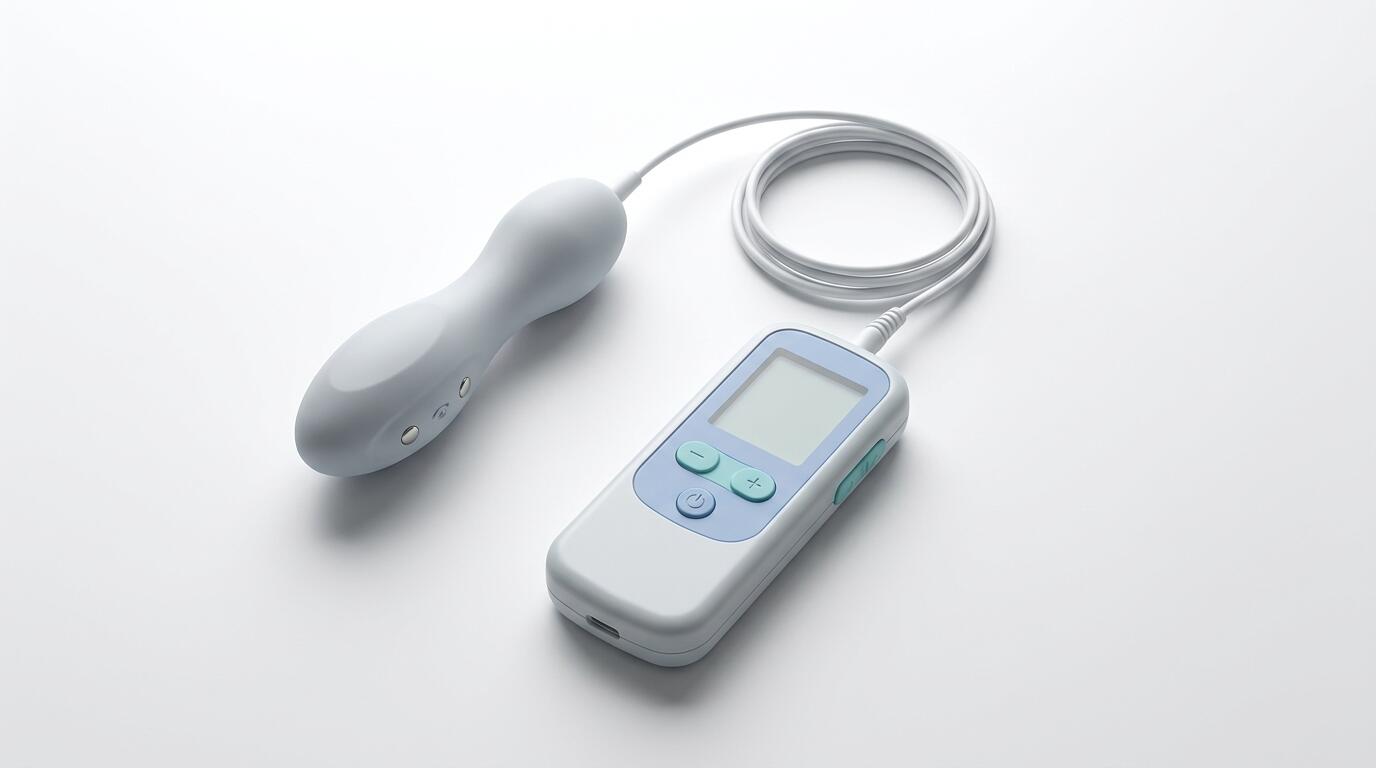
ALT: EMS Kegel trainer device components including probe and controller unit for home-based pelvic floor muscle stimulation and rehabilitation
Advanced Considerations: Getting the Most from EMS Pelvic Floor Therapy
When Results Are Slower Than Expected
It's not uncommon for new users to feel uncertain after their first few weeks of EMS therapy — particularly if they expected rapid symptom resolution. Pelvic floor rehabilitation is gradual by nature. Most clinical protocols require consistent use over multiple weeks before measurable improvements in muscle strength and continence are observed. If you're not seeing results after several weeks of consistent use, consider increasing session intensity gradually (within comfortable limits), adjusting session frequency, or consulting a pelvic floor physical therapist for complementary manual therapy.
Common Misconceptions to Address
"If I can't feel the contractions, it isn't working." This is one of the most persistent myths around EMS therapy. Especially for individuals with significant muscle weakness or reduced pelvic sensitivity, the early sessions may produce subtle or imperceptible sensations — yet muscle recruitment is still occurring. Trust the technology and the process, and increase intensity incrementally to a level where you feel a clear but painless contraction.
"EMS Kegel trainers are only for women after childbirth." While postpartum rehabilitation is one of the most common use cases, these devices are equally relevant for perimenopausal women, older adults of any gender dealing with incontinence, and anyone seeking to improve pelvic floor function for athletic or quality-of-life reasons.
"More sessions and higher intensity mean faster results." Overtraining the pelvic floor — like any muscle group — can lead to fatigue or increased symptoms. Follow the recommended usage guidelines provided by your device manufacturer and healthcare provider, and allow adequate recovery time between sessions.
Relationship to Broader Pelvic Health Protocols
EMS therapy works best as part of a comprehensive pelvic health approach. For many users, this means combining device-based training with dietary modifications (particularly for bladder health), lifestyle adjustments, and possibly physical therapy. Think of the EMS Kegel trainer as your anchor tool — the one that ensures correct muscle activation — while other healthy habits amplify and sustain your progress over time.
Frequently Asked Questions FAQ
Q1: How long does it take to see results from an EMS Kegel trainer?
Results vary depending on the severity of pelvic floor weakness, the consistency of use, and the individual's baseline muscle tone. Many users begin noticing subjective improvements — such as fewer incontinence episodes or improved muscle awareness — within four to six weeks of regular use. More significant functional changes in muscle strength may take longer, typically several months of consistent therapy. Patience and adherence to your program schedule are the most reliable predictors of positive outcomes.
Q2: Is an EMS Kegel trainer safe to use at home without professional supervision?
For most healthy adults without contraindications, home-use EMS pelvic floor devices are considered safe when used according to the manufacturer's instructions. However, if you have an active pelvic infection, undiagnosed pelvic pain, a pacemaker, or are pregnant, you should not use an EMS device without direct medical clearance. Starting at the lowest intensity and gradually increasing based on comfort is a universally recommended approach. Consulting a pelvic floor physical therapist before beginning is always a wise step, even if not strictly required.
Q3: Should I buy an EMS Kegel trainer — and what does it cost compared to clinical therapy?
If you experience urinary incontinence, pelvic organ prolapse symptoms, postpartum weakness, or simply want to strengthen your pelvic floor more effectively than manual Kegels allow, an EMS Kegel trainer is a well-supported investment. Compared to ongoing clinical pelvic floor physical therapy sessions — which can run into hundreds of dollars per month — a quality at-home EMS device offers significant long-term cost savings. Look for ISO-certified, professionally manufactured options from reputable brands to ensure both safety and therapeutic value.
Summary
Understanding what an EMS Kegel trainer is — and whether it's right for you — comes down to three core insights:
First, EMS-based pelvic floor stimulation is clinically supported and addresses a real limitation of manual Kegel exercises: the difficulty of correct muscle activation without guidance. For anyone who has struggled to "feel" their pelvic floor working during traditional exercises, an EMS device offers an evidence-backed path to effective training.
Second, the ideal candidates for this technology are broad — from postpartum women and menopausal adults to fitness-focused individuals and anyone dealing with incontinence or pelvic organ support issues. It's not a niche product; it's a versatile rehabilitation tool with wide applicability.
Third, quality and safety matter enormously when choosing any device used internally for health purposes. Opting for a brand with ISO-certified manufacturing, transparent credentials, and a proven customer base is not optional — it's essential to ensuring safe and effective therapy at home.
The path to a stronger, healthier pelvic floor is more accessible than ever. The right device, used consistently and correctly, can make a meaningful difference in comfort, confidence, and quality of life.
Ready to Take the Next Step?
Ready to take control of your pelvic floor health from the comfort of home? Explore iStim's full lineup of professional-grade EMS and Kegel devices at https://istim.com/ and find the right drug-free solution tailored to your needs. Trusted by over 20,000 customers and built to clinical standards, iStim is here to help you move, feel, and live better — every day.
References
- National Institute of Diabetes and Digestive and Kidney Diseases (NIDDK). "Kegel Exercises".
https://www.niddk.nih.gov/health-information/urologic-diseases/kegel-exercises - National Institutes of Health / National Library of Medicine. "Pelvic Floor Muscle Training versus No Treatment, or Inactive Control Treatments, for Urinary Incontinence in Women".
https://pubmed.ncbi.nlm.nih.gov/20614733/ - American College of Obstetricians and Gynecologists (ACOG). "Pelvic Support Problems".
https://www.acog.org/womens-health/faqs/pelvic-support-problems - National Institutes of Health / National Library of Medicine. "Electrical Stimulation for Urinary Incontinence in Women: A Meta-Analysis of Controlled Randomized Trials".
https://pubmed.ncbi.nlm.nih.gov/12652399/ - MedlinePlus / U.S. National Library of Medicine. "Kegel Exercises — Self-Care".
https://medlineplus.gov/ency/patientinstructions/000141.htm
Note: Standards and clinical guidelines may be updated. Please check the latest official documents or consult a qualified healthcare professional for the most current recommendations.
About iStim
iStim is a Los Angeles-based electrotherapy brand specializing in professional-grade TENS, EMS, and Kegel devices engineered for safe, effective home use — backed by ISO-certified Taiwanese manufacturing and trusted by 20,000+ Amazon customers for drug-free pain relief and muscle stimulation. Learn more at istim.com.
Disclaimer: This article is provided for informational and educational purposes only and does not constitute medical advice. The content is produced in partnership with iStim and reflects general wellness information. Always consult a qualified healthcare professional before beginning any new therapy or treatment program. iStim is not responsible for any actions taken based on the information presented in this article.
Leave a comment