

WeTrac vs Inflatable Neck Collar: Which Is Better for Home Use?
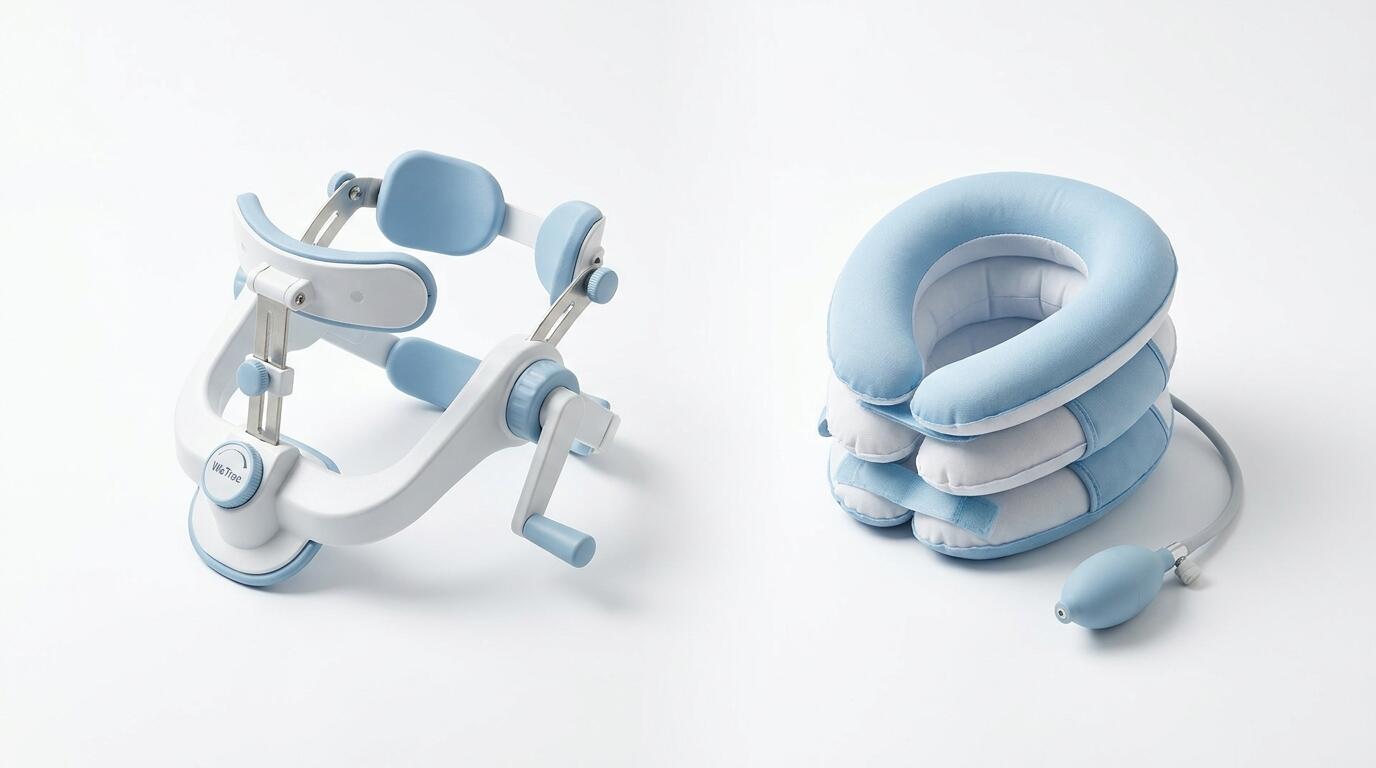
ALT: WeTrac vs inflatable neck collar comparison for home cervical traction and neck pain relief
Which Home Neck Traction Device Actually Works — WeTrac or an Inflatable Neck Collar?
Key Conclusion: When comparing WeTrac vs inflatable neck collar options for home use, the differences go far beyond price and appearance. WeTrac devices offer structured, adjustable traction with measurable force control, while inflatable neck collars provide gentle, passive decompression. Choosing the right one depends on your diagnosis, pain severity, and how consistently you plan to use it. Neither is universally superior — but one is almost certainly better suited to your specific needs.
If you've been dealing with chronic neck pain, cervical disc issues, or the kind of tension that builds from long hours at a desk or screen, you've likely come across both of these solutions. The cervical traction device market has grown significantly as more people seek drug-free, at-home alternatives to frequent clinic visits. Two of the most commonly discussed options — motorized or mechanical neck traction units (often branded or described as "WeTrac-style" devices) and simple inflatable neck collars — represent very different philosophies of care.
Understanding the clinical mechanism, practical usability, and long-term value of each is essential before investing in either. This article breaks down both options thoroughly so you can make an informed, confident choice.
Who Should Read This Comparison?
✅ Applicable Scenarios:
- Adults experiencing chronic neck pain, cervical disc herniation, or nerve compression looking for at-home decompression therapy
- Post-injury or post-surgery patients cleared by a physician for gentle home traction as part of a rehab plan
- Desk workers and remote professionals who experience recurring neck stiffness and tension headaches
- Seniors seeking a low-impact, drug-free approach to managing cervical arthritis or spondylosis discomfort
❌ Not Applicable/Cautions:
- Individuals with acute spinal injuries, fractures, or severe osteoporosis — these conditions require direct medical supervision before any traction is attempted
- Anyone who has not yet received a proper diagnosis for their neck pain — please consult a physician or physical therapist before selecting a device
- People with active infections, tumors, or inflammatory conditions in the cervical spine region
Understanding the Growing Demand for Home Cervical Traction Devices
Neck pain is one of the most common musculoskeletal complaints in the developed world. According to the Global Burden of Disease study, neck pain ranks among the top causes of disability worldwide, affecting people across all age groups and occupational backgrounds. The rise of remote work and screen-heavy lifestyles has made this even more pronounced — physiotherapists and orthopedic specialists consistently report increased patient volumes related to "tech neck" and desk-induced cervical strain.
For many patients, clinical traction therapy — performed in a physiotherapy clinic using specialized equipment — brings notable relief. However, the cost of repeated clinic visits, scheduling challenges, and the desire for daily maintenance between appointments have driven enormous consumer interest in home-use alternatives. This is where devices like mechanical neck traction units and inflatable cervical collars have entered the mainstream.
The challenge? These two product categories are frequently lumped together in online searches and retail listings, yet they work quite differently. A consumer unfamiliar with the distinctions might purchase an inflatable collar expecting the kind of structured traction a clinical-grade device delivers — and end up disappointed, or worse, confused about whether home traction works at all.
If you're trying to navigate this space, we recommend starting with a comprehensive resource on the best cervical traction device for home use, which provides a broader framework for evaluating your options before focusing on specific device comparisons.
The neck traction comparison landscape has evolved considerably in recent years. Early consumer-grade traction devices were largely passive — simple foam rolls, static cervical pillows, or rudimentary over-door pulley systems. Today, home users have access to pneumatic devices, adjustable mechanical units, and even devices that combine traction with heat or vibration. Understanding where WeTrac-style devices and inflatable collars fit within this spectrum is key to making a sound decision.
WeTrac vs Inflatable Neck Collar: A Deep-Dive Comparison
How to Approach Your Selection: A Three-Step Framework
Step 1: Define Your Clinical Need
Before comparing devices, identify what kind of neck condition you're managing. Spend time — ideally during a consultation with your doctor or physical therapist — understanding whether your pain stems from muscle tension, disc compression, facet joint irritation, or nerve impingement. This matters enormously because WeTrac-style traction devices and inflatable collars are optimized for different levels of intervention. A tension-related condition may respond well to the gentle decompression of an inflatable collar, while a herniated disc with radiculopathy may require the more controlled, measured force of a mechanical traction device.
Step 2: Assess Your Comfort with the Device
Consider how you respond to physical therapy devices in general. Some users find that structured, mechanical devices — while more therapeutically precise — feel intimidating at first. Inflatable collars, by contrast, are intuitive and non-threatening. However, ease of use should not be confused with efficacy. Ask yourself: Can I commit to a consistent routine? Will I use the device correctly every session? A device that feels approachable but is used incorrectly will not deliver results — and could cause harm. Take time with manufacturer instructions or a therapist's guidance before your first session.
Step 3: Match the Device to Your Lifestyle and Environment
Think practically about where and how you'll use the device. Inflatable neck collars are compact, lightweight, and can be used almost anywhere — while sitting at a desk, relaxing on the couch, or even during short travel. WeTrac-style devices typically require a flat surface, proper positioning, and a dedicated few minutes of setup. If your schedule is irregular or your living space is limited, portability might tip the scales. If you're committed to a structured daily therapy routine at home, a more clinical-grade device may be the better long-term investment.
Side-by-Side Comparison: WeTrac-Style Device vs Inflatable Neck Collar
Both product categories aim to reduce cervical compression and relieve pain, but they achieve this through different mechanisms and are suitable for different user profiles. Here's a structured comparison to help clarify the differences:
| Comparison Dimension | WeTrac-Style Mechanical Device | Inflatable Neck Collar | Clinical Traction (Reference) |
|---|---|---|---|
| Traction Mechanism | Structured mechanical or motorized traction with adjustable force | Pneumatic inflation providing passive lifting of the jaw and neck | Weighted or motorized pull applied by trained therapist |
| Force Control | Adjustable, often with resistance settings | Limited; depends on inflation volume | Precisely calibrated by clinician |
| Ease of Use | Moderate learning curve; setup required | Very easy; intuitive inflation system | Administered by professional |
| Portability | Moderate — typically designed for home use in a stationary position | High — compact, travel-friendly | Not portable |
| Suitability for Disc Issues | Better suited for moderate disc decompression needs | More appropriate for mild tension relief | Highest precision for all conditions |
| Session Duration | Typically follows clinical protocols (consult provider) | Usually shorter, gentler sessions | Clinician-directed |
| Cost Over Time | Higher upfront cost; low ongoing cost | Low upfront cost; may need replacement | High ongoing cost per session |
| Safety Feedback | Some models include tension indicators | No objective force feedback | Continuous clinician monitoring |
| User Independence | High — once set up correctly | Very high | Not independent |
This table illustrates that neither option is inherently "better" — they exist on a spectrum of intervention intensity. For mild-to-moderate cervical tension, an inflatable collar may be perfectly appropriate. For more persistent or complex cervical conditions, a WeTrac-style device tends to offer greater therapeutic value.
Understanding Each Device in Depth
What WeTrac-Style Devices Actually Do
WeTrac-style cervical traction devices (mechanical or motorized home traction units) work by applying a controlled longitudinal force to the cervical spine. This stretches the space between vertebrae, reduces disc pressure, and allows compressed nerves and joints a degree of decompression. The key advantage of this approach is measurability and adjustability — the user can typically control the amount of traction applied, and some devices include safety mechanisms to prevent over-traction.
These devices are particularly valued by people managing cervical disc herniation, foraminal stenosis, or chronic nerve compression. Physical therapists often recommend them for at-home maintenance between professional sessions. When used correctly and consistently, they can meaningfully reduce radicular symptoms — the shooting pain or numbness that travels from the neck into the arms.
That said, there is a learning curve. Proper positioning is critical. The angle of the neck, the surface the user lies on, and the duration of each session all affect outcomes. Users who rush setup or use the device without guidance may not experience the intended benefit — or may inadvertently strain the muscles supporting the cervical spine. For those considering this category, reading through a resource on how to compare neck traction devices before buying is a valuable preparatory step.
What Inflatable Neck Collars Actually Do
Inflatable neck collars use a pneumatic bladder to gently lift the head away from the shoulders, creating a mild traction effect. They are worn around the neck like a soft collar and inflated using a hand pump until the user feels a gentle stretching sensation. The primary mechanism is passive — the device supports the weight of the head, takes load off the cervical discs and muscles, and encourages gentle elongation.
The appeal of inflatable collars lies in their accessibility. They require no setup, no learning curve, and no prescribed body positioning. Many users wear them while reading, watching television, or working from home. For individuals experiencing muscle-tension-related neck pain, mild cervical compression, or general stiffness, an inflatable collar can provide meaningful temporary relief.
However, inflatable collars have notable limitations. Because the force is generated by inflation volume and is not externally calibrated, there is no objective way to know how much traction is actually being applied. Users with more serious cervical conditions may find that inflatable collars provide insufficient decompression to address their symptoms. There is also a risk of over-inflation — applying too much pressure without the feedback a structured device provides.
For desk workers and sedentary professionals managing tech neck and postural tension, an inflatable collar or a dedicated best neck stretcher for desk workers may offer excellent daily relief without requiring a more intensive traction device. The key is matching the tool to the problem.
Real-World Scenarios: Which Device Fits Which User?
Consider Maria, a 47-year-old marketing professional who spends eight hours daily at a computer. She experiences frequent tension headaches and moderate neck stiffness but has no diagnosed disc pathology. For Maria, an inflatable collar used for 20 minutes during her lunch break may be exactly the right level of intervention — accessible, gentle, and effective for her specific pattern of discomfort.
Now consider David, a 55-year-old former construction worker with a confirmed C5-C6 disc herniation causing intermittent arm numbness. David's physiatrist has recommended home traction as a complement to his conservative treatment plan. For David, a structured WeTrac-style device that allows him to apply a controlled, adjustable traction force is likely to provide meaningfully more therapeutic benefit than an inflatable collar. His condition warrants a more clinical approach.
These scenarios aren't meant to be prescriptive — they illustrate how the decision between these two device types should be guided by the nature of your condition, not simply by cost or convenience. For additional insight on the best neck decompression device for home therapy routines, a dedicated guide can help you think through how to build a consistent and safe home regimen.

ALT: Home user performing cervical traction therapy comparing WeTrac-style device and inflatable neck collar for spinal decompression
Advanced Considerations: What Most Comparisons Miss
The Importance of Consistent, Correct Use
One of the most underappreciated factors in determining which device is "better" is user adherence. A WeTrac-style device that sits unused in a closet because setup feels complicated will never outperform an inflatable collar that's used correctly and consistently every day. The best neck traction device is, ultimately, the one you'll actually use as directed.
Don't Confuse Relief with Recovery
Both WeTrac-style devices and inflatable neck collars can provide meaningful symptomatic relief — reduced pain, decreased muscle tension, and improved range of motion. However, neither replaces a comprehensive treatment approach that may include physical therapy, targeted strengthening exercises, and ergonomic adjustments to your work environment. Think of these devices as tools within a broader wellness strategy, not standalone cures.
A Common Misconception: More Traction Means Better Results
Many first-time users make the mistake of assuming that more force — more inflation, tighter settings, longer sessions — equals faster results. This is not only incorrect but potentially harmful. Cervical traction guidelines consistently emphasize starting with gentle, shorter sessions and gradually progressing based on individual response. Both WeTrac-style devices and inflatable collars should be used with this principle firmly in mind.
Certifications and Quality Indicators
When evaluating any home traction device, look for quality indicators such as ISO-certified manufacturing, regulatory compliance, and a verified track record with real users. These markers aren't just marketing — they reflect genuine commitments to device safety and consistency. Brands that invest in third-party certification and quality control are more likely to deliver devices that perform reliably over time.
Frequently Asked Questions FAQ
Q1: How do I know if WeTrac-style traction or an inflatable neck collar is right for my condition?
The most reliable answer comes from a consultation with your physician or physical therapist. As a general guideline, if your neck pain is associated with muscle tension or postural fatigue with no diagnosed disc pathology, an inflatable collar may suffice. If you have a confirmed diagnosis involving disc herniation, nerve compression, or foraminal stenosis, a structured WeTrac-style device offering controlled traction force is typically more appropriate. Always start conservatively and progress gradually with either device.
Q2: Is WeTrac better than inflatable neck collars for long-term cervical disc relief?
For conditions involving actual disc decompression needs — such as herniated discs or chronic nerve impingement — WeTrac-style mechanical devices generally offer more targeted and adjustable traction than inflatable collars. Inflatable collars provide passive, gentler decompression that is effective for tension and mild compression but may not deliver sufficient force for more complex disc-related issues. Long-term efficacy depends heavily on consistent use, proper positioning, and complementary therapies.
Q3: How long does it typically take to see results with a home cervical traction device?
Response time varies considerably based on the nature and severity of your condition, how consistently you use the device, and whether you're combining traction with other therapeutic strategies. Some users report noticeable improvement in tension-related symptoms within days of consistent use. For structural conditions like disc herniation, meaningful improvement often requires several weeks of regular, correctly applied therapy. Managing expectations and tracking your symptoms over time will help you assess progress objectively.
Summary
Choosing between a WeTrac-style cervical traction device and an inflatable neck collar is not a decision that should be made based on price or popularity alone. Three core principles should guide your choice:
First, match the device to your diagnosis. Inflatable collars are accessible and effective for mild-to-moderate tension and postural discomfort. WeTrac-style devices offer more controlled, clinically relevant traction for moderate-to-complex cervical conditions involving discs and nerves.
Second, prioritize consistency over intensity. The device you use correctly and regularly will always outperform the one you use sporadically or incorrectly. Choose a device you can realistically integrate into your daily routine.
Third, treat home traction as part of a broader plan. Neither device category should be viewed as a complete solution on its own. Combine your chosen device with ergonomic improvements, targeted exercises, and regular check-ins with your healthcare provider for the best long-term outcomes.
Before purchasing, invest time in research. Compare options thoughtfully, understand what each device can and cannot do, and choose based on your actual needs — not marketing claims.
Ready to Explore Drug-Free Pain Relief at Home?
Ready to take control of your pain relief and muscle health — naturally and without drugs? iStim offers a full range of professional-grade TENS, EMS, and Kegel devices designed for safe, effective home use. Visit https://istim.com/ to explore the complete product lineup and find the right electrotherapy solution for your needs.
References
- World Health Organization. "Musculoskeletal Health."
https://www.who.int/news-room/fact-sheets/detail/musculoskeletal-conditions - National Institute of Neurological Disorders and Stroke (NINDS). "Neck Pain Fact Sheet."
https://www.ninds.nih.gov/health-information/patient-caregiver-education/fact-sheets/neck-pain-fact-sheet - American Physical Therapy Association (APTA). "Cervical Traction and Physical Therapy for Neck Pain."
https://www.apta.org/ - GBD 2019 Diseases and Injuries Collaborators. "Global burden of 369 diseases and injuries, 1990–2019." The Lancet, 2020.
https://www.thelancet.com/journals/lancet/article/PIIS0140-6736(20)30925-9/fulltext - Cleveland Clinic. "Cervical Traction: What It Is, Benefits & Risks."
https://my.clevelandclinic.org/health/treatments/23636-cervical-traction
Note: Standards and clinical guidelines may be updated. Please check the latest official documents or consult professional advisors for the most current recommendations.
About iStim
iStim is a Los Angeles-based electrotherapy brand specializing in professional-grade TENS, EMS, and Kegel devices engineered for home use, backed by ISO-certified Taiwanese manufacturing and trusted by 20,000+ customers for drug-free pain relief and muscle stimulation. Learn more at istim.com.
© iStim. All rights reserved. This article is intended for informational purposes only and does not constitute medical advice. Always consult a qualified healthcare professional before beginning any new treatment or therapy program.
Leave a comment