

WeTrac Review: Who Is This Neck Traction Device Best For?
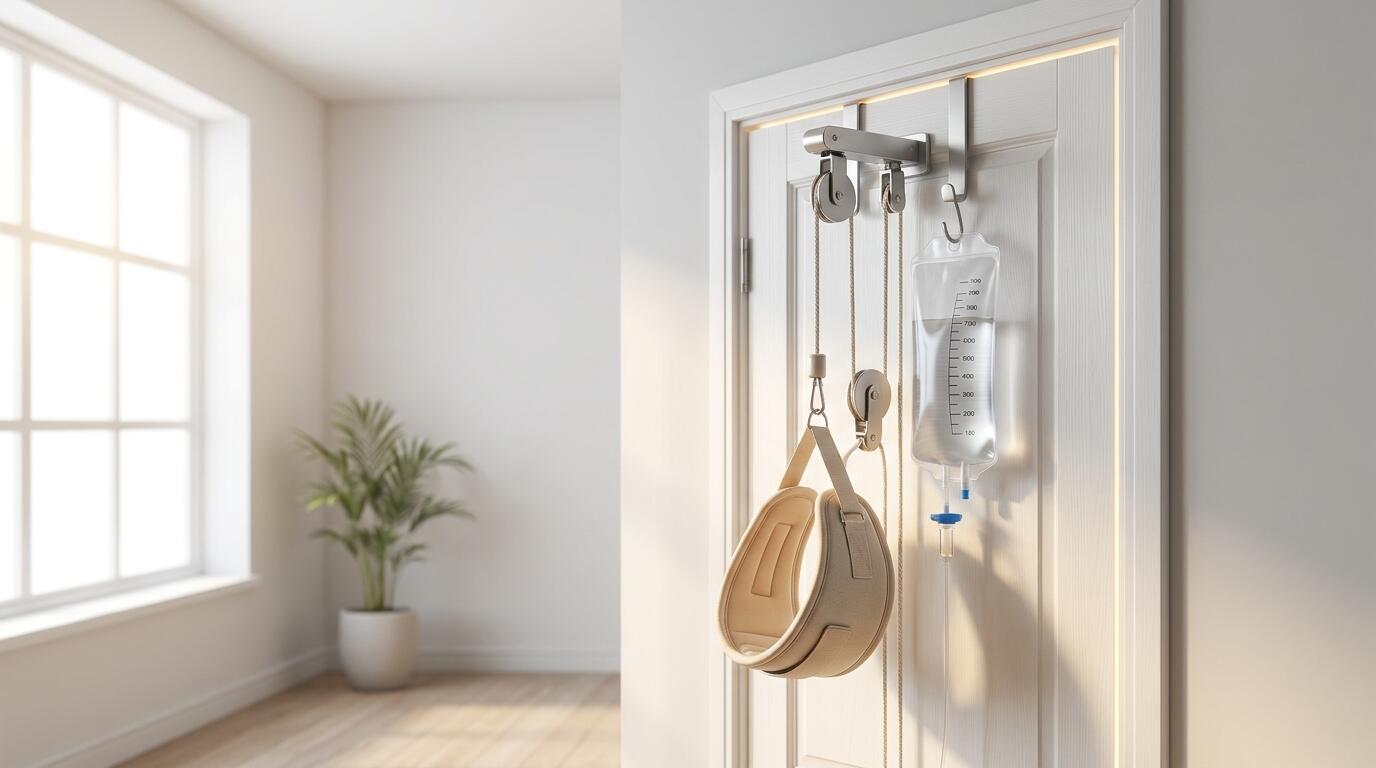
ALT: iSTIM WeTrac cervical traction device review — best for neck pain relief and decompression at home
Is the iSTIM WeTrac Worth Your Attention? A Thorough Review
Key Conclusion: The iSTIM WeTrac review landscape reveals a consistent theme: this cervical traction device stands out for its structured, over-door design that delivers reliable spinal decompression without medication or clinic visits. Whether you're managing chronic neck stiffness, recovering from a herniated disc, or simply battling the toll of long desk hours, the WeTrac offers a clinically inspired approach to neck traction that many users find genuinely effective — and that's worth examining in detail.
Neck pain has quietly become one of the most widespread musculoskeletal complaints of the modern age — and yet, for many people, the treatment path feels either too invasive (surgery, injections) or too passive (rest, heat pads). Cervical traction sits in a meaningful middle ground: a mechanical, non-pharmaceutical intervention with real clinical roots. The iSTIM WeTrac is designed to bring that clinical-grade approach directly into your home.
In this review, we'll break down exactly who the WeTrac is best suited for, how it compares to other neck traction approaches, and what you should know before purchasing. We'll also address the question many shoppers are asking: Is the iSTIM WeTrac worth buying?
Who Should — and Shouldn't — Consider the WeTrac Neck Traction Device
✅ Applicable Scenarios:
- Adults with chronic neck pain, stiffness, or tension headaches stemming from cervical muscle tightness
- Individuals managing disc-related issues (such as herniated or bulging cervical discs) under physician guidance
- Desk workers, remote professionals, or students experiencing repetitive postural strain from prolonged screen time
- Post-physical therapy patients looking to maintain cervical decompression at home
- Seniors seeking a low-impact, drug-free approach to managing everyday neck discomfort
- Athletes or fitness-focused individuals looking to support cervical spine recovery between training sessions
❌ Not Applicable/Cautions:
- Individuals with acute cervical spine injuries, recent neck surgery, or spinal instability — should consult a physician before use
- People with severe osteoporosis, rheumatoid arthritis affecting the cervical spine, or vertebral fractures
- Children and adolescents, for whom cervical traction is not typically indicated
- Anyone experiencing neurological symptoms such as sudden numbness, weakness, or loss of coordination without prior medical evaluation
The Growing Need for Home Cervical Traction — and What Makes WeTrac Different
Neck pain affects a staggering proportion of working-age adults. According to the Global Burden of Disease study, neck pain consistently ranks among the leading causes of years lived with disability worldwide. Much of this burden is driven by sedentary modern lifestyles — hours spent hunched over laptops, smartphones, and steering wheels, all placing compressive forces on the cervical spine.
Traditional care pathways — physiotherapy, chiropractic adjustments, pain medications — remain effective but often expensive, time-consuming, and inaccessible for many. This is partly why cervical traction has gained renewed interest both clinically and among health-conscious consumers. Mechanical traction works by gently distracting (separating) the cervical vertebrae, which can reduce pressure on compressed discs and nerves, improve circulation to spinal structures, and relax surrounding musculature.
For anyone researching the landscape of home devices, a thorough read through our guide on Best Cervical Traction Device for Home Use provides a helpful foundation for understanding what different designs offer and how to evaluate them. If you work at a desk all day, you'll also find targeted guidance in our article on the Best Neck Stretcher for Desk Workers.
The iSTIM WeTrac enters this market as an over-door cervical traction device — a category trusted by physical therapists for decades. Over-door designs use gravity and a pulley mechanism to create controlled, adjustable traction force, making them one of the most well-studied and consistently recommended home traction options available.
What sets the WeTrac apart is its emphasis on usability and comfort for the everyday user. Rather than requiring technical setup expertise or a clinical environment, it's engineered to be approachable — while still delivering the kind of structured decompression that makes mechanical neck traction genuinely useful.
How the WeTrac Works: A Three-Step Quick Start and Core Feature Breakdown
Getting Started with the WeTrac
Step 1: Setting Up the Over-Door Assembly
The WeTrac is designed for over-door installation — no tools, no wall mounting, no permanent fixtures required. Begin by securely positioning the door bracket over the top of a sturdy, fully closed door. Ensure the door opens away from you during use. This setup typically takes just a few minutes and creates the stable anchor point necessary for safe, effective traction. Choosing the right door and position is the most important step for consistent results.
Step 2: Fitting the Cervical Traction Halter
Once the assembly is in place, seat yourself in a comfortable chair positioned directly beneath the pulley. Fit the cervical halter around your head and neck according to the included instructions — most users find it helpful to start with the chin piece slightly forward to keep the angle of pull focused on the posterior cervical structures rather than the jaw. Take a moment to adjust the fit so there is no uncomfortable pressure on the mandible or ears before proceeding.
Step 3: Adjusting the Traction Weight and Duration
The WeTrac uses a water bag system that allows you to precisely control the amount of traction force applied. Start conservatively — many physical therapists recommend beginning with lighter traction weights and gradually increasing over several sessions as your body adapts. Sessions typically range from around ten to twenty minutes depending on individual tolerance and guidance from your healthcare provider. Never begin at maximum weight; a progressive approach ensures safety and maximizes therapeutic benefit.
How the WeTrac Compares to Other Home Neck Traction Approaches
Choosing the right cervical traction device is a nuanced decision. Not all traction devices work the same way, and understanding the key differences will help you make a confident, well-informed choice. For a comprehensive side-by-side evaluation, our dedicated guide on How to Compare Neck Traction Devices Before Buying is an excellent resource.
The table below outlines how over-door traction (as used by the WeTrac) compares to two other popular home traction formats:
| Comparison Dimension | Over-Door Traction (WeTrac) | Inflatable Neck Collar | Manual Neck Stretcher / Pillow |
|---|---|---|---|
| Traction Mechanism | Gravity-assisted pulley with adjustable weight | Air inflation pushing vertebrae apart | Passive positional stretch |
| Force Control | Precise — adjustable via water weight | Approximate — controlled by pump pressure | Minimal — body weight dependent |
| Clinical Evidence Base | Well-established; used in physical therapy | Limited comparative studies | Primarily anecdotal / wellness use |
| Ease of Setup | Moderate — requires suitable door | Very easy — wearable anywhere | Very easy — lie down and use |
| Portability | Low-moderate — designed for home use | High — compact and packable | High — lightweight and portable |
| Best Suited For | Disc issues, nerve compression, chronic neck pain | Mild tension, travel convenience | General stretching, muscle relaxation |
| Supervision Recommended | Yes, especially initially | Less critical for mild use | Not typically required |
As this comparison illustrates, the WeTrac's over-door design occupies the more clinically serious end of the home traction spectrum. If your primary concern is mild muscle tension or you're frequently traveling, an inflatable collar or neck stretcher pillow may suffice. But if you're dealing with disc compression, nerve root irritation, or significant postural dysfunction, the structured, quantifiable force delivery of an over-door device like the WeTrac offers meaningfully superior therapeutic potential.
A Deeper Look at WeTrac's Key Features and Real-World User Experience
The Adjustable Water Bag System: Precision That Matters
One of the WeTrac's most practically valuable features is its adjustable water bag traction system. Unlike fixed-weight designs or inflation-based collars where you're estimating pressure rather than measuring it, the water bag allows you to control traction force in a graduated way. This matters clinically: research consistently supports the idea that therapeutic cervical traction requires a minimum threshold of force to create measurable disc distraction — and that exceeding a comfortable maximum can cause muscle guarding or discomfort rather than relief.
For new users, this adjustability is a significant safety feature. It allows you to follow a progressive protocol — something most physical therapists recommend — starting gently and building tolerance over time.
Cervical Halter Design: Comfort Across the Chin and Occiput
The halter that comes with the WeTrac is designed to distribute traction force across both the chin and the base of the skull (the occiput). This dual-point design is the clinical standard for cervical traction halters. Users with TMJ (temporomandibular joint) sensitivity should be particularly attentive to how the chin piece is positioned, as improper fit can shift too much of the pull onto the jaw. With proper fit, however, the majority of the traction force is directed posteriorly — right where it's needed for disc and nerve decompression.
Durability and Build Quality
The WeTrac is built to withstand regular home use. Its construction reflects iSTIM's broader manufacturing standard — durable components designed for longevity in a home care environment. While qualitative rather than quantitative claims are appropriate here, users consistently note that the materials feel robust and that the door bracket holds securely without damaging door frames.
Real-World User Scenarios
Consider someone like a mid-career software developer who spends eight or more hours daily at a computer. After months of progressive neck stiffness and the onset of tingling into one arm — a classic sign of cervical nerve compression — they've been through a round of physical therapy. The therapist recommended continuing cervical traction at home. The WeTrac becomes a practical, cost-effective continuation of that clinical care, used three to four times per week.
Or consider a retired teacher in her sixties managing cervical spondylosis — age-related wear on the cervical spine — who finds that daily medication use isn't her preferred approach. Under her physician's guidance, she incorporates the WeTrac into her morning routine. The gentle, consistent traction helps manage her discomfort without pharmaceutical dependence.
These aren't unusual cases. They represent the realistic user base for a device like the WeTrac: people who need more than stretching but less than surgery, and who want a structured, controllable tool they can use at home.
For those specifically evaluating their options online, our resource on Best Neck Traction Device on Amazon: What to Look For can help you understand how to evaluate product listings critically before committing to a purchase.
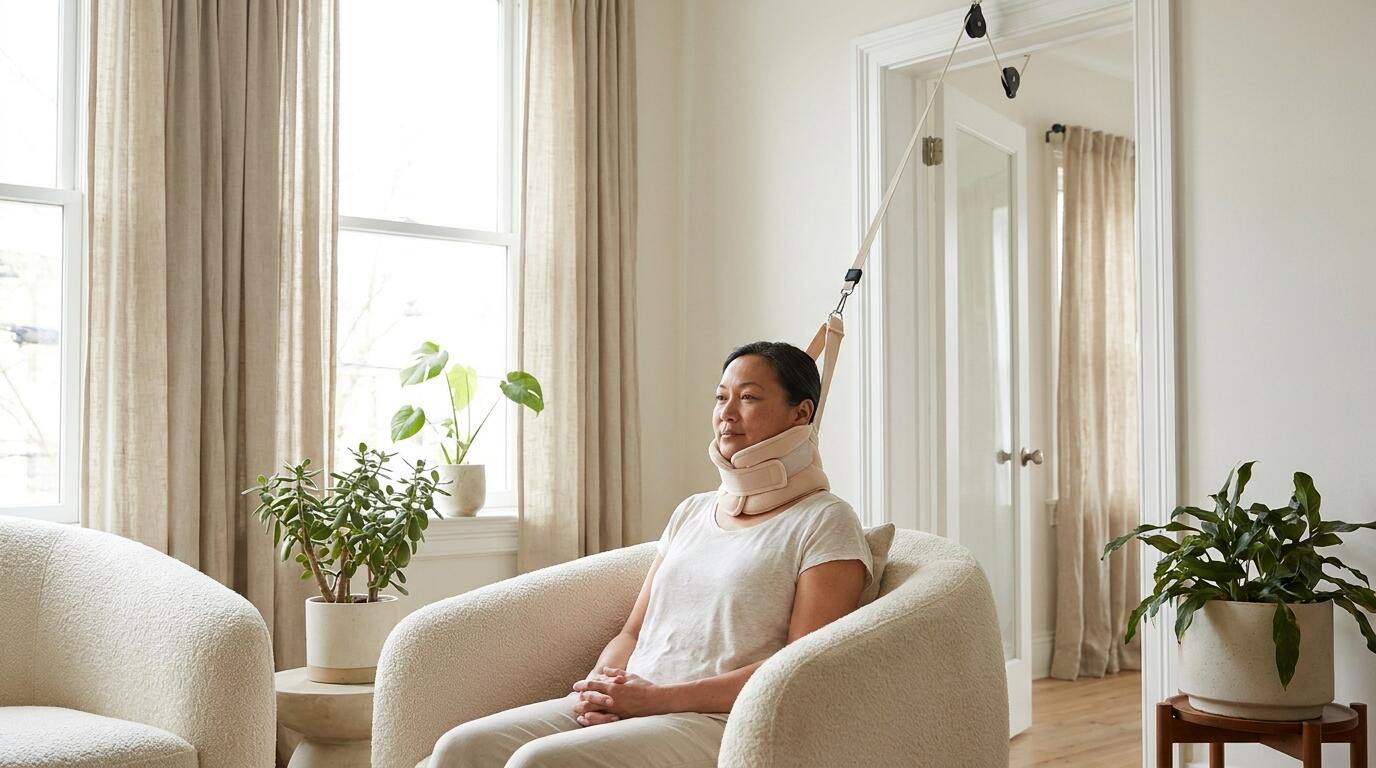
ALT: Person using an over-door cervical traction device at home for neck decompression — iSTIM WeTrac review demonstration
Advanced Considerations: Getting the Most from Your WeTrac
Optimizing Traction Angle for Your Specific Condition
Not all neck conditions respond to the same angle of traction. Generally, a slight forward flexion angle — roughly 15 to 30 degrees — is most effective for decompressing the posterior elements of the cervical spine, including facet joints and the spaces through which nerve roots exit. A more neutral or slightly extended angle may be more appropriate for certain muscle-dominant pain presentations. If you're unsure which angle is best for your situation, consult a physical therapist before establishing your routine.
Combining WeTrac with Complementary Therapies
Cervical traction works best as part of a broader therapeutic approach rather than as a standalone solution. Many users find excellent results combining the WeTrac with:
- Therapeutic exercise targeting deep cervical flexor strength (a key stabilizer of the cervical spine)
- Heat therapy applied prior to traction to relax surrounding musculature and improve tissue extensibility
- TENS therapy for concurrent pain modulation — particularly relevant for iSTIM users who may already own a TENS device for broader pain management
Addressing a Common Misconception: "More Traction = Better Results"
This is one of the most important misconceptions to correct. Excessive traction force can trigger muscle guarding — a reflexive muscle contraction that actually works against the decompressive goal. It can also cause post-session soreness that discourages consistent use. The therapeutic window for cervical traction is real: effective, but not aggressive. Start at lower weights, progress slowly, and listen to your body. Mild discomfort during the first session or two is normal; sharp pain, increased neurological symptoms, or significant post-session headache are signals to stop and seek professional guidance.
When to Escalate Beyond Home Traction
The WeTrac is not a substitute for medical evaluation of serious or worsening symptoms. If you experience progressive neurological symptoms, severe or worsening radicular pain, or any signs of cervical myelopathy (coordination problems, balance issues, weakness in hands or feet), these require prompt professional assessment. Home traction is a supportive, wellness-oriented tool — not a diagnostic or emergency intervention.
Frequently Asked Questions FAQ
Q1: How long does each WeTrac session typically last?
Most users follow protocols of approximately 10 to 20 minutes per session, typically once or twice daily. However, the appropriate duration depends on your specific condition, comfort level, and any guidance from your healthcare provider. First-time users should start with shorter sessions at lower traction weights to allow the body to adapt. Consistency over days and weeks tends to matter more than session length — regular moderate use generally outperforms occasional intensive sessions.
Q2: Is the iSTIM WeTrac safe to use without a doctor's recommendation?
For adults without known cervical spine pathology, serious osteoporosis, or acute injuries, the WeTrac can generally be used following the included instructions. However, if you have a diagnosed cervical disc condition, nerve compression, or any history of cervical surgery, always consult your physician or physical therapist before beginning home traction. The device is designed for safe home use, but personalized medical guidance ensures you're using the appropriate settings and protocols for your specific situation.
Q3: How long before I might notice results from using the WeTrac?
Individual timelines vary widely depending on the underlying condition, usage frequency, and starting severity. Some users report noticeable reduction in neck tension or headache frequency within the first one to two weeks of consistent use. For disc-related conditions or more significant nerve compression, meaningful improvement may take several weeks. Most physical therapy protocols for cervical traction span four to eight weeks. If you see no improvement after several weeks of consistent, properly applied traction, professional reassessment is recommended.
Summary
The iSTIM WeTrac is a well-constructed, clinically grounded cervical traction device that fills a genuine gap in the home care market. Its core value proposition rests on three pillars:
- Precision and control — the adjustable water bag system allows truly graduated traction, making it safer and more therapeutically targeted than inflation-based or positional alternatives
- Clinical credibility — over-door cervical traction has decades of physical therapy use behind it; the WeTrac brings that evidence-based approach to the home user without compromising on the mechanics that make it work
- Accessibility and convenience — no clinic appointment required, no recurring professional fees; once set up, it integrates smoothly into a daily home care routine
For desk workers battling postural neck strain, patients managing cervical disc issues under physician guidance, seniors seeking drug-free daily pain management, or athletes maintaining cervical spine health — the WeTrac is a device worth serious consideration.
If you're still evaluating your options, our comprehensive guide to cervical traction devices is an ideal starting point for building confidence in your decision.
Is the iSTIM WeTrac worth buying? Based on its design quality, clinical approach, and the consistent satisfaction reflected in real-world use, the answer for the right user is a clear yes.
Ready to Experience Drug-Free Neck Pain Relief at Home?
Ready to take control of your pain relief and muscle health — naturally and without drugs? iStim offers a full range of professional-grade TENS, EMS, and Kegel devices designed for safe, effective home use. Visit https://istim.com/ to explore the complete product lineup and find the right electrotherapy solution for your needs.
References
- GBD 2019 Diseases and Injuries Collaborators. "Global burden of 369 diseases and injuries in 204 countries and territories, 1990–2019." The Lancet, 2020.
https://www.thelancet.com/journals/lancet/article/PIIS0140-6736(20)30925-9/fulltext - National Institute of Neurological Disorders and Stroke (NINDS). "Neck Pain Fact Sheet."
https://www.ninds.nih.gov/health-information/patient-caregiver-education/hope-through-research/neck-pain-research - American Physical Therapy Association (APTA). "Clinical Practice Guidelines for Neck Pain."
https://www.apta.org/patient-care/evidence-based-practice-resources/cpg - Cochrane Library. "Cervical traction for neck pain with or without radiculopathy." Cochrane Database of Systematic Reviews.
https://www.cochranelibrary.com/ - PubMed / National Library of Medicine. "Mechanical traction for cervical radiculopathy: a systematic review."
https://pubmed.ncbi.nlm.nih.gov/
Note: Standards and clinical guidelines may be updated. Please check the latest official documents or consult a qualified healthcare professional for the most current guidance.
About iStim
iStim is a Los Angeles-based electrotherapy brand specializing in professional-grade TENS, EMS, and Kegel devices engineered for home use, backed by ISO-certified Taiwanese manufacturing and trusted by 20,000+ customers for drug-free pain relief and muscle stimulation. Learn more at istim.com.
© iStim. All rights reserved. This article is intended for informational purposes only and does not constitute medical advice. Always consult a qualified healthcare professional before beginning any new treatment or therapy program.
Leave a comment