

Using a TENS Unit for Menstrual Pain Relief: A Drug-Free Period Cramp Solution

ALT: Woman using a TENS unit on her lower abdomen for drug-free menstrual cramp and period pain relief
Why TENS Therapy Is Changing How Women Manage Menstrual Pain
Key Conclusion: Using a TENS unit for menstrual pain relief offers a clinically supported, drug-free alternative to NSAIDs and hormonal medications for managing period cramps. By delivering gentle electrical pulses that interrupt pain signals and stimulate the body's natural endorphin release, TENS devices empower women to take control of their menstrual discomfort—anytime, anywhere—without the side effects associated with long-term pharmaceutical use.
For millions of women, menstrual pain is more than an inconvenience—it's a monthly disruption that interferes with work, sleep, and quality of life. Dysmenorrhea, the medical term for painful periods, affects an estimated 45–95% of menstruating women at some point in their lives, yet many still rely exclusively on over-the-counter painkillers or simply endure the discomfort. The good news is that electrotherapy—specifically TENS (Transcutaneous Electrical Nerve Stimulation)—has emerged as a compelling, evidence-based option that is safe, portable, and non-pharmaceutical.
This article walks you through exactly how TENS therapy works for period cramps, who it's right for, how to use it step by step, and how iStim's professional-grade devices make this solution accessible at home.
Who Can Benefit from TENS for Menstrual Cramp Relief
✅ Applicable Scenarios:
- Women with primary dysmenorrhea (cramping without an underlying medical condition) looking for a drug-free pain management option
- Individuals who experience gastrointestinal side effects, such as stomach upset or nausea, from long-term NSAID use
- Health-conscious adults seeking non-hormonal alternatives to birth control pills prescribed for menstrual pain
- Postpartum women managing pelvic discomfort or returning menstrual cycles while breastfeeding (when pharmaceutical options may be limited)
- Active individuals and athletes who want to stay mobile and functional during their cycle without sedating medications
❌ Not Applicable/Cautions:
- Women who are pregnant should not use TENS over the abdomen or pelvic region without explicit medical clearance
- Individuals with implanted electronic devices (pacemakers, insulin pumps, spinal cord stimulators) should avoid TENS therapy without consulting their physician
- Women diagnosed with secondary dysmenorrhea caused by endometriosis, fibroids, or pelvic inflammatory disease should seek medical diagnosis before relying on TENS as a primary treatment
- Do not apply TENS electrodes directly over broken skin, rashes, or areas of reduced sensation
Understanding Period Pain: Why It Hurts and What TENS Does About It
Menstrual cramps occur when the uterus contracts to shed its lining. These contractions are driven by prostaglandins—hormone-like compounds that trigger muscle spasms in the uterine wall. In higher concentrations, prostaglandins cause more intense contractions, reducing blood flow to the uterus and triggering the throbbing, cramping pain that many women know all too well. The pain often radiates to the lower back, thighs, and even the hips.
Most conventional treatments—ibuprofen, naproxen, hormonal contraceptives—work systemically, meaning they affect the entire body to address localized pain. While effective, they carry potential side effects ranging from digestive irritation to cardiovascular risks with long-term use. This is precisely why so many women are searching for targeted, drug-free alternatives.
TENS therapy works through two complementary mechanisms that directly address the experience of menstrual pain. To understand how this works in depth, What Is TENS Therapy and How Does It Relieve Pain Without Drugs? provides an excellent foundational overview worth reading before you begin.
The first mechanism is the Gate Control Theory of Pain. Proposed by Melzack and Wall in 1965, this theory explains that the spinal cord has a neurological "gate" that can be closed to block pain signals from reaching the brain. TENS devices deliver low-frequency electrical pulses through surface electrodes placed on the skin. These pulses stimulate large-diameter sensory nerve fibers (A-beta fibers), which effectively compete with and override the slower pain signals traveling through smaller C-fibers—essentially closing the gate on cramping discomfort.
The second mechanism involves endorphin release. At lower frequencies, TENS stimulation encourages the body's own production of endorphins and enkephalins—natural opioid peptides that act as the body's built-in pain modulators. This explains why many women report not just reduced pain intensity during a TENS session, but a sustained sense of relief that continues for a period of time after the device is turned off.
From a market perspective, the global TENS device market has seen substantial growth, driven in large part by consumers seeking non-pharmaceutical wellness solutions. Women's health applications—including menstrual pain management—represent one of the fastest-growing segments. iStim's commitment to ISO-certified Taiwanese manufacturing and professional-grade performance at consumer-friendly prices places it squarely at the intersection of this health trend and real clinical need.
How to Use a TENS Unit for Menstrual Pain: Step-by-Step
Three-Step Quick Start for Period Cramp Relief
Step 1: Prepare Your Skin and Electrodes
Before applying your TENS unit, clean and dry the skin over your lower abdomen and/or lower back—these are the two primary target zones for menstrual pain. Make sure the skin is free of lotions, oils, or sweat, as these can interfere with electrode adhesion and conductivity. High-quality electrode pads are essential for consistent stimulation; iStim offers professional-grade replacement pads designed to maintain strong skin contact session after session. Allow approximately 2–3 minutes for this preparation step.
Step 2: Place Electrodes and Select Your Settings
For uterine cramping, position one electrode pad on each side of your lower abdomen, roughly level with the pubic hairline and spaced a few inches apart—avoid placing them directly over the midline of the abdomen. For lower back pain radiating from cramps, position the pads symmetrically on either side of the lumbar spine. Connect the lead wires or activate the wireless connection, then start with the lowest intensity setting and a gentle mode (such as a burst or modulated program if available). Gradually increase intensity until you feel a comfortable tingling or buzzing sensation—never to the point of sharp discomfort or muscle contraction. This step typically takes 3–5 minutes.
Step 3: Run Your Session and Monitor Your Response
A typical TENS session for menstrual pain lasts between 20 and 45 minutes. During this time, you can rest, read, work, or continue light activities. If the sensation fades (a phenomenon called accommodation), gently increase the intensity by one step. After your session, remove the pads gently, store them on their protective film, and allow your skin to rest before the next application. Most women can safely use TENS multiple times per day as needed during their cycle. Always follow the guidance provided in your specific device's user manual.
Comparing Pain Relief Options for Menstrual Cramps
There is no single "perfect" approach to menstrual pain relief—the right choice depends on your health profile, lifestyle, and pain severity. The table below compares TENS therapy against the two most common conventional approaches to help you make an informed decision.
| Comparison Dimension | TENS Therapy | NSAIDs (e.g., Ibuprofen) | Hormonal Contraceptives |
|---|---|---|---|
| Mechanism | Electrical nerve stimulation; blocks pain signals and stimulates endorphins | Reduces prostaglandin production systemically | Suppresses ovulation and reduces prostaglandin levels |
| Onset of Relief | Within minutes of application | 30–60 minutes after ingestion | Requires months of use; prevention-focused |
| Side Effects | Minimal; localized skin irritation possible | GI upset, cardiovascular risk with long-term use | Hormonal side effects, mood changes, not suitable for all women |
| Drug-Free | ✅ Yes | ❌ No | ❌ No |
| Suitable for Breastfeeding | Consult provider | Limited | Consult provider |
| Portability | High — compact, wearable devices available | High — OTC pills | N/A — daily pill or device |
| Cost Over Time | One-time device investment + electrode pads | Recurring purchase | Prescription costs + potential side effects management |
| Customizability | High — adjustable intensity, modes, placement | Low | Low |
Electrode Placement Strategies for Maximum Effectiveness
Electrode placement is arguably the most important variable in getting effective pain relief from a TENS unit for menstrual cramps. Understanding the anatomy of your pain helps you position the pads correctly.
Lower Abdominal Placement targets the uterus and ovaries directly. Place one pad on the lower right quadrant of the abdomen and one on the lower left, both at roughly the same horizontal level. The electrical current flows between the two pads, covering the uterine region with stimulation. This placement is most effective for the classic cramping sensation felt in the front of the pelvis.
Lower Back (Sacral) Placement is ideal for women whose menstrual pain radiates prominently into the back or who have pelvic floor tension contributing to their discomfort. Place the pads symmetrically on either side of the sacrum—the flat, triangular bone at the base of the spine. The sacral nerves (S2–S4) play a key role in uterine innervation, making this a highly effective alternative or complementary placement site. For anyone interested in the relationship between pelvic nerve stimulation and women's reproductive health, What Is the Pelvic Floor and Why Does It Matter for Women's Health? offers valuable context.
Dual-Zone Placement (simultaneous front and back) can be used with multi-channel TENS devices. Using both abdominal and sacral placements at the same time provides broader coverage and may deliver more comprehensive relief for severe cramping. iStim's professional-grade devices support multi-channel configurations that make this approach practical for home use.
A practical note on electrode pad quality: the consistency of your stimulation depends heavily on the conductivity and adhesion of your pads. If you notice uneven tingling, "hot spots," or reduced effectiveness, it may be time to replace your electrode pads. For a deeper look at what differentiates electrode pad types, the article on Japanese Gel vs. Standard Gel Electrode Pads: What's the Difference? is an informative resource.
Frequency Settings Matter Too
Most TENS units offer adjustable frequency settings, typically measured in Hertz (Hz). For menstrual pain:
- Higher frequencies (80–120 Hz) activate the gate control mechanism more strongly, producing fast-acting relief that is particularly useful during acute cramping episodes.
- Lower frequencies (2–10 Hz) are associated with greater endorphin release and tend to provide longer-lasting, more diffuse pain relief — making them a good choice for managing ongoing, dull aching discomfort.
Many users find alternating between frequencies during a session—or using a "burst" mode that automatically cycles between frequencies—provides the best of both mechanisms. Refer to your device's manual for specific program options available.
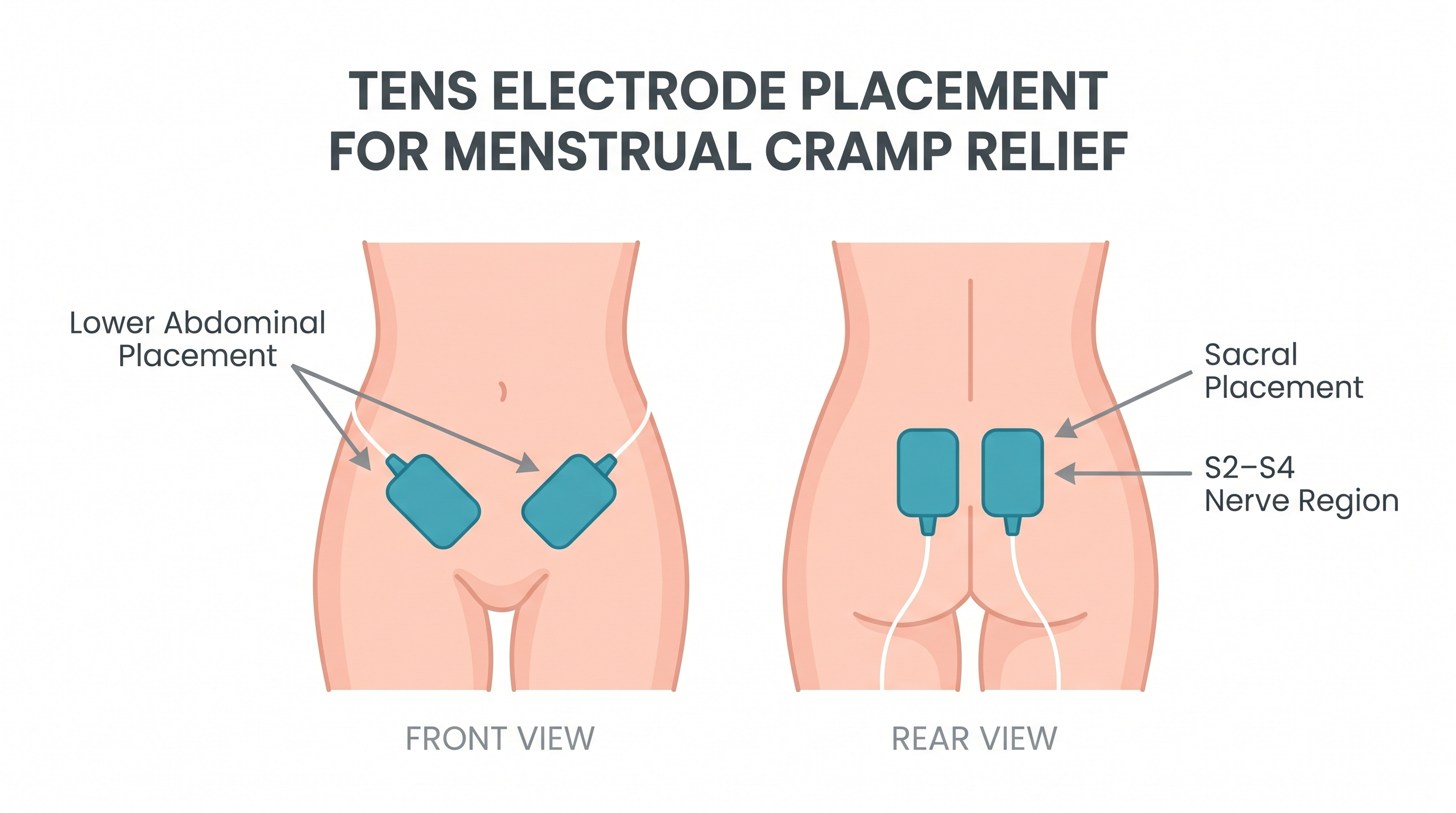
ALT: Diagram showing correct TENS electrode pad placement on lower abdomen and sacral lower back for menstrual cramp pain relief
Advanced Considerations: Getting the Most from Your TENS Therapy
Combining TENS with Complementary Approaches
TENS therapy works best as part of a holistic pain management strategy rather than in isolation. Heat application to the lower abdomen before a TENS session can increase local blood flow and tissue conductivity, enhancing electrode adherence and making the stimulation feel more comfortable. Gentle stretching or yoga poses targeting the hip flexors and lower back can reduce muscular tension that amplifies cramping pain. Magnesium supplementation has also been studied as a complementary approach for reducing prostaglandin-driven contractions—discuss this with your healthcare provider if you experience severe primary dysmenorrhea.
Common Misconceptions About TENS and Menstrual Pain
Misconception 1: "TENS only works for back pain."
This is one of the most persistent myths in the electrotherapy space. TENS has a robust body of clinical research supporting its use for a wide range of pain types, including visceral pain—the type of deep, organ-related pain characteristic of menstrual cramps. The key is appropriate electrode placement and frequency selection.
Misconception 2: "Higher intensity always means more relief."
Effective TENS therapy is not about maximizing intensity—it's about finding the therapeutic sweet spot where you feel a clear, comfortable tingling without pain or involuntary muscle twitching. Starting low and gradually increasing is always the right approach. Excessively high intensity can cause skin irritation and actually trigger discomfort rather than relieving it.
Misconception 3: "TENS and EMS are the same thing."
These are related but distinct modalities. TENS targets sensory nerve fibers to modulate pain signals; EMS (Electrical Muscle Stimulation) targets motor nerve fibers to induce muscle contractions for strengthening or recovery. If you're curious about the differences between these two therapies, the article What Is EMS (Electrical Muscle Stimulation) and How Is It Different from TENS? provides a clear, thorough comparison.
Choosing the Right TENS Device for Menstrual Pain at Home
Not all consumer TENS devices are created equal. When selecting a unit for menstrual pain relief, look for adjustable frequency and intensity controls, multiple program modes (including burst or modulated patterns), and multi-channel capability for simultaneous dual-zone placement. Battery life and portability matter if you plan to use the device during work or daily activities. For a comprehensive guide to evaluating home TENS devices, consult the TENS Unit Buyer's Guide: What to Look for in a Home Electrotherapy Device.
iStim devices are built to professional-grade standards with ISO-certified manufacturing, offering a level of reliability and performance that goes beyond typical consumer electronics—bringing clinic-quality electrotherapy into your home at an accessible price point.
Frequently Asked Questions FAQ
Q1: How do I find the best electrode placement for my specific period cramp pattern?
The most effective electrode placement depends on where your pain is most intense. For front-dominant cramping (lower abdomen, pelvic area), bilateral lower abdominal placement works best. For back-dominant pain or sacral aching, lumbar or sacral placement is more effective. Many women find that trying both locations during their first few sessions—and noting where they feel the most relief—helps them personalize their approach. Start with low intensity, adjust gradually, and give each placement a full 20-minute session before evaluating.
Q2: Is it safe to use a TENS unit every day during my menstrual cycle?
For most healthy women with primary dysmenorrhea, daily TENS use during menstruation is considered safe. Unlike NSAIDs, TENS does not carry systemic risks associated with frequent pharmaceutical use. The primary precautions are skin health—rotate electrode placement slightly between sessions to prevent irritation—and avoiding use if you have a cardiac device, are pregnant, or have been diagnosed with a condition requiring medical supervision. Always read your device's user manual and consult a healthcare professional if you have any underlying health conditions.
Q3: How quickly can I expect TENS to relieve my menstrual cramps, and how long does relief last?
Most users report a noticeable reduction in cramp intensity within 10–20 minutes of beginning a TENS session, particularly at higher frequencies that engage the gate control mechanism. Some women experience continued relief for an extended period after the session ends, particularly with lower-frequency programs that stimulate endorphin release. Relief duration varies by individual, pain severity, and device settings. Many users apply TENS two to three times daily during the heaviest days of their cycle for sustained management throughout the day.
Summary
Managing menstrual pain doesn't have to mean reaching for a pill bottle every month. TENS therapy offers a scientifically grounded, drug-free, and highly practical solution that works with your body's own neurological systems to interrupt pain signals and stimulate natural pain-relieving compounds. Three core takeaways from this article:
- Mechanism matters: Understanding Gate Control Theory and endorphin release helps you use your TENS device more strategically—selecting the right frequency for your type of discomfort and timing sessions appropriately.
- Placement is everything: The difference between moderate and excellent results often comes down to electrode positioning. Lower abdominal and sacral placements target the specific nerve pathways involved in uterine pain, and multi-channel devices allow you to cover both zones simultaneously.
- Consistency and quality: A professional-grade TENS device with reliable electrode pads, adjustable settings, and multiple program modes gives you the tools to genuinely customize your pain management—something no standard over-the-counter pill can offer.
As a next step, consider tracking your pain intensity before, during, and after TENS sessions over two to three menstrual cycles. This simple self-monitoring practice allows you to refine your electrode placement, frequency settings, and session timing for optimal results—and gives you concrete data to share with your healthcare provider if you choose to discuss electrotherapy as part of your broader wellness plan.
Call to Action
Ready to take control of your pain relief and muscle recovery without relying on drugs? Explore iStim's full range of professional-grade TENS, EMS, and Kegel devices at https://istim.com/ and find the right solution tailored to your wellness needs. Backed by ISO-certified manufacturing and trusted by 20,000+ satisfied customers, iStim is your partner in safe, effective, at-home electrotherapy.
References
- American College of Obstetricians and Gynecologists. "Dysmenorrhea: Painful Periods."
https://www.acog.org/womens-health/faqs/dysmenorrhea-painful-periods - National Institutes of Health — National Library of Medicine. "Transcutaneous electrical nerve stimulation (TENS) for primary dysmenorrhoea." Cochrane Database of Systematic Reviews.
https://pubmed.ncbi.nlm.nih.gov/12137625/ - Melzack, R. & Wall, P.D. "Pain Mechanisms: A New Theory." Science, 1965. Referenced via NIH National Library of Medicine.
https://pubmed.ncbi.nlm.nih.gov/5320816/ - U.S. Food and Drug Administration (FDA). "TENS (Transcutaneous Electrical Nerve Stimulators) — Information for Patients."
https://www.fda.gov/medical-devices/home-use-devices/tens-transcutaneous-electrical-nerve-stimulators - Office on Women's Health, U.S. Department of Health and Human Services. "Period Pain."
https://www.womenshealth.gov/menstrual-cycle/period-problems/period-pain
Note: Standards and clinical guidelines may be updated. Please check the latest official documents or consult a qualified healthcare professional for the most current recommendations.
About iStim
iStim is a Los Angeles-based electrotherapy brand specializing in professional-grade TENS, EMS, and Kegel devices designed for safe and effective home use. With ISO-certified manufacturing and a growing community of 20,000+ Amazon customers, iStim is committed to delivering drug-free pain relief and muscle stimulation solutions you can trust.
© iStim. All rights reserved. This article is intended for informational purposes only and does not constitute medical advice. Always consult a qualified healthcare professional before beginning any new therapy or treatment program.
Leave a comment