

The Best Times of Day to Use Your TENS Machine for Maximum Benefit
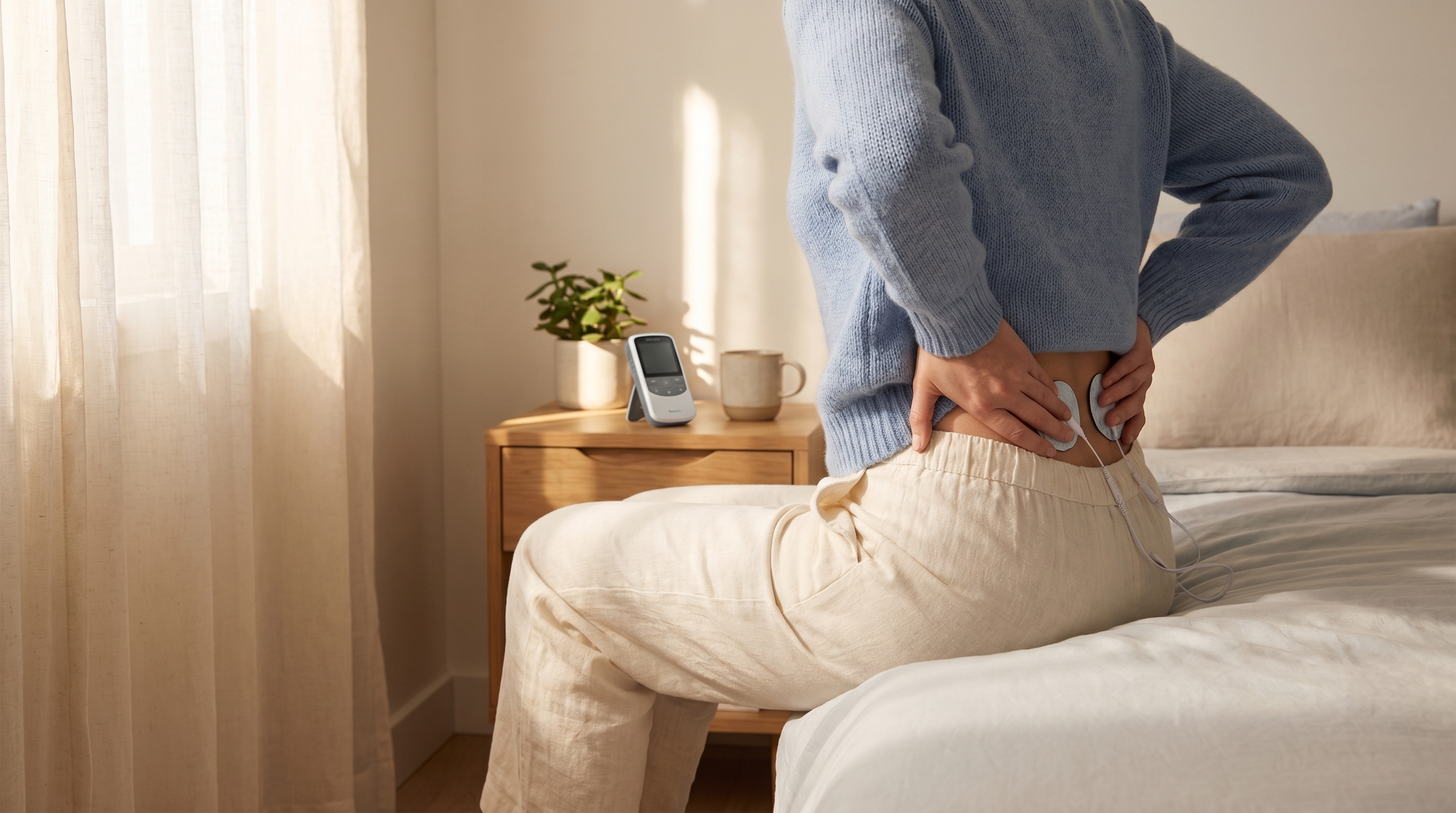
ALT: Person applying TENS electrode pads for drug-free pain relief and muscle stimulation during optimal morning therapy session
Why Timing Your TENS Therapy Can Transform Your Drug-Free Pain Relief Results
Key Conclusion: The timing of your TENS machine sessions plays a surprisingly powerful role in how effective your therapy becomes. Whether you're pursuing drug-free pain relief for chronic back pain, optimizing muscle stimulation for athletic recovery, or integrating pelvic floor health exercises into your daily wellness routine, scheduling your sessions around your body's natural rhythms — from morning stiffness windows to post-workout recovery periods — can meaningfully amplify outcomes. Smart timing turns a good therapy into a great one.
Most people who invest in a TENS device focus on electrode placement, intensity settings, and session duration. These are all important — but there's a frequently overlooked variable that can be the difference between modest relief and transformative results: when you use your device. Your body's physiology changes throughout the day. Pain sensitivity fluctuates. Muscle tone peaks and dips. Hormonal cycles influence inflammatory responses. Understanding these natural rhythms and aligning your TENS therapy schedule with them is one of the most practical, science-informed steps you can take toward better outcomes — without changing a single setting on your device.
In this guide, we'll walk through the best times of day to use your TENS machine based on your specific goals, whether that's managing chronic pain, accelerating muscle recovery, or strengthening your pelvic floor. We'll also address common misconceptions about session frequency and timing, and help you build a personalized daily schedule that works with your body — not against it.
Who This Guide Is For: Applicable Scenarios and Cautions
✅ Applicable Scenarios:
- Individuals managing chronic pain conditions such as arthritis, fibromyalgia, lower back pain, or sciatica who want to time sessions for maximum daily comfort
- Athletes and active individuals using EMS or TENS for pre-workout activation or post-workout muscle recovery and stimulation
- Postpartum women and individuals over 40 seeking to incorporate pelvic floor electrotherapy into a consistent daily wellness routine
- Post-surgery or injury recovery patients working with a physical therapist and wanting to optimize at-home TENS sessions between clinical visits
- Anyone transitioning away from pharmaceutical pain management who needs a structured, evidence-informed approach to daily electrotherapy
❌ Not Applicable/Cautions:
- Individuals with implanted electronic devices such as pacemakers or defibrillators should not use TENS machines without explicit clearance from their cardiologist — timing optimizations do not apply until clearance is obtained
- Pregnant individuals should avoid TENS use over the abdominal or pelvic region without direct medical supervision; consult your OB-GYN before use
- Do not use TENS therapy immediately before driving, operating heavy machinery, or any activity requiring full neuromuscular coordination, as residual muscle relaxation effects may temporarily affect response time
Understanding Why Your Body Responds Differently to TENS at Different Times
The human body is not a static system. It operates on a sophisticated internal clock — the circadian rhythm — that governs everything from cortisol release and body temperature to inflammatory cytokine activity and pain perception. Research in chronobiology has established that the body's sensitivity to pain, its muscle repair processes, and its hormonal environment all shift significantly across a 24-hour period.
For TENS therapy, these shifts matter. The science behind endorphin release during TENS therapy reveals that the analgesic response is partly mediated by the body's own opioid system — and the efficiency of that system is influenced by sleep quality, stress hormones, and the time of day. Cortisol, which naturally peaks in the early morning hours, has anti-inflammatory properties. Scheduling a TENS session to complement — rather than contradict — that peak can enhance outcomes for inflammatory pain conditions.
Similarly, if you're using EMS for muscle stimulation, timing your sessions around exercise bouts — either as a warm-up activator or a recovery accelerator — determines whether you're building strength, reducing delayed onset muscle soreness (DOMS), or simply maintaining tone. Professional sports teams have long understood this distinction, and that knowledge is now accessible to everyday athletes as well. For a deeper look, EMS for athletes: how professional sports teams use electrical muscle stimulation explores exactly how elite-level protocols translate to home use.
There is also growing awareness around pelvic floor electrotherapy. Women dealing with postpartum recovery, incontinence, or age-related pelvic floor weakening have found that consistency and timing within their daily routine — not just the device they use — significantly affects progression. Understanding when your pelvic floor muscles are most relaxed and responsive makes a meaningful difference in how quickly you see and feel results.
The bottom line: your TENS machine is a powerful tool, but like all tools, it performs best when used with precision. And timing is one of the most accessible and effective precision levers available to you.
The Best Times to Use Your TENS Machine: A Time-of-Day Breakdown
Three-Step Quick Start: Building Your Daily TENS Schedule
Step 1: Identify Your Primary Therapy Goal
Before assigning times to your sessions, clarify what you're treating. Are you managing morning stiffness from arthritis or back pain? Are you an athlete optimizing muscle stimulation and recovery around workouts? Or are you focusing on pelvic floor rehabilitation? Each goal maps to a different ideal window in your day. Take five minutes to write down your top one or two objectives — this single step will determine your entire timing strategy and prevent the common mistake of using your device randomly without a consistent protocol.
Step 2: Map Your Sessions to Your Body's Peak Windows
Once you know your goal, align your sessions with the physiological windows described in this guide. For chronic pain management, early morning and early evening sessions are often most effective. For athletic recovery, post-workout sessions within a one-to-two-hour window are optimal. For pelvic floor work, a quiet midday or evening session when you're relaxed and not rushed tends to yield better engagement and awareness of muscle contractions. Block these times in your calendar the same way you would a medication reminder or physical therapy appointment.
Step 3: Track Your Response and Adjust Gradually
Consistency over two to three weeks is the minimum needed to observe meaningful trends. Keep a simple pain or recovery journal — note the time of your session, your intensity setting, the duration, and how you felt before and after. This data helps you fine-tune your timing, identify patterns (for example, "morning sessions reduce my afternoon pain peak more than evening sessions"), and have more productive conversations with your healthcare provider. Don't change multiple variables at once; adjust one element — timing, duration, or intensity — at a time.
Time-of-Day Comparison: Which Window Works Best for Your Goal
Different therapy goals respond to different daily timing windows. The table below offers a practical overview to help you match your TENS or EMS session to the most physiologically advantageous time of day.
| Therapy Goal | Morning (6–9 AM) | Midday (11 AM–1 PM) | Evening (6–9 PM) |
|---|---|---|---|
| Chronic pain management | ✅ Excellent — addresses stiffness and sets tone for the day | ⚠️ Moderate — useful for flare management | ✅ Excellent — reduces pain before sleep |
| Post-workout muscle recovery | ⚠️ Useful for pre-activation | ✅ Good if midday training | ✅ Best for post-training DOMS reduction |
| Pelvic floor rehabilitation | ⚠️ Possible but often rushed | ✅ Good — relaxed body state | ✅ Best — calm environment, focused engagement |
| Stress-related muscle tension | ⚠️ Moderate — cortisol is already high | ✅ Good — midday reset | ✅ Excellent — promotes relaxation before rest |
| Post-surgical recovery (supervised) | Consult provider | Consult provider | Consult provider |
The Morning Window: Addressing Stiffness and Setting the Day's Pain Baseline
For the tens of millions of people who wake up with joint stiffness, muscle tension, or chronic pain flares, the morning window is often the single most impactful time to use a TENS machine. Here's why: during sleep, your body enters a low-mobility state. Joints receive less synovial fluid circulation. Muscles that were held in fixed positions can tighten. Inflammatory cytokines, which follow circadian patterns, can peak in the early morning hours — which is precisely why conditions like rheumatoid arthritis are notoriously worse upon waking.
A morning TENS session of moderate duration, applied to the primary pain site before or gently alongside gentle movement, serves two functions. First, it activates the gate control mechanism — the principle that electrical nerve stimulation can interrupt pain signal transmission to the brain, as explored in detail in how TENS units stimulate nerve fibers to block pain signals to the brain. Second, it primes your nervous system for more comfortable movement throughout the rest of the day, reducing the likelihood of a mid-morning pain spike.
Practical tip: keep your TENS device and electrode pads on your nightstand or in the bathroom so they're part of your morning routine — as automatic as brushing your teeth. A consistent morning session helps establish the neural conditioning that makes TENS increasingly effective over time.
The Post-Workout Window: Maximizing Muscle Stimulation and Recovery
For athletes, weekend warriors, and anyone engaged in physical rehabilitation, the post-workout window — typically within 30 to 90 minutes after exercise — is where EMS and TENS can deliver their most dramatic muscle stimulation and recovery benefits.
During and after intense physical activity, micro-tears in muscle fibers trigger an inflammatory repair cascade. Lactic acid accumulates. Nerve endings become sensitized. EMS applied during this window helps drive nutrient-rich blood into fatigued tissue, supports more complete muscle contractions, and accelerates the clearance of metabolic waste products. This is why elite athletes and professional sports medical teams incorporate electrical muscle stimulation so strategically — it's not just about feeling better faster; it's about training harder in the next session.
If your device offers both TENS and EMS modes, understanding how to switch between them strategically is essential. TENS + EMS combo machines explained: when to use each mode provides a practical breakdown of which mode to use and when — including how to layer them within a single post-workout recovery protocol.
Practical tip: avoid applying TENS or EMS to acutely injured or swollen tissue in the first 24–48 hours post-injury without professional guidance. The post-workout window is ideal for normal muscle fatigue — not acute trauma.
The Midday Window: Managing Flare-Ups and Reducing Stress Tension
The midday window often gets overlooked, but for individuals with variable pain patterns or high-stress occupations, a brief midday TENS session can function as a powerful physiological reset. As cortisol begins to taper from its morning peak and the demands of work or caregiving accumulate, muscle tension — particularly in the neck, shoulders, and lower back — can build significantly.
A 20-minute TENS session applied to tension-prone areas during a lunch break or midday pause interrupts this tension cycle before it compounds into an afternoon pain flare. For those managing fibromyalgia or chronic widespread pain, midday sessions can help maintain a more stable pain baseline rather than experiencing the typical late-afternoon worsening.
This window is also well-suited for pelvic floor electrotherapy, particularly for people new to Kegel devices. When you're not rushed and your body is relatively relaxed, you have greater capacity to focus on the subtle muscle contractions that make pelvic floor training effective. If you're exploring how to use a pelvic floor stimulator correctly for best results, the quality of your body awareness during a session matters as much as the device settings. Learning to feel and isolate pelvic floor engagement is easier when you're calm and unrushed.
The Evening Window: Pre-Sleep Pain Relief and Pelvic Floor Training
The evening window — roughly one to two hours before bed — may be the most versatile and widely beneficial time to use your TENS machine, regardless of your primary goal.
For chronic pain sufferers, an evening session reduces the pain intensity that might otherwise disrupt sleep onset or cause nocturnal waking. This matters enormously: poor sleep quality is not just a consequence of chronic pain — it actively worsens pain sensitivity the following day, creating a damaging cycle. Breaking that cycle with a targeted evening TENS session can improve both sleep quality and next-day pain tolerance. For those who are exploring alternatives to sleep medications or pain pills, this is one of the most compelling arguments for drug-free pain relief through electrotherapy. For a broader look at how TENS compares to pharmaceutical options, see TENS vs. prescription pain medication: a non-invasive alternative explained.
For women focused on pelvic floor health, the evening is often the ideal training window. Pelvic floor muscles respond better to stimulation when the surrounding muscles are relaxed and not competing for neural attention. An evening Kegel electrotherapy session — particularly one using a properly calibrated device — allows for deeper, more effective muscle contractions with less compensatory tension in the glutes or inner thighs. Women who are postpartum or managing stress urinary incontinence will often find that recommended pelvic floor devices for postpartum healing deliver the most noticeable results when used as part of a calm evening routine rather than squeezed into a hurried morning.
Practical tip: avoid high-intensity stimulation settings immediately before bed, as this can occasionally feel stimulating rather than relaxing. Use moderate, comfortable settings in the evening and save higher intensities for daytime sessions.
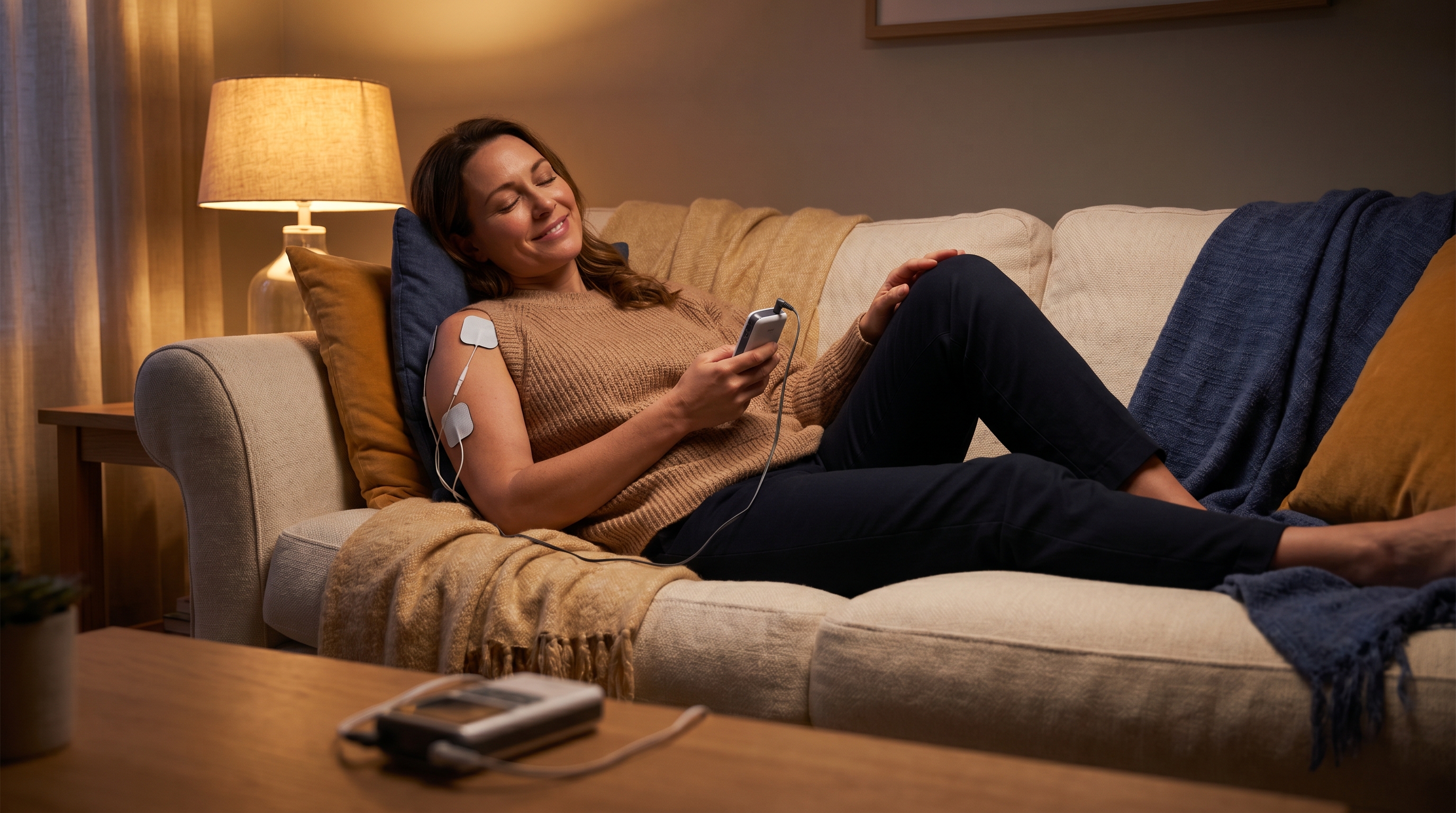
ALT: Woman using professional-grade TENS machine in relaxed evening setting for drug-free pain relief and pelvic floor health before sleep
Advanced Considerations: Special Circumstances, Timing Myths, and Protocol Consistency
Special Situation Handling
Shift Workers and Non-Traditional Schedules: If your sleep-wake cycle doesn't follow a conventional pattern, anchor your TENS timing not to the clock but to your body's functional states. "Morning" for a night-shift worker means their first hours of wakefulness — apply the same logic regardless of what the clock reads.
Managing Pain Flares vs. Maintenance Sessions: During a flare — a sudden intensification of chronic pain — it may be appropriate to use your TENS device outside your normal schedule for targeted short-duration relief. Maintenance sessions follow your regular timing plan; flare sessions are responsive and situational. Having both strategies in your toolkit prevents over-reliance on a single rigid schedule.
Post-Surgical Recovery Timelines: If you're recovering from surgery, timing recommendations may shift significantly based on healing stage. Always follow your surgical team's guidance on when to introduce electrotherapy. Many physical therapists will incorporate TENS into a structured rehabilitation protocol, and your at-home sessions should align with — not conflict with — that clinical plan.
Common Misconceptions About TENS Timing
Myth: More sessions per day always means better results. In reality, there is a saturation point beyond which additional sessions provide diminishing returns and may even cause temporary skin irritation from electrode adhesive. Quality and consistency of well-timed sessions outperform high-frequency random use.
Myth: It doesn't matter when you use TENS as long as you use it regularly. Regularity is necessary but not sufficient. The physiological context in which you deliver stimulation — inflammatory state, muscle readiness, hormonal environment — meaningfully influences outcomes, as the chronobiology research consistently demonstrates.
Myth: Evening TENS will keep you awake. At appropriate settings, evening TENS is relaxing rather than stimulating. Many users report improved sleep onset following evening sessions for chronic pain, a finding consistent with the endorphin and pain-gate mechanisms at work.
Frequently Asked Questions FAQ
Q1: How do I know if I'm using my TENS machine at the right time of day for my condition?
The clearest signal is tracking your subjective pain levels and functional outcomes over two to three weeks of consistent, timed sessions. If morning stiffness is your primary issue, morning sessions should produce measurable reduction in that stiffness within 10–15 minutes of use. For sleep-disrupting pain, evening sessions should correlate with improved sleep quality within one to two weeks. If you're not seeing progress, consult your physical therapist — the issue may be timing, electrode placement, or intensity settings.
Q2: Is it safe to use a TENS machine every day, and does the time of day affect safety?
For most healthy adults without contraindicated conditions, daily TENS use is generally considered safe when following manufacturer guidelines and appropriate session durations. The time of day does not inherently affect safety, but it does affect appropriateness — for example, using a TENS machine while driving is unsafe regardless of time, and high-intensity sessions immediately before sleep may interfere with relaxation. Always review the safety guidelines specific to your iStim device, and consult a healthcare provider if you have underlying medical conditions.
Q3: How long should each TENS session last, and how does that interact with timing?
Session duration guidelines vary by device mode and individual condition, but most TENS protocols for pain management range from 20 to 45 minutes per session. Evening sessions for pre-sleep relief are often most effective on the shorter end of that range at moderate intensity. Morning sessions for stiffness can be slightly longer as the goal is to bring the body through a fuller pain-gate activation cycle. Your iStim device's user manual will provide specific guidance, and creating a weekly pain relief and muscle training schedule using a TENS/EMS combo offers a practical framework for structuring session lengths across your week.
Summary
Timing your TENS machine sessions is not a minor detail — it is one of the most actionable, cost-free upgrades you can make to your electrotherapy practice today. Three key points bear repeating:
First, your body's pain sensitivity, inflammatory state, and muscle readiness fluctuate meaningfully across the day. Working with those rhythms — rather than ignoring them — amplifies the effectiveness of every session you complete.
Second, different goals demand different timing windows. Morning sessions are typically best for addressing stiffness and setting a lower pain baseline. Post-workout sessions maximize muscle stimulation and recovery. Evening sessions deliver pre-sleep pain relief and create the ideal environment for focused pelvic floor rehabilitation. Midday sessions provide a valuable mid-day reset for stress-driven muscle tension and flare management.
Third, consistency within your chosen timing windows builds a more durable therapeutic response over time. The nervous system and musculoskeletal system both adapt to repeated, patterned stimulation. A haphazard schedule undermines that adaptation. A structured, timed schedule accelerates it.
Your next step is simple: identify your primary therapy goal, choose one or two timing windows from this guide, and commit to a consistent schedule for the next three weeks. Track your results, adjust as needed, and work with your healthcare provider to refine your protocol. Professional-grade results are within reach — at home, on your schedule, without pharmaceuticals.
Ready to take control of your pain relief and muscle recovery — naturally and drug-free? Explore iStim's full range of professional-grade TENS, EMS, and Kegel devices at https://istim.com/ and find the right solution tailored to your wellness needs. Join over 20,000 satisfied customers who have made iStim their trusted partner in at-home electrotherapy.
References
- National Institutes of Health — National Center for Complementary and Integrative Health. "Chronic Pain: In Depth".
https://www.nccih.nih.gov/health/chronic-pain-in-depth - American Physical Therapy Association. "Physical Therapists' Role in Pain Management".
https://www.apta.org/patient-care/interventions/pain-management - National Institute of Neurological Disorders and Stroke (NINDS). "Pain: Hope Through Research".
https://www.ninds.nih.gov/health-information/patient-caregiver-education/hope-through-research/pain-hope-through-research - Medline Plus / U.S. National Library of Medicine. "TENS — Transcutaneous Electrical Nerve Stimulation".
https://medlineplus.gov/ency/article/007473.htm - Office on Women's Health, U.S. Department of Health & Human Services. "Pelvic floor disorders".
https://www.womenshealth.gov/a-z-topics/pelvic-floor-disorders
Note: Standards and clinical guidelines may be updated. Please check the latest official documents or consult a qualified healthcare professional for the most current recommendations.
About iStim
iStim is a Los Angeles-based electrotherapy brand specializing in professional-grade TENS, EMS, and Kegel devices engineered for safe, effective home use — backed by ISO-certified Taiwanese manufacturing and trusted by 20,000+ Amazon customers for drug-free pain relief and muscle stimulation. Learn more at istim.com.
© iStim. All rights reserved. This article is intended for informational purposes only and does not constitute medical advice. Always consult a qualified healthcare professional before beginning any electrotherapy or treatment program.
Leave a comment