

TENS vs EMS: Which Device Should You Choose?
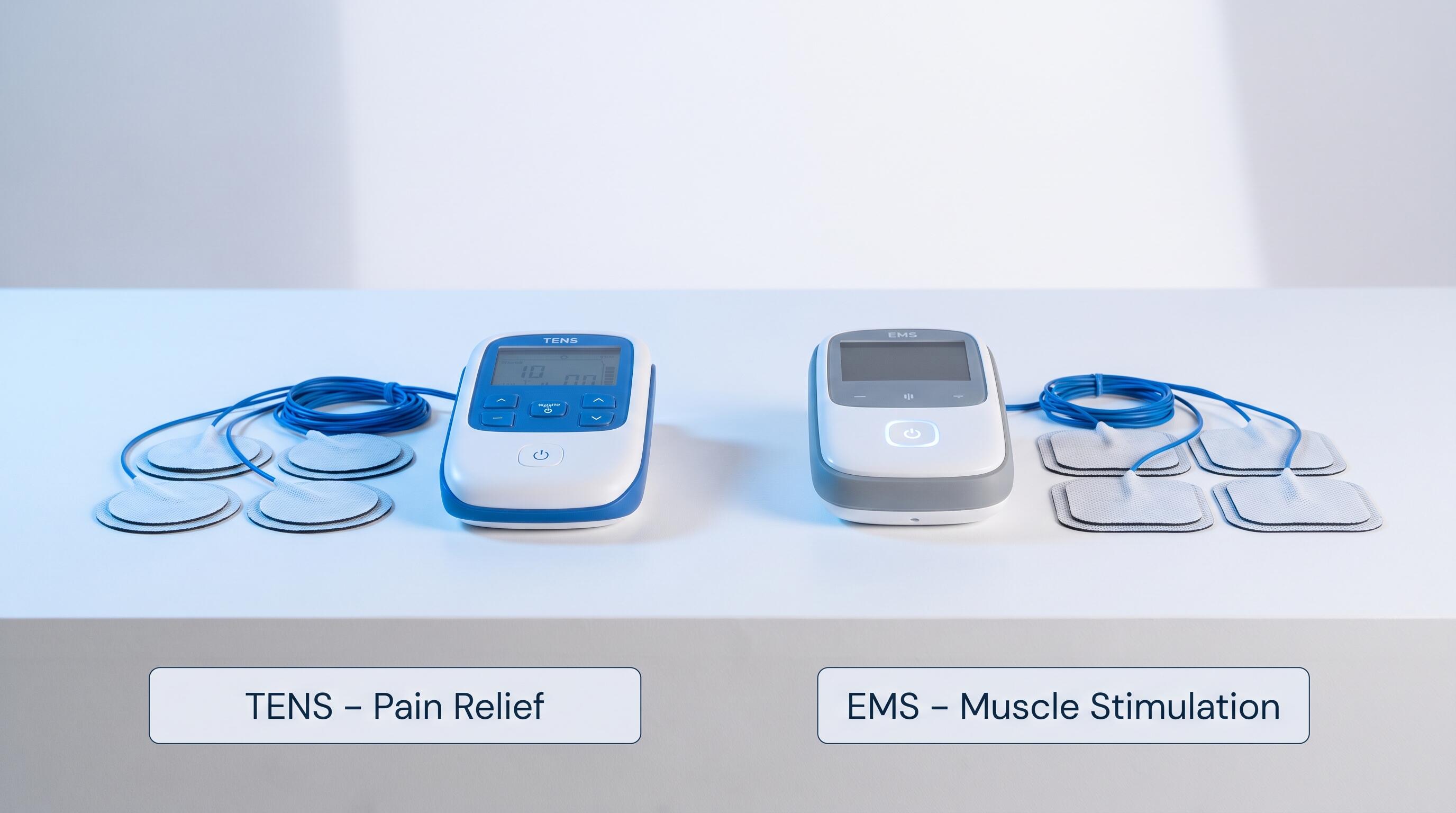
ALT: Side-by-side comparison of TENS and EMS electrotherapy devices for drug-free pain relief and muscle stimulation at home
TENS vs EMS: Understanding the Difference Before You Buy
Key Conclusion: When comparing TENS vs EMS, the right choice depends entirely on your goal. TENS (Transcutaneous Electrical Nerve Stimulation) is designed primarily for drug-free pain relief by interrupting pain signals, while EMS (Electrical Muscle Stimulation) targets muscle contraction for rehabilitation and strengthening. Both technologies use gentle electrical currents, but they serve distinct therapeutic purposes — and choosing the wrong one could mean missing out on the results you're looking for.
If you've been searching for a non-pharmaceutical solution to chronic pain, post-injury recovery, or muscle rehabilitation, you've likely come across two acronyms that appear almost everywhere in the wellness and physical therapy world: TENS and EMS. At first glance, they seem nearly identical — both are small, portable devices that deliver electrical pulses through electrode pads placed on the skin. But the similarities largely end there.
Understanding the core difference between these two technologies isn't just a matter of technicality. It's the foundation of making a smart, informed decision about your health. This article will walk you through exactly what each device does, who it's best suited for, and how to confidently answer the question so many people ask: Should I buy a TENS or EMS device?
Who Should Read This Guide
✅ Applicable Scenarios:
- Individuals dealing with chronic pain conditions such as lower back pain, arthritis, or sciatica who are seeking drug-free pain management alternatives
- People recovering from sports injuries, surgery, or musculoskeletal conditions who need targeted muscle stimulation for rehabilitation
- Fitness enthusiasts and athletes looking to enhance recovery, reduce soreness, or supplement strength training with EMS therapy
- Postpartum women and aging adults exploring pelvic floor rehabilitation or general neuromuscular wellness
- Caregivers or first-time buyers researching electrotherapy devices for a family member
❌ Not Applicable/Cautions:
- Individuals with implanted electronic devices such as pacemakers or defibrillators should not use TENS or EMS without explicit medical clearance
- People with active cancer, deep vein thrombosis, or open skin wounds in the electrode placement area should avoid self-administered electrotherapy without professional guidance
Why So Many People Are Confused About Electrotherapy Devices
The electrotherapy market has exploded in recent years. What was once exclusively available in physiotherapy clinics and hospital rehabilitation centers has now become accessible to everyday users at home. Portable TENS units and EMS devices are among the fastest-growing categories in the consumer wellness space — and for good reason. As more people seek alternatives to pain medications and expensive clinic visits, these devices offer a compelling, evidence-supported option.
Yet with this growth comes confusion. Device manufacturers don't always make the distinctions clear, and many consumers end up purchasing a device based on price or packaging rather than purpose. Some products even combine TENS and EMS functionality in a single unit, which adds versatility but can make it harder to understand which mode to use and when.
The stakes matter here. If you're dealing with a painful herniated disc and you accidentally focus exclusively on EMS muscle contraction when you need nerve-based pain relief, you may not experience the comfort you were hoping for. Conversely, someone trying to rehabilitate a weakened muscle after surgery won't get the active muscle engagement they need from a TENS-only device focused on pain signal interruption.
Understanding this distinction is especially critical now that brands like iStim are bringing professional-grade electrotherapy into the home, making it easier than ever for everyday users to access clinic-quality therapy — as long as they're using the right tool for the right purpose.
Choosing the Right Device: A Practical Framework
Getting Started with Electrotherapy in Three Steps
Step 1: Identify Your Primary Goal
Before you purchase any electrotherapy device, take five minutes to clearly define what you're trying to achieve. Are you living with persistent pain — such as lower back discomfort, nerve-related pain, or joint stiffness — and looking for relief? Or is your primary concern muscle performance: rebuilding strength after an injury, reducing delayed onset muscle soreness after exercise, or improving neuromuscular coordination? Write down your goal in one sentence. This single step will immediately point you toward either TENS or EMS with much greater clarity.
Step 2: Map Your Goal to the Right Technology
Once you know your objective, match it to the appropriate device type. TENS works by delivering low-frequency electrical pulses that stimulate sensory nerves, triggering the body's natural pain-gating mechanism and promoting the release of endorphins — the body's own pain-relieving chemicals. EMS, on the other hand, targets motor nerves to produce actual muscle contractions, mimicking the signals your brain sends during voluntary movement. This distinction is fundamental: TENS talks to your nervous system for pain relief, EMS talks to your muscles for strength and recovery.
Step 3: Choose a Device That Fits Your Lifestyle and Comfort Level
Consider practical factors: Do you need portability for use at work or while traveling? Are you comfortable adjusting settings yourself, or do you prefer a simple preset interface? Do you anticipate needing both pain relief and muscle rehabilitation at different stages of your recovery? iStim offers a range of devices designed for intuitive home use, with professional-grade quality backed by ISO-certified manufacturing — making it a reliable starting point whether you're a first-time user or upgrading from a basic unit.
TENS vs EMS: A Direct Comparison
Understanding the technical distinctions between these two technologies helps clarify why they serve such different purposes, even though they look similar on the surface.
The following comparison breaks down the key differences across dimensions most relevant to home users:
| Comparison Dimension | TENS | EMS | Combined TENS + EMS |
|---|---|---|---|
| Primary Purpose | Drug-free pain relief | Muscle stimulation and rehabilitation | Both pain relief and muscle training |
| Mechanism of Action | Stimulates sensory nerves; blocks pain signals via gate control theory; triggers endorphin release | Stimulates motor nerves; induces muscle contractions for strength, recovery, and tone | Switchable modes for nerve and muscle targeting |
| Best For | Chronic pain, acute pain flare-ups, arthritis, sciatica, post-surgical pain management | Post-injury muscle rehab, athletic recovery, muscle strengthening, neuromuscular re-education | Users needing both pain management and muscle rehabilitation |
| Target User | Chronic pain sufferers, older adults, post-surgery patients managing discomfort | Athletes, rehab patients, fitness enthusiasts, postpartum recovery | Versatile users with complex needs |
| Muscle Contraction | No visible muscle contraction (sensation-based) | Yes — produces visible, active muscle contractions | Depends on mode selected |
| Typical Session Feel | Tingling, buzzing, or pulsing sensation | Muscle twitching or contraction feeling | Varies by mode |
| iStim Product Line | TENS units | EMS devices | Select multi-mode devices |
This table makes one thing immediately clear: these are not interchangeable tools. They are complementary technologies with distinct therapeutic applications. The question isn't which one is "better" — it's which one is right for your specific situation.
A Deeper Look at Each Technology
How TENS Devices Deliver Drug-Free Pain Relief
Transcutaneous Electrical Nerve Stimulation works on a principle that neuroscience researchers have studied for decades. The foundational theory, known as the "gate control theory of pain," was first proposed in the 1960s and suggests that non-painful input — like the mild electrical signals from a TENS device — can "close the gate" to pain signals traveling to the brain. By flooding sensory nerve pathways with gentle electrical impulses, a TENS unit effectively competes with and overrides pain signals.
Beyond the gate control mechanism, TENS therapy also stimulates the production of endorphins, the body's natural opioid-like chemicals. This is why many TENS users describe not just reduced pain during a session, but a lingering sense of relief that extends beyond the treatment period.
TENS is particularly well-suited for people managing:
- Lower back pain — one of the most common reasons people turn to electrotherapy at home
- Arthritis and joint pain — especially in the knees, hands, and shoulders
- Sciatica and nerve-related pain — where the sensation of sharp or radiating discomfort responds well to nerve-level intervention
- Post-surgical pain management — as part of a broader recovery plan under medical guidance
- Fibromyalgia and generalized chronic pain — where reducing daily pain burden is the primary goal
iStim's TENS units are designed with these users in mind, offering multiple intensity levels and preset programs that allow individuals to tailor sessions to their comfort and therapeutic needs.
How EMS Devices Support Muscle Rehabilitation and Strength
Electrical Muscle Stimulation operates at a fundamentally different level. Rather than targeting sensory nerves to modify pain perception, EMS sends electrical pulses to motor nerves — the nerves responsible for telling muscles to contract. The result is an involuntary muscle contraction that closely mimics the effect of voluntary exercise.
This makes EMS invaluable in scenarios where the muscle-brain connection has been disrupted or weakened. After an injury, surgery, or a period of immobility, muscles can atrophy rapidly. EMS helps re-establish neuromuscular pathways, rebuild muscle tone, and maintain circulation — all of which accelerate recovery.
EMS is particularly effective for:
- Post-injury rehabilitation — helping muscles regain strength and coordination after sprains, strains, or orthopedic surgery
- Athletic performance and recovery — reducing delayed onset muscle soreness and supporting faster return to training
- Muscle re-education — particularly after neurological events or extended immobilization
- Core and pelvic floor strengthening — iStim's Kegel trainers, for example, apply EMS principles specifically to pelvic floor rehabilitation, making them a powerful tool for postpartum women and individuals dealing with pelvic floor dysfunction
- General fitness supplementation — for users who want to enhance the effectiveness of their workout routine
It's worth noting that EMS does not replace voluntary exercise — the best outcomes come from using EMS as a complement to active rehabilitation or fitness programs, not as a standalone substitute.
What About Combination Devices?
Many modern electrotherapy devices, including select options from iStim, offer both TENS and EMS modes in a single unit. This versatility is genuinely useful for people who are navigating both pain and functional recovery simultaneously — for example, someone rehabilitating a knee injury who experiences both pain and muscle weakness. In these cases, a combination device allows seamless switching between modes depending on the day's therapeutic priority.
However, having both functions doesn't mean you should use both simultaneously or indiscriminately. Even with a combination device, it's important to identify whether your session goal is pain relief (use TENS mode) or muscle activation (use EMS mode) and set the device accordingly.

ALT: Person applying iStim EMS electrode pads on leg for muscle stimulation and post-exercise rehabilitation at home
Advanced Considerations: Getting the Most from Your Device
Special Situations That Require Extra Thought
Managing both pain and muscle weakness simultaneously: This is common after injuries like ACL tears or rotator cuff damage, where pain and muscle atrophy occur together. A combination device or a two-device approach — using TENS for pain management during flare-ups and EMS during active rehabilitation sessions — is often the most effective strategy. Consult your physical therapist to sequence these modalities appropriately.
Using electrotherapy during pregnancy: Pelvic floor EMS (such as iStim's Kegel trainer range) is gaining recognition as a valuable tool for postpartum recovery. However, TENS and EMS use during pregnancy should only occur under medical guidance. After delivery, pelvic floor stimulation can help restore tone and address issues like urinary incontinence with consistent, properly guided use.
Aging adults with multiple health conditions: Older adults often have the most to gain from drug-free electrotherapy, as reducing reliance on pain medications carries particular benefits for this population. However, those with cardiovascular conditions, implanted devices, or sensory impairments should always consult their physician before beginning any electrotherapy regimen.
Common Misconceptions Worth Addressing
"More intensity means faster results." This is one of the most persistent myths in electrotherapy. Higher intensity does not equal greater therapeutic benefit — in fact, excessive intensity can cause muscle fatigue, skin irritation, or discomfort. Start low, allow your body to adjust, and work up gradually based on comfort.
"TENS and EMS are just placebo." Decades of clinical research support both modalities. The gate control theory underlying TENS is well-established in pain neuroscience, and EMS-induced muscle contractions are physiologically identical to voluntarily generated ones in many respects. While individual results vary, the mechanisms are real and documented.
"Any device will work for any condition." As this entire article demonstrates — not true. The quality, purpose-specificity, and safety certifications of a device matter significantly. iStim's ISO-certified manufacturing ensures that devices meet rigorous quality standards, giving home users confidence in safety and consistency.
Frequently Asked Questions FAQ
Q1: How do I know whether to choose a TENS or EMS device for my needs?
The simplest way to decide is to identify your primary goal. If your main concern is reducing pain — whether from a chronic condition, injury, or post-surgical discomfort — a TENS device is designed for you, as it targets sensory nerve pathways to interrupt pain signals. If your goal is rebuilding muscle strength, improving recovery after exercise, or rehabilitating muscle function after injury or inactivity, EMS is the appropriate choice. When both concerns are present, a combination device may be worth considering.
Q2: Is it safe to use TENS or EMS devices at home without professional supervision?
For most healthy adults, professional-grade home use devices from reputable manufacturers are designed to be safe when used according to instructions. iStim devices are built to professional standards with ISO-certified manufacturing, and each unit comes with guidelines for safe use. That said, individuals with pacemakers, implanted devices, active cancer, or cardiovascular conditions should consult a healthcare provider before use. When in doubt, a brief consultation with a physical therapist can provide personalized guidance.
Q3: How long does it take to see results from TENS or EMS therapy?
Results vary based on the condition being treated, consistency of use, and individual physiology. Many TENS users report noticeable pain relief during or shortly after their first session, though cumulative benefits typically build over repeated sessions. EMS results for muscle rehabilitation tend to emerge over several weeks of consistent use, mirroring the timeline of progressive exercise-based recovery. For best results, electrotherapy should be used consistently as part of a broader wellness or rehabilitation plan, not as an occasional one-off treatment.
Summary
Choosing between TENS and EMS comes down to three core principles:
1. Match the device to your goal. TENS relieves pain by working with your nervous system; EMS rebuilds and stimulates muscle by working with your motor pathways. Using the right tool for the right job is the foundation of effective electrotherapy.
2. Quality and safety matter. Not all electrotherapy devices are created equal. Devices backed by rigorous manufacturing standards — like iStim's ISO-certified production — deliver more consistent, reliable results and provide greater peace of mind for home users who don't have a clinician supervising every session.
3. Electrotherapy works best as part of a broader approach. Whether you're managing chronic pain or rebuilding strength after an injury, TENS and EMS devices are most effective when integrated with appropriate lifestyle adjustments, physical activity where possible, and guidance from healthcare professionals.
The good news: you don't have to choose blindly. With a clear sense of your health goals and the right device in hand, electrotherapy can be a genuinely transformative addition to your wellness routine — one that puts effective, drug-free relief and recovery within reach every single day.
Ready to take control of your pain relief and muscle wellness — naturally and effectively? Explore iStim's full range of professional-grade TENS, EMS, and Kegel devices at https://istim.com/ and find the right solution tailored to your needs. Join over 20,000 satisfied customers who trust iStim for drug-free, clinically inspired therapy from the comfort of home.
References
- National Institute of Neurological Disorders and Stroke (NINDS). "Pain: Hope Through Research".
https://www.ninds.nih.gov/health-information/patient-caregiver-education/hope-through-research/pain-hope-through-research - U.S. Food and Drug Administration (FDA). "Electrical Muscle Stimulator Devices".
https://www.fda.gov/medical-devices/physical-medicine-devices/electrical-muscle-stimulator-devices - American Physical Therapy Association (APTA). "Physical Therapist's Guide to Chronic Pain".
https://www.choosept.com/guide/physical-therapy-guide-chronic-pain - Melzack, R. & Wall, P.D. (1965). "Pain Mechanisms: A New Theory" — Science. Referenced via PubMed / National Library of Medicine.
https://pubmed.ncbi.nlm.nih.gov/14248652/ - National Center for Complementary and Integrative Health (NCCIH), National Institutes of Health. "Chronic Pain: In Depth".
https://www.nccih.nih.gov/health/chronic-pain-in-depth
Note: Standards and clinical guidelines may be updated. Please check the latest official documents or consult qualified professional advisors for current recommendations.
About iStim
iStim is a Los Angeles-based electrotherapy brand specializing in professional-grade TENS, EMS, and Kegel devices engineered for safe and effective home use, backed by ISO-certified Taiwanese manufacturing. With a growing community of 20,000+ Amazon customers, iStim is committed to making drug-free pain relief and muscle stimulation accessible to everyone.
© iStim. All rights reserved. This article is intended for informational purposes only and does not constitute medical advice. Always consult a qualified healthcare professional before starting any new therapy or treatment program.
Leave a comment