

TENS for Knee Pain: Ideal Programs, Intensity Levels, and Pad Placement
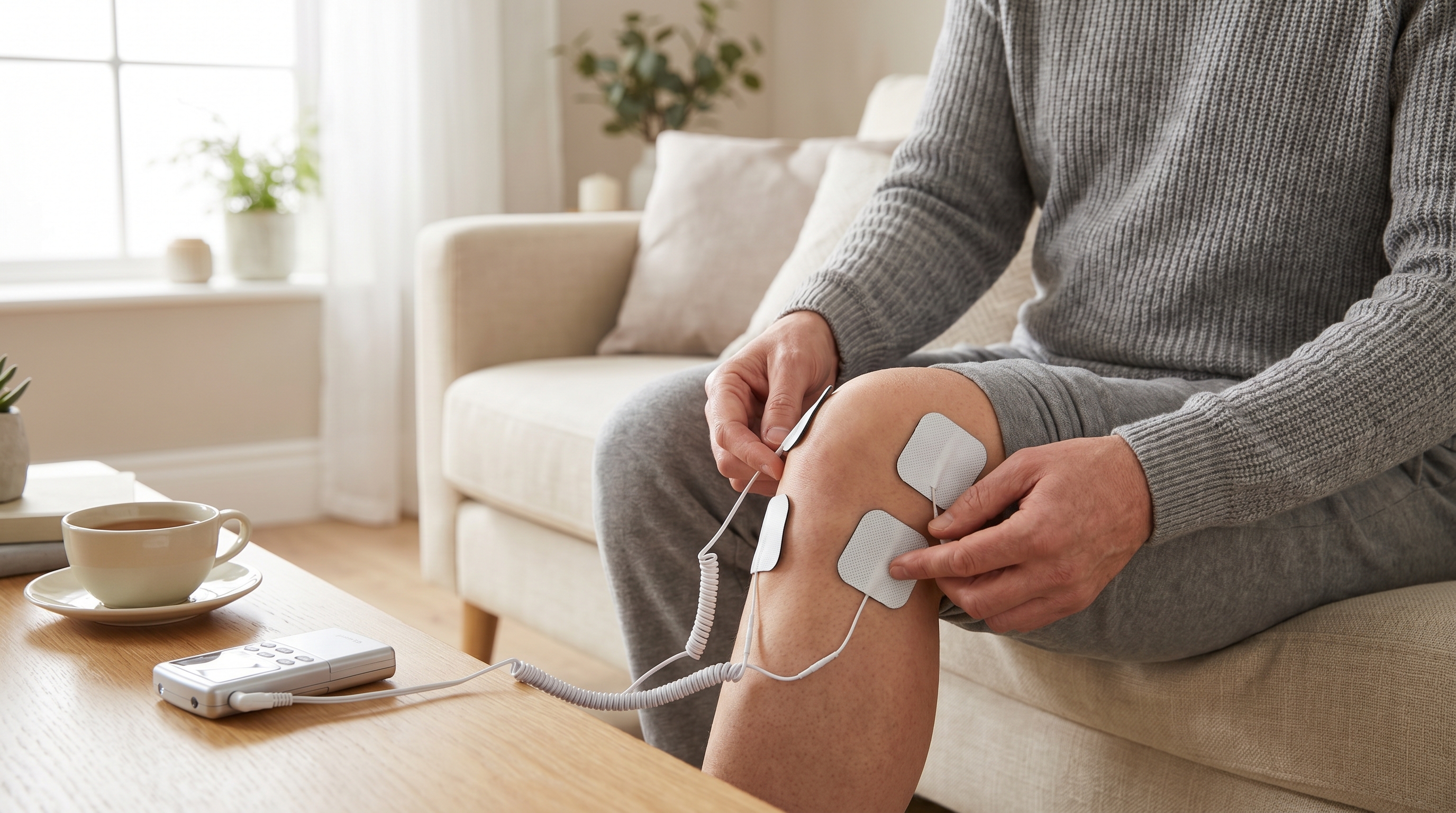
ALT: Person applying TENS electrode pads around the knee joint for drug-free pain relief therapy at home
How TENS Therapy Works for Knee Pain: What Every Sufferer Should Know
Key Conclusion: TENS therapy offers a clinically validated, drug-free approach to managing knee pain — from arthritis and post-surgical discomfort to sports injuries and chronic inflammation. By delivering gentle electrical pulses that interrupt pain signals and stimulate endorphin release, home physical therapy with a TENS device can rival the relief offered by prescription medication, without the side effects. Whether you're exploring EMS technology for muscle support around the knee or seeking broader pelvic floor health solutions, iStim's professional-grade devices bring clinical-quality care directly to your home.
Knee pain is one of the most prevalent musculoskeletal complaints in the world, affecting millions of adults across all age groups. Whether you're an athlete dealing with post-training soreness, a post-surgery patient navigating recovery, or someone managing the daily ache of osteoarthritis, finding effective, sustainable relief without relying solely on pharmaceuticals is a growing priority.
TENS (Transcutaneous Electrical Nerve Stimulation) has emerged as a trusted, evidence-backed tool in this space — not just for temporary comfort, but as part of a structured, long-term pain management plan. What makes TENS particularly appealing for knee pain is the precision it offers: the right program, the right intensity, and the right pad placement can make all the difference between modest relief and meaningful improvement.
Who Can Benefit From TENS Therapy for Knee Pain
✅ Applicable Scenarios:
- Individuals with osteoarthritis or rheumatoid arthritis causing chronic knee joint pain
- Post-surgical recovery patients (e.g., after ACL repair, knee replacement, or meniscus surgery) who need drug-free pain support
- Athletes and active adults experiencing acute knee strain, tendinitis, or patellofemoral pain syndrome
- Older adults seeking a non-invasive, medication-free complement to physical therapy
- Individuals with chronic knee pain who have found limited relief from oral analgesics or anti-inflammatory medications
❌ Not Applicable/Cautions:
- People with pacemakers, implanted electrical devices, or active metal implants near the knee should not use TENS without physician approval
- TENS should not be applied directly over broken skin, open wounds, infected areas, or active inflammation with swelling (consult your provider first)
- Pregnant individuals should avoid TENS near the abdomen or lower back; always consult a healthcare professional before use during pregnancy
- Those with deep vein thrombosis (DVT) or circulatory conditions should seek medical guidance before starting TENS therapy
Understanding Knee Pain and Why TENS Is a Leading Drug-Free Solution
Knee pain affects an estimated 25% of adults and is one of the leading causes of functional disability, according to research published in pain and rehabilitation literature. The causes vary widely — from degenerative joint disease and ligament injuries to bursitis, tendinitis, and post-operative discomfort — but the common thread is their significant impact on quality of life and mobility.
Traditional pain management has long relied on NSAIDs, corticosteroids, and opioid analgesics, each carrying risks of dependency, gastrointestinal damage, or long-term organ stress. This has led a growing number of patients and clinicians to explore non-pharmacological alternatives, and TENS therapy has risen to prominence as one of the most accessible, evidence-supported options available.
TENS works by delivering low-voltage electrical currents through electrode pads placed on the skin near the area of pain. These pulses accomplish two key things: they stimulate large sensory nerve fibers that effectively "close the gate" on pain signal transmission to the brain (the Gate Control Theory), and they trigger the release of endorphins — the body's natural pain-relieving chemicals. To understand more about the physiological mechanisms at play, explore The Science Behind Endorphin Release During TENS Therapy, which offers a detailed breakdown of how electrical stimulation creates natural, lasting pain relief.
For those curious about how TENS compares with conventional pharmaceutical treatments, TENS vs. Prescription Pain Medication: A Non-Invasive Alternative Explained provides a comprehensive, side-by-side assessment that many patients find invaluable when discussing options with their healthcare providers.
Unlike medication, TENS addresses the pain experience at the neurological level — without systemic effects. This makes it especially suitable for older adults who are already managing multiple medications, athletes seeking recovery without compromising performance, and anyone who simply prefers to stay drug-free.
Setting Up TENS for Knee Pain: Programs, Intensity, and Pad Placement
Three Steps to Get Started With TENS for Knee Relief
Step 1: Choose the Right TENS Program for Your Knee Condition
Before placing a single pad, identify which type of knee pain you're addressing. Acute, sharp pain (such as post-injury inflammation or post-surgical discomfort) typically responds well to high-frequency TENS programs (generally in the 80–150 Hz range), which activate the Gate Control mechanism for fast-acting relief. Chronic, dull aching pain — common in osteoarthritis — often benefits more from low-frequency (2–10 Hz) or burst-mode programs that stimulate deeper endorphin release. Many iStim devices offer pre-programmed modes for joint pain, arthritis, and muscle recovery, making program selection intuitive even for first-time users.
Step 2: Position Your Electrode Pads Correctly Around the Knee
Proper pad placement is the single most impactful factor in achieving effective TENS results for knee pain. The general principle is to bracket the area of pain — placing pads so that the electrical current passes through the painful tissue. For diffuse knee pain, a common approach is placing two pads on either side of the kneecap (medial and lateral), or using four pads in a diamond or square pattern surrounding the knee joint. Avoid placing pads directly over the kneecap itself. For inner knee pain, focus medially; for outer knee pain, shift pads laterally. Always clean and dry the skin before application to ensure conductivity and adhesion.
Step 3: Set the Intensity to a Therapeutic — Not Painful — Level
Intensity is where many new users go wrong. The goal is a strong but comfortable tingling sensation — never pain, burning, or muscle twitching (unless you're deliberately using an EMS mode for muscle activation). Start at the lowest intensity setting and gradually increase until you feel a firm, steady tingling across the knee area. This "strong but comfortable" threshold is your therapeutic zone. Sessions typically last 20 to 30 minutes; avoid continuous use beyond the recommended session duration for your device. Always reduce intensity before removing the pads.
Comparing TENS Program Types for Knee Pain Relief
Different TENS program modes offer distinct physiological effects, and understanding which suits your situation can significantly improve your outcomes. Here's how the most common program types compare when applied to knee pain:
| Comparison Dimension | High-Frequency TENS (Conventional) | Low-Frequency TENS (Acupuncture-Like) | Burst Mode TENS |
|---|---|---|---|
| Primary Mechanism | Gate Control — blocks pain signal transmission | Endorphin release — natural chemical pain relief | Combines both mechanisms in alternating bursts |
| Best For | Acute injury, post-surgical pain, sharp discomfort | Chronic knee pain, osteoarthritis, long-term use | Moderate-to-severe chronic pain needing deeper relief |
| Onset of Relief | Fast (during session) | Slower onset, longer-lasting effect | Moderate onset, sustained relief |
| Sensation | Firm, steady tingling | Deeper, pulsing sensation | Rhythmic alternating pulses |
| Session Frequency | Can be used multiple times daily | Often used 1–2 times per day | As directed by device instructions |
| Fatigue Risk | Low | Moderate with prolonged use | Low to moderate |
For those managing both knee pain and muscle weakness around the joint — a common combination in post-surgical rehab — it's worth exploring how TENS and EMS can work together. TENS + EMS Combo Machines Explained: When to Use Each Mode is an excellent resource for understanding when to switch between pain relief and muscle-building modalities.
Detailed Electrode Placement Guide for Common Knee Conditions
Osteoarthritis of the Knee
Osteoarthritis is characterized by cartilage breakdown and joint inflammation, typically producing diffuse, aching pain across the knee. For this condition, a four-pad placement pattern works especially well. Place one pad above and one pad below the knee on the inner (medial) side, and repeat on the outer (lateral) side — creating a surrounding "box" configuration. This ensures the electrical current passes through the entire joint space. Use a low-frequency or burst-mode program to stimulate endorphin release for lasting relief.
Patellofemoral Pain Syndrome (Runner's Knee)
This condition involves pain at the front of the knee, around or behind the kneecap. Place two pads just above the kneecap (on the quadriceps tendon area) and two pads on the upper shin, just below the kneecap on either side. This configuration targets the nerves supplying the patellar region without placing electrodes directly on the bony surface. High-frequency TENS is often preferred for the sharp, activity-related pain characteristic of runner's knee.
Medial Knee Pain (Inner Knee)
Medial collateral ligament (MCL) strain or medial meniscus issues tend to produce pain along the inner knee line. Position two pads vertically along the medial aspect of the knee — one just above the joint line and one just below — to target the area directly. You may add a second channel on the inner thigh if pain radiates upward.
Post-Surgical Knee Pain
Following procedures like ACL reconstruction or total knee replacement, TENS can be a valuable adjunct to prescribed physical therapy. Placement should be discussed with your surgeon or physical therapist, as surgical incisions and hardware locations may affect safe pad positioning. Generally, pads are placed proximal and distal to the incision site — never directly over healing tissue. Always receive medical clearance before beginning TENS post-surgery.
The Role of Pad Size and Quality
Don't underestimate the importance of electrode pad quality. Higher-quality pads maintain better conductivity, distribute current more evenly, and adhere comfortably through movement — all of which affect both comfort and effectiveness. For a comprehensive breakdown of what to look for, the TENS Electrode Pad Buyer's Guide: Sizes, Materials, and Compatibility Explained is an authoritative resource that helps you choose the right pads for your device and body area.
Larger pads (such as 2"×4" rectangular pads) provide broader current distribution — ideal for the muscle belly areas above and below the knee. Smaller pads (such as 2"×2" square pads) offer more focused stimulation for specific pain points. Matching pad size to placement site is a detail that separates beginner results from professional-grade outcomes.
For a broader view of electrode placement across the whole body, including the knee and surrounding areas, the Full Body TENS Electrode Placement Reference: 10 Common Treatment Sites provides an invaluable visual and instructional guide.
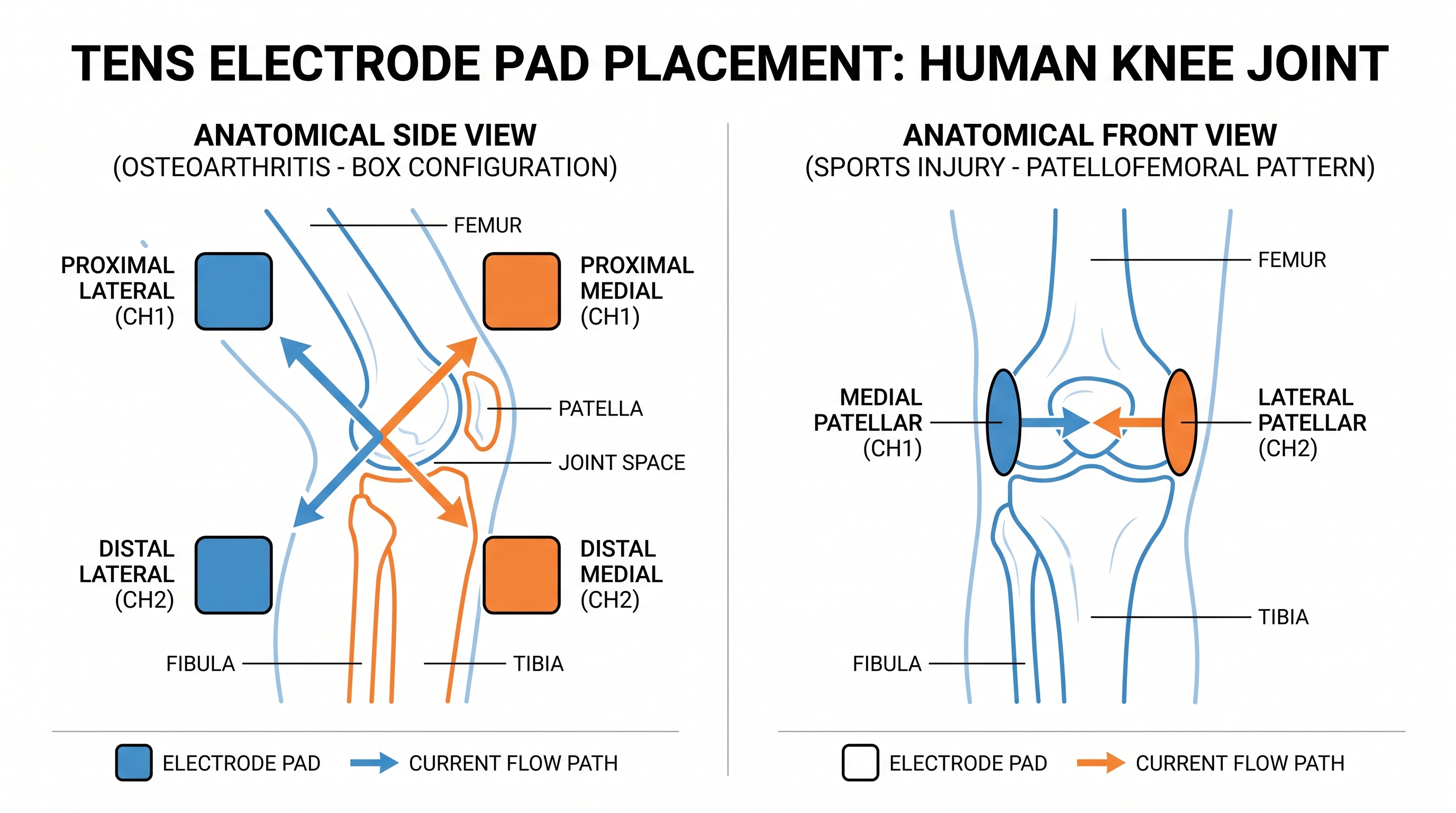
ALT: Detailed TENS electrode pad placement diagram around knee joint for osteoarthritis pain relief and sports injury recovery using home electrotherapy device
Advanced Considerations: Getting the Most From Your TENS Knee Program
When Standard Placement Isn't Enough
Sometimes, knee pain doesn't respond optimally to basic two-pad setups. If you're finding relief is incomplete or short-lived, consider upgrading to a four-channel TENS/EMS device that allows you to treat multiple points simultaneously. This is particularly useful for complex knee conditions where pain radiates to the hamstrings, calf, or hip. Pairing a TENS session for pain with an EMS session targeting the quadriceps and hamstrings can accelerate recovery and reduce the muscle atrophy that often accompanies knee injuries.
Common Misconceptions About TENS and Knee Pain
Misconception 1: "More intensity means more relief." This is among the most common and potentially counterproductive assumptions. Excessive intensity can cause discomfort, skin irritation, and even muscle fatigue. The therapeutic window is a comfortable, strong tingling — not pain. Staying within this range consistently produces better outcomes than intermittently using high intensities.
Misconception 2: "TENS cures the underlying condition." TENS is a powerful pain management tool, but it addresses the pain experience rather than the structural cause. It is most effective when used as part of a comprehensive plan that may include physical therapy, appropriate exercise, weight management, and medical care.
Misconception 3: "Electrode placement doesn't matter that much." In reality, pad placement is arguably the most critical variable. Poor placement can result in little-to-no benefit, while optimal placement dramatically amplifies effectiveness. Take time to understand the anatomy of your knee pain and position pads accordingly.
Combining TENS With Physical Therapy
Physical therapists have long incorporated TENS into knee rehabilitation protocols, and for good reason: TENS can make exercise-based therapy more tolerable by reducing pain before and after sessions. If you're working with a physical therapist, ask them to advise on the optimal placement and program settings that complement your specific rehab protocol. TENS should support — not replace — active rehabilitation.
Frequently Asked Questions FAQ
Q1: How do I know if my TENS intensity level is correct for knee pain?
The correct intensity for TENS therapy is described as a "strong but comfortable" tingling sensation — you should feel the electrical pulses clearly, but they should not cause pain, burning, or involuntary muscle contractions (unless you're using an EMS mode). Start at the lowest setting and gradually increase until the sensation is noticeable and consistent across the treatment area. If you feel discomfort at any point, reduce the intensity immediately. Over time, you may find you can tolerate slightly higher settings as your body acclimates.
Q2: Is TENS therapy safe to use every day for chronic knee pain?
For most people with chronic knee conditions, daily TENS use is generally considered safe when used as directed. Many users find relief with one to two 20–30 minute sessions per day. However, avoid using TENS continuously for extended periods, and give your skin a rest between sessions to prevent irritation. If you have underlying medical conditions — such as diabetes, heart conditions, or implanted devices — always consult your physician before establishing a daily TENS routine. You can also learn more about general TENS safety considerations at Is TENS Therapy Safe? What Doctors and Physical Therapists Say.
Q3: How long does it take to notice results from TENS therapy for knee pain?
Results vary depending on the nature and severity of your knee condition. Many users experience noticeable pain reduction during their very first session, particularly with high-frequency TENS targeting acute pain. For chronic conditions like osteoarthritis, cumulative benefits often build over several weeks of consistent use — with many users reporting meaningful improvement in mobility and daily comfort after two to four weeks of regular sessions. The key is consistency: TENS works best as part of a sustained pain management routine rather than occasional use.
Summary
Managing knee pain without relying on pharmaceuticals is not only possible — it's increasingly achievable with the right tools, knowledge, and commitment. TENS therapy stands out as one of the most versatile, evidence-backed non-invasive options available, offering meaningful relief for conditions ranging from osteoarthritis and tendinitis to post-surgical recovery and sports injuries.
Three core principles define effective TENS use for knee pain:
- Program selection matters: Match your TENS mode (high-frequency, low-frequency, or burst) to the type and chronicity of your knee pain for targeted, physiologically appropriate relief.
- Pad placement is everything: Thoughtful electrode positioning — bracketing the joint, matching pad size to body area, and avoiding contraindicated zones — is the difference between modest and outstanding results.
- Consistency builds results: TENS therapy delivers its greatest benefits as part of a regular, structured routine — not as a one-off intervention.
Whether you're a first-time TENS user or looking to optimize an existing routine, iStim's professional-grade devices provide the programming flexibility, build quality, and ISO-certified reliability to support your journey toward sustained, drug-free knee pain relief.
Ready to take control of your pain relief and muscle recovery — naturally and drug-free? Explore iStim's full range of professional-grade TENS, EMS, and Kegel devices at https://istim.com/ and find the right solution tailored to your wellness needs. Join over 20,000 satisfied customers who have made iStim their trusted partner in at-home electrotherapy.
References
- National Institute of Neurological Disorders and Stroke (NINDS). "Pain: Hope Through Research."
https://www.ninds.nih.gov/health-information/patient-caregiver-education/hope-through-research/pain-hope-through-research - American Physical Therapy Association (APTA). "Clinical Practice Guideline: Knee Pain and Mobility Impairments."
https://www.apta.org/patient-care/evidence-based-practice-resources/clinical-practice-guidelines - National Center for Complementary and Integrative Health (NCCIH), U.S. Department of Health & Human Services. "Chronic Pain: In Depth."
https://www.nccih.nih.gov/health/chronic-pain-in-depth - Vance, C.G.T., Dailey, D.L., Rakel, B.A., & Sluka, K.A. (2014). "Using TENS for Pain Control: The State of the Evidence." Pain Management, 4(3), 197–209. Published via U.S. National Library of Medicine.
https://www.ncbi.nlm.nih.gov/pmc/articles/PMC4186747/ - Arthritis Foundation. "Transcutaneous Electrical Nerve Stimulation (TENS) for Arthritis."
https://www.arthritis.org/health-wellness/treatment/complementary-therapies/physical-interventions/tens-for-arthritis
Note: Standards and clinical guidelines may be updated. Please verify with the latest official documents or consult a qualified healthcare professional for personalized guidance.
About iStim
iStim is a Los Angeles-based electrotherapy brand specializing in professional-grade TENS, EMS, and Kegel devices engineered for safe, effective home use — backed by ISO-certified Taiwanese manufacturing and trusted by 20,000+ Amazon customers for drug-free pain relief and muscle stimulation. Learn more at istim.com.
© iStim. All rights reserved. This article is intended for informational purposes only and does not constitute medical advice. Always consult a qualified healthcare professional before beginning any electrotherapy or treatment program.
Leave a comment