

TENS + EMS Combo Machines Explained: When to Use Each Mode

ALT: Person using a TENS EMS combo device at home for drug-free pain relief and muscle recovery
Understanding TENS + EMS Combo Machines: What They Do and Why It Matters
Key Conclusion: TENS and EMS are two distinct electrotherapy technologies often found in the same device, yet they serve very different purposes. TENS (Transcutaneous Electrical Nerve Stimulation) targets nerve pathways to block pain signals, while EMS (Electrical Muscle Stimulation) directly contracts muscle fibers to aid recovery and strengthening. Knowing when to use each mode is the key to getting the most out of your combo machine — safely and effectively.
If you've recently purchased a combo electrotherapy unit or are considering one, you've likely encountered the question: should I use TENS or EMS right now? The confusion is understandable — both modes use electrical impulses delivered through electrode pads, and both can feel similar on the skin. But underneath that shared mechanism lies a fundamental difference in therapeutic intent.
TENS works by sending low-frequency electrical signals through your skin to interfere with pain signals traveling to the brain. EMS, on the other hand, mimics the signals your nervous system sends to your muscles, causing them to contract. One soothes. The other strengthens. Understanding this distinction — and applying it correctly — is what separates a mediocre therapy session from a genuinely effective one.
This guide walks you through exactly when and how to use each mode, with practical scenarios, a clear comparison, and expert-informed guidance designed for everyday home users.
Who This Guide Is For
✅ Applicable Scenarios:
- Adults managing chronic pain conditions such as lower back pain, arthritis, sciatica, or fibromyalgia who want drug-free relief
- Post-injury or post-surgery patients cleared by their physician to begin at-home electrotherapy rehabilitation
- Fitness enthusiasts and athletes using EMS for muscle recovery, conditioning, or performance enhancement between training sessions
- Individuals with reduced muscle tone due to inactivity, aging, or neurological conditions seeking gentle muscle re-education
❌ Not Applicable/Cautions:
- Individuals with implanted cardiac devices such as pacemakers or defibrillators — electrical stimulation can interfere with device function
- Pregnant women should avoid using TENS or EMS on the abdomen or lower back without explicit medical clearance
- Do not apply electrode pads over open wounds, irritated skin, or areas with impaired sensation
- People with active cancer, epilepsy, or deep vein thrombosis should consult a healthcare provider before use
The Rise of Combo Electrotherapy Devices: Background and Context
Electrotherapy is not new. Physical therapists and rehabilitation specialists have used TENS and EMS equipment in clinical settings for decades. What has changed dramatically in recent years is accessibility. Thanks to advances in miniaturization and manufacturing quality, professional-grade devices are now available for home use at a fraction of the clinic cost — without sacrificing efficacy.
According to the National Institutes of Health (NIH), TENS therapy has been studied extensively as a non-pharmacological approach to pain management, with research supporting its use for musculoskeletal pain, neuropathic pain, and postoperative discomfort. Similarly, EMS has strong clinical backing in sports medicine and physical rehabilitation literature for accelerating muscle recovery and preventing atrophy during immobilization.
The global electrotherapy market has grown substantially as consumers increasingly seek alternatives to opioids and over-the-counter pain medications — both of which carry well-documented risks of dependency, gastrointestinal effects, and other side effects. Drug-free pain relief has moved from a niche preference to a mainstream priority, and TENS/EMS combo devices sit at the center of that shift.
iStim has been at the forefront of this movement, offering ISO-certified, professional-grade electrotherapy devices designed specifically for at-home use. With over 20,000 satisfied customers, iStim's lineup bridges the gap between clinical capability and everyday convenience — making it a trusted choice for those who want real results without a prescription.
Understanding how to correctly operate a combo device begins with understanding the core science behind each mode — which is exactly what the next section covers.
How to Use a TENS + EMS Combo Device: A Practical Breakdown
Three-Step Quick Start
Step 1: Identify Your Therapeutic Goal
Before powering on your device, ask yourself one question: Am I trying to relieve pain, or am I trying to strengthen and recover a muscle? This single distinction determines which mode you should select. If pain is your primary complaint — whether it's a nagging lower back ache, joint soreness, or nerve-related discomfort — start with TENS mode. If you're recovering from an injury, trying to rebuild muscle strength, or following an athletic training protocol, EMS is your starting point. Taking 60 seconds to clarify this before each session prevents misuse and maximizes your outcomes.
Step 2: Prepare Your Skin and Position Electrode Pads Correctly
Clean and dry the skin surface where you'll place the electrodes. Slightly damp skin improves conductivity, but avoid applying pads over oily, irritated, or broken skin. For TENS, position pads on either side of the pain site — not directly over the spine or bony prominences. For EMS, place pads over the motor points of the target muscle (the belly of the muscle where stimulation triggers the strongest contraction). Refer to your device's electrode placement guide. Correct placement is critical — misplaced pads can reduce effectiveness or cause discomfort.
Step 3: Select Mode, Start Low, and Adjust Gradually
Power on your combo device and select either TENS or EMS mode. Begin at the lowest intensity setting and increase slowly until you feel the therapeutic sensation — for TENS, this is a comfortable tingling; for EMS, it's a noticeable muscle twitch or contraction. Never start at high intensity. A typical TENS session runs 20–30 minutes for pain relief. For EMS, session length depends on your goal, but most protocols suggest 15–30 minutes per muscle group. Avoid exceeding recommended session lengths without professional guidance.
TENS vs. EMS vs. Combo Mode: A Side-by-Side Comparison
When evaluating how to use your combo device most effectively, it helps to see the differences laid out clearly. Many users report confusion not just about when to use each mode, but whether a combined session offers additional benefits. Here's a structured breakdown:
| Comparison Dimension | TENS Mode | EMS Mode | Combo (TENS + EMS) |
|---|---|---|---|
| Primary Purpose | Pain signal interruption and relief | Muscle contraction, strengthening, recovery | Simultaneous pain relief and muscle activation |
| Target Tissue | Peripheral nerves | Muscle fibers (motor neurons) | Nerves and muscles together |
| Sensation | Gentle tingling or buzzing | Visible muscle contraction or twitching | Mixed tingling with light contraction |
| Best Use Case | Chronic pain, acute soreness, nerve pain | Post-injury rehab, athletic recovery, atrophy prevention | Rehabilitation where pain and weakness coexist |
| Typical Session | 20–30 minutes | 15–30 minutes per muscle group | As directed by device protocol or therapist |
| Frequency of Use | Multiple times daily if needed | Once or twice daily per muscle group | As clinically indicated |
| Home User Suitability | High — very accessible for daily use | Moderate to high — requires correct placement | High — useful in recovery phases |
This comparison illustrates why combo devices are so versatile: rather than purchasing two separate units, users gain access to both therapeutic modalities in one compact, cost-effective package.
Deep Dive: When to Use TENS, When to Use EMS, and When to Combine
Using TENS Mode: Your Go-To for Pain Relief
TENS therapy is the most widely recognized and broadly applicable mode for everyday pain management. The mechanism is rooted in the Gate Control Theory of Pain, proposed by Melzack and Wall, which suggests that non-painful input (like electrical stimulation) can "close the gate" to painful signals traveling to the brain. In simpler terms: the tingling sensation from TENS occupies the pain signal pathways, reducing your perception of discomfort.
Common conditions where TENS excels include:
- Lower back pain — one of the most prevalent musculoskeletal complaints globally, TENS applied to the lumbar region offers meaningful short-term relief for many sufferers
- Arthritis pain — particularly effective around knee, shoulder, and hand joints
- Sciatica — electrode placement along the sciatic nerve pathway can significantly reduce radiating leg pain
- Postoperative soreness — TENS is frequently used in hospital and rehabilitation settings immediately following surgery to reduce reliance on analgesic medications
- Headaches and neck tension — when applied to the upper trapezius or cervical region with correct technique
TENS is generally considered very safe for repeated daily use. Because it does not cause muscle contractions, there is minimal physiological fatigue involved. This makes it ideal for ongoing management of chronic conditions.
Using EMS Mode: Rebuilding Strength and Accelerating Recovery
EMS operates on a fundamentally different principle. Rather than intercepting pain signals, EMS mimics the electrical impulses the motor cortex sends to muscles, causing them to contract involuntarily. This has profound implications for rehabilitation and athletic performance.
A key question users often ask is: how long can you safely use an EMS device per session? Research and clinical guidelines generally suggest that 15 to 30 minutes per muscle group is appropriate for most therapeutic and fitness applications. Longer sessions can lead to localized muscle fatigue, and in some cases, delayed onset muscle soreness (DOMS) — especially when starting out. It's wise to begin with shorter sessions and gradually increase duration as your body adapts.
EMS is particularly well-suited for:
- Post-surgical muscle atrophy — after knee or hip surgery, for example, muscle groups around the joint can weaken rapidly. EMS helps maintain and rebuild muscle tone during recovery periods when active movement is limited
- Athletic recovery — when comparing the best pain relief method — TENS or EMS — for muscle recovery, the answer depends on symptom type. If muscle soreness is primarily inflammatory and ache-driven, TENS provides more immediate comfort. If the goal is to flush metabolic waste and improve contractile function after intense training, EMS delivers superior results through its active pumping effect on blood and lymph circulation
- Muscle re-education — for patients with neurological conditions affecting motor control, EMS helps re-establish the neuromuscular connection
- Fitness augmentation — the question of whether you achieve better results faster with EMS or regular training is nuanced. EMS does not replace conventional exercise but has been shown in studies to enhance strength gains when used alongside traditional training protocols
Using Combo Mode: The Best of Both Worlds
Many contemporary combo devices, including those in the iStim lineup, allow simultaneous delivery of TENS and EMS signals. This is particularly valuable during the subacute rehabilitation phase — a period after the initial injury when pain is still present but active muscle recruitment needs to begin.
Consider a patient recovering from a knee ligament injury. The knee is still sore (requiring TENS-type pain modulation), but the quadriceps have begun to weaken from disuse (requiring EMS-type stimulation). Combo mode addresses both needs in a single session, potentially shortening recovery time.
Similarly, individuals with chronic lower back pain accompanied by core muscle weakness — a very common pairing — can benefit from combo protocols that simultaneously reduce pain perception and engage weakened stabilizing muscles.
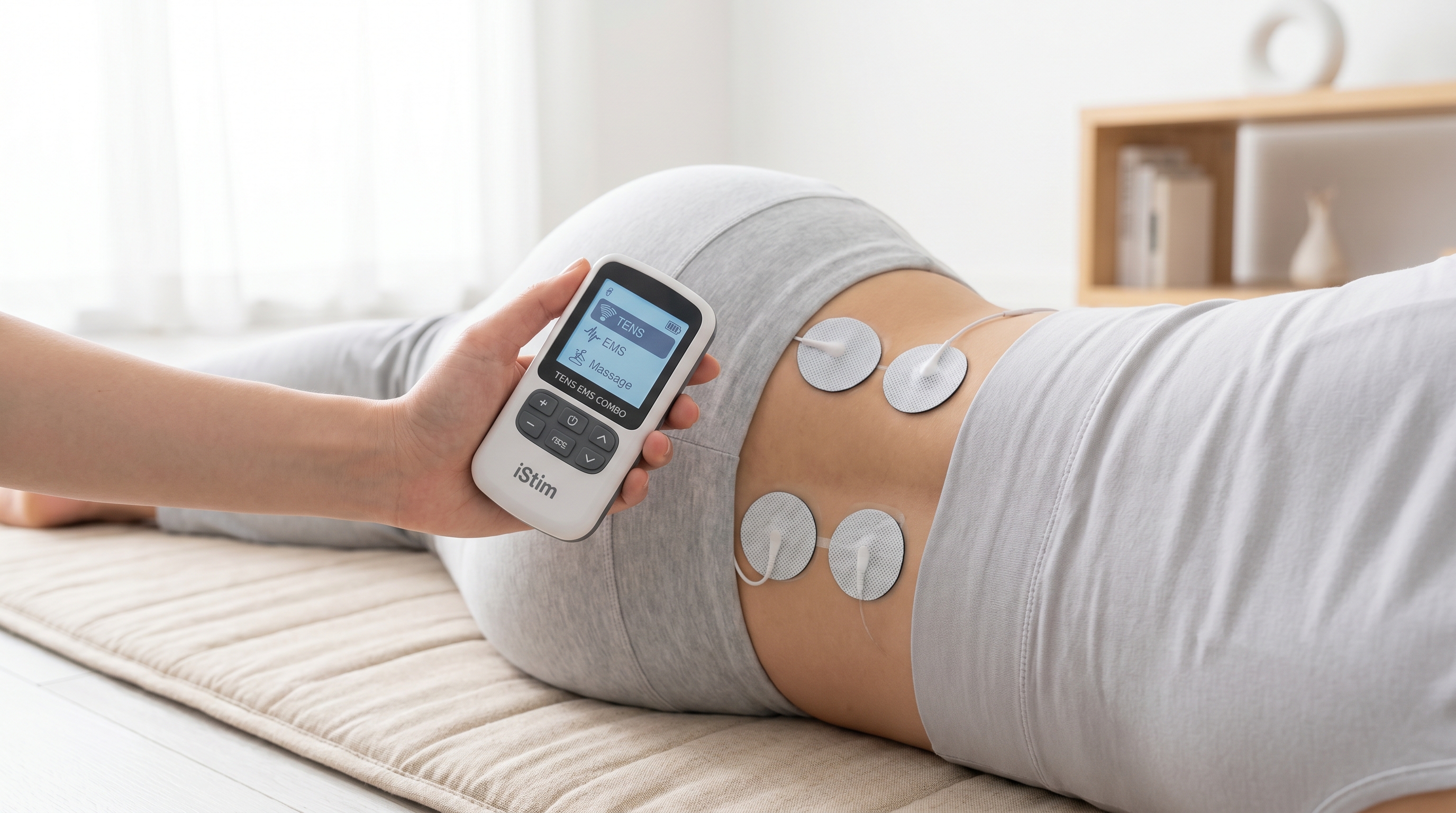
ALT: iStim combo device with electrode pads placed on lower back demonstrating TENS EMS mode selection for pain relief and muscle rehabilitation at home
Advanced Considerations: Getting More From Your Combo Device
Special Situations Worth Knowing
Managing Chronic vs. Acute Pain Differently
Acute pain — such as a fresh muscle strain — typically responds well to TENS at lower frequencies, which tend to produce stronger endorphin-like effects. Chronic pain conditions often benefit from higher-frequency TENS, which provides more immediate but shorter-lasting relief. Understanding this distinction helps you dial in the right settings rather than using a one-size-fits-all approach.
EMS After Resistance Training
Some fitness users apply EMS immediately post-workout to assist with metabolic clearance and reduce next-day soreness. This is distinct from using EMS as the training stimulus. For recovery purposes, lower intensity EMS settings with longer pulse widths are typically preferred over the high-intensity protocols used for strength building.
Skin Sensitivity and Electrode Care
Reusable gel electrode pads lose conductivity over time and with repeated use. Decreased conductivity can cause uneven stimulation and skin irritation. Replace pads when they no longer adhere firmly or when you notice a significant drop in sensation at consistent intensity settings. Clean skin thoroughly before each session to maximize pad life and session comfort.
Common Misconceptions Clarified
Myth: More intensity equals better results.
Reality: Higher intensity does not always translate to greater therapeutic benefit. For TENS, the goal is a comfortable, non-painful sensation — pushing intensity to the point of discomfort can actually trigger pain pathways rather than soothe them. For EMS, you want a visible contraction, but not one that causes cramping or sharp discomfort.
Myth: TENS and EMS are interchangeable.
Reality: As this guide has demonstrated, these are distinct modalities with different targets. Using EMS when you need TENS (or vice versa) is like applying ice when you need heat — the technology is sound, but the application is mismatched.
Myth: Combo devices are lower quality than single-mode devices.
Reality: Modern combo units from reputable manufacturers like iStim deliver both modalities at full clinical efficacy. The convenience of a combo device does not come at the cost of therapeutic quality.
Frequently Asked Questions FAQ
Q1: How long can you safely use an EMS device per session?
For most users, 15 to 30 minutes per muscle group per session is considered safe and effective. Beginners should start at the lower end of this range to allow muscles to adapt. Exceeding recommended session durations — especially at higher intensities — can cause excessive muscle fatigue or soreness. Always follow the guidance provided with your specific device, and consult a physical therapist or physician if you are using EMS as part of a medical rehabilitation protocol.
Q2: Is TENS or EMS better for muscle recovery after exercise?
Both modalities can support recovery, but they work differently. TENS is better suited for managing residual pain and soreness, as it modulates pain signals without causing further muscle activity. EMS is more effective for active recovery — promoting circulation, reducing metabolic waste accumulation, and maintaining muscle tone. For best results, many athletes and rehab patients use TENS immediately post-activity for comfort, then incorporate EMS during subsequent recovery sessions to restore muscle function.
Q3: How soon after an injury can I start using a TENS or EMS device?
TENS can generally be used during the acute phase of an injury (24–72 hours post-injury) to manage pain and reduce reliance on pain medications — though you should always seek medical evaluation first to rule out serious injury. EMS is typically introduced during the subacute or rehabilitation phase, once the initial inflammation has subsided and the treating clinician has cleared active muscle stimulation. Timing varies by injury type and severity, so professional guidance is essential before beginning any electrotherapy protocol post-injury.
Summary
Understanding the difference between TENS and EMS — and knowing exactly when to use each — transforms a combo device from a confusing gadget into a genuinely powerful therapeutic tool. Here are the three core takeaways from this guide:
- TENS is for pain. When discomfort is your primary complaint, TENS mode delivers drug-free relief by interrupting pain signals through the nervous system. It's safe, repeatable, and effective for a wide range of chronic and acute pain conditions.
- EMS is for muscles. When your goal is recovery, strengthening, or maintaining muscle health — particularly during rehabilitation — EMS provides the neuromuscular stimulation needed to contract, condition, and rebuild muscle tissue.
- Combo mode bridges the gap. In situations where pain and muscle weakness coexist — common in post-surgical recovery or chronic musculoskeletal conditions — combo mode allows both issues to be addressed simultaneously, maximizing therapeutic efficiency.
Your next step is straightforward: identify whether pain relief or muscle recovery (or both) is your primary goal today, select the appropriate mode, follow correct electrode placement protocols, and start at a comfortable intensity. Consistency and correct application are what deliver results over time.
Ready to Experience the Difference?
Ready to take control of your pain relief and muscle health — without relying on drugs? iStim offers a full range of professional-grade TENS, EMS, and Kegel devices designed to deliver real results safely and effectively from the comfort of your home. Explore the complete lineup and find the right device for your needs at https://istim.com/.
References
- National Institutes of Health (NIH), National Library of Medicine. "Transcutaneous Electrical Nerve Stimulation (TENS) for Chronic Pain."
https://www.ncbi.nlm.nih.gov/books/NBK537188/ - American Physical Therapy Association (APTA). "Electrophysical Agents in Physical Therapy Practice."
https://www.apta.org/ - National Institutes of Health (NIH), National Library of Medicine. "Electrical Muscle Stimulation for Muscle Recovery and Rehabilitation."
https://pubmed.ncbi.nlm.nih.gov/ - U.S. Food and Drug Administration (FDA). "Information on Transcutaneous Electrical Nerve Stimulators (TENS)."
https://www.fda.gov/medical-devices/home-use-devices/transcutaneous-electrical-nerve-stimulators-tens - Mayo Clinic. "TENS (Transcutaneous Electrical Nerve Stimulation): What You Need to Know."
https://www.mayoclinic.org/tests-procedures/tens/about/pac-20384903
Note: Standards and clinical guidelines may be updated. Please check the latest official documents or consult a qualified healthcare professional for personalized guidance.
About iStim
iStim is a Los Angeles-based electrotherapy brand specializing in professional-grade TENS, EMS, and Kegel devices for home use, trusted by 20,000+ customers and manufactured to ISO-certified standards for safe, drug-free pain relief and muscle stimulation. Learn more at istim.com.
Disclaimer: This article is provided for informational and educational purposes only and does not constitute medical advice. The content is produced in partnership with iStim. Always consult a qualified healthcare professional before starting any new therapy or treatment. © iStim. All rights reserved.
Leave a comment