

TENS Electrode Pad Buyer's Guide: Sizes, Materials, and Compatibility Explained
ALT: TENS electrode pad sizes and materials guide for home pain relief and electrotherapy compatibility
Everything You Need to Know Before Buying TENS Electrode Pads
Key Conclusion: Choosing the right TENS electrode pads is just as important as choosing the right TENS device. Pad size, material, adhesive quality, and device compatibility all directly influence how well electrical stimulation reaches your target muscles and nerves — determining both your comfort and your results. Whether you're managing chronic back pain, recovering from an injury, or exploring drug-free pain relief, understanding electrode pad fundamentals helps you get the most from every session.
If you've invested in a TENS unit for drug-free pain relief, you already know that electrotherapy can be a powerful tool for managing discomfort without medication. But here's a detail that many new users overlook: the electrode pads themselves are not a one-size-fits-all accessory. The wrong pad size can scatter electrical current inefficiently; the wrong material can irritate your skin; and using incompatible pads with your specific device can reduce effectiveness or even damage your unit.
This guide walks you through everything — from understanding pad geometry and adhesive materials to matching electrodes with your specific TENS or EMS device. By the end, you'll be equipped to make a confident, informed purchase that maximizes your therapy outcomes.
Who This Guide Is For
✅ Applicable Scenarios:
- Adults using TENS or EMS devices at home for chronic pain conditions such as back pain, arthritis, sciatica, or fibromyalgia
- Post-injury or post-surgery recovery patients looking to optimize muscle stimulation and pain relief sessions
- Fitness enthusiasts using EMS devices for muscle recovery who need durable, high-conductivity electrode pads
- Women using pelvic floor stimulation devices who require specialized electrode accessories
❌ Not Applicable/Cautions:
- Individuals with implanted electronic devices (e.g., pacemakers) — electrode pad compatibility is secondary to the larger contraindication of electrotherapy itself; always consult a physician first
- Users with known skin sensitivities to adhesive materials who should seek hypoallergenic pad options and confirm with a dermatologist before prolonged use
Why Electrode Pads Matter More Than Most People Think
When people research electrotherapy, they naturally focus on the device itself — the waveform settings, the intensity range, the program modes. But in clinical practice, physiotherapists and pain management specialists will tell you that electrode pad placement and quality are equally decisive in determining treatment outcomes.
Electrode pads serve as the interface between your TENS or EMS device and your body. They transmit electrical impulses through your skin to the underlying nerves or muscle fibers. If the pad has poor adhesion, the electrical contact becomes inconsistent, leading to uneven stimulation — which can feel uncomfortable and reduce therapeutic benefit. If the pad is the wrong size for the treatment area, current may be too concentrated (causing discomfort) or too diffuse (reducing effectiveness).
The global electrotherapy market has grown substantially in recent years, driven by increasing consumer awareness of non-pharmaceutical pain management and the accessibility of home-use devices. As more people bring professional-quality tools like TENS and EMS units into their homes, the demand for high-quality, compatible consumable accessories — including electrode pads — has followed suit. Understanding the nuances of pad selection is now a genuine health literacy skill, not just a purchasing decision.
The Complete Guide to TENS Electrode Pad Sizes, Materials, and Compatibility
Three Steps to Choosing the Right Electrode Pad
Step 1: Identify Your Treatment Area and Match the Pad Size
Pad size should always correspond to the size of the muscle group or pain region being treated. Larger body areas — such as the lower back, thighs, or glutes — generally benefit from larger electrode pads, which distribute current more evenly across a broad surface. Smaller, more targeted areas — like the knee, shoulder joint, or forearm — call for smaller pads that concentrate stimulation precisely. Take a moment before purchasing to measure or estimate the area you'll be treating, and consult any sizing guidelines provided by your device manufacturer. This step takes only a few minutes but significantly impacts your therapy results.
Step 2: Evaluate the Material and Adhesive Quality
Once you've determined the appropriate size, examine the pad material. Most consumer-grade electrode pads use either a carbon rubber or knitted fabric (cloth) base, each with distinct properties. The adhesive gel layer — which ensures skin contact and conductivity — should be self-adhesive, skin-safe, and capable of maintaining reliable contact through movement. Look for pads described as hypoallergenic if you have sensitive skin. Check whether the pads are designed for single use or multiple uses, and factor this into the long-term cost of your therapy. High-quality pads maintain their adhesive and conductive properties across multiple sessions before needing replacement.
Step 3: Verify Device Compatibility Before Purchase
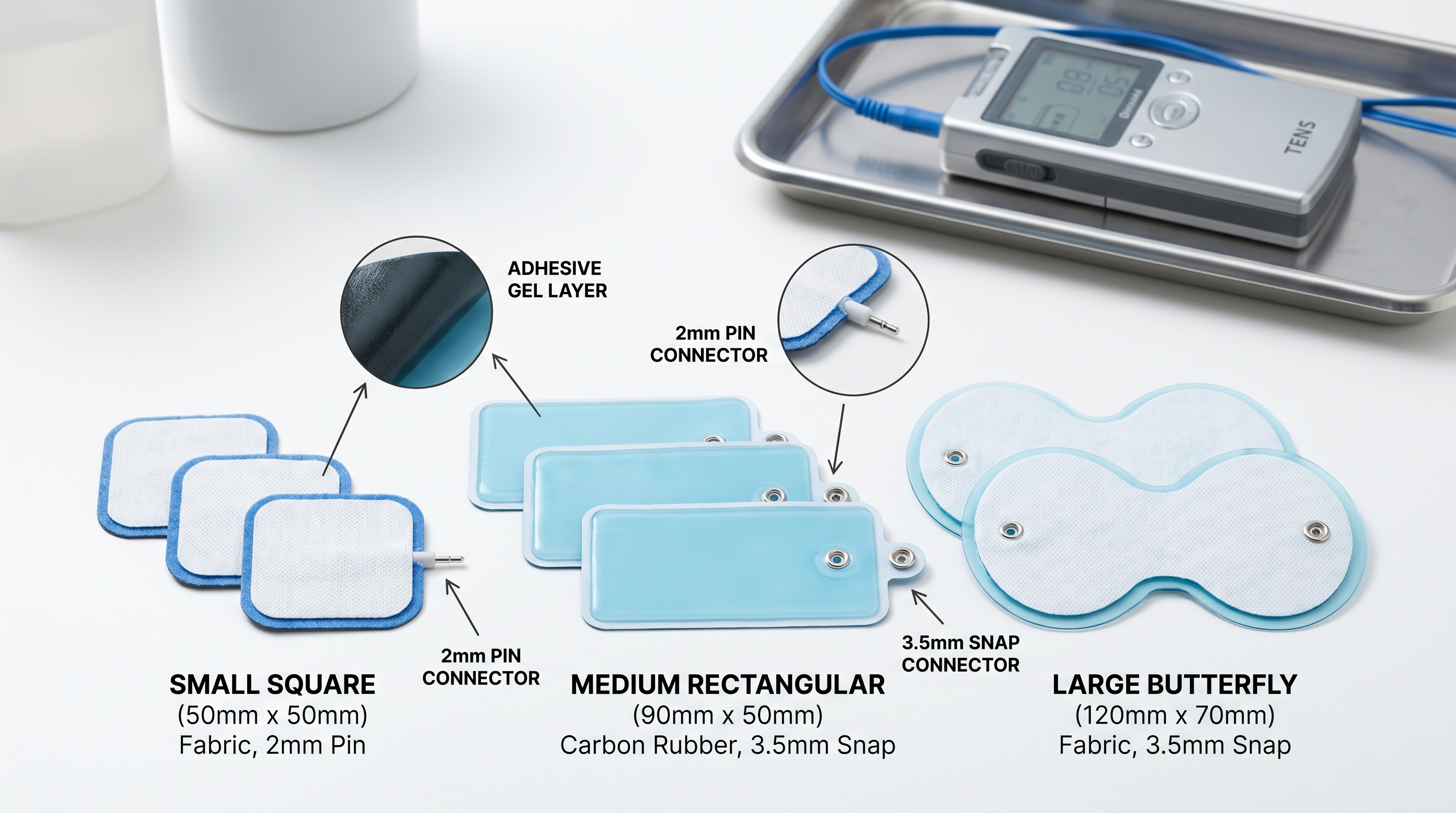
This is the step most often skipped — and the one that causes the most frustration. TENS and EMS devices use standardized lead wire connectors, but not all connectors are the same size or style. The two most common connector types are the 2mm pin connector and the 3.5mm snap connector. Before ordering replacement or additional electrode pads, check your device's manual or product listing to confirm which connector type it uses. Incompatible pads will simply not connect to your unit — or may connect loosely, causing erratic stimulation. Choosing pads from the same manufacturer as your device is always the safest way to guarantee compatibility.
Electrode Pad Size Comparison: Which Format Works Best for You?
Electrode pad sizes are typically described by their shape and approximate dimensions — small square or round pads, medium rectangular pads, and large rectangular or butterfly-shaped pads. The right choice depends heavily on anatomy and the nature of your condition.
| Comparison Dimension | Small Pads | Medium Pads | Large Pads |
|---|---|---|---|
| Best For | Joints, hands, feet, targeted nerve points | Shoulders, arms, calves, moderate muscle groups | Lower back, thighs, glutes, broad muscle coverage |
| Current Distribution | Concentrated and precise | Balanced — covers moderate areas evenly | Wide and diffuse — ideal for large muscle groups |
| Comfort on Curved Areas | Excellent — conforms easily to contours | Good on most body areas | May require repositioning on curved surfaces |
| Typical Use Case | Arthritis, carpal tunnel, localized pain | General TENS therapy, upper/lower limb recovery | Back pain, sciatica, post-surgical muscle stimulation |
| Skin Contact Quality | High on small areas | Consistently high | Dependent on adhesive quality and skin surface prep |
Understanding this size hierarchy helps you build a versatile pad inventory. Many experienced TENS users keep multiple sizes on hand so they can adapt their therapy as symptoms shift — treating a broader area during a flare-up and switching to targeted pads for precise relief during maintenance sessions.
Understanding Electrode Pad Materials: Carbon Rubber vs. Fabric
Carbon rubber electrode pads have long been the standard in clinical settings. They are durable, reusable, and deliver consistent electrical conductivity. These pads typically require a conductive gel to be applied to the skin or the pad surface before each use — a small extra step that ensures optimal current flow. Carbon rubber pads are particularly well-suited for users who need high-intensity stimulation, such as EMS users focused on muscle strengthening or rehabilitation.
Fabric (knitted cloth) electrode pads have become increasingly popular in home-use TENS devices. These pads feature a pre-applied, self-adhesive hydrogel layer that eliminates the need for additional gel. They tend to be more comfortable against the skin, especially during longer sessions, and conform naturally to body contours. Many fabric pads are hypoallergenic and latex-free, making them accessible to users with skin sensitivities.
Self-adhesive hydrogel pads represent a subcategory worth understanding on their own. The gel layer serves a dual purpose: it adheres the pad securely to the skin surface and conducts electrical current efficiently. Over time and with repeated use, the gel layer degrades — the pad becomes less sticky, skin contact becomes inconsistent, and conductivity drops. Knowing when to replace your pads (typically when they begin to feel less adherent or when you notice uneven stimulation) is important for maintaining both safety and effectiveness.
Connector Types and Compatibility: Getting the Details Right
Connector compatibility is the most technically specific aspect of electrode pad selection, yet it's also the most straightforward once you understand the basics.
The 2mm pin connector is common in many clinical-grade and professional home-use TENS devices. The lead wire from the device has a small 2mm metal pin that inserts into a corresponding socket in the electrode pad. This connection type is secure and reliable, making it a preferred choice for devices designed for intensive use.
The 3.5mm snap connector (sometimes referred to as a stud connector) uses a slightly different mechanism — a small circular snap that clicks onto a corresponding point on the pad. This connector type is widely used in consumer-grade devices and is often considered easier to connect and disconnect quickly.
Some devices use proprietary connectors, which means only pads sold or approved by that manufacturer will work correctly. If you're purchasing replacement pads for a specialized device, always verify the connector specification in the product documentation or contact the manufacturer directly.
iStim designs its electrode pads to be compatible with its range of professional-grade TENS and EMS devices, ensuring that users have a reliable supply of high-quality, verified accessories without the guesswork of cross-compatibility research. You can explore compatible electrode accessories at iStim's official website.
Adhesive Longevity and Skin Preparation Tips
One of the most common frustrations among TENS users — especially those new to electrotherapy — is experiencing pads that "won't stick" after just a few uses. In many cases, this isn't a pad quality issue; it's a skin preparation issue.
Clean, dry skin is essential for optimal adhesion. Residual oils, lotions, or sweat on the skin surface significantly reduce the adhesive effectiveness of even premium electrode pads. Before each session, wipe the target area with a clean cloth or an alcohol-free skin prep wipe, then allow the skin to dry completely before applying pads.
Avoid placing pads over broken, irritated, or recently shaved skin. Freshly shaved skin can be more sensitive to adhesive, and broken skin creates a risk of increased conductivity in unintended areas. For areas with significant body hair, light trimming (not shaving) can improve contact without the irritation risk.
After each session, store pads correctly. Most reusable self-adhesive pads come with a protective plastic film. Replacing this film after each use and storing pads in a cool, dry place extends their usable life considerably. Exposure to air causes the hydrogel layer to dry out, which irreversibly reduces adhesion.
ALT: Correct TENS electrode pad placement on lower back demonstrating proper size and adhesive contact for effective drug-free pain relief
Advanced Considerations: Special Situations and Common Misconceptions
Specialty Pad Formats for Specific Therapy Needs
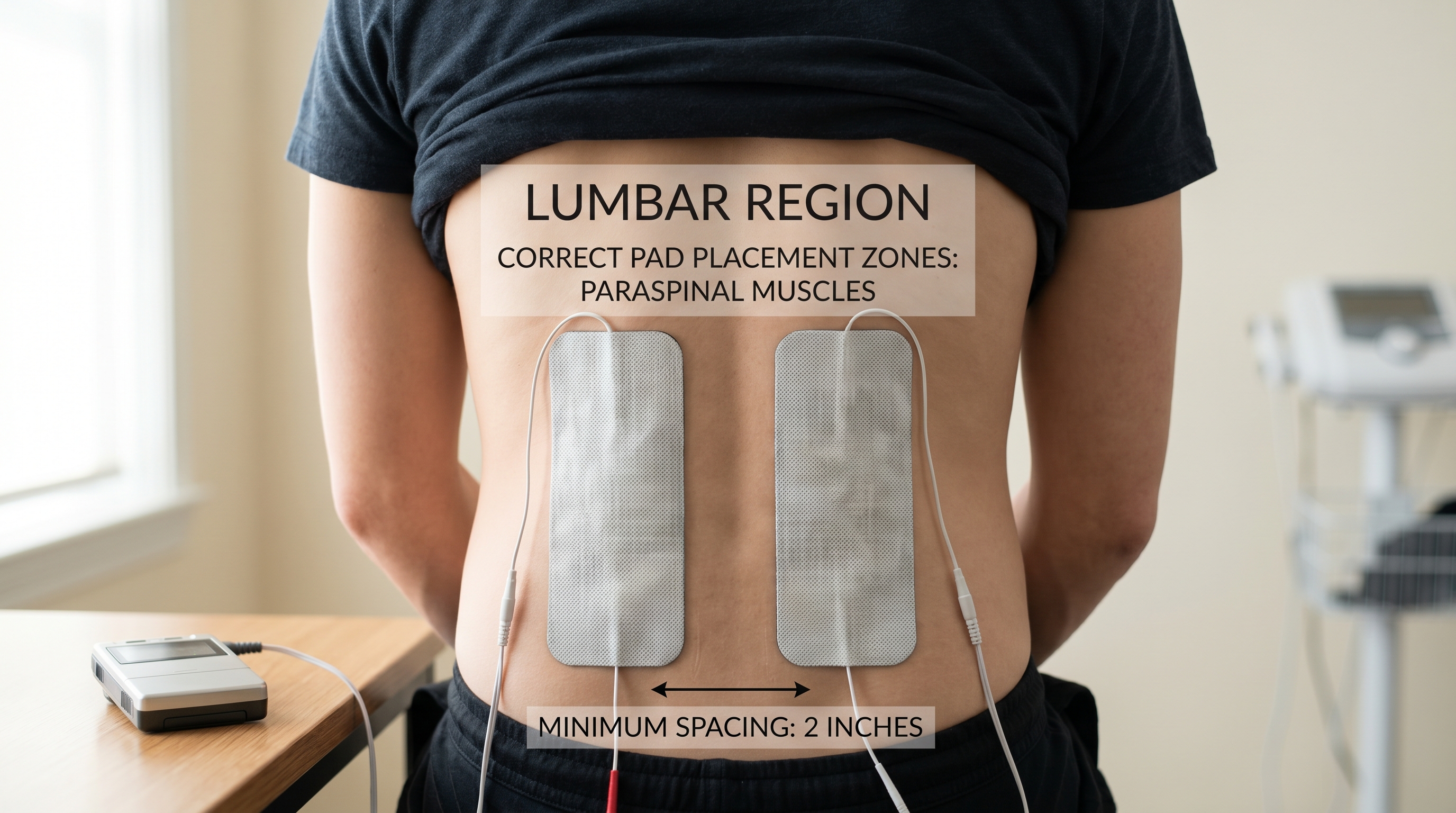
Beyond standard rectangular and square pads, some therapy scenarios call for specialized electrode formats. Butterfly-shaped pads are designed specifically for the lower back, with a contoured shape that follows the lumbar curve and provides symmetrical stimulation across the paraspinal muscles. These are particularly effective for chronic low back pain — one of the most common complaints among TENS users.
Garment-integrated electrodes — electrode pads built into compression sleeves or wraps — are an emerging format for users who need hands-free application during movement or rehabilitation exercises. While less common in standard home-use kits, they represent a meaningful innovation for active recovery users.
Common Misconceptions Clarified
Misconception 1: "More expensive pads are always better."
Price does not always correlate directly with performance. What matters most is the match between pad specifications and your device requirements. A moderately priced pad that is perfectly compatible with your device and sized correctly for your treatment area will outperform a premium pad used incorrectly.
Misconception 2: "One pad size works for the whole body."
This is a frequent mistake among new TENS users. Using a large pad on a small joint like the wrist or ankle concentrates current unevenly and can cause discomfort. Investing in two or three pad sizes gives you the flexibility to treat different body areas optimally.
Misconception 3: "Electrode pads don't expire if they still stick."
Adhesion and conductivity can degrade at different rates. A pad may still adhere to your skin but have reduced hydrogel integrity that impairs electrical transmission. If you notice reduced sensation at the same intensity settings you previously used, it may be time to replace your pads — even if they still feel adherent.
Frequently Asked Questions FAQ
Q1: How do I know when it's time to replace my TENS electrode pads?
Most reusable self-adhesive electrode pads are designed for a limited number of uses before the hydrogel layer loses conductivity and adhesion. Signs that replacement is needed include reduced stickiness that causes pads to lift at the edges during use, noticeably diminished stimulation at the same intensity settings, visible discoloration or deterioration of the gel layer, or skin irritation from uneven electrical contact. Keeping a spare set of pads on hand ensures uninterrupted therapy when replacement time comes.
Q2: Are TENS electrode pads safe for people with sensitive skin?
Many TENS electrode pads are manufactured with hypoallergenic, latex-free materials specifically to accommodate sensitive skin. However, individual reactions to adhesives can vary. If you experience persistent redness, itching, or irritation at the pad site, discontinue use and consult a healthcare provider. Using skin prep wipes, allowing adequate rest time between sessions for the skin to recover, and choosing pads explicitly labeled as hypoallergenic are practical strategies for sensitive-skin users.
Q3: How long do electrode pads typically last, and what affects their lifespan?
The lifespan of electrode pads varies based on usage frequency, proper storage, and skin preparation habits. Pads stored correctly with their protective film replaced after each use and applied to clean, dry skin generally last longer than those subjected to heat, moisture, or oily skin surfaces. Rather than estimating a fixed number of sessions, the most reliable indicator of end-of-life is performance: when stimulation feels uneven or adhesion declines noticeably, it's time to replace. Buying in multipacks offers both cost efficiency and uninterrupted therapy continuity.
Summary
Choosing the right TENS electrode pads is a three-dimensional decision: size must match your treatment area, material and adhesive quality must suit your skin and usage frequency, and connector type must be compatible with your specific device. Getting all three right means more consistent electrical contact, more effective stimulation, and a more comfortable therapy experience overall.
The three core takeaways from this guide are:
- Size selection is therapeutic, not just practical. Matching pad dimensions to your anatomy determines how current distributes through tissue — impacting both comfort and efficacy.
- Material quality and skin preparation work together. Premium adhesive gel technology is only as effective as the skin surface it's applied to. Clean, dry, lotion-free skin maximizes pad performance.
- Compatibility is non-negotiable. Verify your device's connector type before purchasing any electrode pads — this single step prevents the most common buyer frustration.
For those using iStim's professional-grade TENS and EMS devices, the most reliable path to optimal electrode performance is choosing pads designed and verified for iStim equipment. This eliminates guesswork around compatibility and ensures that every session delivers the consistent, drug-free pain relief you're working toward.
Ready to Find the Right Electrode Pads for Your Therapy?
Ready to experience drug-free pain relief and muscle stimulation from the comfort of your home? Visit iStim at https://istim.com/ to explore their full lineup of professional-grade TENS, EMS, and Kegel devices — trusted by 20,000+ customers and built to deliver real results. Whether you're managing chronic pain, recovering from an injury, or strengthening your pelvic floor, iStim has a clinically inspired solution designed for you.
References
- National Institute of Neurological Disorders and Stroke (NINDS). "Pain: Hope Through Research."
https://www.ninds.nih.gov/health-information/disorders/pain - U.S. Food and Drug Administration (FDA). "TENS (Transcutaneous Electrical Nerve Stimulation) — General Information."
https://www.fda.gov/medical-devices/home-use-devices/transcutaneous-electrical-nerve-stimulators-tens - American Physical Therapy Association (APTA). "Electrophysical Agents — Clinical Practice Guidelines."
https://www.apta.org/ - National Institutes of Health (NIH) — National Center for Complementary and Integrative Health. "Chronic Pain: What You Need To Know."
https://www.nccih.nih.gov/health/chronic-pain-what-you-need-to-know - MedlinePlus — U.S. National Library of Medicine. "Electrical Stimulation for Pain."
https://medlineplus.gov/ency/article/007114.htm
Note: Standards and clinical guidelines may be updated periodically. Please check the latest official documents or consult a qualified healthcare professional for the most current recommendations.
About iStim
iStim is a Los Angeles-based electrotherapy brand specializing in professional-grade TENS, EMS, and Kegel devices engineered for safe and effective home use, backed by ISO-certified Taiwanese manufacturing and trusted by over 20,000 Amazon customers. iStim is dedicated to empowering individuals with drug-free, clinically inspired solutions for pain relief, muscle recovery, and pelvic floor health.
Disclaimer: This article is provided for informational and educational purposes only and does not constitute medical advice. The content is copyright © iStim (https://istim.com/). All rights reserved. Please consult a qualified healthcare professional before starting any electrotherapy program.
Leave a comment