

Returning to Exercise After Childbirth: The Role of Pelvic Floor Rehab

ALT: Postpartum woman using pelvic floor electrotherapy device for muscle recovery and rehabilitation after childbirth
Why Pelvic Floor Rehab Is the Missing Link in Your Postpartum Fitness Journey
Key Conclusion: Returning to exercise after childbirth without first addressing pelvic floor weakness is one of the most common — and most preventable — postpartum mistakes. Pelvic floor rehabilitation using targeted muscle stimulation and structured muscle recovery protocols lays the essential foundation for safe fitness reentry. Modern electrotherapy devices like Kegel stimulators offer clinically inspired, drug-free support that bridges the gap between delivery and full physical activity, making recovery both safer and more effective.
The excitement of wanting to "bounce back" after having a baby is completely natural. Yet most postpartum fitness guides jump straight to core workouts and cardio, entirely bypassing the foundation that makes all of it possible: a healthy, functional pelvic floor. This oversight can lead to lasting consequences — from urinary leakage during a run to pelvic organ prolapse years down the line.
Three critical truths shape the postpartum recovery conversation. First, childbirth — whether vaginal or cesarean — significantly stresses the pelvic floor musculature. Second, the timeline for safe return to exercise varies enormously depending on pelvic floor function, not just time elapsed since delivery. Third, new tools in home electrotherapy have made evidence-based pelvic floor rehab more accessible than ever, without requiring constant clinical appointments.
Who This Guide Is For
✅ Applicable Scenarios:
- Postpartum women (vaginal or C-section delivery) cleared by a healthcare provider to begin gentle rehabilitation
- Women experiencing mild to moderate stress urinary incontinence, pelvic heaviness, or reduced core stability after childbirth
- Fitness-minded new mothers eager to return to running, strength training, or yoga safely and progressively
- Women over 40 returning to exercise postpartum, who may also be managing perimenopause-related pelvic changes
- Caregivers and partners researching drug-free, home-based recovery options for postpartum family members
❌ Not Applicable/Cautions:
- Women with active postpartum infections, open wounds, or unhealed perineal tears — consult your OB or midwife before beginning any pelvic floor stimulation
- Individuals with implanted electronic devices (e.g., pacemakers) should not use electrotherapy devices without explicit medical clearance
- Women experiencing severe prolapse symptoms, significant postpartum hemorrhage, or pelvic pain that worsens with exercise should seek in-person pelvic floor physical therapy before using home devices
Understanding What Childbirth Actually Does to Your Pelvic Floor
The pelvic floor is a hammock-like group of muscles, ligaments, and connective tissues spanning the base of the pelvis. These structures support the bladder, bowel, and uterus while playing an active role in core stability, sexual function, and spinal alignment. During pregnancy, the pelvic floor bears increasing load as the uterus grows. During vaginal delivery, those muscles stretch dramatically — sometimes to lengths several times their resting state — and can sustain micro-tears, nerve compression, or significant fatigue.
What many women are surprised to learn is that cesarean delivery does not eliminate pelvic floor trauma. The months of pregnancy still place substantial mechanical stress on the pelvic floor, and the surgical recovery from a C-section involves its own healing timeline that must be respected before exercise begins.
Research published through the American College of Obstetricians and Gynecologists (ACOG) consistently shows that pelvic floor dysfunction — including urinary incontinence, pelvic organ prolapse, and reduced sexual sensation — affects a significant proportion of postpartum women, often going undertreated because of stigma or lack of awareness. In fact, many women assume that leaking when they laugh, cough, or jump is "just part of having a baby." It isn't, and it doesn't have to be permanent.
For a broader look at how pelvic floor symptoms can signal underlying dysfunction before or after childbirth, Signs of a Weak Pelvic Floor: How to Recognize the Symptoms offers an excellent foundational read. Similarly, Urinary Incontinence After Childbirth: Causes, Impact, and Treatment Options dives deeper into why postpartum leakage happens and what your evidence-based options are.
The good news is that the pelvic floor is highly trainable. With the right approach — starting gently, progressing systematically, and using supportive tools like electrotherapy — most women can restore strength, coordination, and function to levels that support active lifestyles.
Your Roadmap: From Postpartum Recovery to Full Fitness Return
Three-Step Quick Start for Postpartum Pelvic Floor Rehab
Step 1: Get a Pelvic Floor Baseline Assessment
Before starting any exercise program — even gentle walking — schedule a pelvic floor assessment with a women's health physiotherapist or your OB-GYN at your postpartum check-up (typically around 6 weeks). This appointment should evaluate muscle tone, coordination, and any signs of prolapse or nerve involvement. Knowing your starting point prevents the most common mistake: doing too much too soon. This step takes as little as one appointment and creates the roadmap for everything that follows.
Step 2: Begin Targeted Pelvic Floor Muscle Stimulation at Home
Once cleared by your provider, start a structured home pelvic floor training program. At-home Kegel electrotherapy devices — such as those in iStim's pelvic floor lineup — use gentle electrical impulses to help identify and activate the correct pelvic muscles, which is especially valuable when voluntary muscle contraction is weak or poorly coordinated after delivery. Daily sessions of targeted muscle stimulation rebuild neuromuscular connection before you layer on higher-impact activities. Most women can begin this phase within the first 6–12 weeks postpartum with provider guidance.
Step 3: Progressively Reintroduce Exercise With Ongoing Monitoring
With pelvic floor function improving, begin reintroducing low-impact exercise — walking, swimming, postpartum yoga — and monitor for any return of symptoms (leaking, heaviness, discomfort). Gradually progress intensity over weeks to months. Use your electrotherapy sessions as ongoing maintenance support, particularly after more demanding workout days, to aid muscle recovery and prevent regression. High-impact activities like running or jumping should typically wait until at least 12 weeks postpartum, and only when pelvic floor function has been confirmed as adequate.
Comparing Postpartum Pelvic Floor Rehab Approaches
There is no single "right" way to approach pelvic floor rehab — the best strategy depends on symptom severity, lifestyle, access to care, and personal preference. Here's how the most common approaches compare:
| Comparison Dimension | In-Clinic Pelvic Floor PT | Voluntary Kegel Exercises | Kegel Electrotherapy Devices |
|---|---|---|---|
| Guidance quality | High (hands-on, individualized) | Low without instruction | Moderate-High (structured programs) |
| Accessibility | Limited by location/cost | Fully accessible | Home-based, accessible |
| Muscle activation accuracy | Confirmed by therapist | Often incorrect without biofeedback | Assisted activation improves accuracy |
| Cost over time | High (recurring sessions) | Free | Moderate one-time investment |
| Suitable for early rehab | Yes | With guidance | Yes, with provider clearance |
| Progress tracking | In-session only | Self-reported | Some devices include biofeedback |
| Drug-free | Yes | Yes | Yes |
The ideal postpartum rehab plan often combines elements of all three: an initial assessment with a pelvic floor physiotherapist, daily home practice using a Kegel stimulator, and gradual voluntary exercise as strength returns.
How Kegel Electrotherapy Devices Support Postpartum Recovery
What is Kegel electrotherapy, and why does it work?
Kegel electrotherapy uses the same foundational science behind clinical electrical stimulation therapy — delivering low-level electrical current through a probe or external electrode to cause involuntary contractions of the pelvic floor muscles. This is particularly valuable postpartum because many women cannot effectively isolate or contract their pelvic floor voluntarily, especially in the weeks immediately after delivery when nerve signaling may be disrupted.
The electrical impulse essentially "teaches" the neuromuscular pathway the correct contraction pattern, restoring communication between the brain and the pelvic floor muscles that may have been disrupted during labor. Over consistent sessions, the muscles regain strength, endurance, and coordination — prerequisites for impact-tolerant exercise.
Best practices for pelvic floor stimulator usage and safety tips
When using a pelvic floor stimulator at home, following best practices ensures both safety and effectiveness:
- Always begin with the lowest intensity setting and increase gradually — you should feel a clear contraction without pain or discomfort
- Use the device in a comfortable, reclined position during initial sessions to minimize pelvic floor tension
- Follow the session duration guidelines provided with your specific device; avoid the temptation to extend sessions beyond recommendations, especially early on
- Clean and store electrode probes according to manufacturer instructions to prevent infection risk
- Do not use a pelvic floor stimulator over broken skin, during menstruation (unless cleared by your provider), or if you have an active pelvic infection
- Always consult your healthcare provider before beginning electrotherapy if you have any postpartum complications
iStim's Kegel devices are designed with the home user in mind — offering adjustable intensity levels and clinically inspired waveform programs that mirror what you'd encounter in a professional rehabilitation setting. For a detailed walkthrough of one of iStim's most popular pelvic floor tools, How to Use the iStim V2 Kegel Exerciser: A Complete Setup and Usage Guide provides step-by-step setup and session instructions.
Pelvic floor rehab and the broader role of electrotherapy in recovery
It's worth understanding that electrotherapy is not exclusive to pelvic floor rehab. The same underlying principles of electrical muscle stimulation are used by athletes for muscle recovery, by chronic pain patients for symptom management, and by rehabilitation specialists across a wide range of conditions. As you advance in your postpartum fitness journey and begin reintegrating full-body workouts, EMS devices can support muscle recovery in your legs, back, and core. Understanding how EMS for Athletes: How Professional Sports Teams Use Electrical Muscle Stimulation can inform how you progressively apply these tools beyond pelvic floor rehabilitation alone.
The postpartum exercise timeline: what the evidence says
Current clinical guidance generally suggests the following postpartum exercise progression — though individual variation is significant:
- Weeks 1–6: Rest, gentle walking, diaphragmatic breathing, and early pelvic floor awareness exercises
- Weeks 6–12: Begin structured pelvic floor rehab (voluntary Kegels + electrotherapy), gentle yoga, and light resistance training with breath coordination
- Weeks 12+: Progressive return to moderate cardio, strength training, and functional exercise — with high-impact activities reserved until pelvic floor function is confirmed adequate
These timelines are not rigid checkboxes. A woman who had a particularly challenging delivery, significant perineal tearing, or who is experiencing prolapse symptoms may need considerably more time. Listening to your body and working with a pelvic floor physiotherapist remains the gold standard.
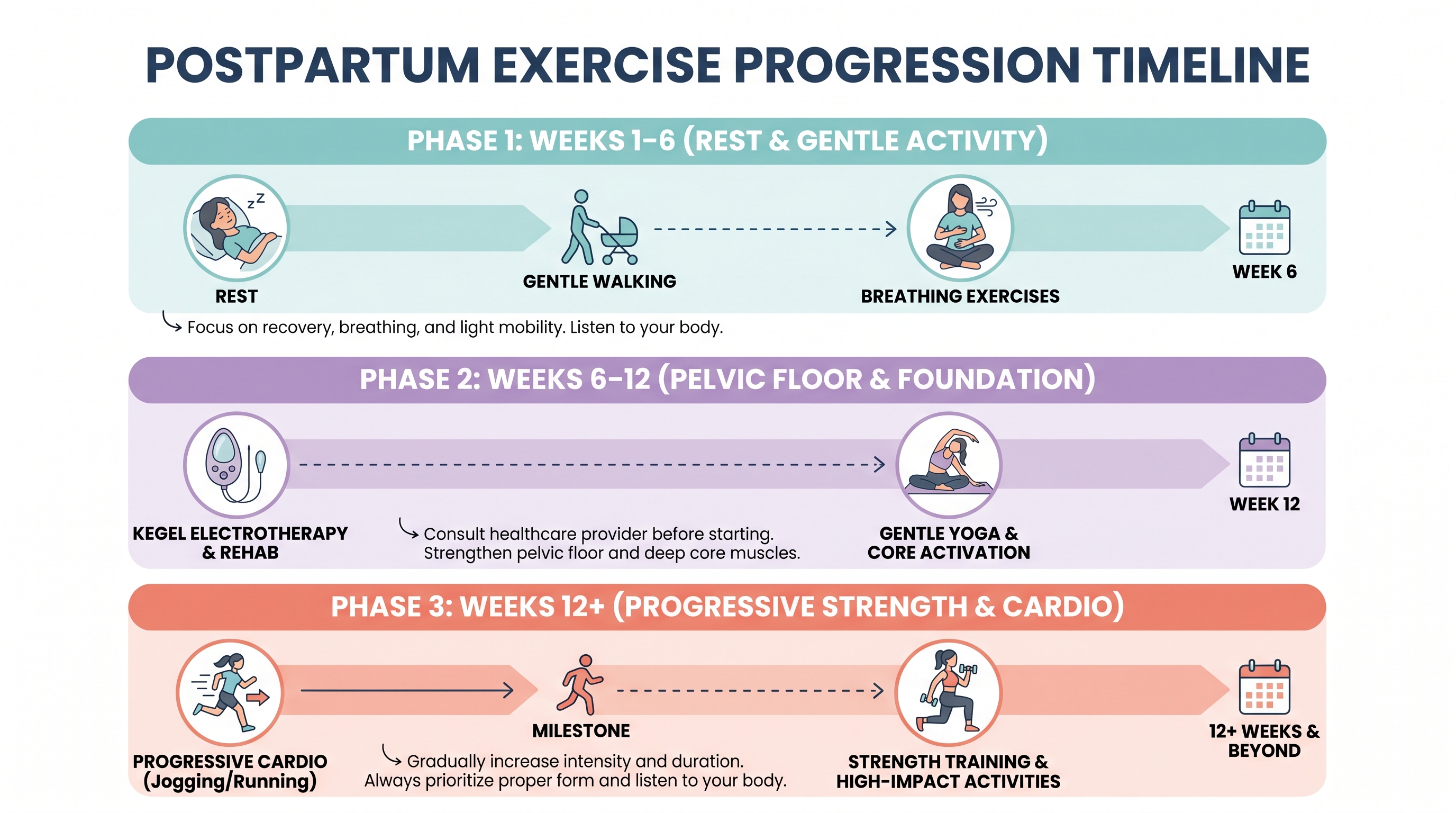
ALT: Postpartum exercise progression timeline highlighting pelvic floor rehab with Kegel electrotherapy devices and muscle recovery milestones
Advanced Considerations: What Pelvic Floor Recovery Looks Like Beyond 3 Months
Persistent Symptoms and When to Seek Further Help
For many women, consistent pelvic floor rehab leads to significant improvement within a few months. However, for others — particularly those with more complex deliveries, multiple births, or pre-existing pelvic floor dysfunction — recovery takes longer and may require additional intervention. If you are beyond 12 weeks postpartum and still experiencing notable urinary leakage, pelvic heaviness, or pain during exercise, revisiting your pelvic floor physiotherapist is essential.
It's also worth noting that pelvic floor health is a lifelong concern. Women who establish strong pelvic floor habits postpartum are better positioned as they approach perimenopause and beyond — a phase when estrogen decline naturally reduces tissue elasticity. For women over 40 navigating both postpartum recovery and midlife pelvic changes, Pelvic Floor Health for Women Over 40: What Changes and How to Address It offers targeted guidance.
Common Misconceptions About Postpartum Pelvic Floor Rehab
Misconception 1: "If I'm not leaking, my pelvic floor is fine."
Not necessarily. Pelvic floor dysfunction can manifest as reduced sensation, difficulty fully emptying the bladder, pelvic heaviness, or reduced core stability — all without overt urinary leakage. Proactive rehab is worthwhile regardless of whether obvious symptoms are present.
Misconception 2: "Kegel exercises alone are enough."
Voluntary Kegels are only effective when performed correctly — and studies show that a significant proportion of women who think they're doing Kegels correctly are actually bearing down or engaging the wrong muscles. Electrotherapy-assisted training removes this guesswork by stimulating the correct muscles directly.
Misconception 3: "Electrotherapy is only for older women or serious medical conditions."
Pelvic floor electrotherapy is appropriate for postpartum women of any age and is widely used in clinical settings as a first-line intervention for mild to moderate pelvic floor dysfunction. Home devices like those from iStim bring this clinical-grade technology into everyday reach.
Frequently Asked Questions FAQ
Q1: How do I know which pelvic floor stimulators are recommended after childbirth?
Look for devices specifically designed for pelvic floor rehabilitation that offer adjustable intensity settings, clinically inspired waveform programs, and clear safety guidelines for postpartum use. iStim's Kegel electrotherapy devices are built to professional standards with ISO-certified manufacturing, making them a trusted home-use option. Always confirm with your healthcare provider that a device is appropriate for your specific postpartum situation before beginning use — particularly if you had complications during delivery.
Q2: Is it safe to use a pelvic floor electrotherapy device before my 6-week postpartum check-up?
In most cases, providers recommend waiting until after the initial postpartum check-up before beginning any structured pelvic floor stimulation, as healing tissues need time to recover first. However, gentle breathing exercises and pelvic floor awareness (without active contraction) are often encouraged earlier. Always follow your OB-GYN or midwife's specific guidance, as timelines vary based on your delivery experience, healing progress, and individual health factors.
Q3: How long does it typically take to see results from pelvic floor electrotherapy after childbirth?
Most women begin noticing improvements in muscle awareness and mild symptom reduction within 4–6 weeks of consistent daily sessions, though meaningful functional gains — like reduced leakage during exercise — often take 8–12 weeks of regular use. Results depend on consistency, starting baseline, and whether electrotherapy is combined with voluntary Kegel practice and progressive exercise reintroduction. Individual variation is significant; working with a pelvic floor physiotherapist alongside home therapy can optimize your timeline.
Summary
Returning to exercise after childbirth is not simply a matter of waiting long enough and then diving back in. It requires a deliberate, layered approach that starts with pelvic floor rehabilitation and progresses thoughtfully toward higher-intensity activity.
Three core takeaways define a successful postpartum fitness return:
- Foundation first: The pelvic floor must be assessed and progressively rehabilitated before higher-impact exercise is safely reintroduced — regardless of whether obvious symptoms like urinary leakage are present.
- Electrotherapy bridges the gap: Kegel electrotherapy devices offer clinically inspired, drug-free muscle stimulation that helps restore neuromuscular function when voluntary contractions are weak or poorly coordinated — making them a powerful complement to traditional physiotherapy.
- Progress, don't rush: Postpartum recovery is not linear. Monitoring symptoms, respecting your body's signals, and working with healthcare professionals produces far better long-term outcomes than pushing through discomfort to return to pre-pregnancy fitness levels prematurely.
Your postpartum body has accomplished something extraordinary. Giving it the structured, evidence-informed care it deserves — including the right tools for pelvic floor muscle recovery — is not a delay in your fitness journey. It is the journey.
Ready to Rebuild From the Ground Up?
Ready to take control of your pain relief and muscle recovery — without relying on medication? Explore iStim's full lineup of professional-grade TENS, EMS, and Kegel devices at https://istim.com/ and find the right solution tailored to your body's needs. Trusted by over 20,000 customers and built to clinical standards, iStim makes effective electrotherapy safe, simple, and accessible right from the comfort of your home.
References
- American College of Obstetricians and Gynecologists (ACOG). "Physical Activity and Exercise During Pregnancy and the Postpartum Period."
https://www.acog.org/clinical/clinical-guidance/committee-opinion/articles/2020/04/physical-activity-and-exercise-during-pregnancy-and-the-postpartum-period - National Institute of Diabetes and Digestive and Kidney Diseases (NIDDK). "Kegel Exercises."
https://www.niddk.nih.gov/health-information/urologic-diseases/kegel-exercises - Bø, K., et al. "Evidence-Based Physical Therapy for the Pelvic Floor." Elsevier Health Sciences. Referenced via PubMed/NCBI.
https://pubmed.ncbi.nlm.nih.gov/ - National Health Service (NHS). "Pelvic Floor Exercises."
https://www.nhs.uk/conditions/urinary-incontinence/pelvic-floor-exercises/ - The International Urogynecological Association (IUGA). "Pelvic Floor Dysfunction."
https://www.iuga.org/patient-information
Note: Standards and clinical guidance may be updated; please check the latest official documents or consult a qualified healthcare professional for current recommendations.
About iStim
iStim is a Los Angeles-based electrotherapy brand specializing in professional-grade TENS, EMS, and Kegel devices designed for safe and effective home use. With ISO-certified manufacturing and a growing community of 20,000+ verified customers, iStim is committed to empowering individuals with drug-free, clinically inspired solutions for pain relief, muscle stimulation, and pelvic floor health. Learn more at https://istim.com/.
Disclaimer: This article is intended for informational purposes only and does not constitute medical advice. Always consult a qualified healthcare professional before starting any new therapy or treatment program. iStim products are not intended to diagnose, treat, cure, or prevent any medical condition.
Leave a comment