

Postpartum Pelvic Floor Recovery: When to Start Kegel EMS Therapy After Birth

ALT: New mother using Kegel EMS therapy device for postpartum pelvic floor recovery after childbirth
Postpartum Pelvic Floor Recovery: Reclaiming Your Core Strength After Birth
Key Conclusion: Postpartum pelvic floor recovery is one of the most important — and most overlooked — aspects of maternal health. Kegel EMS (Electrical Muscle Stimulation) therapy offers a clinically inspired, drug-free approach to rebuilding pelvic floor strength after childbirth. Understanding when to start, how to safely progress, and which device to trust can make the difference between a full recovery and months of unnecessary discomfort, leakage, or prolapse risk.
Bringing a new life into the world is extraordinary, but it also places immense mechanical and neurological stress on the pelvic floor — the group of muscles, ligaments, and connective tissues that form the base of the pelvis. Whether you delivered vaginally or by cesarean section, your pelvic floor has been significantly challenged during pregnancy and birth. The result? Weakened muscles, nerve disruption, and a recovery window that many new mothers either rush through or ignore entirely.
Three critical realities define postpartum pelvic floor recovery. First, damage to pelvic floor muscles is virtually universal — studies suggest the majority of women experience some degree of pelvic floor dysfunction following childbirth. Second, traditional Kegel exercises alone have a notoriously poor compliance rate; women either forget to do them, perform them incorrectly, or lose motivation. Third, Kegel EMS therapy — which uses gentle electrical pulses to stimulate pelvic floor contractions automatically — provides a targeted, measurable, and clinically inspired alternative that is now accessible from home. This article walks you through the complete picture: the biology, the timing, the therapy, and the tools that can support your recovery.
Who Should Read This Guide: Applicable Scenarios and Cautions
✅ Applicable Scenarios:
- New mothers who have recently given birth (vaginally or via C-section) and are experiencing urinary leakage, pelvic pressure, or reduced core strength
- Women in the later postpartum period (typically 6 weeks or beyond, with medical clearance) who want to accelerate pelvic floor rehabilitation using EMS technology
- Women who have tried traditional Kegel exercises but struggle with consistency, technique, or measurable progress
- Individuals dealing with mild-to-moderate stress urinary incontinence, pelvic floor weakness, or post-delivery prolapse risk who are seeking drug-free recovery options
❌ Not Applicable/Cautions:
- Women in the immediate postpartum period (typically the first 4–6 weeks) should not begin Kegel EMS therapy without explicit clearance from their OB-GYN, midwife, or pelvic floor physiotherapist
- Women with active vaginal or perineal wounds, infections, bleeding, or unhealed episiotomy/tear sites should wait until full tissue healing is confirmed before using any internal EMS device
- Those with pacemakers, implanted electronic medical devices, or certain nerve conditions should consult a physician before using any electrical stimulation therapy
- Pregnant women should not use Kegel EMS devices during active pregnancy without direct medical supervision
Understanding Postpartum Pelvic Floor Dysfunction: The Science Behind the Struggle
The pelvic floor is not a single muscle but a complex hammock-like system of muscles and connective tissue stretching from the pubic bone to the tailbone. Its responsibilities include supporting the bladder, uterus, and bowel; enabling urinary and bowel control; contributing to sexual function; and stabilizing the core and spine. To understand how to recover it, it helps to first understand what happens to it during pregnancy and birth.
During pregnancy, the pelvic floor endures months of increasing load from the growing uterus and baby. Hormonal changes — particularly the release of relaxin — cause ligaments and connective tissue to soften and lengthen, which, while necessary for birth, reduces structural support. By the third trimester, the pelvic floor may already be in a state of chronic low-grade strain.
Vaginal delivery amplifies this significantly. The process of a baby passing through the birth canal can stretch pelvic floor muscles to several times their resting length. Perineal tearing, episiotomies, prolonged pushing phases, and instrumental deliveries (vacuum or forceps) are all associated with higher degrees of muscle and nerve damage. Even cesarean deliveries, while bypassing the birth canal, still follow nine months of pregnancy-related loading and hormonal changes — meaning C-section mothers are not exempt from pelvic floor dysfunction.
If you want to understand the foundational anatomy at play, the detailed guide on What Is the Pelvic Floor and Why Does It Matter for Women's Health? provides essential context for anyone beginning this recovery journey.
Common postpartum pelvic floor symptoms include:
- Stress urinary incontinence — leaking urine when coughing, sneezing, laughing, or lifting
- Urgency incontinence — sudden, difficult-to-control urges to urinate
- Pelvic organ prolapse — a feeling of heaviness, bulging, or pressure in the vaginal area
- Reduced sensation during intercourse
- Lower back or pelvic girdle pain linked to core instability
Research published in leading obstetric journals indicates that up to 50% of women who have given birth vaginally will experience some degree of pelvic floor dysfunction during their lifetime — yet fewer than 25% seek or receive appropriate treatment. This treatment gap is precisely where at-home Kegel EMS therapy has emerged as a meaningful and empowering solution.
The demand for effective postpartum pelvic health tools has grown considerably over the past decade. Women are increasingly informed and proactive about their recovery, and digital health platforms have made clinical-quality devices accessible outside of traditional healthcare settings. EMS technology — long used in physical therapy and rehabilitation clinics — has been refined and miniaturized to deliver safe, effective stimulation in a home-use format.
The Complete Guide to Starting Kegel EMS Therapy After Birth
The Three-Step Framework for Safe Postpartum EMS Recovery
Step 1: Obtain Medical Clearance and Assess Your Recovery Stage
Before beginning any pelvic floor EMS program, the single most important step is to consult your healthcare provider — whether that's your OB-GYN, midwife, or a certified pelvic floor physiotherapist. Most clinical guidelines recommend waiting until approximately 6 weeks postpartum for vaginal deliveries and potentially longer for complicated deliveries or C-sections. At your postpartum check-up, ask specifically about the status of any perineal wounds, your uterine involution, and whether you have any contraindications to electrical stimulation. This appointment is the gateway to safe recovery — do not skip it or self-diagnose your readiness.
Step 2: Begin with Gentle Manual Kegels Before Introducing EMS
Even before your EMS device arrives or is activated, begin familiarizing your pelvic floor with gentle, voluntary contractions. This re-establishes neuromuscular awareness — the brain-to-muscle connection that is often disrupted after birth. A simple exercise: imagine you are stopping the flow of urine midstream. Hold that contraction for 3–5 seconds, then fully release for an equal duration. Start with just a few repetitions and build gradually. If you experience any pain or pressure, stop and consult your provider. This preparatory phase typically spans the first 1–2 weeks of your recovery program.
Step 3: Introduce Kegel EMS Therapy with a Gradual Intensity Protocol
Once you have medical clearance and basic neuromuscular awareness, introduce your Kegel EMS device. Begin at the lowest intensity setting — one where you feel gentle stimulation but no discomfort or strong muscle fatigue. Allow the device to guide the muscle contractions rather than adding forceful voluntary effort on top. A typical introductory session might last 15–20 minutes, performed every other day to allow muscle recovery between sessions. Track your sessions, note any symptoms, and increase intensity only when the current level feels comfortable and effortless. Consistency over weeks — not intensity over days — is what drives lasting results.
Comparing Postpartum Pelvic Floor Recovery Approaches
Not all pelvic floor recovery methods are created equal. Here's how common approaches compare to help you make an informed decision:
| Comparison Dimension | Manual Kegel Exercises | Pelvic Floor PT (In-Clinic) | Kegel EMS Therapy (Home Device) |
|---|---|---|---|
| Requires correct muscle identification | Yes — high error rate | Guided by therapist | Device stimulates automatically |
| Compliance and consistency | Low (easily forgotten) | Moderate (appointment-dependent) | High (convenient home use) |
| Accessibility and cost | Free but unguided | Clinically effective but costly | One-time investment, reusable |
| Objective muscle stimulation | No — relies on user effort | Yes — therapist-assisted | Yes — EMS provides direct stimulation |
| Suitable for nerve disruption post-birth | Limited | Yes | Yes — stimulates even weakened muscles |
| Drug-free and non-invasive | Yes | Yes | Yes |
| Privacy and comfort | High | Lower | High — home-based |
This comparison highlights a key insight: Kegel EMS therapy occupies a powerful middle ground — delivering clinically inspired stimulation with the convenience, affordability, and privacy of a home device. For women who cannot access regular pelvic floor physiotherapy due to cost, time constraints, or location, a quality EMS Kegel device can be genuinely life-changing.
How Kegel EMS Devices Work — and Why They Excel for Postpartum Recovery
The Science of Electrical Muscle Stimulation for the Pelvic Floor
EMS (Electrical Muscle Stimulation) works by delivering low-level electrical impulses through electrodes placed on or within the target muscle group. In the case of pelvic floor EMS, a small intravaginal probe delivers gentle electrical pulses directly to the pelvic floor muscles, causing them to contract and relax in a controlled, rhythmic pattern. These contractions mimic the neuromuscular signals your brain sends during voluntary Kegel exercises — but with a crucial advantage: the device ensures the correct muscles are being activated, every time, at a precisely calibrated intensity.
This is particularly important postpartum because many women cannot accurately identify or voluntarily contract their pelvic floor muscles after birth. Nerve disruption, muscle trauma, and the simple unfamiliarity of the sensation can make voluntary Kegels difficult or even counterproductive. EMS bypasses this barrier by directly stimulating the muscle fibers, rebuilding the neural pathways, and systematically strengthening the tissue over time.
Why Consistency Matters More Than Intensity
One of the most common misconceptions about pelvic floor recovery is that harder or more intense training yields faster results. In reality, pelvic floor rehabilitation — like all neuromuscular recovery — is governed by the principles of progressive overload and adequate recovery. Starting at too high an intensity can cause muscle fatigue, soreness, or even worsen symptoms in the early weeks. Clinical guidance consistently emphasizes starting gently, building gradually, and maintaining frequency over many weeks.
A practical example: Sarah, a 32-year-old first-time mother, began using a Kegel EMS device at 8 weeks postpartum following her midwife's clearance. She started at the lowest intensity setting, using the device three times per week. By week four of her EMS program, she noticed she could sneeze without leaking. By week eight, her sense of pelvic heaviness had significantly improved, and she felt confident returning to light jogging. Her progress wasn't dramatic day-to-day — but the cumulative effect of consistent, correctly targeted stimulation made a measurable difference.
The Role of iStim Kegel EMS Devices in Home Recovery
iStim's Kegel EMS devices are engineered to bring this clinical-quality stimulation into the home environment. Built with ISO-certified manufacturing standards, these devices offer multiple program modes and adjustable intensity settings tailored to different stages of recovery — from initial rehabilitation to progressive strengthening. The design philosophy prioritizes safety, ease of use, and effectiveness, making it accessible to first-time device users who may have no prior experience with electrotherapy.
For those who want to understand the full mechanism and science behind these devices, the guide on How EMS Kegel Devices Work: A Guide to Electrical Pelvic Floor Stimulation provides a thorough and approachable deep-dive into the technology.
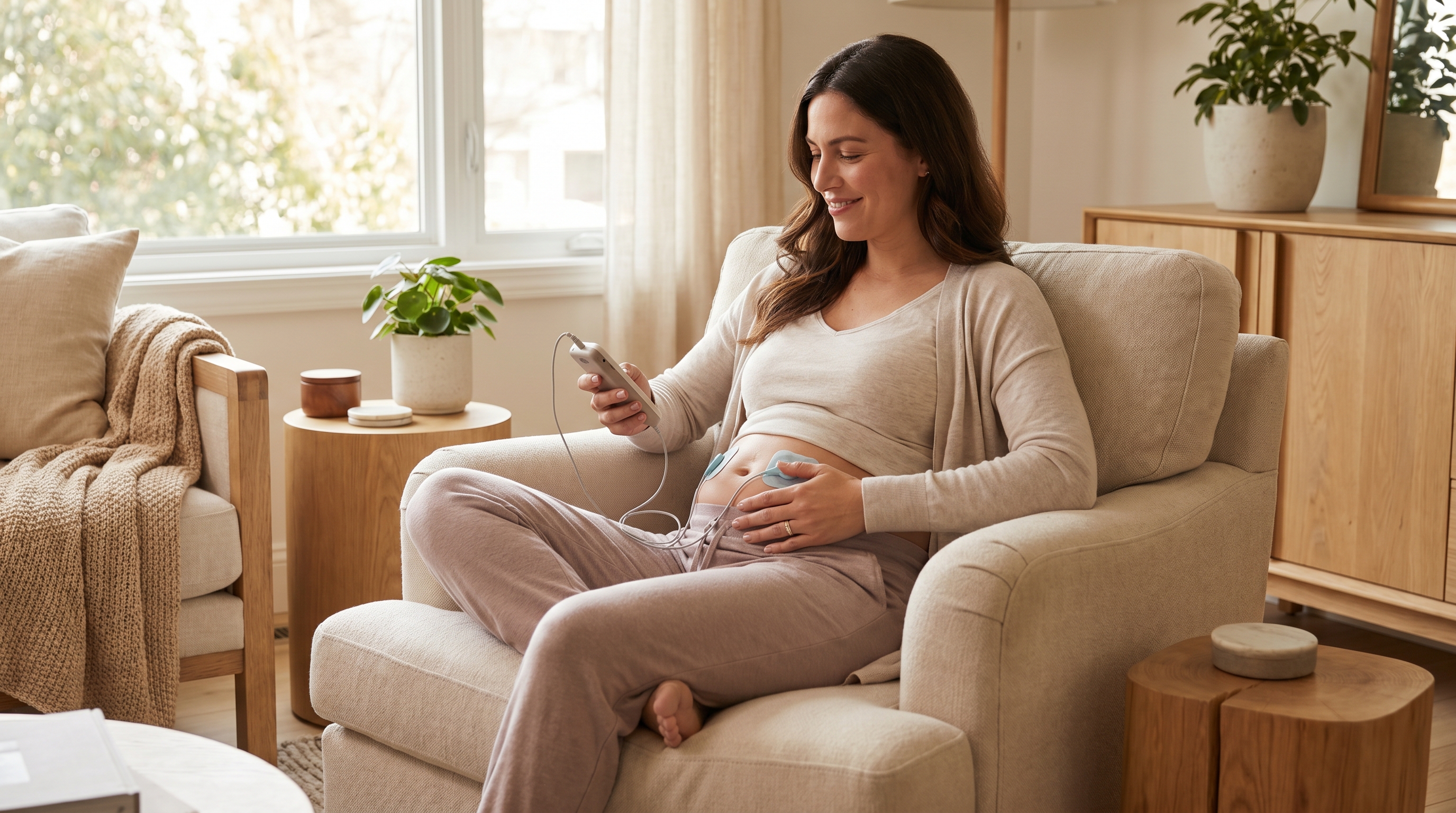
ALT: Postpartum woman using home Kegel EMS electrical stimulation device for pelvic floor recovery after vaginal birth
Advanced Considerations: Special Cases, Misconceptions, and Complementary Therapies
Special Situations That Require Extra Care
C-Section Recovery: While abdominal surgery bypasses vaginal birth trauma, C-section mothers still carry months of pregnancy-related pelvic floor loading. Additionally, the abdominal wall weakness following surgery can create a compensatory strain on the pelvic floor. Most practitioners recommend waiting at least 8–10 weeks post-C-section before beginning Kegel EMS, with individualized guidance from a provider who can assess abdominal healing.
Perineal Tears and Episiotomies: Women who experienced significant tearing (third or fourth degree) or episiotomies require additional healing time before introducing an intravaginal EMS probe. In these cases, pelvic floor PT with external stimulation techniques may be recommended first, with internal EMS introduced only after complete tissue repair is confirmed.
Postpartum Depression and Mental Load: Recovery from birth is not only physical. Women managing postpartum depression, anxiety, or the cognitive load of new motherhood may find that a simple, automated home device reduces the mental barrier to consistent pelvic floor care — one of the genuine practical advantages of Kegel EMS therapy.
Common Misconceptions Clarified
Myth: "I had a C-section, so I don't need pelvic floor therapy." False. As noted above, pregnancy itself compromises the pelvic floor regardless of delivery mode.
Myth: "If I don't have leakage, my pelvic floor is fine." Not necessarily. Pelvic floor dysfunction can present as tightness, pelvic pain, back pain, or prolapse — none of which require incontinence to be clinically significant.
Myth: "EMS is the same as TENS and just manages pain." These are distinct technologies with different therapeutic targets. While both use electrical pulses, TENS (Transcutaneous Electrical Nerve Stimulation) is primarily designed for pain relief by modulating nerve signals — as explained in detail in this guide on What Is TENS Therapy and How Does It Relieve Pain Without Drugs? — whereas EMS specifically causes muscle contractions for strengthening and rehabilitation.
Complementary Approaches That Enhance EMS Results
Kegel EMS therapy works best as part of a broader recovery strategy that includes adequate hydration, progressive return to exercise (walking before running), core breathing exercises (diaphragmatic breathing), and — where accessible — periodic check-ins with a pelvic floor physiotherapist. EMS devices are powerful tools, not standalone cures; their effectiveness multiplies when combined with consistent lifestyle support.
Frequently Asked Questions FAQ
Q1: How soon after giving birth can I safely start Kegel EMS therapy?
Most clinical guidelines suggest waiting until at least 6 weeks postpartum for uncomplicated vaginal deliveries, and potentially 8–10 weeks or longer for C-sections or significant perineal tears. The key prerequisite is written or verbal clearance from your OB-GYN, midwife, or pelvic floor physiotherapist. Every postpartum body is different — your provider can assess tissue healing, residual bleeding, and any contraindications before you begin. Never self-initiate EMS therapy in the immediate postpartum period, as this could interfere with natural tissue recovery.
Q2: Is Kegel EMS therapy safe to use at home without professional supervision?
For healthy postpartum women who have received medical clearance, home-use Kegel EMS devices designed for consumer use — such as those offered by iStim — are generally considered safe when used according to manufacturer guidelines. The devices feature adjustable intensity settings that allow users to begin gently and progress at their own pace. However, "safe for home use" does not mean "requires no professional input." Incorporating at least initial guidance from a pelvic floor physiotherapist significantly improves outcomes and reduces the risk of using the device incorrectly.
Q3: How long does it typically take to see results from Kegel EMS therapy after childbirth?
Recovery timelines vary based on the degree of pelvic floor dysfunction, consistency of use, and individual physiology. Many women report noticeable improvements in urinary control and pelvic stability within 4–8 weeks of consistent Kegel EMS therapy — typically with sessions three to four times per week. Significant structural strengthening and symptom resolution may take 3–6 months of sustained practice. Think of pelvic floor EMS like physical therapy for any other muscle group: progressive, cumulative, and worth the commitment for long-term results.
Summary
Postpartum pelvic floor recovery is not optional — it is an essential investment in your long-term health, quality of life, and physical confidence. Three core takeaways from this guide:
1. Timing and medical clearance are non-negotiable. The postpartum body is in a dynamic state of healing. Introducing Kegel EMS therapy before appropriate tissue recovery can do more harm than good. Wait for clearance — typically around 6 weeks for vaginal deliveries — and then begin.
2. Kegel EMS therapy closes the compliance gap that defeats manual Kegels. Most women who rely solely on voluntary exercises either perform them incorrectly or abandon them within weeks. EMS automatically engages the correct muscles, delivers consistent stimulation, and removes the guesswork — making long-term recovery dramatically more achievable.
3. Quality, safety-certified devices matter. Not all Kegel EMS devices are equal. Choosing a device backed by ISO-certified manufacturing, designed for home use, and supported by clinical-grade technology is the foundation of safe, effective recovery. iStim's Kegel EMS devices are engineered specifically to meet this standard, delivering professional-quality stimulation with the convenience and accessibility that new mothers genuinely need.
Your next steps: obtain medical clearance at your postpartum appointment, begin familiarizing yourself with voluntary Kegel contractions, and explore iStim's range of Kegel EMS devices to find the right tool for your recovery stage.
Ready to take control of your pelvic floor health and recovery from the comfort of home? iStim offers a full range of professional-grade TENS, EMS, and Kegel devices engineered for safe, effective, drug-free therapy trusted by over 20,000 customers. Explore the complete lineup and find the right device for your needs at https://istim.com/.
References
- American College of Obstetricians and Gynecologists (ACOG). "Optimizing Postpartum Care: ACOG Committee Opinion."
https://www.acog.org/clinical/clinical-guidance/committee-opinion/articles/2018/05/optimizing-postpartum-care - National Institute of Diabetes and Digestive and Kidney Diseases (NIDDK). "Kegel Exercises."
https://www.niddk.nih.gov/health-information/urologic-diseases/kegel-exercises - National Library of Medicine / PubMed. "Pelvic floor muscle training versus no treatment, or inactive control treatments, for urinary incontinence in women."
https://pubmed.ncbi.nlm.nih.gov/26171681/ - Office on Women's Health, U.S. Department of Health & Human Services. "Body changes and discomforts during and after pregnancy."
https://www.womenshealth.gov/pregnancy/childbirth-and-beyond/body-changes-and-discomforts - Physiotherapy Evidence Database (PEDro). "Electrical stimulation for the treatment of stress urinary incontinence."
https://pedro.org.au/
Note: Standards and clinical guidelines may be updated. Please check the latest official documents or consult a qualified healthcare professional for the most current recommendations.
About iStim
iStim is a Los Angeles-based electrotherapy brand specializing in professional-grade TENS, EMS, and Kegel devices designed for home use, combining ISO-certified Taiwanese manufacturing with a commitment to drug-free pain relief and muscle stimulation trusted by 20,000+ customers worldwide. Learn more at https://istim.com/.
Disclaimer: This article is provided for informational and educational purposes only and does not constitute medical advice. The content is produced in association with iStim and reflects general wellness information. Always consult a qualified healthcare professional before beginning any new therapy or treatment program. © iStim. All rights reserved.
Leave a comment