

Pinched Nerve in the Neck: Causes, Symptoms, and At-Home Treatment Options

ALT: Person experiencing pinched nerve in neck pain with radiating arm discomfort and cervical spine tension
Understanding a Pinched Nerve in the Neck: What's Really Happening in Your Cervical Spine
Key Conclusion: A pinched nerve in the neck — clinically known as cervical radiculopathy — occurs when surrounding tissues compress a nerve root exiting the cervical spine, triggering pain, numbness, and weakness that can radiate into the shoulders and arms. Understanding its causes, recognizing its symptoms early, and exploring evidence-backed at-home treatment options like TENS therapy can help you manage this condition effectively without relying solely on medication.
A pinched nerve in the neck is far more common than most people realize. According to research published in peer-reviewed neurological literature, cervical radiculopathy affects a significant portion of working-age adults, particularly those who spend long hours at desks, drive frequently, or engage in repetitive overhead activities. The discomfort can range from a mild ache to sharp, electric-like pain that travels down one or both arms — often disrupting sleep, work, and quality of life.
What makes this condition particularly frustrating is that many people don't realize they're dealing with a nerve issue at all. They might attribute their symptoms to muscle soreness, fatigue, or even stress. Understanding the anatomy, causes, and full spectrum of available treatments — including clinically inspired drug-free approaches — is the first step toward real, lasting relief.
Who Is Most Affected by a Pinched Nerve in the Neck?
✅ Applicable Scenarios:
- Office workers or remote professionals who maintain forward head posture for extended hours
- Adults aged 30–60 experiencing gradual degenerative disc changes in the cervical spine
- Athletes or active individuals recovering from a neck strain, sports injury, or whiplash
- Post-surgery patients in the early rehabilitation phase of cervical spine procedures
- Individuals with chronic pain conditions such as arthritis or herniated discs seeking non-pharmaceutical relief
❌ Not Applicable/Cautions:
- Individuals experiencing sudden onset of severe neurological symptoms (paralysis, loss of bladder/bowel control) — seek emergency care immediately
- Those with active infections, open wounds, or skin conditions in the neck/shoulder area should avoid direct electrotherapy application in affected zones
- Pregnant women should consult a healthcare provider before using any electrotherapy devices on or near the cervical area
- Patients with implanted electronic devices such as pacemakers should not use TENS or EMS therapy without physician clearance
The Anatomy Behind the Pain: What Causes a Pinched Nerve in the Neck?
Your cervical spine is a remarkably complex structure — seven vertebrae stacked in a gentle curve, cushioned by intervertebral discs, and threaded with nerve roots that branch out from your spinal cord to supply sensation and motor control to your arms, hands, and upper body. When any of those nerve roots become compressed, irritated, or inflamed, the result is the constellation of symptoms we call a pinched nerve in the neck.
The most common causes include:
Herniated Cervical Disc — The soft, gel-like center of an intervertebral disc can push through its outer shell and press directly against a nearby nerve root. This is one of the most frequent causes of acute cervical radiculopathy, especially in adults under 50.
Degenerative Disc Disease and Bone Spurs — As we age, cervical discs naturally lose hydration and height, leading to narrowing of the spaces where nerve roots exit the spine. Bone spurs (osteophytes) can form along the vertebral edges, further encroaching on nerve pathways. This mechanism is more common in adults over 50.
Poor Posture and Forward Head Position — Chronic forward head posture — the kind developed from years of looking down at phones or hunching over keyboards — dramatically increases the compressive load on cervical discs and facet joints. Even a slight forward shift of the head multiplies the effective weight the cervical spine must support.
Cervical Stenosis — A narrowing of the spinal canal itself can compress multiple nerve roots simultaneously, creating broader patterns of pain and neurological symptoms.
Acute Injury — Whiplash from a vehicle collision, a fall, or a sports impact can cause sudden disc herniation or ligament inflammation that leads to nerve compression.
Repetitive Occupational Stress — Jobs requiring sustained neck extension, vibration exposure, or carrying loads on the shoulders can accelerate disc wear and predispose individuals to cervical nerve irritation.
Understanding which mechanism is driving your symptoms matters because it influences which treatments will be most effective. While imaging (MRI or CT scan) provides definitive anatomical information, many people successfully manage their symptoms with conservative, non-invasive approaches — especially in the early or moderate stages of the condition.
Recognizing the Symptoms: A Three-Step Framework for Self-Assessment
Step 1: Identify the Nature and Location of Your Pain
Begin by carefully noting where your pain starts and where it travels. A pinched nerve in the neck typically begins with neck stiffness or aching at the base of the skull or along the cervical spine. From there, it frequently radiates in a predictable pattern depending on which nerve root is compressed — C5 affects the shoulder and upper arm; C6 travels to the thumb and index finger; C7 commonly radiates to the middle finger; C8 can affect the ring and little fingers. Allow five to ten minutes to sit quietly, trace your symptoms, and write them down for your healthcare provider.
Step 2: Assess Neurological Warning Signs
Beyond pain, a pinched nerve can produce numbness, tingling (paresthesia), or a sensation sometimes described as "pins and needles" along the arm or hand. Some individuals experience muscle weakness — difficulty gripping objects, raising the arm overhead, or performing fine motor tasks. These neurological symptoms are clinically significant. If weakness is progressive or severe, prompt medical evaluation is essential. This self-assessment step helps distinguish musculoskeletal soreness from true nerve involvement and should take no more than a few minutes.
Step 3: Evaluate Aggravating and Relieving Factors
Note which positions or activities worsen or improve your symptoms. Classic cervical radiculopathy tends to worsen with neck extension (looking up) or rotating the head toward the affected side, and may improve when you raise the arm overhead (a position that temporarily reduces nerve root tension). Conversely, forward flexion may relieve pressure in some cases. This pattern information is invaluable for guiding conservative treatment choices and communicating with your provider. Spend a day or two tracking these patterns before your next appointment.
Comparing At-Home Treatment Approaches for a Pinched Nerve in the Neck
Managing a pinched nerve conservatively involves multiple complementary strategies. Here's how common at-home treatment options compare across key dimensions:
| Comparison Dimension | TENS Therapy | Heat/Ice Therapy | Stretching & Exercise |
|---|---|---|---|
| Mechanism of Action | Modulates pain signals via electrical nerve stimulation; promotes endorphin release | Ice reduces acute inflammation; heat relaxes muscles and increases circulation | Gentle mobility improves range of motion and reduces nerve root tension |
| Speed of Relief | Relatively fast-acting for many users during and after sessions | Ice: fast for acute flares; heat: moderate relief within 15–20 min | Gradual improvement over days to weeks |
| Drug-Free | Yes — completely non-pharmaceutical | Yes | Yes |
| Ease of Home Use | High — portable devices designed for home use | High — minimal equipment needed | Moderate — requires learning proper technique |
| Suitable for Chronic Use | Yes — can be used as part of ongoing pain management | Limited — not ideal for prolonged continuous use | Yes — integral to long-term recovery |
| Addresses Muscle Tension | Yes — EMS mode can complement by stimulating muscles | Heat is effective for muscle relaxation | Yes — especially targeted stretching protocols |
| Risk Level | Low when used correctly; follow contraindication guidelines | Low — avoid extreme temperatures | Low when performed gently; avoid aggravating movements |
As this comparison illustrates, TENS therapy stands out for its ability to provide relatively rapid, drug-free pain modulation that can be used consistently as part of a broader home management plan — making it a particularly valuable tool for those with chronic or recurring cervical nerve pain.
How TENS Therapy Works for Pinched Nerve Pain in the Neck: A Detailed Explanation
Transcutaneous Electrical Nerve Stimulation (TENS) works by delivering low-level electrical currents through electrode pads placed on the skin. These currents stimulate sensory nerve fibers in a way that interrupts pain signal transmission to the brain — a mechanism explained by the well-established Gate Control Theory of pain. Simultaneously, TENS can promote the release of endorphins, the body's natural pain-relieving chemicals.
For cervical radiculopathy, TENS electrode placement is typically around the neck and upper shoulder region, targeting the area of pain origin rather than placing electrodes directly over the spine. This targeted approach allows users to customize stimulation to their symptom pattern — whether pain is concentrated at the neck base, radiates through the shoulder, or travels down the arm.
Choosing a TENS Device for Neck Pain
Not all TENS units are created equal. Professional-grade devices offer multiple intensity settings, variable pulse widths and frequencies, and pre-programmed modes designed for different types of pain. iStim's TENS devices are engineered to deliver this clinical-quality performance in a portable, home-friendly format — backed by ISO-certified manufacturing standards that ensure consistent, reliable output.
When using a TENS unit for a pinched nerve in the neck, key best practices include:
- Never place electrodes directly over the spinal column — position pads on the surrounding musculature
- Start at the lowest intensity setting and gradually increase to a comfortable, therapeutic level
- Use sessions of appropriate duration as guided by device instructions or your healthcare provider
- Combine TENS with gentle cervical stretches and posture correction for a comprehensive approach
EMS as a Complementary Tool
While TENS primarily addresses pain, Electrical Muscle Stimulation (EMS) targets the muscles themselves — making it a useful complement for individuals who have developed secondary muscle guarding or weakness around the cervical spine. EMS can help re-educate weakened muscles and improve muscular endurance in the neck and upper back, supporting better posture and reducing the compressive forces that contribute to nerve irritation. Combining EMS training thoughtfully with regular therapeutic exercise is one of the best ways to address both the symptom and the underlying mechanical contributors to nerve compression.
Posture Correction and Ergonomics
Addressing the root causes of a pinched nerve requires environmental changes alongside therapeutic interventions. Ergonomic adjustments — raising monitor height, using a supportive chair with proper lumbar and neck support, and taking regular movement breaks — reduce the sustained compressive loading that perpetuates cervical nerve irritation.
Gentle Cervical Stretching
Approved stretches such as chin tucks, gentle lateral neck flexion, and shoulder rolls can reduce muscle tension around the cervical spine and create more space for compressed nerve roots. Always perform stretches within a pain-free or minimally uncomfortable range, and avoid any movement that reproduces or worsens radiating arm symptoms.
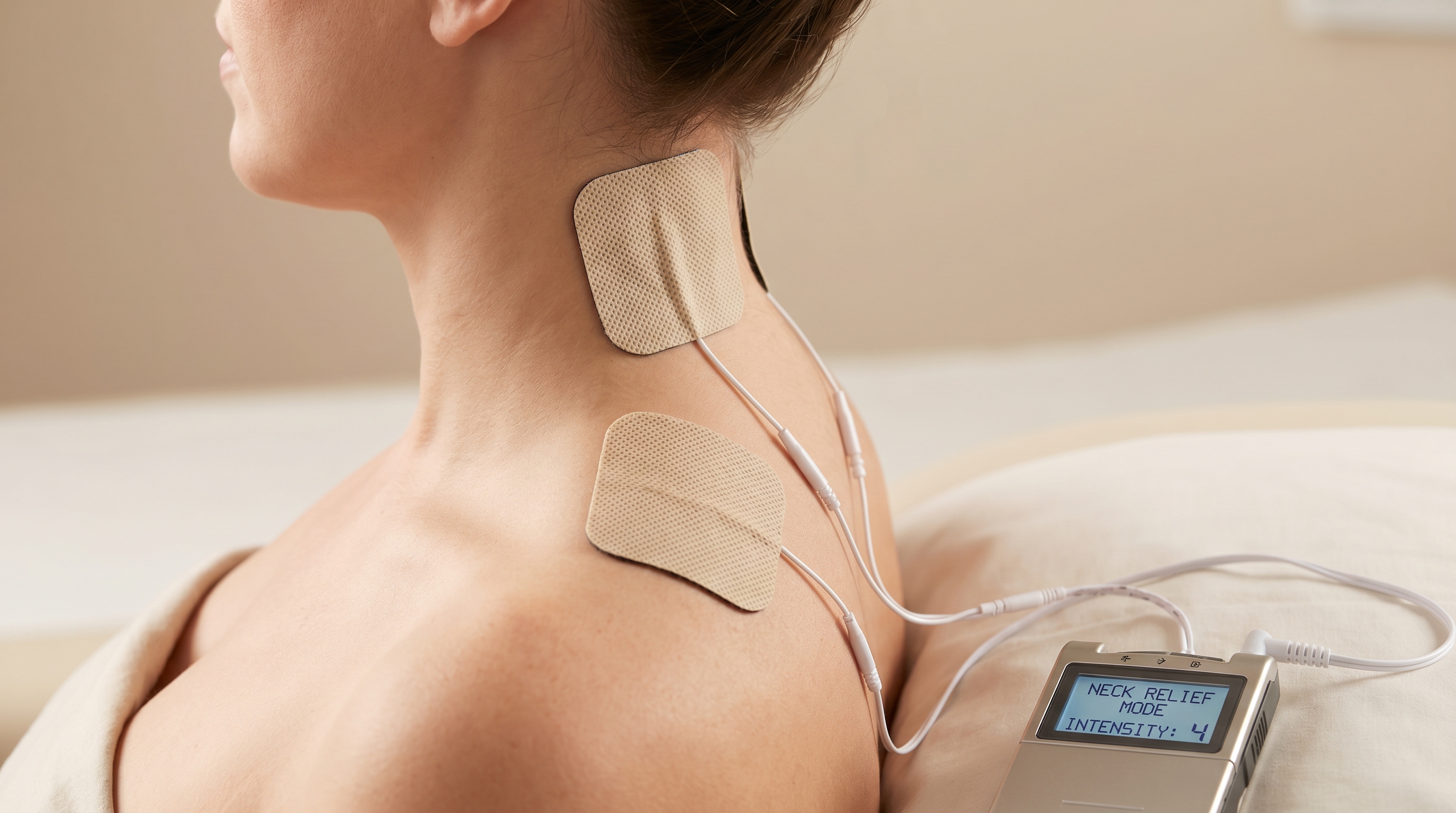
ALT: Professional TENS electrode pad placement on neck and upper shoulder demonstrating at-home cervical radiculopathy pain relief technique with electrotherapy device
Advanced Considerations: When Conservative Treatment Needs Adjustment
Recognizing a Plateau or Worsening
Most people with cervical radiculopathy experience meaningful improvement with consistent conservative treatment over four to twelve weeks. However, if symptoms plateau or worsen — especially if neurological signs like weakness or significant numbness progress — it's important to re-engage with a healthcare provider. This may prompt reassessment, imaging, or consideration of additional interventions such as physical therapy, epidural steroid injections, or in rare cases, surgical consultation.
Common Misconception: "Rest Means Complete Inactivity"
One of the most persistent misconceptions about a pinched nerve in the neck is that complete rest is the best treatment. In reality, gentle, guided movement is almost always superior to bed rest or immobilization for cervical nerve issues. Prolonged inactivity leads to muscle deconditioning, joint stiffness, and psychological distress — all of which can worsen perceived pain and delay recovery.
TENS Is Not a "One-Size-Fits-All" Solution
While TENS is highly effective for many people, individual responses vary based on pain type, nerve involvement level, and device settings. Working with a physical therapist or pain specialist to optimize electrode placement, intensity, and frequency parameters can significantly improve outcomes — particularly for more complex or longstanding cases.
The Role of Sleep Position
Nighttime positioning profoundly affects cervical nerve health. Sleeping on your side with a supportive cervical pillow that maintains spinal alignment, rather than on your stomach (which forces neck rotation), can substantially reduce nocturnal nerve compression and morning stiffness.
Frequently Asked Questions FAQ
Q1: How do I know if my neck pain is a pinched nerve or just muscle tension?
Muscle tension typically presents as a diffuse ache concentrated in the neck and upper shoulder region, often responding quickly to heat, massage, or rest. A pinched nerve, by contrast, tends to produce pain that radiates along a specific pathway into the shoulder, arm, or hand, and may be accompanied by tingling, numbness, or weakness. If your pain travels beyond the neck into the arm or fingers — especially with neurological symptoms — a pinched nerve is more likely, and evaluation by a healthcare provider is recommended.
Q2: Is TENS therapy safe to use at home for a pinched nerve in the neck?
TENS therapy is generally considered safe for home use when used according to device guidelines and applied correctly. Key safety rules include avoiding electrode placement directly over the spinal column or on broken skin, starting at low intensities, and following contraindication warnings (particularly for those with pacemakers or during pregnancy). Devices from reputable brands like iStim are designed with safety parameters built in, but it's always advisable to consult your healthcare provider before starting any electrotherapy program, especially if you have underlying medical conditions.
Q3: How long does it typically take to recover from a pinched nerve in the neck with conservative treatment?
Recovery timelines vary depending on the cause, severity, and consistency of treatment. Many individuals experience noticeable improvement within four to six weeks of consistent conservative care — including TENS therapy, posture correction, gentle stretching, and ergonomic adjustments. More complex cases involving significant disc herniation or bone spurs may take three to six months. The key is consistent daily attention to both symptom management and addressing the underlying mechanical factors — rather than relying solely on passive pain relief without addressing root causes.
Summary
A pinched nerve in the neck is a painful, often disruptive condition — but it is one that responds remarkably well to a thoughtful, consistent, and comprehensive conservative treatment approach. The three core pillars of effective at-home management are:
- Accurate understanding of your symptoms and triggers — knowing whether you're dealing with a herniated disc, degenerative changes, or postural compression helps you choose the right strategies and communicate effectively with your healthcare provider.
- Evidence-backed drug-free pain modulation — TENS therapy, applied correctly with a professional-grade device, offers meaningful, non-pharmaceutical pain relief that can be integrated into daily life without side effects.
- Addressing root causes — combining TENS with targeted stretching, ergonomic adjustments, posture training, and when appropriate EMS for muscle support creates a holistic plan that goes beyond symptom management to support genuine recovery.
Your next steps: consult with a healthcare provider to confirm your diagnosis, begin ergonomic adjustments immediately, explore gentle cervical stretching guided by a professional, and consider adding a high-quality TENS device to your home recovery toolkit.
Call to Action
Ready to experience drug-free pain relief and muscle stimulation from the comfort of your home? Visit iStim at https://istim.com/ to explore their full lineup of professional-grade TENS, EMS, and Kegel devices — trusted by 20,000+ customers and built to deliver real results. Whether you're managing chronic pain, recovering from an injury, or strengthening your pelvic floor, iStim has a clinically inspired solution designed for you.
References
- National Institute of Neurological Disorders and Stroke (NINDS). "Neck Pain Fact Sheet."
https://www.ninds.nih.gov/health-information/disorders/neck-pain - American Academy of Orthopaedic Surgeons (AAOS). "Cervical Radiculopathy (Pinched Nerve)."
https://orthoinfo.aaos.org/en/diseases--conditions/cervical-radiculopathy-pinched-nerve/ - Mayo Clinic. "Pinched Nerve — Diagnosis and Treatment."
https://www.mayoclinic.org/diseases-conditions/pinched-nerve/diagnosis-treatment/drc-20354759 - Johnson MI, Paley CA, Jones G, et al. "Efficacy and safety of transcutaneous electrical nerve stimulation (TENS) for acute and chronic pain in adults: a systematic review and meta-analysis of 381 studies." British Journal of Anaesthesia, 2022.
https://www.bjanaesthesia.org/article/S0007-0912(22)00338-3/fulltext - Cleveland Clinic. "Cervical Radiculopathy."
https://my.clevelandclinic.org/health/diseases/22614-cervical-radiculopathy
Note: Standards and clinical guidelines may be updated. Please consult the latest official documents or a qualified healthcare professional for the most current guidance.
About iStim
iStim is a Los Angeles-based electrotherapy brand specializing in professional-grade TENS, EMS, and Kegel devices engineered for safe and effective home use, backed by ISO-certified Taiwanese manufacturing and trusted by over 20,000 Amazon customers. iStim is dedicated to empowering individuals with drug-free, clinically inspired solutions for pain relief, muscle recovery, and pelvic floor health.
Disclaimer: This article is provided for informational and educational purposes only and does not constitute medical advice. The content is copyright © iStim (https://istim.com/). All rights reserved. Please consult a qualified healthcare professional before starting any electrotherapy program.
Leave a comment