

Knob-Turning vs Air_x0002_Pump Neck Traction Device
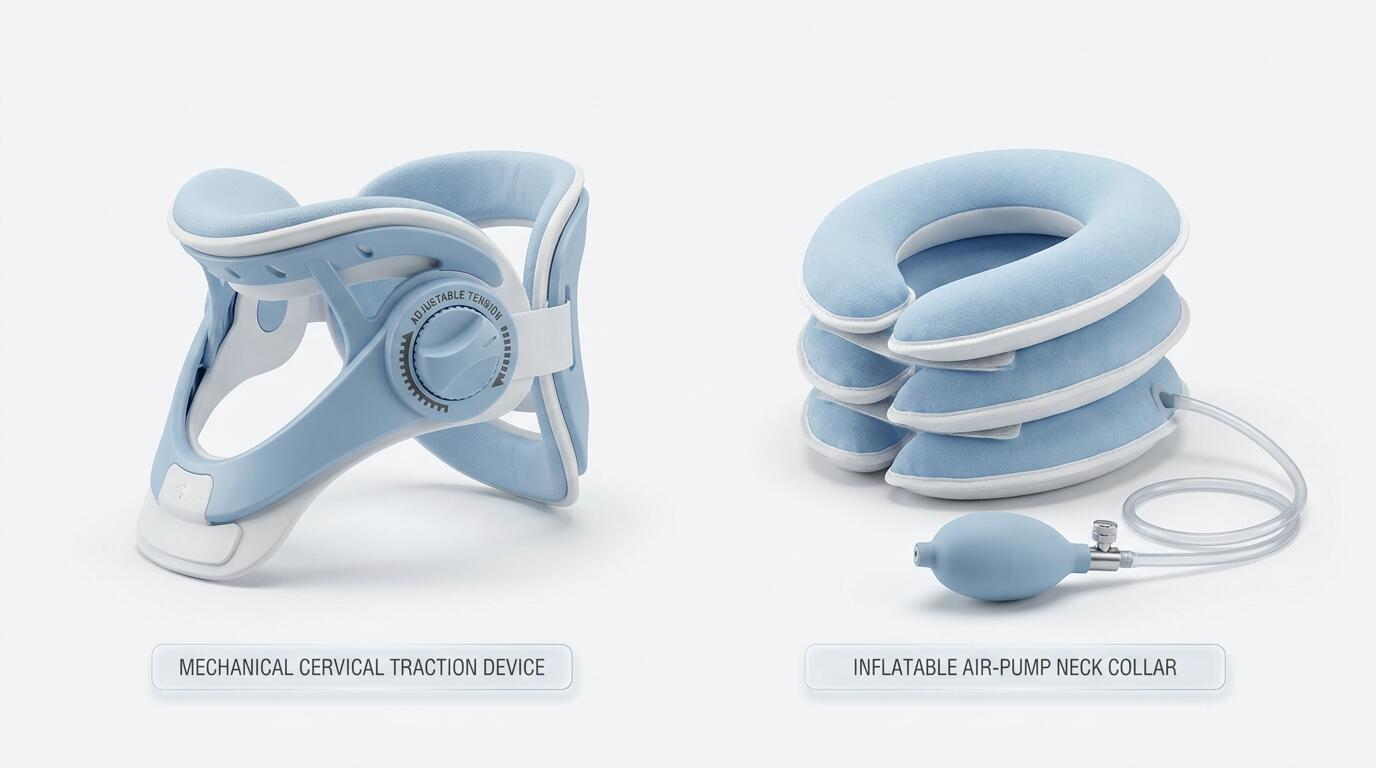
ALT: Knob-turning neck traction device compared side by side with air pump neck collar for cervical pain relief
Knob-Turning vs. Air-Pump Neck Traction Device: Which One Actually Works for Cervical Pain Relief?
Key Conclusion: When comparing knob-turning neck traction to air-pump neck collars, the key difference lies in precision, consistency, and user control. Knob-turning mechanisms allow for measurable, incremental adjustments that are difficult to achieve with air-pump designs. For individuals dealing with cervical disc compression, chronic neck pain, or post-injury recovery, understanding which device best suits your anatomy and lifestyle is critical to achieving safe, effective results at home.
Neck traction has quietly become one of the most searched-for home therapy solutions in recent years — and for good reason. Millions of adults struggle with cervical disc degeneration, herniated discs, pinched nerves, and the kind of postural strain that comes from hours hunched over screens. Two device types have emerged as the primary contenders: knob-turning cervical traction devices and air-pump neck collars. Both promise decompression and relief, but they work very differently.
This guide breaks down each mechanism in plain language, compares their real-world performance across several key dimensions, and helps you decide which approach makes the most sense for your specific situation. Whether you're a desk worker with recurring tension headaches, an athlete recovering from a cervical strain, or a senior managing degenerative disc disease, the right choice depends on more than just price.
Who Should (and Shouldn't) Read This Comparison
✅ Applicable Scenarios:
- Adults experiencing chronic cervical disc compression, nerve impingement, or persistent neck stiffness seeking a non-pharmaceutical decompression option
- Post-injury or post-surgery patients cleared by their physician to begin at-home cervical traction therapy
- Desk workers and remote professionals looking for a daily-use cervical decompression tool that integrates easily into a home routine
- Older adults and seniors managing age-related cervical degeneration who need simple, low-effort devices
- Athletes and active individuals who want precise traction control during muscle recovery periods
❌ Not Applicable/Cautions:
- Individuals with acute cervical fractures, spinal instability, severe osteoporosis, or active infection in the cervical region — traction of any kind is contraindicated without physician clearance
- Anyone currently experiencing severe neurological symptoms such as sudden loss of strength, numbness radiating into both arms, or loss of bladder/bowel control — these require immediate medical evaluation, not home traction
- Pregnant individuals should consult a healthcare provider before using any mechanical cervical traction device
Why Neck Traction Has Become a Mainstream Home Therapy Tool
Neck pain is one of the most prevalent musculoskeletal complaints globally. According to research published through the National Institutes of Health, cervical pain affects roughly 30% of adults in any given year, with a significant portion becoming chronic. The demand for at-home, drug-free solutions has surged alongside rising awareness of the side effects associated with long-term NSAID use and the limitations of passive rest.
Cervical traction — the controlled, gentle elongation of the cervical spine — has been used clinically for decades. Physical therapists have long employed intermittent mechanical traction to decompress cervical discs, reduce nerve root pressure, and relieve associated headaches and shoulder tension. The challenge has always been translating this clinical tool into a safe, accessible, and affordable home format.
That translation has produced two dominant product categories: knob-turning traction devices (also called mechanical or dial-adjustable traction devices) and air-pump neck collars (also called inflatable cervical collars). Both attempt to create the same therapeutic effect — longitudinal distraction of the cervical vertebrae — but through fundamentally different mechanisms.
For anyone doing their homework before purchasing, the Best Cervical Traction Device for Home Use guide provides a comprehensive overview of the full product landscape, including important safety considerations. Similarly, if you're a desk worker specifically, the resource on the Best Neck Stretcher for Desk Workers covers posture-specific recommendations that pair well with the information here.
Understanding the mechanical distinction between these two device types isn't just academic — it directly affects how safe, comfortable, and therapeutically effective your traction experience will be.
A Practical Guide to Choosing and Using Neck Traction Devices
Getting Started: Three Steps to Your First Session
Step 1: Assess Your Needs and Contraindications
Before investing in any cervical traction device, spend five to ten minutes honestly evaluating your symptoms. Is your neck pain localized or does it radiate into your arms? Have you been diagnosed with a herniated cervical disc, or is your discomfort primarily muscular? Note whether your symptoms worsen with prolonged sitting (suggesting postural compression) or with specific movements (suggesting joint or disc involvement). This self-assessment — ideally validated by a healthcare provider — will determine which traction type is appropriate and what traction force level is safe for you.
Step 2: Select the Right Device Type Based on Your Profile
Once your needs are clear, match them to the appropriate mechanism. If you require consistent, repeatable traction at a specific decompression level — especially for disc-related issues — a knob-turning mechanical device generally offers more reliable control. If you're primarily dealing with muscle tension and want a soft, gentle option for occasional use or travel, an air-pump collar may be sufficient. Consider portability, ease of setup, and your comfort with adjusting mechanical components when making this decision.
Step 3: Begin with a Conservative Starting Point and Progress Gradually
Regardless of device type, always begin at the lowest available traction setting. For your first session, limit use to five to ten minutes and pay close attention to how your neck responds — both during and for several hours after. Mild stretching sensation is normal; sharp pain, tingling that worsens, or dizziness are signals to stop immediately. Gradually increase duration and traction intensity only after confirming tolerance over several sessions, and always follow the manufacturer's guidelines.
Knob-Turning vs. Air-Pump Neck Collars: A Direct Comparison
Both device categories have their advocates, and the best choice genuinely depends on individual needs. The following comparison cuts through the marketing language to evaluate each type across the dimensions that matter most to home users.
Knob-turning cervical traction devices use a manual dial or rotating mechanism — typically built into an over-the-door or seated unit — to apply measurable, incrementally adjustable traction force. The user controls the degree of distraction with specificity, and the force remains stable throughout the session.
Air-pump neck collars are inflatable devices worn around the cervical spine like a collar. The user pumps air into the collar via a hand bulb, which gradually expands the collar and lifts the head away from the shoulders. Deflation releases the traction.
| Comparison Dimension | Knob-Turning Traction Device | Air-Pump Neck Collar | Key Consideration |
|---|---|---|---|
| Traction Force Control | High — incremental dial adjustment provides consistent, measurable force | Moderate — inflation pressure varies and is difficult to quantify precisely | Disc-related conditions benefit from consistent, measurable force |
| Ease of Use | Moderate — initial setup may require learning curve | High — straightforward pump-and-wear design | Seniors or users with limited hand dexterity may prefer air-pump |
| Portability | Low to moderate — over-door units are stationary; seated units more portable | High — lightweight and packable for travel | Frequent travelers benefit from inflatable collar portability |
| Traction Angle Control | Good — many models allow angle adjustment for flexion or extension | Limited — traction is primarily vertical and less customizable | Targeted disc decompression at specific angles requires mechanical control |
| Stability During Session | High — force is mechanically locked once set | Variable — air pressure can shift subtly during session | Consistent decompression requires stable force delivery |
| Suitable For | Disc herniation, nerve root compression, clinical-grade home therapy | Muscle tension, mild stiffness, travel use, general neck fatigue | Match device type to diagnosed condition, not just preference |
| Price Range | Moderate to higher investment | Lower to moderate investment | Higher upfront cost of knob-type may reflect long-term therapeutic value |
| Maintenance | Minimal — durable mechanical components | Moderate — air bladder integrity requires monitoring over time | Inflatable components may degrade with extended use |
Deeper Dive: Understanding the Mechanics and Their Real-World Impact
How Knob-Turning Traction Works
The defining advantage of knob-turning cervical traction is precision. When you rotate the adjustment dial on a mechanical traction device, you are physically moving structural components of the device — typically spreading a frame or adjusting a strap system — in controlled, quantifiable increments. This means that if a physical therapist has recommended a specific traction force for your condition, you can replicate that force session after session with reasonable consistency.
This repeatability matters clinically. Cervical disc decompression is most effective when applied consistently over time. Variability in force delivery — even if the average feels similar — can reduce therapeutic benefit and, in some cases, cause discomfort through uneven loading of cervical structures.
Many knob-turning designs also allow users to control the angle of traction. Neutral traction (straight up) versus slight flexion (chin tucked forward) decompresses different levels of the cervical spine. C5-C6 and C6-C7 discs — among the most commonly affected in degenerative disc disease — respond differently to traction angle. This nuance is difficult or impossible to achieve with a standard air-pump collar.
How Air-Pump Neck Collars Work
An air pump neck collar inflates around the cervical spine, using the expanding foam or bladder structure to gently push the jaw upward and elongate the neck. It's a simple, intuitive concept, and it does create some degree of cervical distraction — particularly for the muscles and soft tissues around the upper cervical spine.
Where air-pump designs face limitations is in force control and consistency. Hand-pumped inflation is difficult to standardize, and small differences in pump strokes can translate to meaningful differences in applied force. Additionally, air bladders are subject to micro-leaks over time, meaning the collar may deliver less traction during later sessions than it did when new, without any obvious indication to the user.
That said, air-pump collars have real advantages. They are genuinely portable — you can pack one in a carry-on bag and use it on a plane or in a hotel room. They are easy to put on independently, which matters for users with limited mobility. And for mild muscle tension or general cervical fatigue (rather than disc pathology), the gentle circumferential support they provide can be genuinely soothing.
Matching Device Type to Condition Severity
The clinical picture matters enormously when choosing between these two device types. Consider a 45-year-old with confirmed C5-C6 disc herniation causing radiating arm pain. This user needs consistent, angle-specific traction delivered at a therapeutically meaningful force level — knob-turning mechanical traction is the more appropriate tool, and they would do well to review resources like How to Compare Neck Traction Devices Before Buying before making a purchase.
Now consider a 32-year-old remote worker with chronic upper trapezius tightness and occasional cervical stiffness from poor desk posture. Their condition is primarily postural and muscular. An air-pump collar used for 15 minutes during a lunch break could provide meaningful relief, and its portability is a genuine lifestyle benefit.
For users who are unsure which category they fall into, the guide on Best Neck Traction Device on Amazon: What to Look For offers practical purchasing guidance, including what specifications and certifications to prioritize.
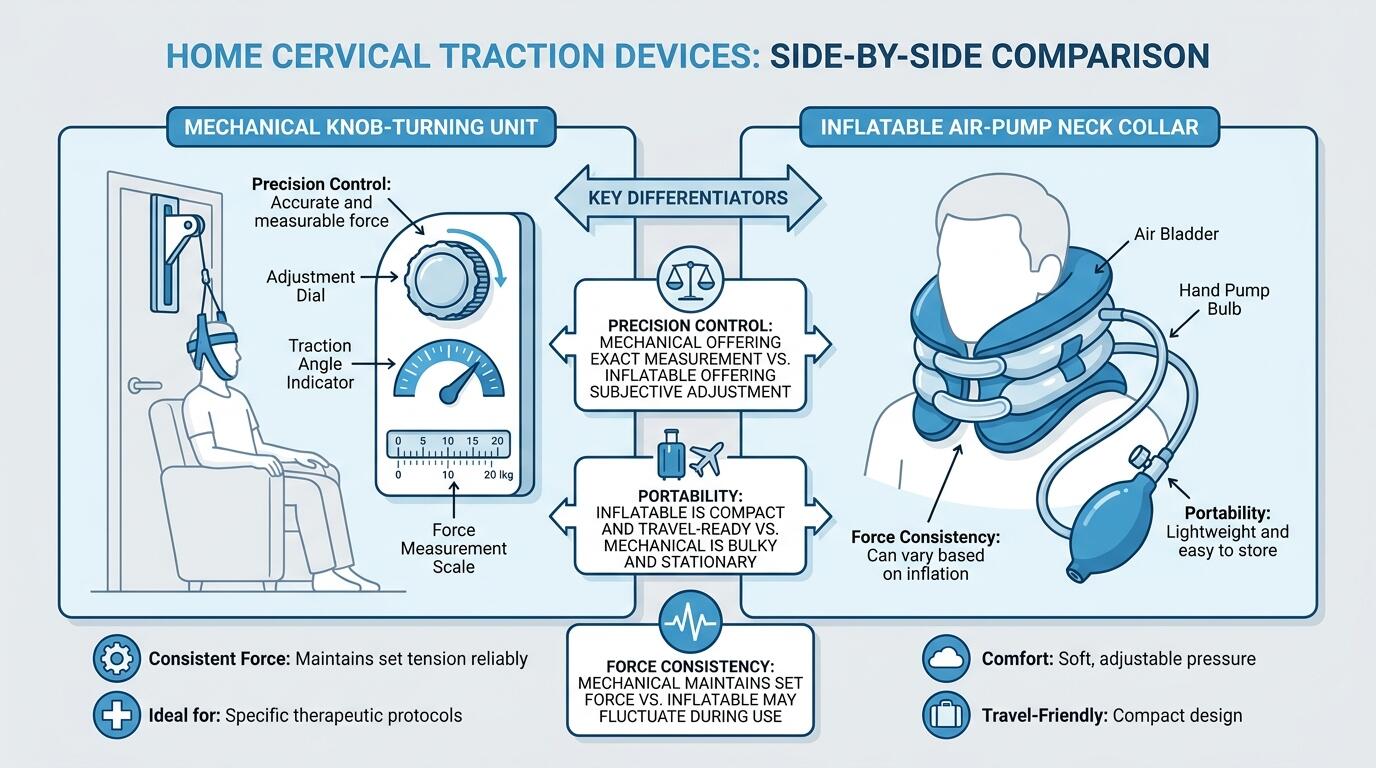
ALT: Side-by-side comparison of knob-turning mechanical cervical traction device and inflatable air-pump neck collar for home decompression therapy
Advanced Considerations: When Standard Guidance Isn't Enough
Special Situations That Require Extra Care
Post-Surgical Cervical Patients: Anyone who has undergone cervical spine surgery — including discectomy, fusion, or laminectomy — should only begin home traction with explicit clearance from their surgeon. Knob-turning devices, with their more controlled force delivery, are generally preferred in post-surgical contexts when traction is approved, but the timing and force parameters must be individualized.
Older Adults with Osteoporosis: Bone density loss in the cervical vertebrae means that traction forces that are comfortable and safe for a younger adult may be excessive for someone with significant osteoporosis. Air-pump collars, with their inherently gentler and more diffuse force application, may be safer for this population — though medical guidance is essential regardless.
Users with Temporomandibular Joint (TMJ) Issues: Some knob-turning and air-pump devices apply traction partly through chin support structures. If you have TMJ pain or jaw joint dysfunction, this contact point can worsen symptoms. Look specifically for devices that use occipital (back-of-head) support rather than chin cup designs.
Common Misconceptions to Address
Misconception: More traction force equals faster results. This is false and potentially harmful. Cervical traction works through gradual, consistent decompression over time. Excessive force can strain cervical ligaments and worsen disc pathology. Start low, progress slowly.
Misconception: Air-pump collars are always safer because they're softer. Softness doesn't equal safety in this context. An imprecisely inflated collar can apply more force than intended, particularly at the atlantoaxial joint (C1-C2). Both device types carry risks when used improperly.
Misconception: These devices replace physical therapy. Home traction devices are a complement to — not a replacement for — professional physical therapy. A qualified therapist can assess your cervical mechanics, recommend appropriate traction parameters, and address muscular and mobility issues that a traction device alone cannot correct.
Frequently Asked Questions FAQ
Q1: How do I know if knob-turning traction is better than an air-pump model for my specific neck condition?
The answer depends primarily on your diagnosis. Knob-turning traction is generally better suited for disc-related conditions — herniated cervical discs, foraminal stenosis, or nerve root compression — because it delivers consistent, angle-adjustable, measurable force. Air-pump collars are more appropriate for muscle-based tension, general fatigue, or as a convenient travel supplement. If your condition has been formally diagnosed, ask your physician or physical therapist which mechanism aligns with your treatment protocol before purchasing.
Q2: Is it safe to use a neck traction device every day at home without professional supervision?
Daily use can be appropriate for many users, but it's not universally safe without some baseline of professional guidance. Most physical therapists recommend starting with three to four sessions per week, assessing response, and then adjusting frequency. Daily use is generally considered safe for users whose conditions are stable, who have been cleared by a clinician, and who are using the device within recommended time and force parameters. If you experience increased pain, new neurological symptoms, or persistent soreness, reduce frequency and consult a healthcare provider.
Q3: How long does it typically take to notice results from cervical traction therapy at home?
Results vary by condition severity, consistency of use, and whether traction is combined with other therapeutic interventions like stretching or physical therapy. Many users report noticeable improvement in stiffness and localized pain within two to four weeks of consistent use. Disc-related nerve symptoms — such as radiating arm pain or numbness — may take longer to resolve and may require clinical-grade traction parameters to show meaningful change. Home traction is best viewed as a long-term management tool rather than a quick fix.
Summary
Choosing between a knob-turning neck traction device and an air-pump neck collar is not a trivial decision — it directly affects the safety, comfort, and therapeutic effectiveness of your cervical decompression routine. Here are the three core takeaways from this comparison:
1. Mechanism matters for clinical outcomes. Knob-turning devices offer superior precision, force consistency, and angle control — qualities that are particularly important for disc-related cervical conditions. Air-pump collars offer simplicity and portability that suit mild, muscular complaints and on-the-go use.
2. Match the device to your diagnosis, not your budget or convenience alone. Underinvesting in the wrong device type — or overusing a device that isn't calibrated to your needs — can delay recovery and, in rare cases, cause harm. Taking the time to understand your condition and consult a professional pays dividends in long-term outcomes.
3. Home traction works best as part of a broader self-care strategy. Whether you choose knob-turning mechanical traction or an air-pump collar, the best results come when traction is combined with appropriate stretching, postural correction, ergonomic improvements, and — where indicated — professional physical therapy.
Your next step: identify your primary symptoms, review the device comparison table above, and if possible, discuss your findings with a physical therapist or physician before making a final purchase decision.
Call to Action
Ready to take control of your pain relief and muscle health — naturally and without drugs? iStim offers a full range of professional-grade TENS, EMS, and Kegel devices designed for safe, effective home use. Visit https://istim.com/ to explore the complete product lineup and find the right electrotherapy solution for your needs.
References
- National Institute of Neurological Disorders and Stroke. "Neck Pain Fact Sheet."
https://www.ninds.nih.gov/health-information/patient-caregiver-education/fact-sheets/neck-pain-fact-sheet - National Center for Biotechnology Information (NCBI) / PubMed. "Cervical Traction for Managing Neck Pain: A Systematic Review."
https://pubmed.ncbi.nlm.nih.gov/ - American Physical Therapy Association (APTA). "Neck Pain Clinical Practice Guidelines."
https://www.apta.org/patient-care/evidence-based-practice-resources/clinical-practice-guidelines - Cleveland Clinic. "Cervical Traction: What It Is, Purpose & Types."
https://my.clevelandclinic.org/health/treatments/24369-cervical-traction - MedlinePlus / U.S. National Library of Medicine. "Neck Pain."
https://medlineplus.gov/neckpain.html
Note: Standards and clinical guidelines may be updated periodically. Please check the latest official documents or consult a qualified healthcare professional for the most current recommendations.
About iStim
iStim is a Los Angeles-based electrotherapy brand specializing in professional-grade TENS, EMS, and Kegel devices engineered for home use, backed by ISO-certified Taiwanese manufacturing and trusted by 20,000+ customers for drug-free pain relief and muscle stimulation. Learn more at istim.com.
© iStim. All rights reserved. This article is intended for informational purposes only and does not constitute medical advice. Always consult a qualified healthcare professional before beginning any new treatment or therapy program.
Leave a comment