

Japanese Gel vs. Standard Gel Electrode Pads: What's the Difference?
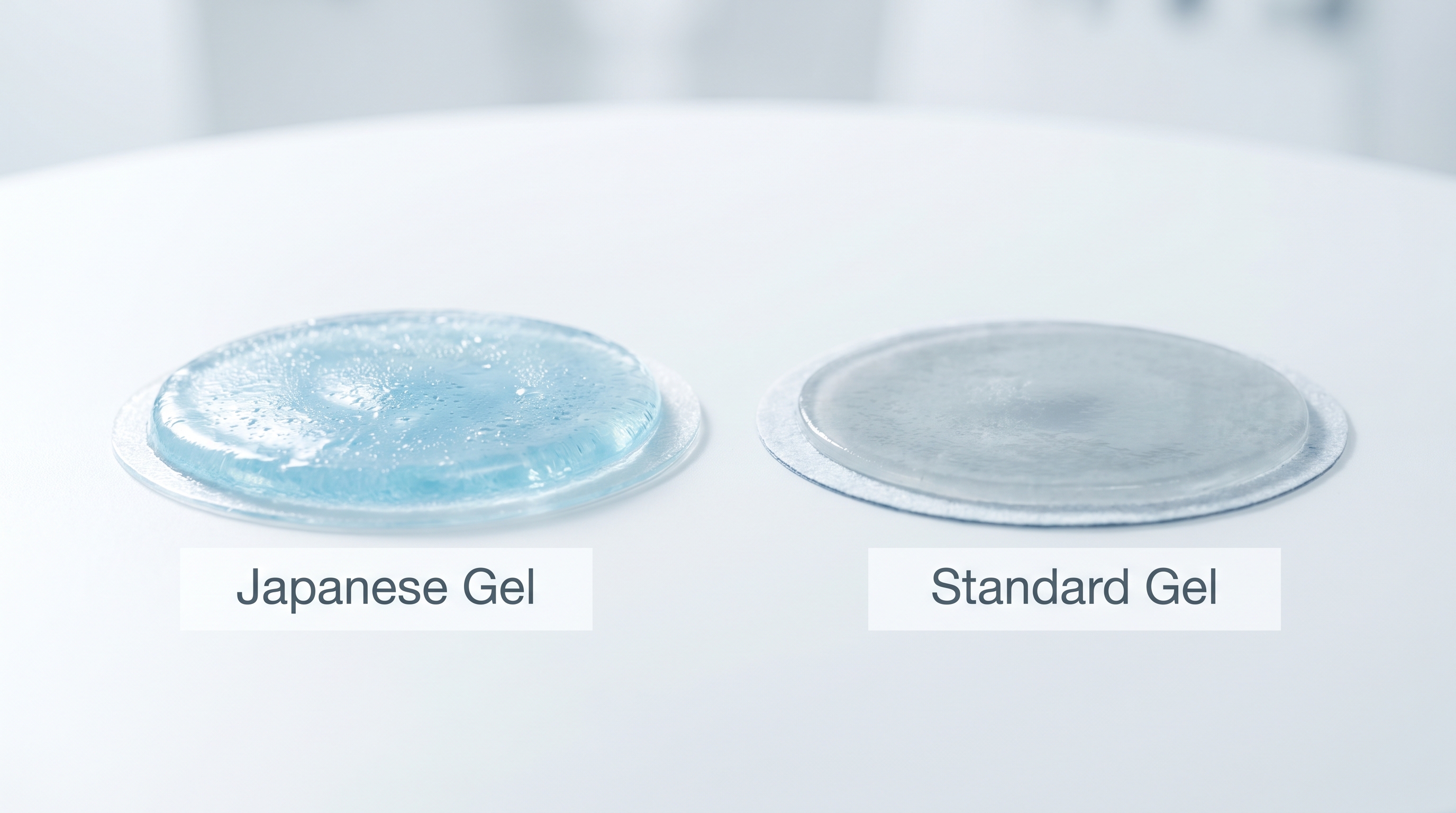
ALT: Japanese gel vs standard gel electrode pads side-by-side comparison for TENS and EMS electrotherapy home use
Why Your Electrode Pad Choice Can Make or Break Your TENS or EMS Session
Key Conclusion: Not all electrode pads are created equal. When comparing Japanese gel vs. standard gel electrode pads, the differences in adhesion quality, skin compatibility, conductivity, and reusability can significantly affect your electrotherapy results. Whether you use a TENS device for pain relief or an EMS unit for muscle recovery, choosing the right pad type helps ensure consistent electrical contact, greater comfort, and a more effective session — especially for long-term home users.
If you've ever experienced a TENS or EMS session that felt uneven, caused skin irritation, or simply didn't seem to work as well as expected, the culprit may not be your device — it may be your electrode pads. This is one of the most overlooked variables in home electrotherapy, yet it has a direct impact on how well the electrical signal is conducted through your skin and into the underlying tissue.
Two main categories dominate the market: Japanese gel electrode pads and standard gel electrode pads. Understanding the core differences between them can help you make smarter purchasing decisions, protect your skin, and ultimately get more out of your electrotherapy investment.
Who Should Read This Guide
✅ Applicable Scenarios:
- Home users of TENS or EMS devices looking to optimize their therapy results
- Individuals with sensitive skin who have experienced irritation or poor adhesion with standard pads
- Seniors managing chronic pain or arthritis discomfort at home who want gentle, reliable contact
- Women using Kegel electrical stimulation devices and seeking comfortable, skin-safe electrode options
- Post-injury or post-surgery patients conducting rehabilitation at home under medical supervision
❌ Not Applicable/Cautions:
- Users who have open wounds, skin infections, or active dermatitis in the treatment area — consult a healthcare provider before use
- Individuals with implanted electronic devices (e.g., pacemakers) — electrode pad type does not change the underlying contraindication; medical clearance is required first
- Those expecting electrode pads to substitute for professional clinical care in complex neurological or orthopedic conditions
The Hidden Variable in Home Electrotherapy: Electrode Gel Technology
When most people shop for TENS or EMS accessories, they focus on device features — output channels, intensity levels, preset programs. Electrode pads, often sold as afterthoughts, rarely get the scrutiny they deserve. Yet every milliamp of current that your device delivers must pass through those pads and their gel layer to reach your body. If that interface is suboptimal, your therapy is suboptimal.
The global electrotherapy device market has grown substantially over the past decade, driven in large part by rising consumer interest in drug-free pain management. According to market research, millions of TENS and EMS units are sold annually for home use — and for each device, users go through multiple sets of electrode pads over time. Despite this volume, awareness about pad quality differences remains low among everyday consumers.
At the heart of this issue is the gel formulation. Electrode pads rely on a conductive gel to create a stable, low-resistance interface between the metal electrode snap and the skin surface. The chemistry, viscosity, moisture content, and adhesive properties of that gel determine how well the pad performs — and for how long.
Japanese gel, a term that has become associated with a specific class of high-performance hydrogel formulated and refined primarily by Japanese manufacturers, has gained a strong reputation in the professional and prosumer electrotherapy community. Standard gel, by contrast, refers to the broader category of general-purpose conductive adhesive gels used in lower-cost or mass-market electrode pads.
Understanding what separates these two categories is not just an academic exercise. For seniors managing arthritis pain at home, for athletes recovering between training sessions, and for women strengthening their pelvic floor, the right electrode pad can mean the difference between a comfortable, effective session and one that's frustrating, painful, or ineffective.
Breaking Down the Differences: A Step-by-Step Evaluation Framework
Quick Start: How to Assess Your Current Electrode Pads
Step 1: Inspect Adhesion Quality Before and After Use
Before applying your electrode pads, press gently on their gel surface with a fingertip. Quality gel should feel moist, slightly tacky, and uniform across the entire pad surface. After your session, check whether the pad lifts cleanly or leaves residue. Japanese gel pads typically maintain consistent adhesion across multiple sessions with proper care, while standard gel pads may begin to dry or lose tackiness after just a few uses. This step takes about 30 seconds and can immediately tell you a great deal about pad longevity.
Step 2: Evaluate Skin Comfort During and After Your Session
During your TENS or EMS session, pay attention to whether you feel any stinging, hot spots, or uneven sensation beneath the pad. These are signs of inconsistent electrical contact, often caused by partial pad lift or uneven gel distribution. After removing the pads, inspect your skin: mild redness that fades within minutes is normal, but persistent redness, welts, or itching suggest a compatibility issue with the gel formula. Japanese gel pads, which tend to be formulated with skin-friendly, hypoallergenic materials, are significantly less likely to provoke these reactions.
Step 3: Track Reusability and Performance Over Time
Keep a simple log of how many sessions you get from each set of pads before performance noticeably degrades. A quality Japanese gel pad, with proper care (replacing the film backing after use, storing flat, away from heat and dust), should deliver a meaningful number of reuses before adhesion or conductivity noticeably degrades. Standard gel pads often show diminishing performance more quickly. Tracking this helps you calculate true cost-per-session and justify the investment in higher-quality pads.
Comparative Analysis: Japanese Gel vs. Standard Gel Electrode Pads
To make an informed decision, it helps to look at the key performance dimensions side by side. The following table summarizes the most clinically and practically relevant differences between Japanese gel pads, standard gel pads, and a hybrid/mid-tier category that attempts to bridge the gap.
| Comparison Dimension | Japanese Gel Pads | Standard Gel Pads | Mid-Tier / Hybrid Pads |
|---|---|---|---|
| Gel Material | High-performance hydrogel, often hypoallergenic | General-purpose conductive adhesive | Blend of hydrogel and acrylic-based adhesive |
| Skin Adhesion | Strong, uniform, long-lasting | Moderate; may lift at edges during use | Variable; typically better than standard |
| Conductivity | High and consistent across pad surface | Adequate but may have hot spots | Generally good, with some variance |
| Skin Compatibility | Excellent; low irritation risk | Moderate; higher risk for sensitive skin | Moderate to good |
| Reusability | High; multiple sessions with proper care | Low to moderate; degrades faster | Moderate |
| Moisture Retention | Superior; gel stays moist longer | Tends to dry out between sessions | Better than standard, not as good as Japanese |
| Residue After Removal | Minimal to none | May leave sticky residue | Occasional light residue |
| Cost Per Unit | Higher upfront | Lower upfront | Mid-range |
| Best For | Sensitive skin, frequent users, professional-grade home therapy | Occasional use, tight budgets | Regular users seeking balance of cost and quality |
This comparison makes it clear that Japanese gel electrode pads carry meaningful advantages for users who rely on TENS or EMS therapy regularly — whether for chronic pain management, ongoing muscle rehabilitation, or pelvic floor strengthening.
Deep Dive: What Makes Japanese Gel Different at the Material Level
The Science Behind Hydrogel Formulations
The term "Japanese gel" does not simply refer to geography — it reflects a specific class of hydrogel technology refined over decades of medical device manufacturing in Japan, where precision, material quality, and biocompatibility are held to exceptionally high standards.
Japanese gel electrode pads use a cross-linked polyacrylamide or polyvinyl alcohol-based hydrogel that is engineered to maintain optimal moisture levels without drying out quickly. This moisture stability is critical because the electrical conductivity of the gel is directly tied to its water content. As standard gels dry, their impedance rises, meaning the device has to work harder to push the same amount of current through the skin — leading to uneven stimulation and potential discomfort.
Japanese hydrogel formulations also tend to incorporate skin-conditioning agents, such as humectants, that help preserve the skin's own moisture barrier during use. This is particularly important for seniors, whose skin tends to be thinner, drier, and more susceptible to irritation — a key consideration for anyone using home healthcare devices for seniors with arthritis or chronic joint pain.
Adhesion Without Aggression
One of the paradoxical challenges of electrode pad design is achieving strong adhesion without damaging the skin upon removal. Standard acrylic-based adhesives — the same family used in many medical tapes — can be aggressive enough to cause micro-tears in delicate skin, particularly with repeated application in the same location.
Japanese gel pads solve this through what engineers call a "self-leveling" gel structure: the material flows slightly under pressure to conform to the skin's micro-topology, creating intimate contact and secure hold without relying on aggressive chemical bonding. When removed, the gel releases cleanly, minimizing the mechanical stress on the skin surface.
This property is especially valuable for women using Kegel electrical stimulation devices for pelvic floor rehabilitation. Perineal and inner thigh skin can be particularly sensitive, and pads that adhere gently yet securely are essential for both comfort and therapeutic efficacy.
Conductivity Uniformity and Hot Spot Prevention
Perhaps the most clinically significant advantage of Japanese gel is its uniform current distribution. When a pad has inconsistent gel coverage — whether due to drying, uneven application, or manufacturing variation — the electrical current concentrates at the points of best contact, creating "hot spots" that feel like burning or sharp stinging.
Japanese gel's superior moisture retention and self-leveling properties ensure that current spreads evenly across the entire pad surface. This means users feel a smooth, therapeutic sensation rather than isolated points of discomfort — which is especially important at higher intensity settings used for deep muscle stimulation in EMS applications.
Longevity and Sustainability
From a practical standpoint, the higher upfront cost of Japanese gel pads is often offset by their superior reusability. Standard pads may need replacement after a handful of sessions, while Japanese gel pads — when properly stored with their protective film intact, kept away from dust and extreme temperatures — can maintain effective performance across many more sessions. Over time, this reduces waste and lowers the effective cost per therapy session.
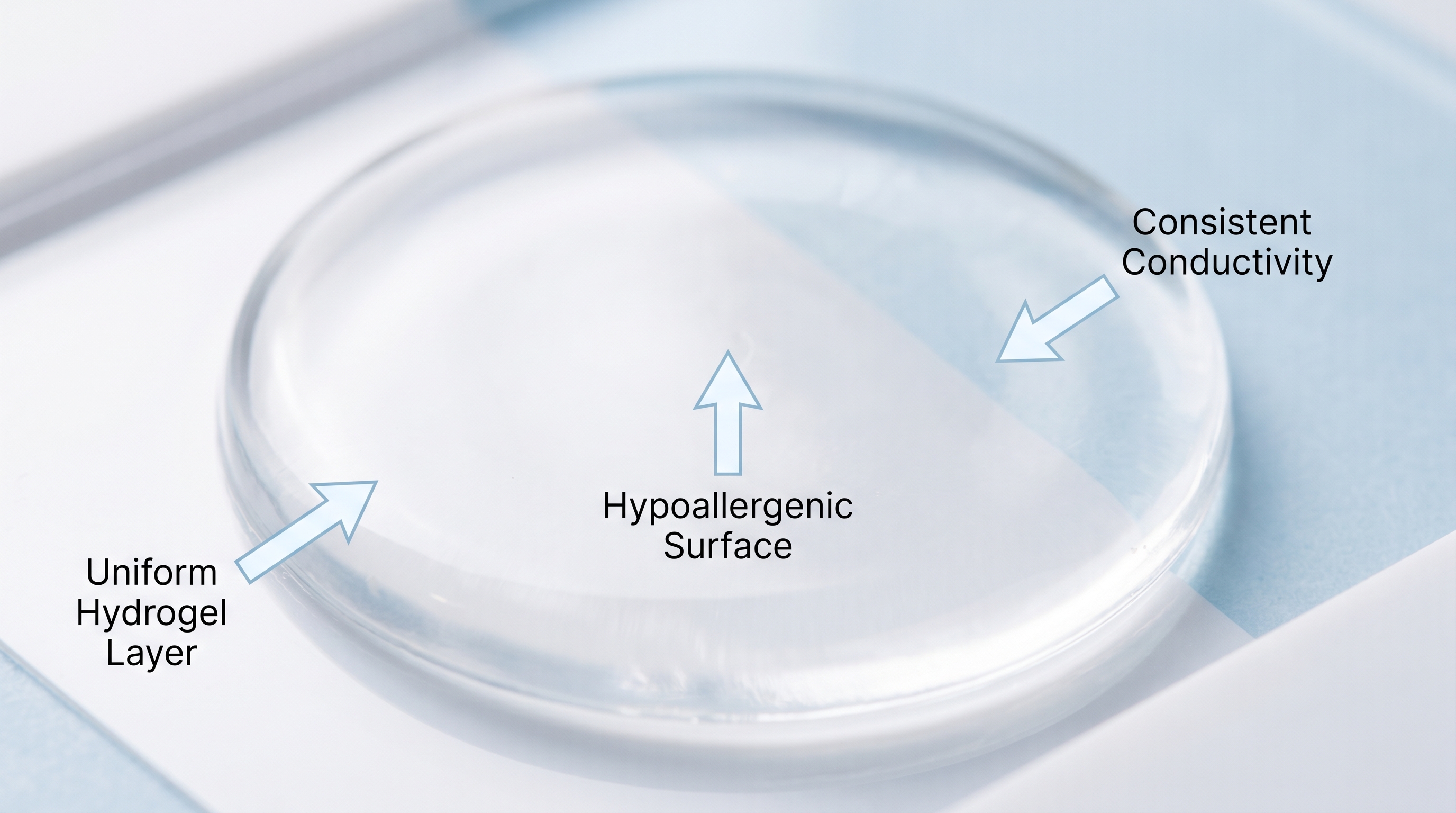
ALT: Close-up of Japanese gel electrode pad showing uniform hydrogel surface for consistent TENS EMS current distribution and skin-safe adhesion
Advanced Considerations: When Pad Type Matters Most
Special Situations That Amplify the Difference
Sensitive or Aging Skin: The gap between Japanese gel and standard gel performance is most pronounced for users with compromised skin barriers. Seniors, individuals undergoing chemotherapy, or those with conditions like eczema or psoriasis (in non-affected areas) will notice a dramatically greater comfort difference. The skin-conditioning properties of Japanese hydrogel actively work with the skin rather than against it.
High-Frequency or Long-Duration Sessions: Users who rely on TENS for chronic pain management and run sessions daily — or multiple times per day — will exhaust standard pads quickly and may experience cumulative skin irritation. Japanese gel's durability and gentleness make it better suited for intensive use patterns.
Pelvic Floor Applications: For women using electrical stimulation for pelvic floor health — whether to improve muscle tone, address stress urinary incontinence, or enhance pelvic sensitivity — electrode placement is intimate and skin tolerance is non-negotiable. High-quality Japanese gel pads provide the secure, comfortable contact needed for this sensitive application. Many users searching for the best pelvic floor stimulators for enhancing intimacy and sensitivity or looking to understand what are the best pelvic floor exercises for strengthening pelvic muscles may not realize that electrode pad quality plays a direct role in how effective and comfortable their electrical stimulation sessions are.
Common Misconceptions
"All gel pads are the same if they're the same size." This is false. Size determines placement geometry, but the gel formulation determines electrical performance and skin interaction. Two pads of identical dimensions can produce radically different therapy experiences.
"Higher price always means Japanese gel." Not necessarily. Some brands charge premium prices for standard gel pads with upgraded packaging. Look for explicit material descriptions, country of gel manufacturing, or certifications rather than relying on price alone as a proxy for quality.
"Standard pads are fine for occasional use." For truly occasional use — a few times per month — standard pads may be adequate. But for anyone using electrotherapy as a regular part of their wellness or rehabilitation routine, the cumulative advantages of Japanese gel in terms of skin health and consistency become meaningful quickly.
Frequently Asked Questions FAQ
Q1: How do I know if my electrode pads are made with Japanese gel?
Look for explicit labeling on the product packaging that states "Japanese gel," "Japanese hydrogel," or notes Japanese-origin gel materials. Reputable brands will often specify the gel origin or formulation type in their product descriptions. You can also assess quality indirectly: Japanese gel pads typically feel uniformly moist on the gel surface right out of packaging, adhere smoothly without aggressive pull, and release cleanly with minimal residue. If a pad feels tacky like standard medical tape or leaves sticky residue, it is likely standard acrylic-based gel.
Q2: Are Japanese gel electrode pads safe for people with sensitive skin or skin conditions?
Japanese gel electrode pads are generally considered more skin-friendly than standard gel pads due to their hypoallergenic formulations and gentler adhesion mechanics. However, "sensitive skin" covers a wide spectrum, and individuals with active skin conditions — including eczema, psoriasis, or contact dermatitis — should consult a dermatologist or their prescribing clinician before applying any electrode pad, regardless of type. Always perform a small patch test on non-sensitive skin first if you are trying a new pad brand. Avoid placing pads on broken, irritated, or inflamed skin.
Q3: How long do Japanese gel electrode pads typically last compared to standard ones?
While exact session counts vary by brand, usage intensity, and care practices, Japanese gel pads are widely documented to outlast standard gel pads in terms of maintained adhesion and conductivity. Standard pads may begin to lose effectiveness after a relatively small number of sessions, while well-maintained Japanese gel pads can remain effective for notably longer. To maximize lifespan: always replace the protective backing film after each use, store pads flat in a clean, sealed bag away from heat and direct sunlight, and avoid touching the gel surface with fingers unnecessarily, as skin oils degrade the gel.
Summary
Choosing between Japanese gel and standard gel electrode pads is not merely a purchasing detail — it is a decision that directly affects the safety, comfort, and effectiveness of every electrotherapy session you conduct at home.
Three core takeaways from this guide:
- Japanese gel outperforms standard gel in conductivity uniformity, adhesion stability, and skin compatibility — making it the preferred choice for regular users, those with sensitive skin, and anyone using electrotherapy for pelvic floor or targeted muscle rehabilitation.
- The upfront cost difference is offset by superior reusability and reduced skin irritation, meaning Japanese gel pads often represent better long-term value despite a higher per-unit price.
- Pad quality is not device-dependent — even the most advanced TENS or EMS unit cannot compensate for poor electrode contact. The pad is the final and critical link between the device and your body.
For anyone committed to a drug-free, home-based approach to pain management, muscle recovery, or pelvic floor health, investing in the right electrode pads is just as important as investing in the right device. Armed with this knowledge, you can ask better questions, read product descriptions more critically, and choose accessories that support your health goals rather than undermine them.
Ready to take control of your pain relief and muscle health from the comfort of home? iStim offers a full line of professional-grade TENS, EMS, and Kegel devices designed to deliver safe, drug-free results — trusted by over 20,000 customers. Visit https://istim.com/ to explore the right device for your needs and start your journey toward a more comfortable, active life.
References
- National Institutes of Health, National Library of Medicine. "Transcutaneous Electrical Nerve Stimulation (TENS) for Pain Management."
https://www.ncbi.nlm.nih.gov/books/NBK537188/ - U.S. Food and Drug Administration (FDA). "Transcutaneous Electrical Nerve Stimulators — Guidance for Over-the-Counter Use."
https://www.fda.gov/medical-devices/classify-your-medical-device/product-codes - American Physical Therapy Association (APTA). "Electrophysical Agents — Clinical Practice Guidelines."
https://www.apta.org/ - National Institutes of Health, National Library of Medicine. "Pelvic Floor Muscle Training with Electrical Stimulation for Urinary Incontinence."
https://pubmed.ncbi.nlm.nih.gov/ - Cleveland Clinic. "Electrical Muscle Stimulation (EMS): What It Is and How It Works."
https://my.clevelandclinic.org/health/treatments/electrical-muscle-stimulation
Note: Standards may be updated; please check the latest official documents or consult professional advisors.
About iStim
iStim is a Los Angeles-based electrotherapy brand specializing in professional-grade TENS, EMS, and Kegel devices for home use. With ISO-certified Taiwanese manufacturing and the trust of 20,000+ Amazon customers, iStim is committed to delivering safe, effective, and drug-free solutions for pain relief and muscle stimulation. Learn more at https://istim.com/.
Disclaimer: This article is provided for informational and educational purposes only and does not constitute medical advice. The content is produced in association with iStim. Always consult a qualified healthcare professional before starting any electrotherapy or treatment program. Individual results may vary.
Leave a comment