

How to Switch Between TENS and EMS on Your iStim Device

ALT: Person switching between TENS and EMS modes on an iStim electrotherapy device for home pain relief and muscle recovery
Understanding TENS vs. EMS: Why Your iStim Electrotherapy Device Does Both
Key Conclusion: Modern electrotherapy devices like those offered by iStim are engineered to deliver both TENS and EMS therapy in a single unit — giving home users the full benefits of clinical-grade pain relief and muscle stimulation without needing separate devices. Whether you're managing chronic back pain, recovering from an injury, or exploring home physical therapy for pelvic floor health, knowing how to correctly switch between these two modes is essential to getting the results you need safely and effectively.
If you've recently purchased an iStim combo device or are considering one, you may have noticed that your unit supports both TENS (Transcutaneous Electrical Nerve Stimulation) and EMS (Electrical Muscle Stimulation) modes. While these two technologies share the same hardware platform, they serve distinct therapeutic purposes — and confusing them can mean the difference between effective relief and a frustrating session.
This guide walks you through everything you need to know: what each mode does, when to use it, and exactly how to switch between them on your iStim device. Whether you're a first-time user or an experienced home therapist fine-tuning your routine, this article will help you get the most out of your device.
Who Should Read This Guide
✅ Applicable Scenarios:
- First-time iStim device users who want to understand the difference between TENS and EMS before starting therapy
- Chronic pain sufferers (back pain, arthritis, sciatica, nerve pain) who primarily use TENS mode for daily pain management
- Athletes, fitness enthusiasts, or post-surgery patients who want to incorporate EMS for muscle recovery, strengthening, or preventing atrophy
- Postpartum women or older adults using an iStim device as part of a broader pelvic floor rehabilitation plan
- Caregivers helping a family member set up and manage a home electrotherapy routine
❌ Not Applicable/Cautions:
- Individuals with implanted electronic devices (such as pacemakers or defibrillators) — consult your physician before using any electrotherapy device
- Anyone experiencing open wounds, skin infections, or active inflammation at the electrode placement site — do not apply pads to affected areas
- Those who have been advised by a healthcare provider to avoid electrical stimulation therapy
- Pregnant women, unless using a device and mode specifically cleared for that purpose under medical supervision
The Difference Between TENS and EMS — And Why It Matters for Home Physical Therapy
To use your iStim device confidently, you first need to understand the fundamental difference between the two modes it offers.
TENS (Transcutaneous Electrical Nerve Stimulation) works by sending low-voltage electrical pulses through the skin to stimulate sensory nerve fibers. This stimulation interferes with pain signals traveling to the brain — a mechanism supported by the Gate Control Theory of pain. TENS is primarily a pain management tool. It doesn't cause noticeable muscle contraction; instead, you typically feel a gentle tingling or buzzing sensation. To learn more about how this process works at the neurological level, see How TENS Units Stimulate Nerve Fibers to Block Pain Signals to the Brain.
EMS (Electrical Muscle Stimulation), on the other hand, targets motor nerve fibers to produce actual muscle contractions. The pulses are typically stronger, with different waveform characteristics designed to mimic the signals the nervous system sends when it wants a muscle to contract. EMS is used for muscle recovery, rehabilitation, strengthening, and even reducing localized muscle fatigue.
The key takeaway: TENS relieves pain. EMS works the muscle. Mixing them up — or unknowingly staying in the wrong mode — can mean you're applying muscle-contracting currents when you want pain relief, or failing to engage the muscle when recovery is the goal.
For a deeper comparison of how these two modes interact and when a combo approach is most beneficial, the guide TENS + EMS Combo Machines Explained: When to Use Each Mode is an excellent starting point. Understanding this distinction is the foundation of using your iStim device effectively — and it's exactly why knowing how to switch between modes matters so much.
How to Switch Between TENS and EMS on Your iStim Device
Three-Step Quick Start
Switching between TENS and EMS on your iStim device is straightforward once you know what to look for. Before you begin, make sure your device is fully charged or connected to power, your electrode pads are properly positioned and adhered to clean, dry skin, and the intensity is set to zero.
Step 1: Power On and Access the Mode Selection Screen
Turn on your iStim device by pressing and holding the power button until the display activates. Most iStim combo units feature a clear digital display showing the current therapy mode, program number, intensity level, and timer. Once the device is on, you should see the active mode displayed — typically labeled as "TENS" or "EMS" (or sometimes as separate program categories). Take a moment to identify which mode is currently active before making any changes. This step typically takes less than 30 seconds.
Step 2: Navigate to the Mode or Program Selector
On iStim devices, TENS and EMS modes are generally accessed through the program or mode selection button — often labeled "Mode," "Program," or represented by a dedicated icon. Press this button to cycle through available therapy programs. TENS programs are typically grouped together (often the first set of programs on the menu), while EMS programs follow. Refer to your device's user manual for the exact program numbering, as this may vary slightly between iStim models. When the display shows the program associated with your desired therapy type, stop cycling. Do not adjust intensity until the correct mode is confirmed.
Step 3: Adjust Intensity and Begin Your Session
Once you've confirmed the correct mode is selected, use the intensity controls (usually "+" and "−" buttons or a dedicated intensity dial) to gradually increase to a comfortable level. For TENS, you're looking for a gentle tingling sensation — there should be no muscle contraction and no pain. For EMS, you should feel visible or palpable muscle contractions — noticeable, but never sharp or painful. Set your timer if your device supports it, and begin your session. After the session ends, reduce intensity to zero before powering off.
Comparing TENS, EMS, and Combined Mode: Which Is Right for Your Situation?
Choosing the right mode isn't just about following instructions — it's about matching the therapy to your specific goal. The following comparison can help you make that decision:
| Comparison Dimension | TENS Mode | EMS Mode | Combined/Sequential Use |
|---|---|---|---|
| Primary Purpose | Drug-free pain relief | Muscle contraction, recovery, strengthening | Pain relief + muscle rehabilitation together |
| Sensation | Tingling, buzzing — no muscle movement | Visible/palpable muscle contractions | Varies by phase |
| Best For | Chronic pain, nerve pain, arthritis, post-surgical soreness | Muscle atrophy prevention, athletic recovery, pelvic floor rehab | Complex rehabilitation, injury recovery phases |
| Electrode Placement | On or near pain site, following nerve pathways | Directly over target muscle belly | Determined by goal; may reposition between modes |
| Typical Session Feel | Relaxing, non-intrusive | Active, workout-like | Transitional — relaxing then active |
| Who Benefits Most | Chronic pain sufferers, older adults, caregivers managing pain | Athletes, post-op patients, pelvic floor rehab users | Rehab patients, those with overlapping needs |
| Safety Consideration | Avoid over bony prominences, near eyes, throat | Avoid fatiguing muscle; do not use over injured tissue | Consult provider for complex conditions |
Detailed Electrode Placement and Mode-Specific Tips
Getting the mode right is only half the equation — electrode placement is equally critical to therapeutic success. Incorrect pad placement is one of the most common reasons users don't achieve the expected results, regardless of whether they're in TENS or EMS mode.
Electrode Placement for TENS Mode
For TENS therapy, the goal is to position electrode pads so that the electrical current travels through the area where pain originates or along the relevant nerve pathway. A common approach is to place one pad at or near the pain site and another slightly away, creating a current path through the affected tissue.
For example, if you're treating lower back pain, pads are often placed on either side of the spine in the lumbar region — never directly over the spine itself. For knee arthritis, pads may be placed above and below the joint. Avoid placing TENS electrodes over the front of the neck, across the chest (particularly near the heart), on broken or irritated skin, or over any implanted electronic device.
For a comprehensive visual reference on where to place pads across the body, Full Body TENS Electrode Placement Reference: 10 Common Treatment Sites provides detailed guidance for the most common treatment areas.
Electrode Placement for EMS Mode
EMS electrode placement is more anatomy-specific. Because you're targeting muscle fibers directly, pads should be placed on the motor point of the muscle — the spot where the nerve enters the muscle belly, which produces the strongest contraction with the least discomfort. Placing pads on muscle bellies rather than tendons or joints is a core best practice for EMS safety and effectiveness.
For athletes using EMS for post-workout recovery, common targets include the quadriceps, hamstrings, calves, and upper back muscles. For pelvic floor rehabilitation, specialized internal or external electrode accessories designed for that purpose should be used — and your iStim device should be set to the appropriate pelvic floor program. You can find detailed setup guidance in the article How to Use the iStim V2 Kegel Exerciser: A Complete Setup and Usage Guide.
Transitioning Between Modes During a Session
Some users wonder whether it's safe to switch from TENS to EMS (or vice versa) within the same session. The answer is generally yes — but with an important precaution: always reduce the intensity to zero before switching modes or repositioning electrodes. Abruptly changing from one mode to another at high intensity can cause an uncomfortable or startling electrical surge.
A practical workflow many users follow is to begin with TENS for pain relief — allowing muscles to relax and reducing discomfort — then transition to EMS for muscle work once pain is under control. This sequential approach is especially useful for rehabilitation scenarios where pain and muscle weakness coexist, such as post-surgical recovery or chronic low back pain with muscle deconditioning.
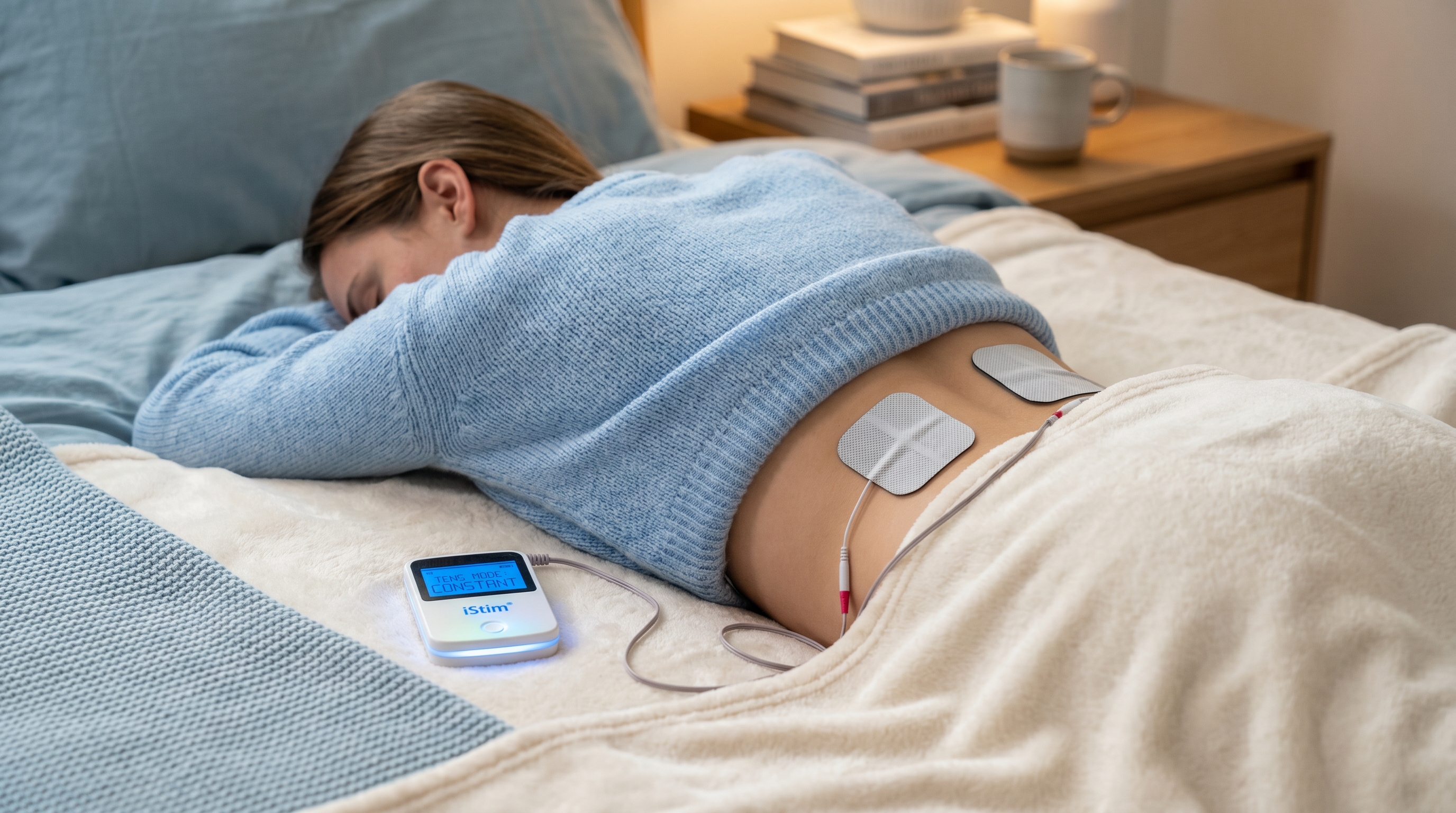
ALT: iStim electrotherapy device with electrode pads on lower back for TENS mode pain relief, used as part of home physical therapy routine
Advanced Tips: Getting More From Your iStim Device
Special Situations and Adjustments
When TENS Stops Feeling Effective
Some users notice that after extended use, the same TENS program seems less effective — a phenomenon sometimes referred to as "accommodation." If this happens, try changing the program setting (most iStim devices offer multiple TENS programs with different pulse patterns), adjusting pad placement slightly, or taking a short break between sessions. The science behind why TENS remains effective relates to its action on the body's endorphin system, which you can explore in more detail in The Science Behind Endorphin Release During TENS Therapy.
When EMS Causes Discomfort
EMS should never be painful. If you experience discomfort, check pad placement first — ensure pads are on muscle belly, not over tendons or joints. Reduce intensity if contractions feel sharp or cramping. If discomfort persists, stop the session and consult your healthcare provider. For athletes specifically, it's worth noting how professional-level applications of EMS are structured — as covered in EMS for Athletes: How Professional Sports Teams Use Electrical Muscle Stimulation.
Using iStim Devices Alongside Medication Management
Many iStim users are exploring electrotherapy as a way to reduce dependence on pain medications. While TENS and EMS are not replacements for medical care, they are clinically recognized complementary therapies. For context on how TENS stacks up against pharmaceutical options, the article TENS vs. Prescription Pain Medication: A Non-Invasive Alternative Explained offers a balanced, evidence-informed comparison.
Common Misconceptions
Misconception: More intensity always means better results.
Reality: Higher intensity can lead to muscle fatigue (in EMS) or skin irritation (in TENS). Start low and increase gradually to the therapeutic threshold — the lowest intensity that produces the desired effect.
Misconception: TENS and EMS can be used interchangeably.
Reality: They serve different physiological purposes. Using EMS when you need TENS can cause unnecessary muscle contractions; using TENS when you need EMS won't produce the muscle engagement required for rehabilitation.
Misconception: iStim devices are only for pain.
Reality: iStim's device range includes specialized programs for muscle strengthening, athletic recovery, and pelvic floor rehabilitation — making them versatile tools for a wide range of health and wellness goals.
Frequently Asked Questions FAQ
Q1: How do I know which mode my iStim device is currently set to?
Your iStim device's display screen shows the active therapy mode, which is typically labeled clearly as "TENS" or "EMS" — or indicated by a specific program number corresponding to each mode type. Refer to the program chart in your device's user manual to map program numbers to their corresponding therapy types. If you're unsure, power off the device, restart it, and navigate through programs from the beginning, noting which programs are listed under each mode category before starting a session.
Q2: Is it safe to use both TENS and EMS in the same session on the same area?
Yes, it is generally safe to use both modes on the same body area in a single session, provided you reduce intensity to zero before switching between modes and ensure electrode pads are properly positioned for each therapy type. Many rehabilitation protocols do use both sequentially. However, avoid excessively long combined sessions, and always listen to your body. If you experience skin irritation, unusual muscle fatigue, or any pain, end the session and allow the area to rest. When in doubt, consult a physical therapist for personalized guidance.
Q3: How long should a typical TENS or EMS session last on an iStim device?
Session duration can vary depending on your therapy goal and the specific program selected. For TENS pain relief, many users find sessions in the range of 20–30 minutes effective for managing acute or chronic discomfort, though some programs may be designed for shorter or longer intervals. For EMS muscle work, duration depends on the muscle group and your conditioning level — beginning users should start with shorter sessions to avoid muscle fatigue. Always follow the guidance in your iStim device's user manual and consult a healthcare provider for personalized session length recommendations.
Summary
Switching between TENS and EMS on your iStim device is a simple process once you understand the purpose of each mode and follow the correct steps. Here are the three core takeaways to remember:
- Know your goal before selecting a mode. TENS is for pain relief through nerve stimulation; EMS is for muscle contraction, recovery, and strengthening. Choosing the right mode is the foundation of effective therapy.
- Always reduce intensity to zero before switching modes. This prevents uncomfortable electrical surges and protects both the user and the device. Proper transitioning between modes — especially mid-session — ensures safety and therapeutic continuity.
- Electrode placement matters as much as mode selection. Correctly positioned pads maximize therapeutic benefit and minimize discomfort. Use body-specific guidelines for TENS nerve targeting and EMS motor point placement, and consult iStim's educational resources for visual references.
With iStim's professional-grade electrotherapy devices, you have clinical-quality therapy at your fingertips — designed to be safe, intuitive, and effective for everyday home use. Whether you're managing chronic pain, accelerating athletic recovery, or rehabilitating pelvic floor function, the ability to confidently navigate between TENS and EMS modes transforms your device from a single-purpose tool into a comprehensive home therapy system.
Ready to Explore More?
Ready to take control of your pain relief and muscle recovery — without relying on medication? Explore iStim's full lineup of professional-grade TENS, EMS, and Kegel devices at https://istim.com/ and find the right solution tailored to your body's needs. Trusted by over 20,000 customers and built to clinical standards, iStim makes effective electrotherapy safe, simple, and accessible right from the comfort of your home.
References
- National Institute of Neurological Disorders and Stroke (NINDS). "Pain: Hope Through Research."
https://www.ninds.nih.gov/health-information/patient-caregiver-education/hope-through-research/pain-hope-through-research - American Physical Therapy Association (APTA). "Physical Therapy Guide to Chronic Pain."
https://www.moveforwardpt.com/ - U.S. National Library of Medicine — MedlinePlus. "Transcutaneous Electrical Nerve Stimulation (TENS)."
https://medlineplus.gov/ency/article/007560.htm - Physiopedia. "Electrical Muscle Stimulation."
https://www.physio-pedia.com/Electrical_Muscle_Stimulation - Johnson, M.I. (2014). "Transcutaneous Electrical Nerve Stimulation: Mechanisms, Clinical Application and Evidence." Reviews in Pain, 1(1), 7–11. Published via US National Library of Medicine.
https://www.ncbi.nlm.nih.gov/pmc/articles/PMC4300537/
Note: Standards and clinical guidelines may be updated. Please check the latest official documents or consult a qualified healthcare professional for the most current recommendations.
About iStim
iStim is a Los Angeles-based electrotherapy brand specializing in professional-grade TENS, EMS, and Kegel devices designed for safe and effective home use. With ISO-certified manufacturing and a growing community of 20,000+ verified customers, iStim is committed to empowering individuals with drug-free, clinically inspired solutions for pain relief, muscle stimulation, and pelvic floor health. Learn more at https://istim.com/.
Disclaimer: This article is intended for informational purposes only and does not constitute medical advice. Always consult a qualified healthcare professional before starting any new therapy or treatment program. iStim products are not intended to diagnose, treat, cure, or prevent any medical condition.
Leave a comment