

How to Compare Neck Traction Devices Before Buying
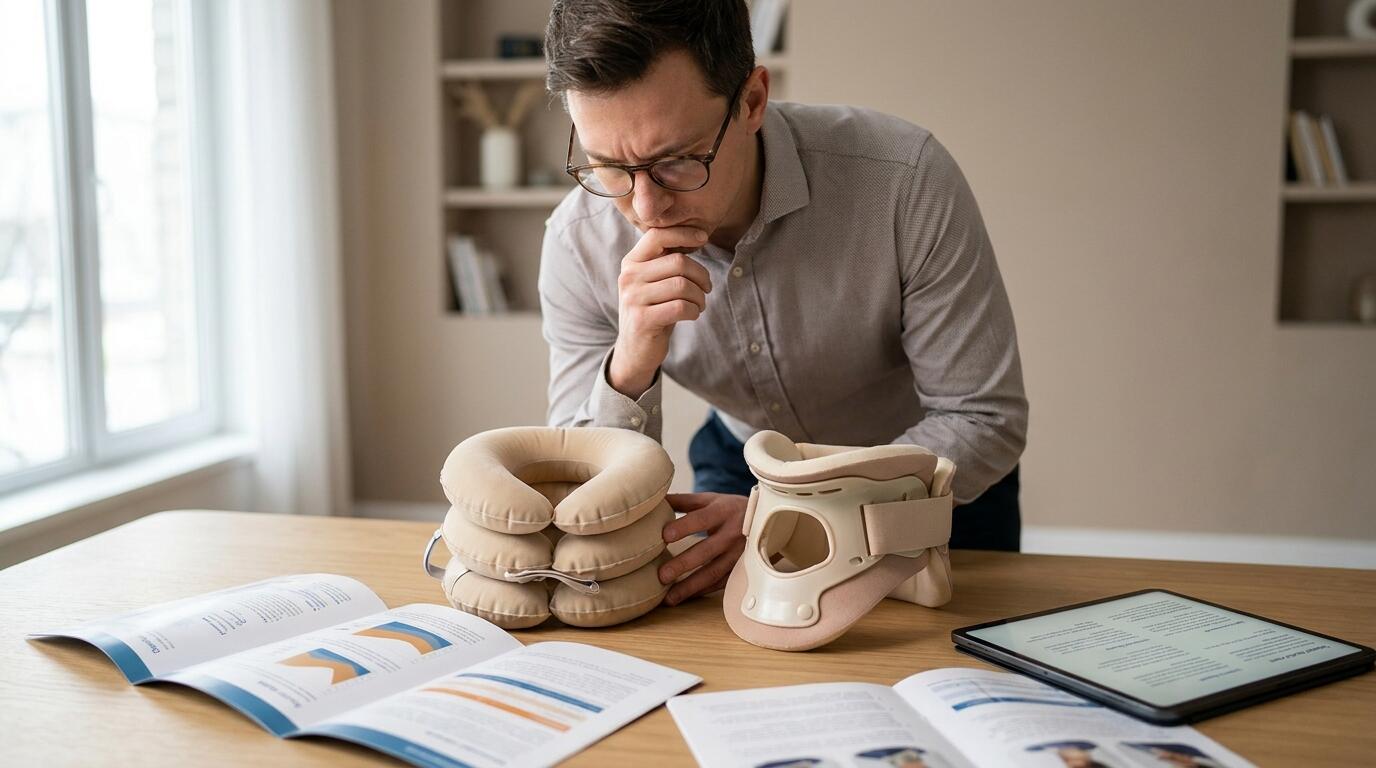
ALT: Person comparing neck traction devices on a desk before making a smart buying decision
Why Learning to Compare Neck Traction Devices Could Save You Money — and Your Neck
Key Conclusion: Before investing in any cervical relief tool, it's essential to compare neck traction devices across multiple dimensions — including traction mechanism, adjustability, safety features, and intended use. Not all devices are created equal, and choosing the wrong one can delay recovery or even worsen symptoms. A well-informed comparison process protects both your health and your budget, ensuring you select a solution truly aligned with your clinical needs.
The market for home-use cervical therapy products has expanded dramatically in recent years, driven by the rising prevalence of neck pain linked to sedentary work habits, prolonged screen time, and post-injury recovery needs. Whether you're dealing with a herniated disc, cervical muscle tension, or post-whiplash stiffness, the device you choose matters enormously.
This guide walks you through every dimension you need to evaluate — from mechanical design to safety certifications — so your next purchase is grounded in evidence, not guesswork. By the end, you'll understand exactly what separates a well-engineered device from a poorly designed one, and why that distinction can make or break your recovery journey.
Who This Neck Traction Buying Guide Is For
✅ Applicable Scenarios:
- Adults experiencing chronic cervical tension, muscle stiffness, or nerve compression who are exploring non-pharmaceutical relief options
- Post-injury or post-surgical patients cleared by a physician for at-home cervical decompression therapy
- Remote workers and individuals with desk-bound lifestyles seeking preventive care for neck and upper back discomfort
- Patients with diagnosed conditions such as cervical spondylosis, herniated discs, or cervicogenic headaches under professional guidance
❌ Not Applicable/Cautions:
- Individuals with acute cervical fractures, severe osteoporosis, spinal instability, or active inflammatory conditions — traction is contraindicated without explicit physician approval
- Children and adolescents, as cervical traction devices are engineered specifically for adult anatomy and musculature
- Anyone experiencing numbness, tingling, or worsening symptoms during use — these are red flags that require immediate medical consultation before continuing
The Growing Market for Cervical Therapy Devices — And Why Comparison Matters
Neck pain is one of the most prevalent musculoskeletal complaints worldwide. According to the Global Burden of Disease Study, neck pain ranks among the top causes of disability globally, affecting people across all age groups and occupational categories. In the United States alone, tens of millions of adults report chronic neck discomfort, and the demand for accessible, home-based relief solutions has never been higher.
This surge in demand has produced a crowded, often confusing marketplace. Dozens of devices — ranging from simple inflatable collars to sophisticated over-the-door pulley systems and motorized cervical units — claim to offer decompression, pain relief, and structural restoration. The sheer variety makes it challenging to discern which category fits your needs, let alone which specific product within that category deserves your investment.
Here's why this matters clinically: cervical traction, when applied incorrectly — either through the wrong device type, improper angle, or excessive force — can aggravate the very conditions it aims to treat. Overstretching ligaments, applying traction at the wrong cervical angle, or using a device not suited to your body type or diagnosis can delay recovery and potentially cause harm.
A thoughtful, systematic comparison process isn't just about consumer savvy — it's about therapeutic safety. Understanding how different device types work, what clinical evidence supports each mechanism, and how devices differ in terms of adjustability, portability, and durability empowers you to make a decision that serves your long-term health.
Additionally, cervical traction is often most effective when integrated into a broader pain management and rehabilitation program. Many physical therapists combine traction with electrotherapy modalities — such as TENS (Transcutaneous Electrical Nerve Stimulation) or EMS (Electrical Muscle Stimulation) — to address both the structural compression and the muscular tension that typically accompany cervical conditions. As you evaluate traction devices, consider how they might complement other therapeutic tools in your home care toolkit.
How to Compare Neck Traction Devices: A Practical Framework
Three-Step Quick Start for First-Time Buyers
Step 1: Define Your Clinical Need and Get Professional Input
Before browsing any product, schedule a consultation with your physician, physical therapist, or chiropractor. Ask them to clarify your diagnosis, whether cervical traction is appropriate for your condition, and what angle and force range is recommended. This step typically takes a single appointment but saves significant time, money, and risk downstream. Arriving at the product comparison stage with professional guidance transforms a confusing marketplace into a navigable one.
Step 2: Identify Your Primary Use Context
Decide whether you need a device primarily for home use during rest periods, for use at a desk or during work hours, or for travel and portability. This immediately narrows your options. Over-the-door traction systems, for example, require a fixed door and dedicated space, while inflatable cervical collars can be used almost anywhere. Clarifying your lifestyle context before comparing specifications ensures you're evaluating devices that are actually compatible with your routine.
Step 3: Evaluate Devices Against a Standardized Checklist
Armed with clinical guidance and lifestyle context, apply a consistent comparison framework across candidate devices. Evaluate traction type, adjustability range, safety mechanisms, material quality, ease of use, and user feedback. Resist the temptation to base decisions solely on price or star ratings — a thorough, criteria-driven evaluation protects you from devices that look appealing on the surface but fail in clinical appropriateness.
Main Solution Comparison: Types of Neck Traction Devices
Understanding the major categories of cervical traction devices is the foundation of any meaningful comparison. Each type operates on a different mechanical principle and suits different clinical scenarios.
The following table outlines the primary device types you'll encounter in the home-use market:
| Comparison Dimension | Over-the-Door Traction Unit | Inflatable Cervical Collar | Mechanical/Pump-Assisted Device |
|---|---|---|---|
| Traction Mechanism | Gravity-based pulley system with weighted bag | Air inflation expands collar to gently elongate cervical spine | Manual pump or ratchet mechanism provides controlled linear traction |
| Adjustability | Weight adjustable via water/sand bag; angle via head harness | Limited; depends on inflation volume | High — precise force control via calibrated pump |
| Portability | Low — requires door and dedicated setup | High — compact and travel-friendly | Moderate — more portable than door units, less so than collars |
| Ease of Use | Moderate — requires setup and positioning | High — simple to don and inflate | Moderate — requires technique for consistent positioning |
| Cost Range | Typically lower entry cost | Generally most affordable category | Mid-to-upper price range |
| Clinical Guidance Required | Yes — force and duration must be professionally prescribed | Recommended — especially for acute conditions | Yes — particularly for angle and pressure calibration |
| Best Suited For | Home-based rehabilitation under PT supervision | Mild tension relief, post-travel stiffness | Moderate-to-severe cervical compression needing precise decompression |
This table serves as a starting point — not a final decision tool. Your physician or physical therapist should validate which category aligns with your specific diagnosis before you finalize any purchase.
Detailed Comparison Criteria: What to Examine Before You Buy
Traction Force Range and Adjustability
The single most important technical specification to evaluate is traction force range — how much pulling force the device can deliver, and whether that force is adjustable. Cervical traction force requirements vary significantly based on body weight, diagnosis, muscle mass, and treatment stage. A device that offers only a fixed force level is inherently less versatile and may be clinically inappropriate for many users.
Look for devices that allow granular, incremental adjustments. Some mechanical units offer clearly marked force increments, allowing you to progress gradually from gentler introductory sessions to therapeutic levels recommended by your provider. Devices without clear force indicators make consistent, safe use nearly impossible.
Cervical Angle and Positioning
The angle at which traction is applied significantly affects which cervical structures are targeted. Flexion-angle traction (chin slightly tucked) is commonly used for disc-related conditions, as it opens posterior disc spaces. Neutral or slight extension may be indicated for facet joint issues. A device that allows angle adjustment offers far greater clinical utility than one that locks you into a single position.
Over-the-door units allow some angle adjustment through head harness positioning and rope attachment point. Mechanical pump devices often include adjustable chin and occipital cup configurations. Inflatable collars generally provide less angle specificity, which is why they're better suited to mild tension relief than to structural decompression.
Safety Features and Overpressure Protection
Any device you consider should incorporate clear safety mechanisms. These may include maximum pressure limits built into pump mechanisms, quick-release valves for rapid deflation in inflatable models, or non-slip base materials to prevent device movement during use. Read product documentation carefully to understand what safety failsafes are present — and what happens if the device is used incorrectly.
Avoid devices that provide no force feedback, no maximum threshold, or no clear instructions for emergency release. These are not minor conveniences — they are clinical safety essentials.
Material Quality and Hygiene
Cervical traction devices are in prolonged contact with skin, hair, and sometimes sweat. Evaluate the materials used for the chin rest, occipital support, and any foam padding. Look for materials described as skin-safe, hypoallergenic, or medical-grade. Removable, washable covers are a practical advantage for long-term use.
Cheap foam padding that degrades quickly not only affects comfort but may alter the device's functional geometry over time — subtly changing the traction angle or contact distribution in ways that affect both efficacy and safety.
Ease of Solo Operation
Many users will apply cervical traction without a caregiver or therapist present. A device that requires complex setup, fine motor manipulation, or precise positioning that's difficult to achieve alone introduces inconsistency and risk. Prioritize devices designed with solo use in mind — those with intuitive controls, clear alignment guides, and ergonomic adjustment mechanisms.
User Reviews and Real-World Durability
While clinical specifications are foundational, real-world user feedback reveals durability, comfort nuances, and common operational challenges that specifications alone don't capture. Look for verified purchaser reviews that specifically mention long-term durability, any changes in device function over months of use, and how responsive the manufacturer was to any issues. Aggregated feedback from thousands of users — as with products carrying substantial Amazon review volume — provides a meaningful quality signal.
Brand Credibility and Manufacturing Standards
Not all devices are manufactured under the same quality controls. When evaluating brands, look for evidence of ISO-certified manufacturing, FDA registration where applicable, and transparent product documentation. Brands that operate under internationally recognized manufacturing standards offer greater assurance that devices perform consistently and safely across units.
This matters particularly for electrotherapy and rehabilitation brands operating at the intersection of clinical and consumer markets — where the consequences of quality failure are not just financial but physiological.
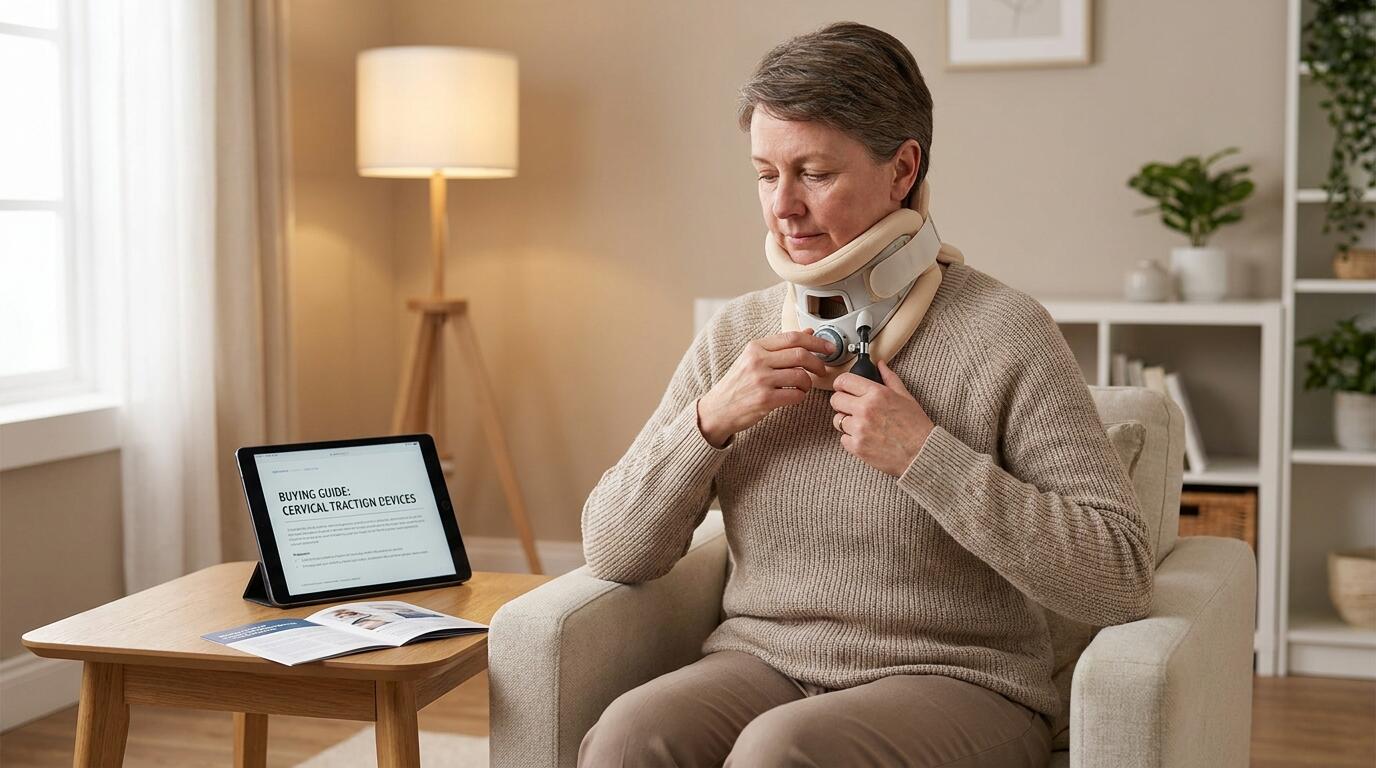
ALT: Adult user carefully comparing and adjusting a cervical neck traction device at home, following a neck traction buying guide
Advanced Considerations: Beyond the Basics
When Standard Comparisons Aren't Enough
For users with complex or multi-layered cervical conditions — such as simultaneous disc herniation and cervical stenosis, or post-surgical recovery following spinal fusion — standard device comparisons may be insufficient. In these scenarios, generic consumer-grade devices may carry contraindications that aren't obvious from product descriptions.
Work directly with a physiatrist or orthopedic specialist who can specify exact parameters: force range, session duration, frequency, and angle. Bring this prescription to your device comparison process. Any device unable to meet those specifications — regardless of how well-reviewed it may be — is the wrong tool for your needs.
Common Misconceptions to Address
"More traction force equals faster relief." This is a dangerous oversimplification. Therapeutic cervical traction operates within specific force windows — too little provides no structural benefit, while too much risks ligament strain, muscle guarding, or worsened nerve compression. Effective traction is precisely calibrated, not maximized.
"Inflatable collars provide the same benefit as clinical traction." Inflatable collars offer gentle decompression and may help with mild tension relief, but they do not replicate the precise, angle-specific traction delivered by mechanical or over-the-door systems. Understanding this distinction prevents both under-treatment and false expectations.
"Any neck traction device is interchangeable." Device categories serve meaningfully different purposes. A device appropriate for post-whiplash tension may be entirely inappropriate for cervical disc herniation. Device selection must be diagnosis-driven, not convenience-driven.
Integration with Electrotherapy
Many users find that combining cervical traction with TENS-based electrotherapy enhances overall outcomes. TENS devices work by delivering low-level electrical impulses that interrupt pain signals at the nerve level — providing drug-free relief that complements the structural decompression achieved through traction. Used before or after traction sessions, TENS can help reduce muscle guarding, improve tolerance for the traction process, and accelerate the overall arc of recovery.
Frequently Asked Questions FAQ
Q1: How do I know which type of neck traction device is right for my condition?
The most reliable answer starts with a professional diagnosis. Your physician or physical therapist can specify whether your condition — whether it's a herniated disc, cervicogenic headache, or muscle tension — benefits from traction, and at what angle and force level. From there, use the device type comparison framework in this guide to identify which category (over-the-door, inflatable, or mechanical) best delivers those prescribed parameters within your lifestyle and budget.
Q2: Are neck traction devices safe to use at home without professional supervision?
Many well-designed cervical traction devices are intended for supervised home use — meaning a professional has assessed your suitability and provided usage parameters, but you apply the therapy independently. Safety depends on correct initial setup, adherence to prescribed force and duration limits, and attentiveness to your body's response. Never exceed recommended force levels, and discontinue use immediately if you experience increased pain, numbness, dizziness, or tingling. These symptoms warrant prompt medical consultation.
Q3: How long does it typically take to feel results from cervical traction therapy?
Response timelines vary considerably based on diagnosis, chronicity of the condition, device type, and adherence to a consistent protocol. Some users report noticeable tension relief after just a few sessions; others with structural conditions like disc herniation may require several weeks of consistent use before measurable improvement occurs. Your physical therapist or physician is the best source for realistic expectations specific to your case — avoid devices or brands making unqualified claims of rapid, universal results.
Summary
Comparing neck traction devices before buying is not a luxury — it's a clinical responsibility. The right device, chosen through a systematic evaluation process, can meaningfully support your recovery and quality of life. The wrong one can delay progress, cause harm, or simply waste your investment.
Three core principles should anchor every comparison you make:
First, lead with clinical guidance. Your diagnosis and a professional's recommendations should define your evaluation criteria before you engage with a single product description.
Second, evaluate systematically. Compare devices across traction type, adjustability, safety features, material quality, and solo usability — not just price or visual design.
Third, consider the broader therapeutic picture. Cervical traction works best as one component of a multi-modal approach that may include physical therapy exercises, posture correction, and complementary modalities like TENS electrotherapy for muscle tension and pain signal management.
The path to meaningful, lasting neck relief is paved with informed decisions. Take the time to compare thoroughly, consult professionals, and invest in devices from brands that demonstrate transparent manufacturing standards and genuine clinical credibility.
Ready to take control of your pain relief and muscle health from the comfort of home? Explore iStim's full range of professional-grade TENS, EMS, and Kegel devices at https://istim.com/ and find the right drug-free solution tailored to your needs. Join over 20,000 satisfied customers who trust iStim for safe, effective, and clinically inspired electrotherapy.
References
- World Health Organization. "Musculoskeletal Health."
https://www.who.int/news-room/fact-sheets/detail/musculoskeletal-conditions - National Institute of Neurological Disorders and Stroke (NINDS). "Neck Pain Fact Sheet."
https://www.ninds.nih.gov/health-information/patient-caregiver-education/fact-sheets/neck-pain-fact-sheet - American Physical Therapy Association (APTA). "Neck Pain Clinical Practice Guidelines."
https://www.apta.org/ - Cochrane Library. "Traction for Low-Back Pain with or without Sciatica — Evidence Review."
https://www.cochranelibrary.com/ - PubMed / National Library of Medicine. "Cervical Traction for Managing Neck Pain: A Systematic Review."
https://pubmed.ncbi.nlm.nih.gov/
Note: Standards and clinical guidelines may be updated. Please check the latest official documents or consult a qualified healthcare professional for the most current recommendations.
About iStim
iStim is a Los Angeles-based electrotherapy brand specializing in professional-grade TENS, EMS, and Kegel devices engineered for safe and effective home use, backed by ISO-certified Taiwanese manufacturing and a growing community of 20,000+ trusted customers.
© iStim. All rights reserved. This article is intended for informational purposes only and does not constitute medical advice. Always consult a qualified healthcare professional before beginning any electrotherapy or pain management program.
Leave a comment