

How to Choose the Right Electrode Pad Size for Your Treatment Area
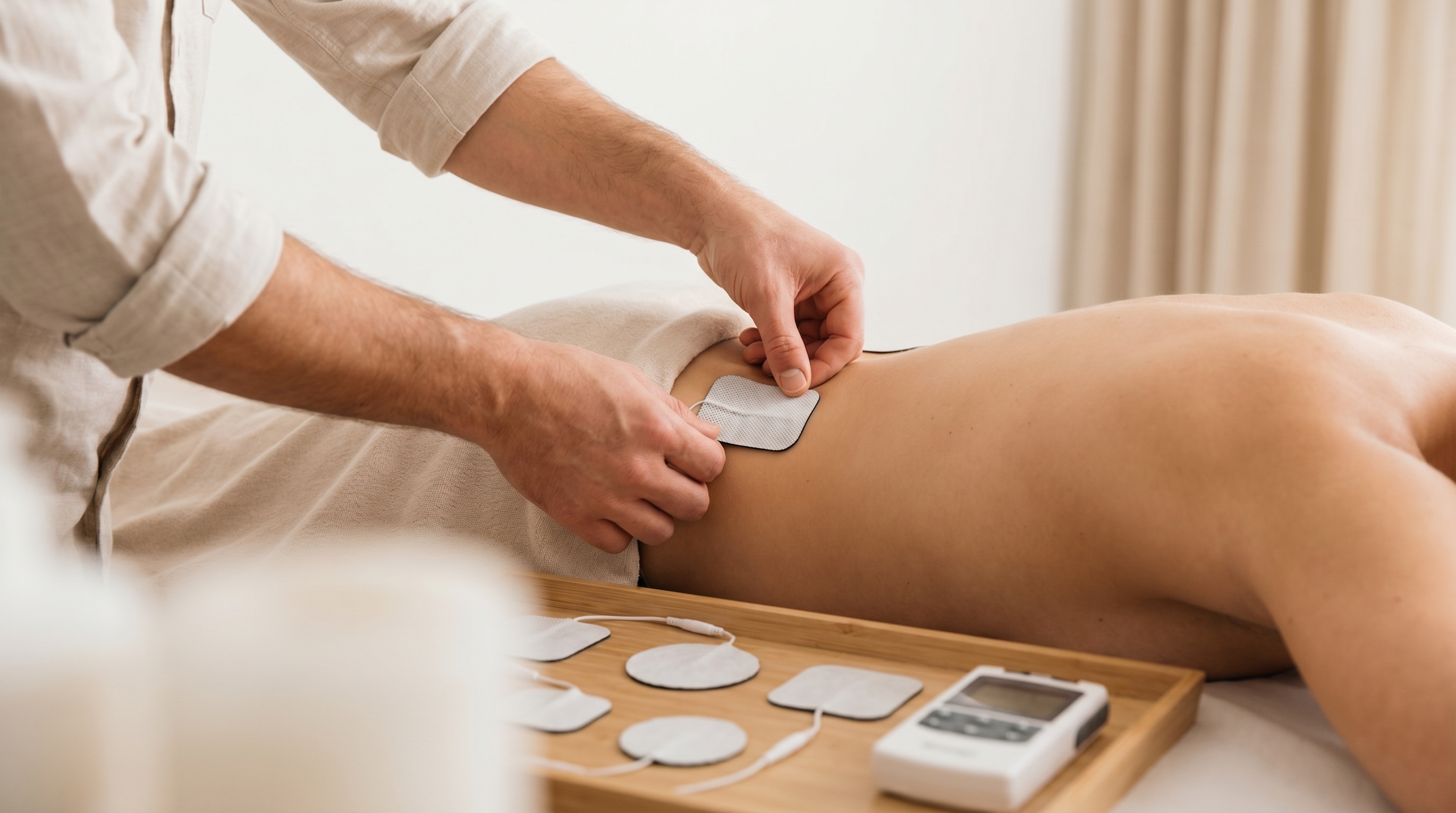
ALT: Person selecting correct electrode pad size for lower back TENS therapy treatment area
Why Electrode Pad Size Matters More Than You Think for Effective TENS and EMS Therapy
Key Conclusion: Choosing the right electrode pad size for your specific treatment area is one of the most overlooked yet critical factors in getting effective TENS and EMS therapy results. Using pads that are too small can concentrate electrical current and cause discomfort, while oversized pads may dilute stimulation and reduce therapeutic effectiveness. Matching pad size to your body area ensures optimal current distribution, better muscle activation, and safer, more comfortable sessions — whether you're targeting back pain, shoulder tension, or pelvic floor health.
Most people who invest in a quality TENS or EMS device spend considerable time selecting the right unit, researching intensity settings, and learning proper placement techniques. Yet one fundamental detail is frequently overlooked: the physical size of the electrode pads being used. This single variable can mean the difference between a session that delivers genuine, lasting relief and one that produces little more than a mild buzzing sensation.
Electrode pad sizing affects how electrical current is distributed across the skin and underlying tissues. A pad that's appropriately matched to your treatment zone creates consistent, targeted stimulation — the kind that interrupts pain signals, promotes muscle contractions, and supports recovery. Understanding this relationship empowers you to get measurably better results from every session, without changing your device settings or adding more time to your routine.
Who Should Read This Guide
✅ Applicable Scenarios:
- Adults using TENS units at home for chronic or acute pain management (back pain, knee pain, shoulder tension, neck stiffness)
- Athletes and fitness enthusiasts using EMS devices for muscle recovery, conditioning, or performance enhancement
- Postpartum women or anyone using Kegel trainers and pelvic floor stimulators who want to optimize electrode contact and placement
- Seniors managing arthritis, joint discomfort, or reduced mobility who rely on regular electrotherapy sessions
- Anyone who has experienced discomfort or inconsistent results during TENS/EMS therapy and suspects pad placement or size may be a contributing factor
❌ Not Applicable/Cautions:
- Individuals with implanted electrical devices (pacemakers, neurostimulators) — consult your physician before using any electrotherapy equipment
- People with broken, irritated, or infected skin at the treatment site — electrode pads should never be placed directly on compromised skin
- Those using electrotherapy near the chest, heart region, or across the temple without explicit guidance from a healthcare professional
The Science Behind Electrode Pad Sizing and Current Distribution
To understand why pad size matters so profoundly, it helps to understand what's actually happening beneath the surface during a TENS or EMS session. When electrical current passes through electrode pads, it doesn't simply travel in a straight line between the two pads. It disperses through the tissues in a pattern largely determined by the conductive surface area of the pad itself.
Current density — the concentration of electrical current per unit of skin surface area — is the key concept here. A smaller pad concentrates the same amount of current into a tighter area, resulting in higher current density. This can be useful for targeting small, localized regions like a specific trigger point or a narrow muscle belly, but it can also create uncomfortable "hot spots" if the pad is too small relative to the current intensity being used.
Conversely, a larger pad spreads current across a greater surface area, reducing current density and creating a broader, more diffuse stimulation pattern. For large muscle groups like the quadriceps, glutes, or the broad muscles of the lower back, this distributed stimulation is precisely what's needed to achieve thorough muscle engagement or meaningful pain relief.
This is why understanding the relationship between electrode size and treatment area isn't just a matter of comfort — it directly impacts therapeutic efficacy. For a deeper exploration of how electrical stimulation interacts with nerve fibers, How TENS Units Stimulate Nerve Fibers to Block Pain Signals to the Brain offers a thorough breakdown of the underlying mechanisms.
Beyond current density, pad size also influences the ease of placement on curved or contoured body areas. The neck, knee, and shoulder joint all present irregular surfaces where oversized pads may not achieve full contact, creating uneven current distribution and potentially reducing effectiveness. In these scenarios, smaller or specially shaped pads often outperform their larger counterparts despite delivering the same electrical output.
For those looking to understand the full range of pad specifications — including materials, adhesive types, and compatibility considerations — the comprehensive TENS Electrode Pad Buyer's Guide: Sizes, Materials, and Compatibility Explained is an essential reference that covers these variables in significant depth.
Market trends reflect growing consumer awareness of this issue. As home-use electrotherapy devices become more sophisticated and widely adopted, users are increasingly seeking guidance not just on how to use their devices, but on how to optimize every component of their therapy — including the often-underestimated electrode pad.
How to Choose the Right Electrode Pad Size: A Practical Three-Step Framework
Three-Step Quick Start for Matching Pad Size to Treatment Area
Step 1: Map Your Target Treatment Area
Before selecting a pad size, clearly identify the specific body region you're targeting. Is it a large, flat muscle group like the lower back or thigh? A smaller, more contoured area like the neck or wrist? Or a joint-adjacent area like the knee or elbow? Trace the approximate boundaries of the area with your fingertip to get a visual sense of its dimensions. This mapping process takes only a minute or two but ensures your pad selection is grounded in the actual anatomy of the target site rather than guesswork.
Step 2: Match Pad Size to Area Characteristics
Once you've mapped the treatment area, apply the general principle: larger areas call for larger pads; smaller or contoured areas call for smaller pads. For broad, flat regions (back, thighs, abdomen), a larger pad delivers better current distribution. For narrow or curved regions (neck, wrist, behind the knee), a smaller pad ensures full skin contact and more precise stimulation. If you're treating multiple points simultaneously, consider whether a multi-channel device with varied pad sizes across channels might be appropriate — as discussed in 4-Channel TENS/EMS: How to Treat Multiple Body Areas Simultaneously.
Step 3: Test, Observe, and Adjust
Start your session at a low intensity and pay close attention to where you feel the stimulation. The sensation should be distributed across the intended treatment area, not concentrated at the edges of the pad or in a single spot. If you notice unusual discomfort at the pad edges, the pad may be too small for the current level you're using. If stimulation feels weak or inconsistent, the pad may be too large for the area, resulting in insufficient current density. Adjust accordingly and document what works best for each treatment site over time.
Electrode Pad Size Comparison: Which Size Works Best for Which Body Area
Selecting the right pad isn't a matter of personal preference alone — it's a functional decision based on the anatomy and therapeutic goals of each treatment zone. The following comparison provides a practical framework for common use cases:
| Comparison Dimension | Small Pads | Medium Pads | Large Pads |
|---|---|---|---|
| Best Treatment Areas | Neck, wrist, ankle, foot, behind the knee | Shoulder, upper arm, calf, knee joint | Lower back, thighs, glutes, abdomen |
| Current Distribution | Concentrated, targeted | Balanced, moderate spread | Broad, diffuse coverage |
| Comfort on Curved Surfaces | Excellent — conforms to contours | Good on moderately curved areas | Less ideal for uneven surfaces |
| Ideal Therapy Type | Trigger point relief, precise nerve stimulation | Mixed pain relief and muscle activation | Large muscle EMS training, broad pain relief |
| Adhesion Considerations | Easier to reposition; may require more frequent replacement | Good balance of adhesion and reusability | Larger surface = more adhesive contact; critical to ensure full skin contact |
| Recommended User | Those targeting joint-adjacent areas or small muscles | Most general home users | Athletes and EMS users working large muscle groups |
Detailed Guidance by Body Region
Lower Back and Lumbar Region
The lower back is one of the most common treatment sites for home TENS therapy, and it's also one of the most forgiving when it comes to pad sizing — primarily because the surface area is generous and relatively flat. Larger electrode pads are generally recommended here, as they can cover the broad expanse of the lumbar muscles on either side of the spine effectively.
Placement typically involves positioning one pad on each side of the lower spine, with the pads positioned over the paravertebral muscles rather than directly over the vertebral column itself. Avoid placing pads directly on the spine. For users dealing with chronic lower back pain, understanding TENS vs. Prescription Pain Medication: A Non-Invasive Alternative Explained can provide important context for how electrotherapy fits into a broader pain management strategy.
Neck and Cervical Region
The neck presents one of the more challenging placement scenarios due to its curved anatomy, proximity to sensitive structures, and the relatively small surface area available on either side of the cervical spine. Smaller pads are strongly preferred here, positioned along the lateral sides of the neck rather than across the back of the neck.
Because the neck area is close to the carotid arteries and the vagus nerve, users should always start at the lowest effective intensity and avoid placing pads directly over these structures. For anyone managing cervical discomfort or spondylosis, targeted information on safe TENS application in this region can be found in the guide on Pinched Nerve in the Neck: Causes, Symptoms, and At-Home Treatment Options.
Knee and Joint-Adjacent Areas
The knee joint is another area where smaller pads excel. The curved, bony anatomy of the knee makes large pad placement impractical — they simply won't maintain consistent skin contact across the irregular surface. Small pads placed above and below the kneecap, or on either side of the joint, provide effective stimulation for the surrounding soft tissues and help manage localized pain effectively.
For those using EMS for athletic recovery involving the lower limbs, the insights shared in EMS for Athletes: How Professional Sports Teams Use Electrical Muscle Stimulation illustrate how professional-level practitioners approach electrode placement for performance and recovery outcomes.
Shoulders and Upper Back
The shoulder region benefits from medium-sized pads in most cases. The deltoid and trapezius muscles are substantial enough to warrant adequate surface coverage, but the curvature of the shoulder joint means oversized pads may not lie flat. Medium pads placed over the muscle belly of the targeted area — rather than over the joint itself — tend to yield the best results.
Thighs, Glutes, and Large Muscle Groups
For large muscle group EMS training, whether for rehabilitation or fitness purposes, larger pads are the clear choice. The quadriceps, hamstrings, and gluteal muscles all have substantial surface area and relatively flat profiles that accommodate larger electrode coverage without difficulty.
It's worth noting that EMS placement for muscle stimulation and TENS placement for pain relief, even on the same body part, may call for slightly different pad positioning strategies. Understanding these nuances is covered in depth in TENS + EMS Combo Machines Explained: When to Use Each Mode.
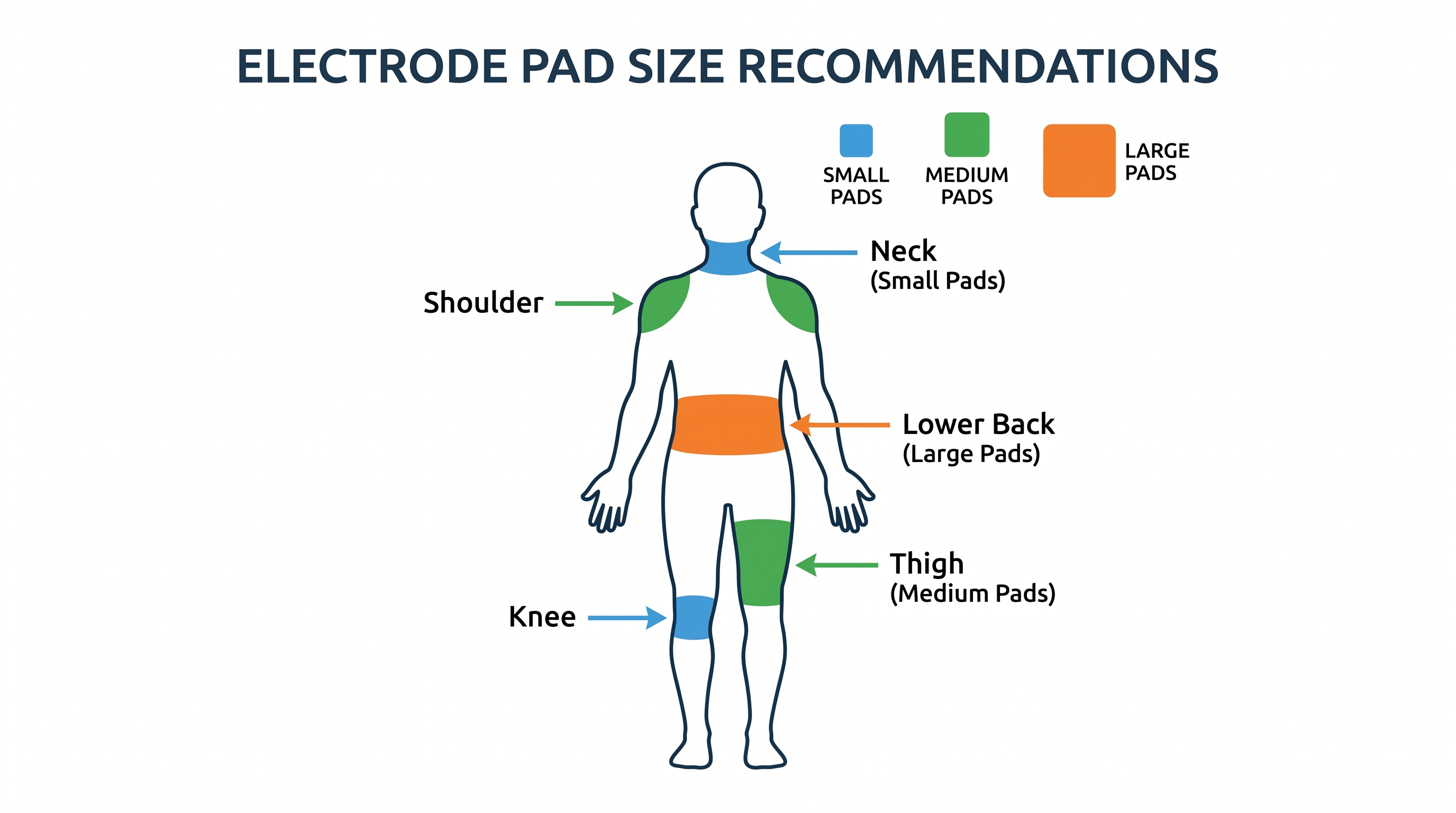
ALT: Electrode pad size selection guide showing small, medium, and large pads matched to different TENS and EMS treatment body areas
Advanced Considerations: Special Situations, Misconceptions, and Pad Longevity
Handling Special Situations
Postpartum and Pelvic Floor Applications: For women using pelvic floor stimulators after childbirth or to address incontinence, electrode sizing takes on a different dimension entirely. Internal Kegel probe electrodes operate on their own specialized sizing parameters, but for external pelvic floor TENS applications — where surface pads are placed on the lower abdomen or inner thighs — smaller pads are typically used to target specific nerve pathways without overstimulating adjacent areas. If you're exploring pelvic floor therapy and want to understand the broader landscape of symptoms and treatment options, the article on Urinary Incontinence After Childbirth: Causes, Impact, and Treatment Options provides valuable context.
Using Multiple Pad Sizes in a Single Session: If your device supports multiple channels, there's no rule against using different pad sizes on different channels within the same session. Athletes, for example, might use larger pads on the quadriceps while simultaneously using smaller pads on the knee joint — targeting both broad muscle recovery and localized joint support in a single treatment.
Pad Degradation and Size Consistency: As electrode pads age and their adhesive gel degrades, effective conductive surface area can decrease even if the physical pad dimensions remain unchanged. A worn pad may behave more like a smaller pad due to uneven adhesion. This is why monitoring pad condition is important — reduced adhesion doesn't just mean the pad falls off; it also means current distribution becomes uneven, potentially increasing discomfort or reducing efficacy.
Common Misconceptions Clarified
"Bigger pads are always better": This is a persistent myth. Larger pads are appropriate for large muscle groups but actively counterproductive for small, contoured, or joint-adjacent areas where full skin contact cannot be maintained.
"Pad size doesn't matter if I adjust the intensity": Increasing intensity to compensate for incorrect pad sizing creates a mismatch between the current delivered and the tissue's capacity to absorb it comfortably. This can result in unpleasant sensations and reduces therapeutic precision.
"Any pad will work with any device": Pad compatibility is also a consideration alongside size. Always ensure pads are compatible with your specific device's connector type and impedance requirements.
Frequently Asked Questions FAQ
Q1: How do I know if my electrode pad size is correct for my treatment area?
The clearest indicator is the quality of sensation during your session. With the correctly sized pad, stimulation should feel evenly distributed across the treatment area rather than concentrated at the edges. You should not feel sharp or pinching sensations at the pad margins. Additionally, the pad should lie flat against the skin with no lifted edges — if corners are peeling up, the pad is likely too large for the contour of that body area. Start at a low intensity and increase gradually to assess distribution.
Q2: Are there electrode pads specifically designed for pelvic floor and Kegel therapy?
Yes. Pelvic floor electrotherapy encompasses both internal probe electrodes designed specifically for vaginal insertion in Kegel training devices, and external surface pads used for transcutaneous pelvic stimulation. These applications are distinctly different from standard TENS pad use. For internal Kegel devices, the probe itself serves as the electrode, making external pad sizing irrelevant. For external pelvic floor stimulation, smaller surface pads are typically recommended. Always follow the specific guidance provided with your device, or consult a pelvic health physiotherapist.
Q3: How often should I replace electrode pads, and does worn adhesive affect pad performance?
Electrode pad lifespan varies based on usage frequency, skin care habits, and storage conditions. As a general guideline, pads should be replaced when adhesion becomes noticeably reduced, when the gel surface appears dry or cracked, or when you begin experiencing uneven sensations during sessions. Worn adhesive directly compromises current distribution because areas of poor contact create resistance hotspots. Storing pads on their protective backing film after each use and keeping skin clean and residue-free before sessions significantly extends pad longevity.
Summary
Choosing the right electrode pad size for your treatment area is a straightforward but genuinely impactful decision that affects the comfort, safety, and effectiveness of every TENS or EMS session you conduct. The three core principles to carry forward are:
- Match pad size to anatomy: Larger, flatter areas benefit from larger pads for broad coverage; smaller, curved, or joint-adjacent areas require smaller pads for proper skin contact and precise stimulation.
- Monitor current distribution, not just intensity: The sensation quality during a session tells you whether your pad sizing is appropriate. Distributed, even stimulation signals a good match; edge concentration or discomfort signals a mismatch.
- Maintain your pads and reassess over time: Pad performance changes as adhesive degrades. Regularly inspect your pads and replace them when their condition begins to compromise current distribution.
Taking these principles into your practice requires minimal effort but yields meaningful improvements in your results — whether you're managing chronic back pain, recovering from athletic exertion, or building pelvic floor strength. The right pad, in the right size, on the right location is the foundation of effective at-home electrotherapy.
Ready to Optimize Your Electrotherapy Experience?
Ready to take control of your pain relief and muscle health from the comfort of home? iStim offers a full range of professional-grade TENS, EMS, and Kegel devices designed to deliver real, drug-free results — trusted by over 20,000 satisfied customers. Explore the complete lineup and find the right device for your needs at https://istim.com/.
References
- National Institute of Neurological Disorders and Stroke (NINDS). "Pain: Hope Through Research".
https://www.ninds.nih.gov/health-information/patient-caregiver-education/hope-through-research/pain-hope-through-research - American Physical Therapy Association (APTA). "Physical Therapy Guide to Low Back Pain".
https://www.choosept.com/guide/physical-therapy-guide-to-low-back-pain - National Center for Biotechnology Information (NCBI), U.S. National Library of Medicine. "Transcutaneous Electrical Nerve Stimulation (TENS) for Pain Management".
https://www.ncbi.nlm.nih.gov/books/NBK537188/ - U.S. Food and Drug Administration (FDA). "TENS (Transcutaneous Electrical Nerve Stimulators) — Information for Patients and Caregivers".
https://www.fda.gov/medical-devices/home-use-devices/transcutaneous-electrical-nerve-stimulators-tens - Chartered Society of Physiotherapy (CSP). "Electrical Stimulation Guidance for Clinical Practice".
https://www.csp.org.uk/
Note: Standards and clinical guidance may be updated. Please refer to the latest official documents or consult a qualified healthcare professional for the most current recommendations.
About iStim
iStim is a Los Angeles-based electrotherapy brand specializing in professional-grade TENS, EMS, and Kegel devices for home use, backed by ISO-certified Taiwanese manufacturing and trusted by 20,000+ customers for safe, drug-free pain relief and muscle stimulation. Learn more at istim.com.
Disclaimer: This article is produced by the iStim content team and is intended for informational purposes only. It does not constitute medical advice, diagnosis, or treatment. Always consult a qualified healthcare professional before starting any new therapy or treatment program. © iStim. All rights reserved.
Leave a comment