

How to Choose a Cervical Traction Device Safely
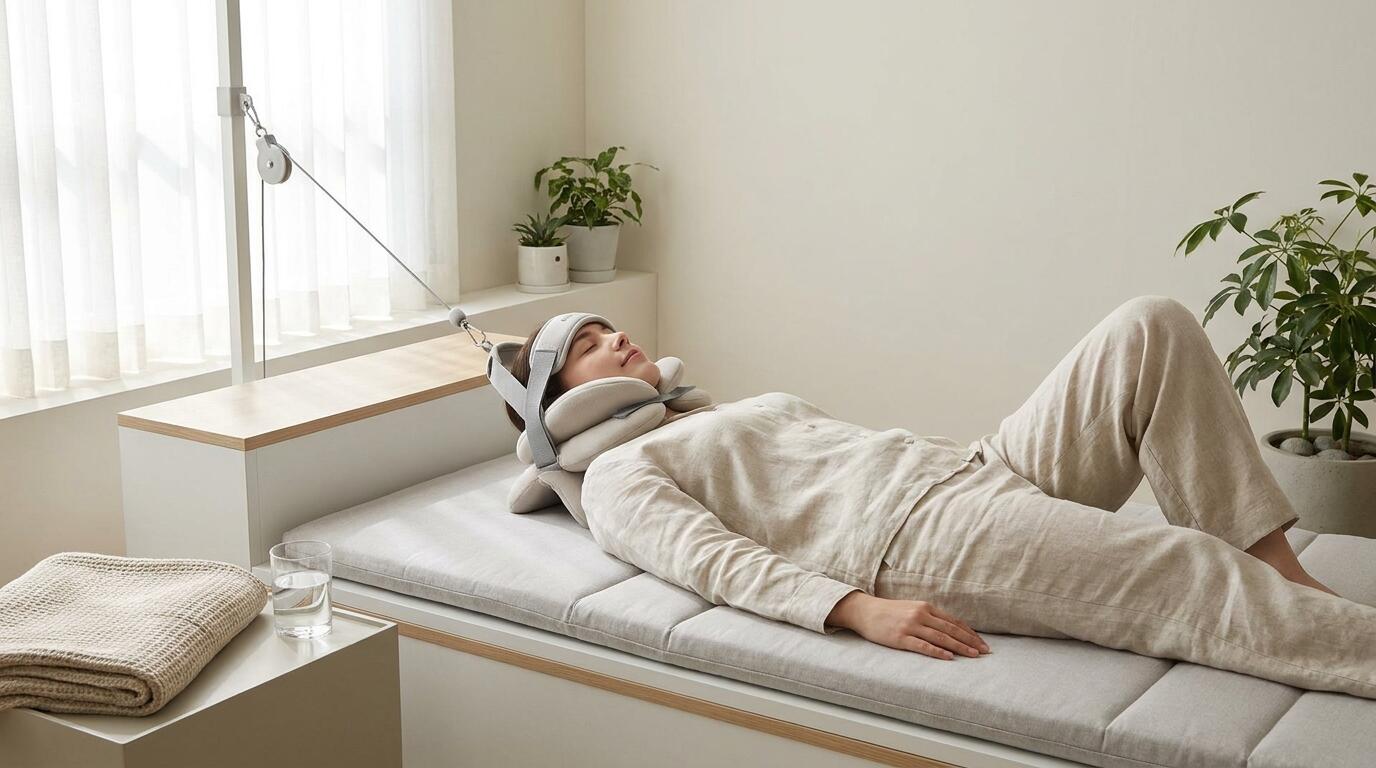
ALT: A person safely using a cervical traction device at home for neck pain relief and spinal decompression
Why Knowing How to Choose a Cervical Traction Device Matters More Than You Think
Key Conclusion: Learning how to choose a cervical traction device safely is one of the most important steps you can take before investing in at-home neck pain relief. With dozens of products available and widely varying levels of clinical evidence behind them, making an informed decision protects not only your budget but your long-term spinal health. The right device should match your specific diagnosis, comfort level, and daily routine — guided by a healthcare professional whenever possible.
Neck pain is one of the most prevalent musculoskeletal complaints in the modern world, affecting millions of adults who spend long hours at desks, on screens, or recovering from injury. Cervical traction has emerged as a popular non-pharmaceutical option, offering decompression of the cervical spine to relieve pressure on compressed discs and nerve roots. But not all traction devices are created equal, and choosing the wrong type — or using even a good device incorrectly — can worsen symptoms rather than relieve them.
This guide is designed to help you navigate your options with clarity and confidence, whether you're dealing with chronic neck stiffness, a herniated disc, or post-rehabilitation maintenance. You'll find practical guidance on device types, safety criteria, and red flags to avoid — all grounded in clinical reasoning and real-world usability.
Who Should (and Should Not) Consider Cervical Traction
✅ Applicable Scenarios:
- Adults experiencing chronic cervical neck pain, stiffness, or tension headaches related to disc compression or muscle tightness
- Individuals diagnosed with cervical radiculopathy, herniated discs, degenerative disc disease, or cervical spondylosis who have received medical clearance for traction therapy
- Post-rehabilitation patients looking to maintain spinal decompression benefits between physical therapy visits
- Desk workers, drivers, or frequent screen users dealing with persistent postural strain in the neck and upper back
❌ Not Applicable/Cautions:
- Individuals with cervical instability, osteoporosis, spinal fractures, tumors, active infections, or recent neck surgery — traction in these cases can be dangerous and is contraindicated without direct physician guidance
- Children, pregnant individuals, or those with unmanaged cardiovascular conditions should avoid self-administered cervical traction without explicit medical approval
- People experiencing acute nerve symptoms such as sudden severe numbness, weakness in the arms or hands, or loss of bladder/bowel control should seek emergency care rather than attempting any traction therapy
Understanding Cervical Traction: Background and Growing Demand
Cervical traction works on a deceptively simple principle: applying a gentle, sustained, or intermittent stretching force to the cervical spine to increase the space between vertebrae, relieve nerve root compression, reduce muscle spasm, and improve mobility. It has been used in clinical rehabilitation settings for decades, delivered by trained physical therapists using motorized or mechanical traction tables.
The appeal of home-use cervical traction devices has grown dramatically in recent years. Rising healthcare costs, limited access to physical therapy, and a broader cultural shift toward self-managed wellness have all contributed to a booming market. According to the American Physical Therapy Association, cervical traction remains a recognized therapeutic modality when applied appropriately for specific diagnoses, particularly cervical radiculopathy.
However, the expansion of consumer-grade devices has not always been matched by equivalent safety standards or user education. Devices range from inflatable neck collars to over-the-door hanging units to more sophisticated mechanical or pneumatic systems — each with different force levels, angles of traction, and suitability for different conditions.
Electrotherapy, which uses electrical nerve and muscle stimulation to complement physical approaches to pain management, is another rapidly growing category in home wellness. Brands like iStim have pioneered the use of professional-grade TENS and EMS devices for at-home drug-free pain relief, giving patients access to clinical-quality tools without the cost barrier of repeated clinic visits. While TENS and cervical traction work through different mechanisms, they can be complementary components of a comprehensive neck pain management plan — and understanding how to evaluate any therapeutic device safely is a skill that applies across modalities.
Understanding the market landscape helps you ask the right questions and avoid being misled by marketing language that sounds clinical but lacks evidence.
How to Choose a Cervical Traction Device: A Step-by-Step Safety Framework
Three Steps to Get Started Safely
Step 1: Get a Proper Diagnosis Before You Shop
Before you begin comparing devices, consult a physician, orthopedic specialist, or licensed physical therapist. Cervical traction is not appropriate for all types of neck pain — it works best for conditions involving disc compression and nerve root irritation, not for muscular neck pain alone or cervical instability. A proper imaging study (X-ray or MRI) and clinical examination will help confirm whether traction is right for your specific anatomy and condition. This step typically takes one to two clinical visits and is the most important investment you can make before purchasing any device.
Step 2: Research Device Types and Match Them to Your Clinical Needs
Once you have medical clearance, research the main categories of cervical traction devices (detailed below) and discuss the options with your care provider. Consider factors such as how much adjustable force the device delivers, whether it allows for different traction angles, how easy it is to use independently at home, and whether it's designed for sitting, lying, or upright use. Matching the device type to both your diagnosis and your practical lifestyle is critical for adherence and safety. This research phase should take no less than a few days of careful review.
Step 3: Start Low, Go Slow, and Monitor Your Response
Once you've selected a device with professional input, begin with the lowest recommended traction force and shortest recommended session duration. Gradual introduction allows your muscles and connective tissues to adapt and helps you identify any adverse reactions early. Keep a simple symptom journal noting pain levels, any new sensations, and functional changes. If symptoms worsen or new symptoms appear — especially neurological ones like increased numbness, tingling, or arm weakness — stop immediately and contact your healthcare provider. Safe cervical traction is a progressive, monitored process, not a one-time fix.
Cervical Traction Device Types: A Comparative Overview
Choosing the right category of cervical traction device is as important as choosing a reputable brand. Each type has a distinct mechanism, force range, and set of use cases. Understanding these differences helps you match the device to your clinical profile.
The following table summarizes the most common types available on the consumer and clinical market:
| Comparison Dimension | Over-the-Door Traction Unit | Inflatable Neck Collar | Supine Mechanical Traction Device |
|---|---|---|---|
| Primary Mechanism | Gravity-based weight and pulley system | Air pressure expanding to lift head | Adjustable mechanical or pneumatic stretching while lying down |
| Force Adjustability | Adjustable via added weights | Limited; varies with inflation level | Higher precision; often clinician-grade |
| Traction Angle | Typically forward-flexed | Primarily vertical | Can simulate various clinical angles |
| Ease of Self-Use | Moderate; requires door setup | High; simple and portable | Moderate to complex depending on model |
| Best For | Cervical disc issues with clinician guidance | Mild postural tension relief | Clinical-grade home rehabilitation |
| Primary Caution | Risk of excess force if incorrectly weighted | Low force may be insufficient for disc conditions | Cost; requires proper instruction |
| Clinical Evidence Level | Moderate; well-studied in rehab settings | Limited for structural conditions | Strongest when matched to clinical parameters |
This table is meant to support your conversations with healthcare providers, not to replace their guidance. Always confirm which device type is appropriate for your specific diagnosis.
What to Look for Before Buying: Detailed Safety Criteria
Adjustability and Force Control
The single most important safety feature in any cervical traction device is precise, controllable traction force. Applying too much force — or applying force too quickly — can strain ligaments, aggravate inflamed nerve roots, or cause acute injury. Look for devices that offer clearly graduated force settings, ideally with visible or tactile indicators, so that you can begin at the lowest effective level and progress gradually under guided instruction.
Devices that offer only a single, non-adjustable setting are generally not appropriate for home use, as they cannot be tailored to individual tolerance or changing symptom patterns.
Traction Angle and Cervical Positioning
Clinical research consistently shows that the angle of traction significantly affects which spinal segments are most decompressed. A forward-flexed angle (typically between 15 and 25 degrees of neck flexion) is most commonly recommended for targeting mid-cervical disc levels. Devices that lock you into a single neutral position may be less effective or even misdirected for your specific disc level.
Before purchasing, ask your physical therapist which angle is appropriate for your condition, and then verify that the device you're considering can achieve that position safely.
Build Quality, Materials, and Safety Standards
A cervical traction device that will be used repeatedly — and that exerts mechanical force on your spine — must be built to consistent quality standards. Look for devices manufactured in compliance with recognized quality management systems, and check whether they carry relevant medical device certifications or approvals in your country (such as FDA registration in the United States or CE marking in Europe).
Avoid devices from unknown manufacturers with no documentation of testing or quality oversight. The cervical spine is not an area where cost-cutting on device quality is ever acceptable.
Comfort and Compliance Features
Even a clinically appropriate device won't deliver results if it's so uncomfortable that you stop using it after a week. Evaluate the quality of the head and chin supports or harness system — these must distribute force evenly across the base of the skull and not place pressure directly on the jaw, throat, or vulnerable carotid arteries. Padding material should be durable, hygienic, and ideally removable for cleaning.
Portability and ease of setup also matter for long-term adherence. If a device requires a complex 20-minute assembly every time you use it, compliance rates will drop quickly.
Included Guidance and User Support
Reputable cervical traction devices should include clear, medically reviewed instructions — ideally with guidance on session duration, frequency, force progression, and contraindications. Brands that provide educational resources, responsive customer support, and encouragement to work with healthcare professionals demonstrate a commitment to user safety that goes beyond the sale.
Red Flags to Avoid
Be cautious of devices that make sweeping cure claims without clinical substantiation, devices with no clearly identified manufacturer or country of origin, and products that actively discourage healthcare provider consultation. These are warning signs of a device prioritizing marketing over patient safety.
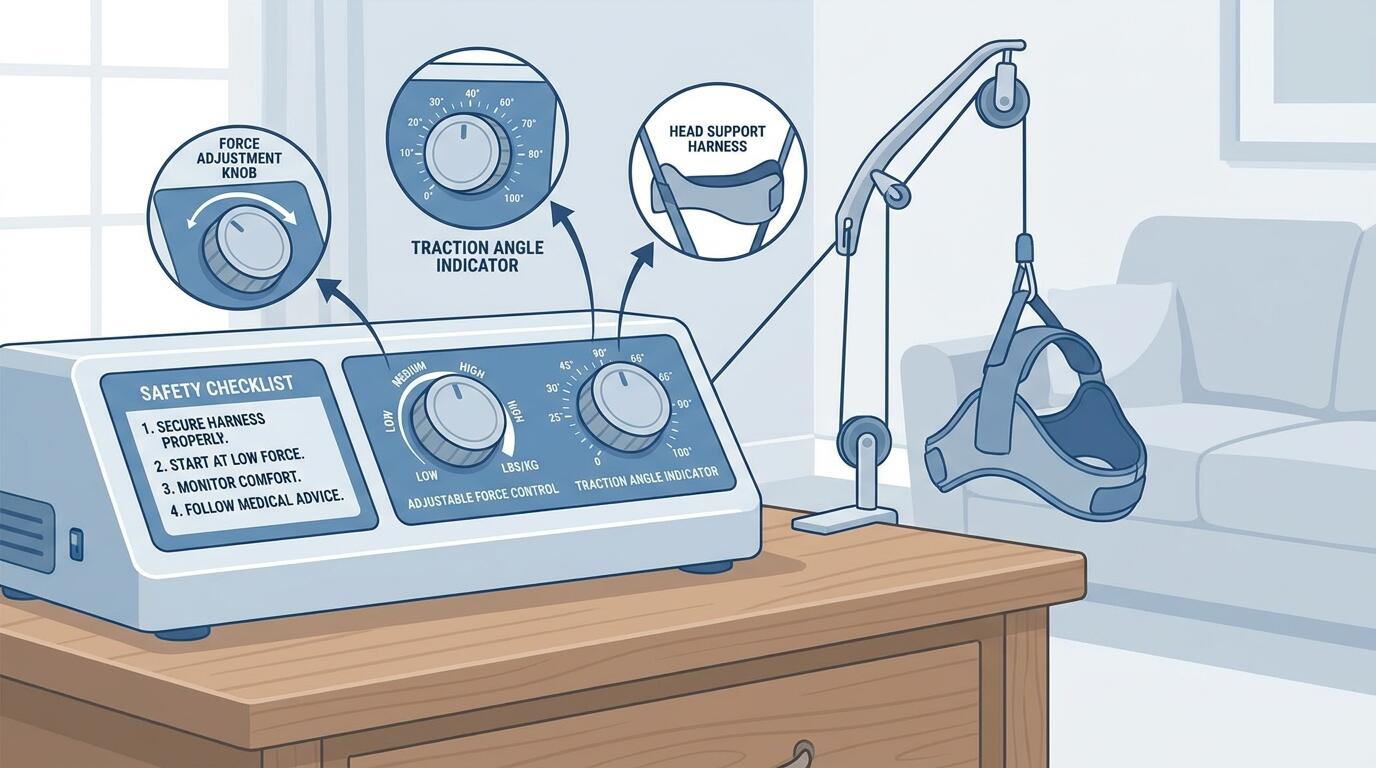
ALT: Detailed view of cervical traction device setup at home showing adjustable force settings and safety guidelines for neck pain relief
Advanced Considerations: Special Situations and Common Misconceptions
Managing Cervical Traction Alongside Other Therapies
Cervical traction does not exist in isolation. Many people managing chronic neck pain also use complementary modalities, and understanding how they interact is important for safety and effectiveness.
TENS (Transcutaneous Electrical Nerve Stimulation) therapy, for example, is a well-established non-pharmaceutical approach that works by delivering low-level electrical impulses to interrupt pain signals and stimulate natural endorphin release. Used before a cervical traction session, a TENS unit applied to the neck and upper trapezius muscles may help reduce muscle guarding, making traction more comfortable and potentially more effective. Devices like those from iStim offer professional-grade TENS technology designed for at-home use, with adjustable parameters that allow you to customize stimulation to your comfort level.
Always discuss the combination of therapies with your healthcare provider before implementing them together, particularly if you are post-surgical or have complex neurological symptoms.
Common Misconceptions About Cervical Traction Safety
"More traction force means faster results." This is one of the most dangerous myths in at-home rehabilitation. Excessive traction force can stretch ligaments beyond their elastic limit, aggravate disc herniation, or provoke severe muscle spasm. Clinical protocols always begin with conservative, lower force levels and progress gradually based on patient response.
"If it's sold online, it must be safe to use without medical advice." Consumer availability does not equal universal safety. Many cervical traction devices are sophisticated mechanical tools that require individualized calibration. The fact that a product is accessible without a prescription does not mean it is appropriate for self-prescription.
"Cervical traction cures herniated discs." Traction therapy can significantly reduce pain and functional limitation associated with disc-related conditions, but it does not physically "put a disc back in place." Its benefits are real but operate through neurological and biomechanical pathways that require appropriate application and realistic expectations.
Frequently Asked Questions FAQ
Q1: How do I know which cervical traction device is right for my specific neck condition?
The most reliable way to identify the right cervical traction device for your condition is to begin with a formal diagnosis from a physician or physical therapist. Different devices are optimized for different spinal levels and pathologies — for example, a device suited for mid-cervical disc herniation may not be ideal for upper cervical joint dysfunction. Your clinician can specify the appropriate traction angle, force range, and session parameters, which then guides your device selection. Never choose a device based solely on price or online reviews without clinical input.
Q2: Is it safe to use a cervical traction device every day at home?
For most people with medical clearance, daily use at low to moderate force is considered safe within recommended session durations — but this varies by individual condition and device type. Many clinical protocols recommend sessions several times per week rather than daily to allow tissue adaptation. Over-frequent or excessive-duration sessions can lead to muscle soreness, ligament fatigue, or symptom flare-ups. Always follow the guidelines provided by your healthcare provider and the device manufacturer, and reduce frequency if any discomfort or worsening symptoms occur.
Q3: How long does it typically take to see results from cervical traction therapy?
Individual responses vary considerably, but many patients report noticeable symptom improvement within two to four weeks of consistent, appropriately applied cervical traction therapy. Clinical studies on cervical radiculopathy have generally used intervention periods of four to eight weeks. Results depend on diagnosis accuracy, device suitability, consistency of use, and whether traction is integrated into a broader rehabilitation plan. Traction is rarely effective as a standalone treatment for complex conditions — it works best alongside other modalities such as physical therapy exercises and pain management strategies.
Summary
Choosing a cervical traction device safely is not simply a purchasing decision — it is a clinical process that begins with an accurate diagnosis, proceeds through careful device evaluation, and requires ongoing monitoring of your body's response. Three core principles should guide every step:
First, always prioritize professional guidance. A healthcare provider's input transforms a potentially risky self-experiment into a structured, evidence-informed therapy. Second, match the device to your specific condition. Device type, traction angle, adjustable force range, and build quality all matter significantly — not just brand reputation or price point. Third, start conservatively and progress gradually. The cervical spine responds best to measured, incremental loading rather than aggressive intervention.
Incorporating complementary non-pharmaceutical approaches — such as professional-grade TENS therapy for muscle relaxation and pain modulation — can further enhance your outcomes when used appropriately alongside traction. The goal is a sustainable, multi-modal strategy that reduces your reliance on medications and empowers you to manage your neck health proactively at home.
If you're already exploring electrotherapy as part of your pain management toolkit, trusted brands with clinically grounded devices can make a meaningful difference in both safety and effectiveness.
Ready to take control of your pain relief and muscle health from the comfort of home? Explore iStim's full range of professional-grade TENS, EMS, and Kegel devices at https://istim.com/ and find the right drug-free solution tailored to your needs. Join over 20,000 satisfied customers who trust iStim for safe, effective, and clinically inspired electrotherapy.
References
- American Physical Therapy Association. "Neck Pain — Cervical Traction and Physical Therapy".
https://www.apta.org/ - National Institute of Neurological Disorders and Stroke (NINDS), U.S. National Institutes of Health. "Neck Pain Fact Sheet".
https://www.ninds.nih.gov/ - Cochrane Library. "Cervical Traction for Neck Pain and Cervical Radiculopathy: A Systematic Review".
https://www.cochranelibrary.com/ - U.S. Food and Drug Administration (FDA). "Medical Devices — Home Use Devices Guidance".
https://www.fda.gov/medical-devices/home-use-devices - MedlinePlus, U.S. National Library of Medicine. "Cervical Spondylosis and Disc Disorders".
https://medlineplus.gov/
Note: Standards and clinical guidelines may be updated. Please check the latest official documents or consult a qualified healthcare professional for current recommendations.
About iStim
iStim is a Los Angeles-based electrotherapy brand specializing in professional-grade TENS, EMS, and Kegel devices engineered for safe and effective home use, backed by ISO-certified Taiwanese manufacturing and a growing community of 20,000+ trusted customers.
© iStim. All rights reserved. This article is intended for informational purposes only and does not constitute medical advice. Always consult a qualified healthcare professional before beginning any electrotherapy or pain management program.
Leave a comment