

How TENS Units Stimulate Nerve Fibers to Block Pain Signals to the Brain
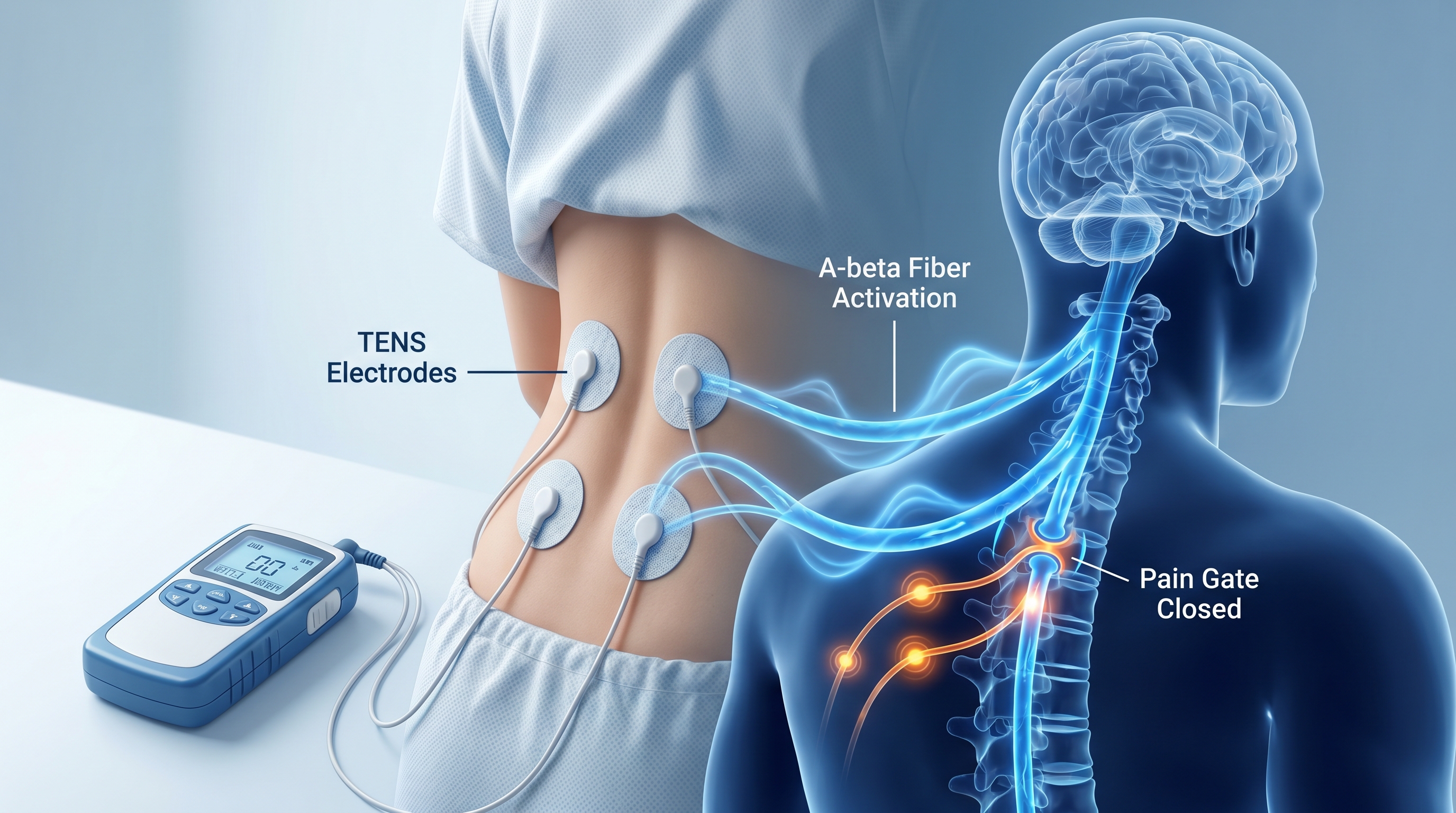
ALT: TENS unit electrode placement on lower back blocking pain signals to the brain through nerve fiber stimulation
Understanding How TENS Units Use Nerve Fiber Stimulation to Block Pain Signals
Key Conclusion: TENS (Transcutaneous Electrical Nerve Stimulation) units deliver low-level electrical impulses through the skin to stimulate specific nerve fibers, effectively interrupting pain signals before they reach the brain. By activating the gate control mechanism and triggering the body's natural endorphin release, TENS therapy offers a clinically validated, drug-free approach to managing both chronic and acute pain — making it a powerful tool for everyday home users seeking safe, non-pharmaceutical pain relief.
If you've ever wondered why placing a small device with electrode pads on your back or knee can make persistent pain melt away, the answer lies in the elegant science of how your nervous system processes pain — and how TENS technology cleverly intervenes in that process.
TENS therapy is not a modern gimmick. It is grounded in decades of neurophysiological research and has been used in clinical settings by physical therapists, pain specialists, and rehabilitation professionals worldwide. What has changed dramatically in recent years is accessibility: professional-grade TENS devices are now available for safe, effective home use, allowing everyday individuals to benefit from the same science that once required a clinical visit.
This article unpacks the neuroscience behind TENS therapy, explains exactly how electrical stimulation targets nerve fibers to block pain signals to the brain, and helps you determine whether this drug-free solution is right for your needs.
Who Can Benefit from TENS Nerve Stimulation Therapy
✅ Applicable Scenarios:
- Adults managing chronic pain conditions such as lower back pain, arthritis, fibromyalgia, or neuropathy
- Post-injury or post-surgery patients seeking drug-free adjunct pain relief during recovery
- Active individuals and athletes using TENS alongside EMS for muscle recovery and reduced soreness
- Older adults experiencing everyday aches and joint discomfort who prefer non-pharmaceutical options
- Women managing pelvic floor discomfort or using Kegel electric stimulation for pelvic health rehabilitation
- Anyone seeking a convenient at-home alternative to frequent clinical pain management visits
❌ Not Applicable/Cautions:
- Individuals with implanted electronic devices such as pacemakers or defibrillators — electrical stimulation can interfere with device function
- People with epilepsy, active cancer over treatment areas, deep vein thrombosis, or open wounds at electrode placement sites
- Pregnant women should avoid TENS over the abdomen or lower back without explicit medical clearance
- Do not use TENS on broken skin, rashes, numb areas where sensation is impaired, or directly over the eyes or throat
- Children and individuals with cognitive impairments who cannot communicate discomfort should only use TENS under direct medical supervision
The Science Behind Pain: Why Nerve Fiber Stimulation Works
To understand why TENS therapy is so effective, you first need to understand how your body processes pain in the first place.
Pain is not simply a sensation that exists in your knee, back, or shoulder. Pain is a signal — an electrochemical message generated at the site of tissue damage or irritation, transmitted through a network of nerve fibers, processed through the spinal cord, and ultimately interpreted by the brain. Without that final step of brain interpretation, pain as a conscious experience would not exist.
This is the critical insight that makes TENS therapy possible: if you can intercept that signal along its journey — before it reaches the brain — you can reduce or eliminate the perception of pain without touching the underlying tissue or introducing a single pharmaceutical compound.
The Two Types of Sensory Nerve Fibers TENS Targets
Your nervous system contains several types of nerve fibers, but two categories are especially relevant to pain management and TENS therapy:
A-beta fibers are large-diameter, heavily myelinated (insulated) nerve fibers that transmit non-painful sensory information — touch, pressure, and vibration — very rapidly. They do not normally carry pain signals.
C fibers and A-delta fibers, by contrast, are smaller, slower nerve fibers responsible for transmitting pain and temperature signals. C fibers carry the dull, aching, chronic pain that lingers after injury. A-delta fibers transmit sharp, acute pain sensations.
Here is where TENS becomes powerful: low-frequency and high-frequency electrical stimulation can selectively activate A-beta fibers, which are more responsive to mild electrical current due to their larger diameter and greater myelination. When A-beta fibers are activated, they can essentially "crowd out" or override the pain signals traveling through C fibers and A-delta fibers — a phenomenon explained by the Gate Control Theory of Pain.
The Gate Control Theory: The Central Mechanism of TENS
First proposed by Ronald Melzack and Patrick Wall in 1965, the Gate Control Theory of Pain remains one of the most influential frameworks in pain neuroscience. The theory proposes that the spinal cord contains a neurological "gate" — located in the dorsal horn — that can either open to allow pain signals to pass to the brain, or close to block them.
The gate's position is determined by the relative activity of different nerve fibers:
- When C fibers and A-delta fibers are active (i.e., when there is tissue damage or irritation), the gate opens and pain signals travel to the brain.
- When A-beta fibers are active — carrying touch, pressure, or mild electrical stimulation — the gate tends to close, reducing or blocking the transmission of pain signals to the brain.
This is precisely why rubbing a bruised area instinctively makes it feel better — the tactile stimulation activates A-beta fibers, partially closing the gate. TENS therapy works on the same principle, but far more precisely and consistently.
High-frequency TENS (typically above 50 Hz) most directly activates A-beta fibers to trigger the spinal gate control mechanism, producing rapid pain relief that is felt during and immediately after treatment. This is sometimes called "conventional TENS" and is ideal for acute pain management.
Endorphin Release: The Second Pain-Blocking Mechanism
TENS therapy has a second, equally important mechanism of action: the stimulation of endogenous opioid release.
Low-frequency TENS (typically below 10 Hz) stimulates the brain and spinal cord to release beta-endorphins and enkephalins — the body's natural pain-killing compounds, which work similarly to opioid medications but without addiction risk or pharmaceutical side effects.
This is why low-frequency TENS is often used for chronic pain conditions — the effect builds over time and can provide lasting pain relief even after the device is switched off. Researchers and clinicians have confirmed this mechanism through studies showing that opioid antagonists like naloxone can partially reverse the pain-relieving effects of low-frequency TENS, confirming that endogenous opioids play a real, measurable role.
Together, these two mechanisms — gate control inhibition and endorphin release — explain why TENS therapy is effective across such a wide range of pain conditions, from post-surgical recovery to arthritis to neuropathic pain.
How to Use a TENS Unit at Home: A Practical Step-by-Step Guide
Getting Started with Your TENS Device
Step 1: Identify Your Pain Area and Electrode Placement Sites
Before turning on your device, identify the specific area of pain and locate the correct electrode placement sites. For most musculoskeletal pain, electrodes are placed on either side of the painful area — not directly over the spine or bony prominences. Consult the electrode placement guide included with your iStim device or reference established guidelines for best practices for safe TENS unit electrode placement. Clean the skin with mild soap and water and allow it to dry fully before applying pads. Proper placement is essential to achieving effective nerve fiber stimulation and maximizing pain relief.
Step 2: Set Frequency and Intensity for Your Pain Type
Start with a low intensity and gradually increase until you feel a comfortable tingling sensation — never pain or strong muscle twitching unless using an EMS mode. For acute pain, select a higher frequency (above 50 Hz) to activate the gate control mechanism. For chronic pain, a lower frequency setting (below 10 Hz) may provide deeper, longer-lasting relief through endorphin stimulation. iStim devices offer multiple programmable modes designed for both acute and chronic pain scenarios, allowing you to personalize your therapy without clinical expertise.
Step 3: Run Your Session and Monitor Your Response
A standard TENS session typically runs for 20 to 30 minutes, though session length may vary depending on your condition and device program. During the session, you should feel gentle electrical pulses — a tingling or buzzing sensation that should remain comfortable throughout. After the session, remove electrode pads carefully, clean the skin, and store pads on their protective liner to preserve adhesion for future use. If you experience increased pain, skin irritation, or discomfort, discontinue use and consult a healthcare professional. Most users see meaningful pain relief after consistent use over several days.
Comparing TENS, EMS, and Other Pain Relief Methods
When evaluating your options for pain management and muscle recovery, it helps to understand how different approaches compare. Many users ask about the best pain relief method — TENS or EMS for muscle recovery — and the answer depends on your specific goals.
TENS targets sensory nerve fibers to block pain perception, while EMS (Electrical Muscle Stimulation) targets motor nerve fibers to cause muscle contractions, supporting recovery, strength building, and rehabilitation. They are complementary rather than competitive — and iStim offers both.
| Comparison Dimension | TENS Therapy | EMS Therapy | Over-the-Counter Pain Medication |
|---|---|---|---|
| Primary Mechanism | Nerve fiber stimulation to block pain signals | Motor nerve stimulation to contract muscles | Systemic chemical pain suppression |
| Best For | Acute and chronic pain relief | Muscle recovery, strength, rehabilitation | Short-term acute pain management |
| Onset of Relief | Rapid (during session) or gradual (low-freq) | Gradual (post-workout recovery) | 30–60 minutes post-ingestion |
| Drug-Free | Yes | Yes | No |
| Side Effect Risk | Minimal when used correctly | Minimal when used correctly | GI issues, dependency risk, organ strain |
| Home Use Accessibility | High — user-friendly devices available | High — user-friendly devices available | High — available OTC |
| Long-Term Use Safety | Well-established with proper guidance | Well-established with proper guidance | Concerns with prolonged use |
Deep Dive: The Neurophysiology of TENS and What the Research Tells Us
Understanding frequency-specific effects is essential to getting the most out of TENS therapy at home. Research consistently shows that the frequency you select significantly changes which biological mechanism is activated — and therefore which type of pain it is most effective against.
High-frequency TENS (50–150 Hz) produces its effect primarily through the spinal gate control mechanism. The rapid electrical pulses preferentially activate large-diameter A-beta sensory fibers, which in turn inhibit the transmission of pain signals through interneurons in the dorsal horn of the spinal cord. Pain relief is felt quickly — often within minutes of beginning a session — but may diminish shortly after the device is turned off.
Low-frequency TENS (1–10 Hz) activates deeper pain modulation systems, triggering the release of beta-endorphins through pathways in the brain stem and hypothalamus. Pain relief develops more gradually but can persist for hours beyond the end of a session, making this frequency range particularly valuable for individuals managing chronic pain conditions.
Burst mode TENS — in which high-frequency bursts are delivered at a low-frequency carrier — is designed to activate both mechanisms simultaneously, combining rapid gate control relief with the longer-lasting endorphin response. This hybrid approach is increasingly favored in clinical settings and is available on advanced home-use devices.
A practical example: consider a 52-year-old with chronic lower back pain who has relied on NSAIDs for years. Switching to a consistent home TENS regimen using low-frequency settings, she notices that the dull, persistent ache diminishes significantly over two to three weeks of daily sessions — consistent with research showing cumulative endorphin effects with regular low-frequency TENS use. For acute flare-ups, switching to high-frequency mode provides almost immediate relief.
Safe electrode placement is not just a matter of comfort — it directly determines which nerve fibers are stimulated and how effectively the therapy works. Electrodes placed too far from the pain site may not adequately activate the relevant afferent nerve fibers. The general principle is to place electrodes at or around the painful area, bracketing the site of pain, while avoiding placement directly on the spine, joints, head, or over major blood vessels.
For pelvic floor conditions, specialized Kegel electric stimulation devices like those offered by iStim use internal or external electrode configurations specifically designed for pelvic nerve stimulation — a distinct but related application of the same underlying neuroscientific principles.
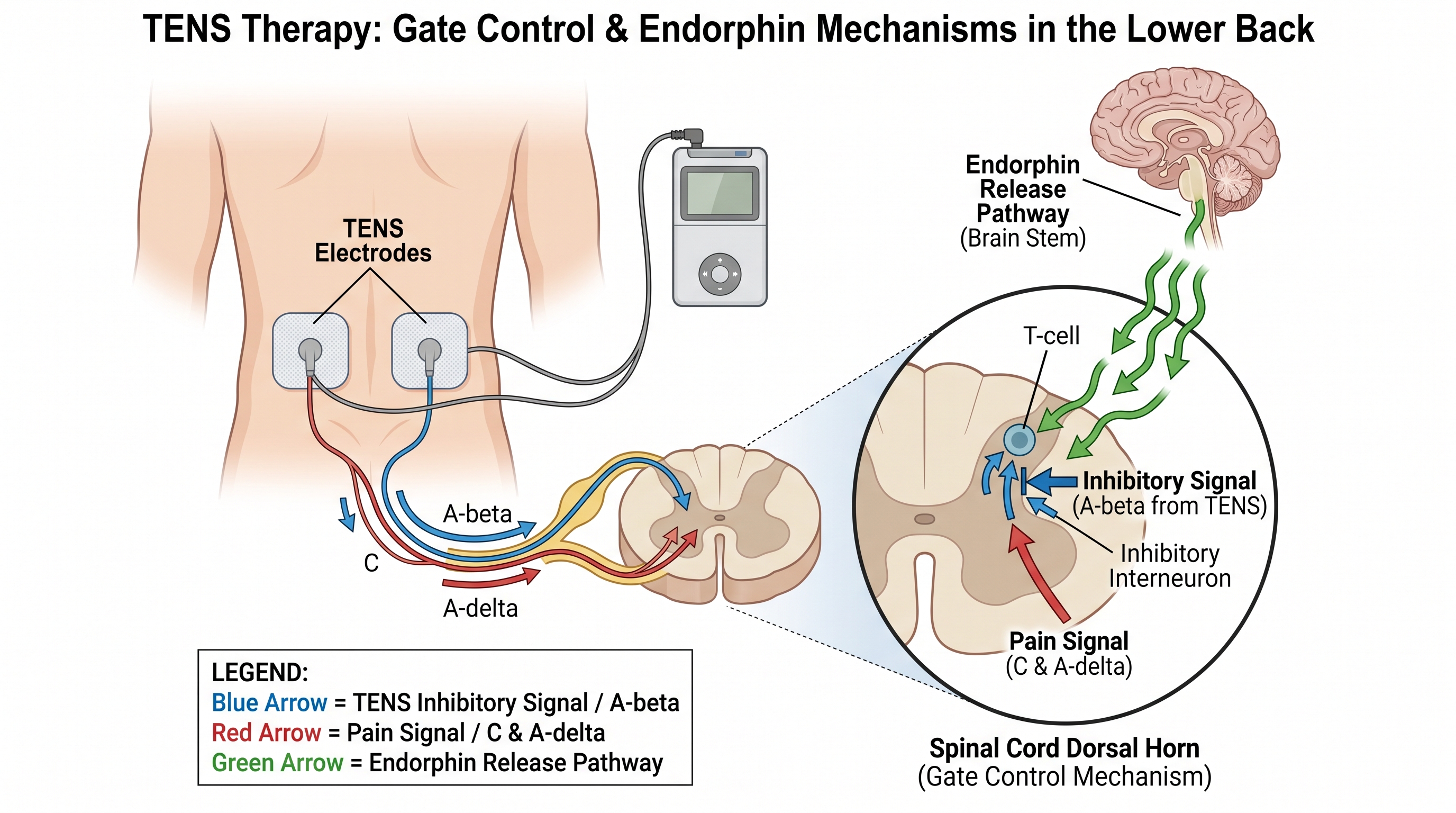
ALT: Diagram illustrating TENS electrode placement on the lower back and corresponding nerve fiber pathways blocking pain signals to the brain
Advanced Considerations: Maximizing Your TENS Therapy Outcomes
Addressing Special Situations and Common Misconceptions
Misconception 1: "TENS only masks pain — it doesn't treat anything."
While TENS does not repair damaged tissue, dismissing it as mere "masking" misrepresents the science. The gate control mechanism and endorphin release are genuine neurophysiological processes, not placebo effects. Moreover, by enabling movement without pain, TENS therapy can facilitate rehabilitation exercises that accelerate actual tissue healing — making it a meaningful contributor to recovery, not just a temporary distraction.
Misconception 2: "Higher intensity always means better results."
This is incorrect and potentially counterproductive. Excessively high intensity can cause muscle discomfort, skin irritation, or paradoxically increase pain sensitivity. The therapeutic window for TENS is a comfortable tingling sensation — strong enough to activate target nerve fibers, but never uncomfortable. Starting low and gradually adjusting is always the best practice.
Misconception 3: "TENS and EMS are the same thing."
Though both use electrical stimulation, TENS and EMS target fundamentally different nerve fibers and serve different purposes. TENS stimulates sensory A-beta fibers for pain relief; EMS stimulates motor nerve fibers to produce muscle contractions for strength and recovery. Understanding this distinction helps users select the right mode for their specific needs — and iStim's device lineup is designed to make this choice clear and accessible.
Regarding certification and quality: When selecting a home TENS device, device quality and safety certification matter enormously. iStim's devices are backed by ISO-certified manufacturing from Taiwan, providing assurance of consistent electrical output, safety standards, and build quality that directly affect both therapeutic efficacy and user safety.
Frequently Asked Questions FAQ
Q1: How do I know if my TENS unit is correctly stimulating the right nerve fibers for pain relief?
The most reliable indicator is sensation: you should feel a noticeable but comfortable tingling or buzzing sensation in the area around the electrodes, without pain, strong muscle contractions, or skin burning. If you feel the sensation spreading into the pain area, the electrodes are likely activating the relevant sensory nerve fibers. If you feel nothing or only discomfort, recheck electrode placement following safe TENS unit electrode placement best practices and adjust intensity gradually upward from the lowest setting.
Q2: Is TENS therapy safe to use daily for chronic pain management?
For most healthy adults without contraindications, daily TENS use is considered safe when following device guidelines. Many individuals with chronic conditions such as arthritis, fibromyalgia, or lower back pain use TENS daily as part of an integrated pain management plan. However, it's important to vary electrode placement slightly between sessions to avoid skin irritation, and to take periodic breaks as recommended. Always consult your healthcare provider before starting a daily regimen, particularly if you have underlying medical conditions.
Q3: How long does it take to experience noticeable pain relief from TENS therapy?
High-frequency TENS often produces noticeable pain relief within the first 15–30 minutes of a session, making it useful for acute pain flare-ups. Low-frequency TENS for chronic pain may require consistent use over several days to two weeks before significant cumulative benefit is felt, as the endorphin response builds with repeated stimulation. Many iStim users report meaningful improvement within the first week of regular use, with continued improvement as therapy becomes part of their daily wellness routine.
Summary
TENS therapy works through two elegantly simple yet scientifically powerful mechanisms: activating large-diameter A-beta nerve fibers to close the spinal gate against incoming pain signals, and stimulating the brain and spinal cord to release natural endorphins that suppress pain perception at a systemic level. Together, these mechanisms make TENS one of the most versatile, evidence-based drug-free pain relief tools available today.
Three core takeaways from this article:
- The neuroscience is real and validated — Gate Control Theory and endorphin-mediated pain suppression are not theoretical constructs but measurable biological processes confirmed through decades of research.
- Frequency matters — High-frequency TENS is ideal for quick acute pain relief; low-frequency TENS builds lasting chronic pain management through endorphin stimulation. Knowing the difference helps you use your device most effectively.
- Professional-grade quality at home is achievable — iStim's ISO-certified TENS and EMS devices bring clinical-level technology into everyday home use, empowering you to take control of your pain management without relying solely on pharmaceuticals or frequent clinical visits.
Your next step is straightforward: identify your primary pain concern, review the electrode placement guidelines for your area of need, and begin with a low-intensity session to familiarize yourself with the sensations. Consistent use, combined with appropriate frequency selection for your pain type, is the foundation of effective at-home TENS therapy.
Ready to experience drug-free pain relief and muscle recovery from the comfort of your home? Explore iStim's full range of professional-grade TENS, EMS, and Kegel devices at https://istim.com/ and find the right solution tailored to your wellness needs. Join over 20,000 satisfied customers who trust iStim to deliver clinically inspired electrotherapy — safely, effectively, and affordably.
References
- National Institutes of Health (NIH) — National Library of Medicine. "Transcutaneous Electrical Nerve Stimulation (TENS) for Pain Relief".
https://www.ncbi.nlm.nih.gov/books/NBK537188/ - Melzack, R., & Wall, P.D. "Pain Mechanisms: A New Theory". Science, 150(3699), 971–979. (1965) — via PubMed.
https://pubmed.ncbi.nlm.nih.gov/5320816/ - American Physical Therapy Association (APTA). "Electrophysical Agents — Contraindications and Precautions: An Evidence-Based Approach to Clinical Decision Making in Physical Therapy".
https://www.apta.org/ - Johnson, M.I. "Transcutaneous Electrical Nerve Stimulation: Mechanisms, Clinical Application and Evidence". Reviews in Pain, 1(1), 7–11. — via PMC.
https://www.ncbi.nlm.nih.gov/pmc/articles/PMC4590899/ - Cleveland Clinic. "TENS (Transcutaneous Electrical Nerve Stimulation)".
https://my.clevelandclinic.org/health/treatments/tens-transcutaneous-electrical-nerve-stimulation
Note: Standards and clinical guidelines may be updated. Please check the latest official documents or consult a qualified healthcare professional for the most current recommendations.
About iStim
iStim is a Los Angeles-based electrotherapy brand specializing in professional-grade TENS, EMS, and Kegel devices engineered for home use, backed by ISO-certified Taiwanese manufacturing and trusted by 20,000+ customers for safe, drug-free pain relief and muscle stimulation. Learn more at istim.com.
Disclaimer: This article is provided for informational and educational purposes only and does not constitute medical advice. The content is not intended to diagnose, treat, cure, or prevent any medical condition. Always consult a qualified healthcare professional before beginning any new therapy or treatment program. © iStim. All rights reserved.
Leave a comment