

How EMS Helps Muscles Contract, Recover, and Grow Stronger
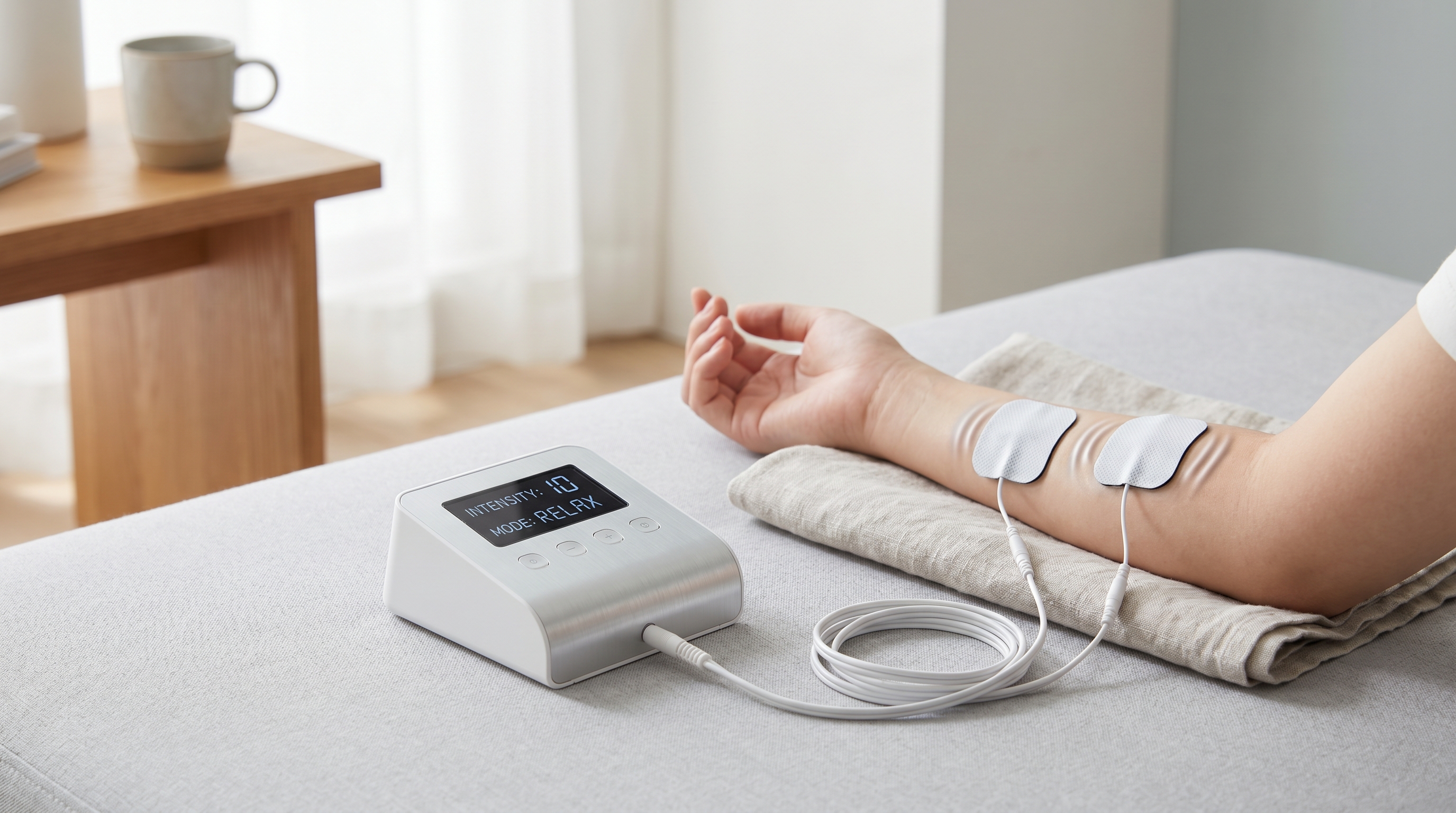
ALT: EMS electrical muscle stimulation device helping muscles contract, recover, and grow stronger during home therapy session
What Is EMS and Why Does It Matter for Muscle Health?
Key Conclusion: Electrical Muscle Stimulation (EMS) uses precisely calibrated electrical impulses to trigger involuntary muscle contractions, mimicking the natural signals your nervous system sends during exercise. This technology accelerates muscle recovery, reduces post-workout soreness, supports rehabilitation after injury or surgery, and can progressively build muscle strength — all without the joint stress of conventional training. For health-conscious individuals seeking drug-free, clinically inspired muscle care at home, EMS represents a powerful and versatile solution.
Muscle health sits at the core of overall physical well-being, yet many people struggle to maintain it — whether due to sedentary lifestyles, post-injury limitations, or the simple reality that recovery is often neglected in favor of the next workout. EMS (Electrical Muscle Stimulation) bridges that gap by delivering therapeutic electrical impulses directly to targeted muscle groups, stimulating contractions that promote healing, strength, and endurance.
What makes EMS particularly compelling is its accessibility. Once confined to clinical rehabilitation centers and elite sports facilities, this technology has evolved into a user-friendly, home-ready solution. Backed by decades of sports science and physical therapy research, EMS devices are now helping everyday users — from weekend warriors to post-surgery patients — take meaningful control of their muscle health.
Who Can Benefit from EMS Therapy?
✅ Applicable Scenarios:
- Active individuals and athletes looking to enhance muscle recovery between training sessions
- Post-injury or post-surgery patients undergoing physical rehabilitation who need gentle muscle activation
- Older adults experiencing muscle weakness, atrophy, or chronic musculoskeletal discomfort
- Sedentary individuals seeking to improve muscle tone and circulation without high-impact exercise
- Anyone managing delayed onset muscle soreness (DOMS) after strenuous physical activity
❌ Not Applicable/Cautions:
- Individuals with implanted electronic devices such as pacemakers or defibrillators should avoid EMS
- Pregnant women should not apply EMS stimulation to the abdominal or lower back regions without medical clearance
- EMS electrodes should never be placed over open wounds, irritated skin, or areas of reduced sensation
- Individuals with epilepsy, active cancer, or deep vein thrombosis should consult a physician before use
The Science Behind Muscle Contraction and Electrical Stimulation
To understand why EMS works so effectively, it helps to understand how muscles contract naturally. Every voluntary movement you make — from lifting a coffee cup to running a mile — begins with an electrical signal. Your brain sends an impulse through motor neurons that reaches muscle fibers, triggering a cascade of biochemical events that cause those fibers to contract. The greater the signal and the more motor units recruited, the stronger the contraction.
EMS replicates this process artificially. By delivering low-level electrical impulses through electrode pads placed on the skin, EMS devices stimulate motor neurons directly, causing the target muscle to contract — entirely independent of voluntary neural signals from the brain. This is what makes EMS uniquely valuable: it can activate muscles even in individuals who have difficulty initiating movement due to injury, neurological impairment, or postoperative immobilization.
The Three Pillars of EMS Benefit: Contraction, Recovery, and Growth
Modern EMS science recognizes three distinct but interconnected pathways through which electrical muscle stimulation delivers benefit:
1. Forced Muscle Contractions for Activation and Tone
When EMS triggers a muscle contraction, it recruits motor units in a pattern that differs slightly from voluntary exercise. Research suggests that EMS tends to recruit both slow-twitch and fast-twitch muscle fibers simultaneously, which can lead to more comprehensive muscle engagement than certain conventional exercises. This makes EMS particularly effective for muscle re-education — teaching atrophied or weakened muscles to "wake up" and fire correctly after a period of disuse.
2. Enhanced Circulation for Faster Recovery
The rhythmic contractions induced by EMS create a pumping effect within the muscle tissue. This mechanical action enhances local blood flow, facilitating the delivery of oxygen and nutrients to fatigued muscle fibers while simultaneously clearing metabolic waste products like lactic acid. For athletes managing delayed onset muscle soreness, or post-surgical patients trying to restore function, this circulatory boost translates directly into faster, more comfortable recovery.
3. Progressive Neuromuscular Adaptation for Strength Gains
When EMS is used consistently and progressively over time — gradually increasing intensity or session duration — it challenges muscle fibers to adapt, just as resistance training does. Studies in sports medicine and physical therapy have documented meaningful improvements in muscle strength, endurance, and cross-sectional area in subjects using EMS as either a primary or adjunctive training modality. Combined with conventional exercise, EMS can accelerate the neuromuscular adaptations that lead to genuine strength gains.
EMS vs. TENS: Understanding the Difference
It's worth clarifying a common point of confusion. TENS (Transcutaneous Electrical Nerve Stimulation) and EMS both use electrical impulses delivered through skin electrodes, but they serve different primary purposes. TENS targets sensory nerve fibers to interrupt pain signals, making it the preferred choice for drug-free pain management. EMS, by contrast, targets motor nerves to stimulate muscle contractions, making it ideal for muscle recovery, strengthening, and rehabilitation. Many high-quality devices — including those in the iStim lineup — offer both modalities, allowing users to address both pain and muscle health in a single device platform.
How to Use EMS Effectively: A Three-Step Framework
Getting the most out of your EMS device doesn't require a physical therapy degree. Following a structured, consistent approach makes all the difference in whether you experience meaningful results or frustration.
Step 1: Identify Your Goal and Choose the Right Mode
Before placing a single electrode, clarify what you're trying to achieve. Are you recovering from a hard workout and managing soreness? Rehabilitating a weakened muscle group after injury? Actively training for strength improvements? Most professional-grade EMS devices offer multiple program modes — such as recovery, strength, endurance, and massage — each calibrated to deliver specific pulse frequencies and waveforms. Selecting the mode aligned with your goal ensures the electrical impulses are doing the right kind of work. Spend five minutes reviewing your device's program guide before your first session; this investment pays dividends in effectiveness and safety.
Step 2: Prepare Your Skin and Position Electrodes Correctly
Electrode placement is arguably the most critical variable in EMS effectiveness. Clean the target skin area with mild soap and water to remove any oils, lotions, or sweat that could impede conductivity. Allow the skin to dry fully before applying electrode pads. Position the electrodes on either side of the target muscle belly — not over bony prominences, joints, or areas with broken skin. For larger muscle groups like the quadriceps or glutes, a two-electrode or four-electrode configuration spanning the muscle length typically delivers the most uniform and comfortable contraction. Adequate skin hydration and fresh electrode pads are essential for consistent signal delivery.
Step 3: Start Low, Build Gradually, and Monitor Your Response
Begin every session at the lowest comfortable intensity setting and gradually increase until you feel a strong but not painful muscle contraction. The target sensation should be unmistakable muscular engagement — you should be able to see or feel the muscle contracting — but never sharp, burning, or deeply uncomfortable. Most EMS sessions for recovery purposes last between 20 to 30 minutes, while strength-training programs may vary by protocol. After each session, give the treated muscle group adequate rest before repeating stimulation. Track your progress and increase intensity incrementally over weeks to ensure progressive challenge and continued adaptation.
EMS Compared to Other Muscle Recovery and Strengthening Methods
Understanding how EMS stacks up against alternative approaches helps you make informed decisions about integrating it into your wellness routine.
| Comparison Dimension | EMS Therapy | Conventional Resistance Training | Massage Therapy |
|---|---|---|---|
| Muscle Activation Mechanism | Direct motor nerve stimulation via electrical impulses | Voluntary neural signaling through resistance loading | Manual manipulation of soft tissue |
| Joint Stress / Impact | Minimal to none — ideal for injury recovery | Moderate to high depending on load and movement | None |
| Accessibility at Home | High — portable devices available for home use | Moderate — requires equipment or gym access | Low — typically requires a practitioner |
| Ability to Target Specific Muscles | High — precise electrode placement | Moderate — compound movements recruit multiple muscles | Moderate — depends on therapist skill |
| Drug-Free Pain Relief Component | Yes, especially when combined with TENS | Indirect — via endorphin release | Yes — via circulation and tissue relaxation |
| Cost Over Time | Low — device investment with reusable pads | Variable — gym fees or equipment purchase | High — ongoing per-session cost |
| Suitable for Post-Surgery Rehab | Yes — with medical guidance | Limited — may be contraindicated early post-surgery | Partial — depends on surgical site |
This comparison highlights EMS's distinctive advantage: it delivers targeted muscle stimulation with minimal mechanical load, making it uniquely valuable during recovery phases when conventional exercise is not yet appropriate or comfortable.
Combining EMS Training with Regular Workouts: Best Practices
One of the most common questions among fitness-oriented users is how to integrate EMS sessions with their existing training routine. The answer lies in understanding EMS as a complement — not a replacement — for conventional exercise.
Using EMS for Pre-Activation
Applied before a workout at lower intensity settings, EMS can "pre-activate" target muscle groups, improving neuromuscular recruitment and potentially reducing injury risk. This is particularly useful for individuals who struggle to engage certain muscles — such as the glutes or deep core — during compound movements.
Using EMS for Post-Workout Recovery
This is where many users see the most dramatic benefit. After a demanding training session, applying EMS to fatigued muscles at a low-frequency, recovery-oriented setting promotes blood flow, reduces inflammatory metabolite accumulation, and accelerates the repair process. Many athletes report notably reduced DOMS and faster readiness for the next training session when incorporating EMS recovery protocols.
Strategic Rest Day Application
On days when you're not actively training, EMS can maintain neuromuscular engagement without adding physical stress. This is especially valuable during deload weeks or when managing minor soft tissue soreness that makes conventional training uncomfortable.
The best way to combine EMS training with regular workouts is to treat it as a recovery and activation tool, scheduling sessions around your training calendar rather than in competition with it.
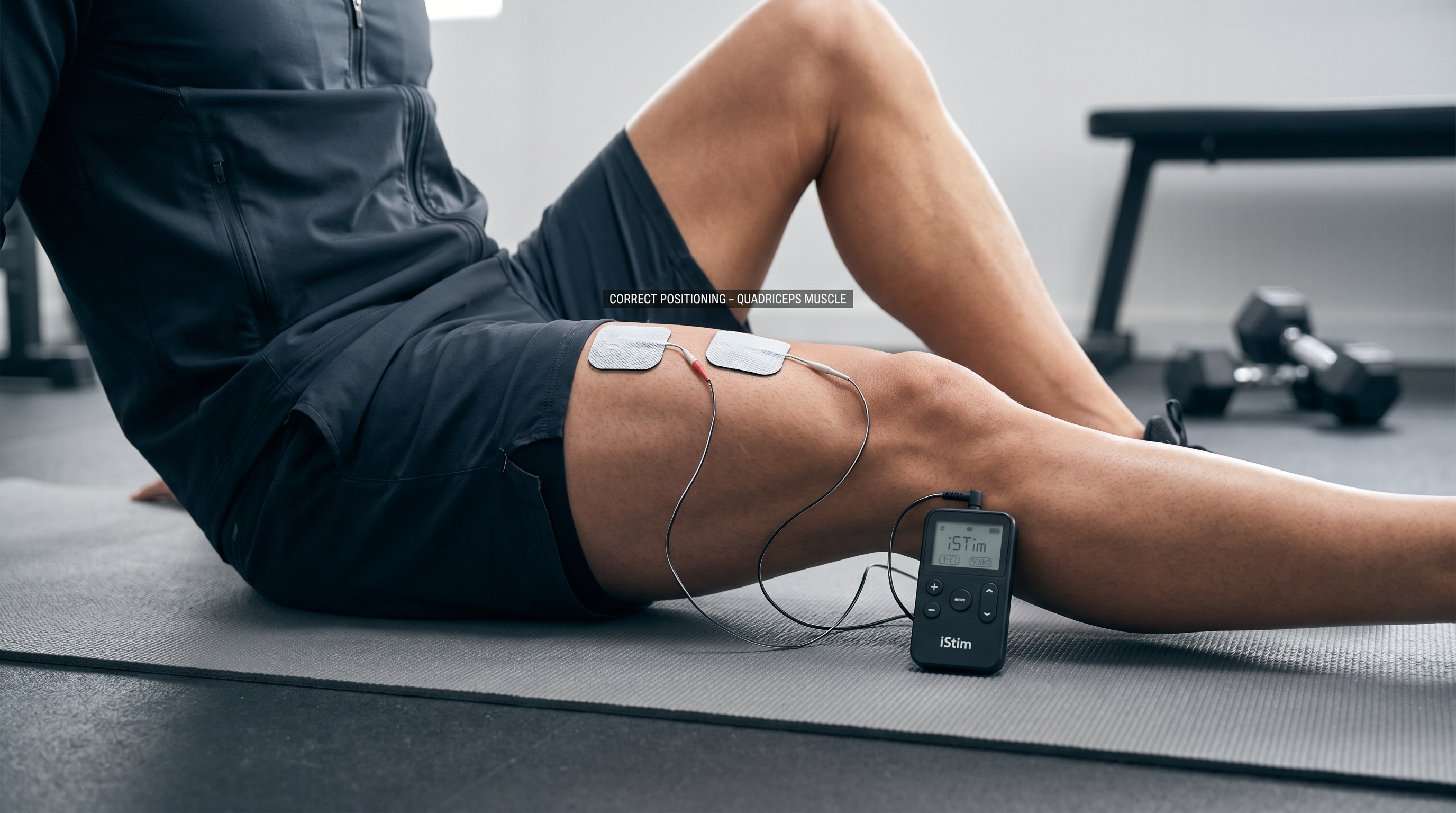
ALT: iStim EMS device with electrode pads correctly positioned on quadriceps muscle for post-workout recovery and electrical muscle stimulation therapy
Advanced Considerations: Getting More from Your EMS Practice
Managing Electrode Placement for Complex Muscle Groups
As you grow more comfortable with EMS, you may want to address more complex or harder-to-reach muscle groups. The lower back, for example, benefits from electrode placement along the paraspinal muscles — but requires careful positioning to avoid the spinal column itself. The hamstrings, often chronically tight in desk workers and athletes alike, respond well to a longitudinal electrode arrangement following the muscle fiber direction. For users specifically interested in pelvic floor rehabilitation, specialized internal or surface electrodes designed for pelvic stimulation offer a targeted solution that conventional electrode pads simply cannot replicate. iStim's dedicated Kegel electric stimulation devices are specifically engineered for this purpose, making pelvic floor therapy safe, private, and effective at home.
Common Misconceptions About EMS Safety
Misconception 1: "Higher intensity always means better results."
This is not only incorrect but potentially counterproductive. Excessively high EMS intensity can cause muscle fatigue, microtrauma, or skin irritation without proportional benefit. Progressive, moderate stimulation that challenges the muscle without overwhelming it consistently outperforms aggressive intensity.
Misconception 2: "EMS can fully replace exercise."
EMS is a powerful adjunct to an active lifestyle, but it does not replicate the cardiovascular, metabolic, and hormonal benefits of full-body exercise. Its greatest value is as a complement to movement, not a substitute for it.
Misconception 3: "EMS devices are only for athletes or clinical patients."
This outdated perception overlooks the broad population who benefits daily from EMS — including older adults managing muscle loss, desk workers combating postural imbalances, and anyone seeking drug-free muscle care between medical appointments.
EMS and TENS Side Effects: What to Know
When used as directed, both EMS and TENS therapies carry a very low risk profile. The most commonly reported TENS unit side effects and EMS-related experiences include mild skin redness or irritation at electrode sites (typically resolving within an hour), muscle fatigue after longer sessions, and occasional tingling sensations that persist briefly post-treatment. These effects are generally minor and self-limiting. More serious adverse events are rare and almost exclusively associated with misuse — such as incorrect electrode placement, using damaged equipment, or ignoring contraindications. Always follow device guidelines and consult your healthcare provider if you have underlying conditions.
Frequently Asked Questions FAQ
Q1: How should I combine EMS training sessions with my regular workout schedule?
The most effective approach is to use EMS strategically around your training blocks rather than adding it on top of heavy workouts indiscriminately. Apply EMS at recovery-mode settings within a few hours after intense training to accelerate muscle repair and reduce soreness. On lighter or rest days, use strength-mode EMS at moderate intensity to maintain neuromuscular engagement. Avoid high-intensity EMS on the same muscle groups on back-to-back days, just as you would with conventional resistance training, to allow adequate recovery.
Q2: Are EMS devices safe for older adults managing age-related muscle loss?
For most older adults without contraindicated conditions, EMS is a safe and clinically validated approach to managing sarcopenia (age-related muscle loss) and maintaining functional strength. The low-impact nature of EMS makes it particularly appropriate for individuals who cannot tolerate high-intensity exercise. However, older adults with cardiovascular conditions, implanted devices, or reduced skin sensation should obtain medical clearance before beginning EMS therapy. Starting with lower intensity settings and shorter sessions is recommended to allow the body to adapt comfortably.
Q3: How long does it take to notice results from regular EMS use, and how often should I use it?
Most users begin to notice improvements in muscle tone, reduced soreness recovery time, and improved local circulation within two to four weeks of consistent use — typically three to five sessions per week. Measurable strength improvements generally require a longer commitment of six to twelve weeks, especially when EMS is paired with active exercise. Session frequency and intensity should be individualized based on your goals, baseline fitness, and how well your muscles recover between sessions. Consulting your device's recommended protocol guidelines provides a solid evidence-based starting point.
Summary
EMS therapy represents one of the most versatile and scientifically supported tools available for home muscle care — and understanding its mechanisms empowers you to use it far more effectively. Three core principles summarize its value:
1. Precise Muscle Activation Without Mechanical Load
EMS bypasses the joints and connective tissue stress of conventional exercise, making it uniquely valuable during rehabilitation, recovery, or for populations who cannot tolerate traditional training loads.
2. Accelerated Recovery Through Enhanced Circulation
The rhythmic contractions EMS induces function as a biological pump, improving blood flow, reducing inflammatory waste accumulation, and shortening the time your muscles need to return to peak readiness.
3. Progressive Neuromuscular Strengthening Over Time
When used consistently with progressive intensity, EMS delivers genuine strength and endurance adaptations — especially when paired strategically with regular physical activity.
Your next step is straightforward: identify your primary goal — recovery, rehabilitation, or strengthening — choose a professional-grade EMS device matched to that goal, and commit to a structured, progressive protocol. The results are real, the science is sound, and the access has never been better.
Ready to experience drug-free pain relief and muscle recovery from the comfort of your home? Explore iStim's full range of professional-grade TENS, EMS, and Kegel devices at https://istim.com/ and find the right solution tailored to your wellness needs. Join over 20,000 satisfied customers who trust iStim to deliver clinically inspired electrotherapy — safely, effectively, and affordably.
References
- National Institute of Neurological Disorders and Stroke (NINDS). "Pain: Hope Through Research".
https://www.ninds.nih.gov/health-information/patient-caregiver-education/hope-through-research/pain-hope-through-research - American Physical Therapy Association (APTA). "Electrical Stimulation for Muscle Reeducation and Rehabilitation".
https://www.apta.org/ - U.S. Food and Drug Administration (FDA). "Information for Patients: TENS (Transcutaneous Electrical Nerve Stimulators)".
https://www.fda.gov/medical-devices/consumer-products/tens-transcutaneous-electrical-nerve-stimulators - PubMed Central / National Institutes of Health. "Effects of Electrical Muscle Stimulation on Muscle Strength and Function".
https://www.ncbi.nlm.nih.gov/pmc/ - MedlinePlus (U.S. National Library of Medicine). "Muscle Disorders and Rehabilitation".
https://medlineplus.gov/muscledisorders.html
Note: Standards and clinical guidelines may be updated. Please check the latest official documents or consult a qualified healthcare professional for current recommendations.
About iStim
iStim is a Los Angeles-based electrotherapy brand specializing in professional-grade TENS, EMS, and Kegel devices engineered for home use, backed by ISO-certified Taiwanese manufacturing and trusted by 20,000+ customers for safe, drug-free pain relief and muscle stimulation. Learn more at istim.com.
Disclaimer: This article is provided for informational and educational purposes only and does not constitute medical advice. The content is not intended to diagnose, treat, cure, or prevent any medical condition. Always consult a qualified healthcare professional before beginning any new therapy or treatment program. © iStim. All rights reserved.
Leave a comment