

EMS for Legs and Glutes: A Training Guide for Using Muscle Stimulators at Home
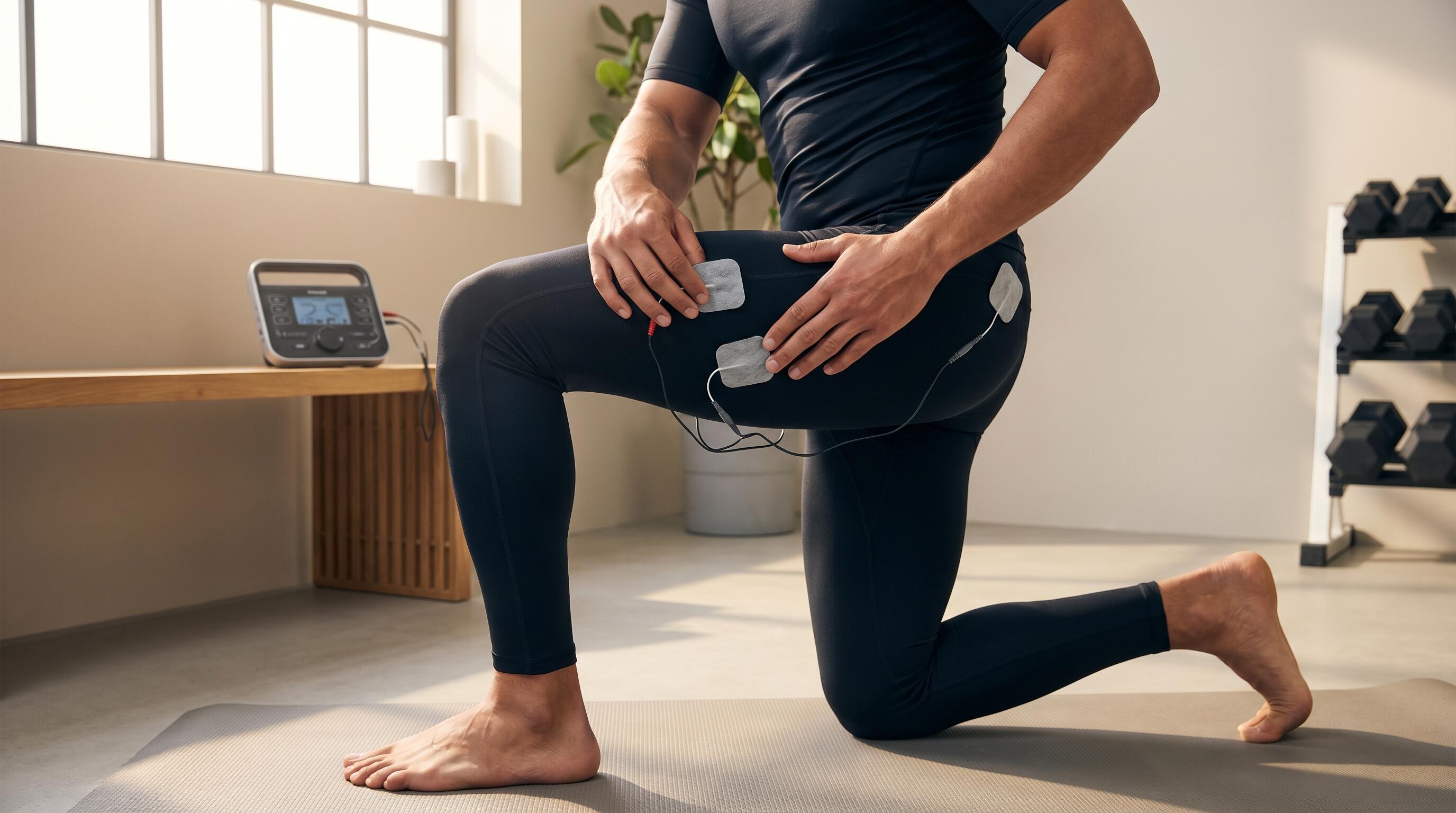
ALT: Person applying EMS muscle stimulator electrodes to legs and glutes for home training and recovery
Why EMS for Legs and Glutes Is Transforming At-Home Fitness and Recovery
Key Conclusion: Electrical muscle stimulation (EMS) technology is redefining what's possible in home physical therapy and fitness training. By delivering targeted electrical impulses that trigger involuntary muscle contractions in the legs and glutes, EMS devices offer a compelling drug-free path to muscle activation, recovery, and strength building — making professional-quality results increasingly accessible outside the clinic. Whether your goal is pain relief, rehabilitation, or athletic performance, EMS technology can serve as a powerful complement to your existing routine.
If you've ever struggled with stubborn glute activation, post-workout leg soreness, or the frustration of losing lower body strength during recovery from injury, you're not alone. Millions of adults across every fitness level face the same challenges — and many are discovering that EMS (Electrical Muscle Stimulation) devices offer a science-backed solution that fits into a busy life.
EMS works by delivering low-level electrical pulses directly to targeted muscle groups, stimulating contractions that mimic the effects of voluntary exercise. For the legs and glutes specifically — two of the body's largest and most functionally important muscle groups — this technology can bridge the gap between passive recovery and active training, helping users maintain muscle tone, accelerate healing, and even enhance athletic performance from the comfort of home.
This guide will walk you through everything you need to know: how EMS applies to lower body training, how to choose the right device, how to position electrodes correctly, and how to build a sustainable routine that delivers real results.
Who Can Benefit From EMS Lower Body Training?
✅ Applicable Scenarios:
- Athletes and fitness enthusiasts looking to accelerate muscle recovery after intense leg days or endurance training
- Adults experiencing leg muscle weakness, atrophy, or reduced tone due to sedentary lifestyle, injury recovery, or aging
- Postpartum women or older adults seeking gentle glute and hip muscle rehabilitation under guidance
- Chronic lower back pain sufferers who benefit from stronger glute engagement to support spinal alignment
- Individuals supplementing their workout routine to improve muscle activation and mind-muscle connection in hard-to-engage glute muscles
❌ Not Applicable/Cautions:
- Individuals with pacemakers, implanted cardiac defibrillators, or other active implanted medical devices should avoid EMS use entirely
- People with open wounds, skin infections, or compromised sensation in the legs or glutes should not apply electrodes to affected areas
- Pregnant women should consult their healthcare provider before using EMS on the lower body
- Those with deep vein thrombosis (DVT) or circulatory disorders in the legs require medical clearance before use
- EMS is not a substitute for physical therapy when treating diagnosed musculoskeletal injuries — always consult a qualified professional
The Science and Growing Popularity of Lower Body EMS Training
Lower body strength is foundational to almost everything we do — walking, climbing stairs, lifting, and maintaining healthy posture. Yet the glutes and posterior thigh muscles are notoriously difficult to activate effectively for many people, a phenomenon exercise scientists refer to as "gluteal amnesia." This is particularly common in individuals who sit for prolonged periods throughout the day.
At the same time, the legs and glutes are the muscle groups most vulnerable to atrophy during periods of immobility, injury recovery, or post-surgical rehabilitation. Physical therapists have used clinical electrical muscle stimulation for decades to address exactly these challenges — and now, thanks to advances in consumer-grade technology, the same core principles are available in compact home devices.
The global EMS device market has seen significant growth over the past decade, fueled by rising consumer interest in drug-free alternatives to pain management and a broader trend toward at-home wellness solutions. According to research published in sports medicine literature, EMS training has demonstrated measurable benefits for muscle strength, hypertrophy, and recovery when used consistently and correctly.
For those already exploring electrotherapy options, it's worth understanding how EMS relates to TENS. While TENS (Transcutaneous Electrical Nerve Stimulation) focuses primarily on pain relief by modulating nerve signals, EMS is specifically designed to cause muscle contractions. If you're weighing your options, the detailed breakdown in TENS + EMS Combo Machines Explained: When to Use Each Mode offers valuable clarity on when to use each modality — and why some users benefit from devices that do both.
For athletes specifically, EMS has moved well beyond the realm of rehabilitation. Professional sports teams across disciplines have integrated EMS protocols into their training regimens to improve explosive power, accelerate recovery between sessions, and maintain muscle readiness during injury layoff periods. To understand how elite-level use translates to home applications, EMS for Athletes: How Professional Sports Teams Use Electrical Muscle Stimulation is an essential read for anyone serious about maximizing lower body training outcomes.
Your Complete Guide to Using EMS for Legs and Glutes at Home
Three-Step Quick Start for Lower Body EMS
Step 1: Prepare Your Skin and Gather Your Equipment
Before applying any EMS device, clean the treatment areas on your legs and glutes with mild soap and water, then dry thoroughly. Skin preparation is critical — oils, lotions, and sweat residue can reduce electrode adhesion and signal conductivity, leading to inconsistent stimulation and reduced effectiveness. Lay out your EMS unit, electrode pads, and lead wires in a comfortable, accessible position. Most sessions for beginners benefit from starting with the device fully powered off while placement is completed.
Step 2: Position Electrodes on Target Muscle Groups
Electrode placement determines which muscles receive stimulation and how effectively they contract. For the quadriceps, place one electrode on the upper portion of the muscle near the midpoint of the thigh, and the second on the lower portion just above the knee. For the hamstrings, position electrodes along the back of the thigh with similar upper-to-lower spacing. For the glutes, place electrodes on the upper and lower regions of the gluteus maximus, avoiding the tailbone and hip joint. Always ensure there is adequate spacing between electrode pads — overcrowding can cause skin irritation and diminish targeted stimulation. To explore full-body electrode placement options, the Full Body TENS Electrode Placement Reference: 10 Common Treatment Sites guide provides an excellent visual reference.
Step 3: Select Your Program, Start Low, and Build Gradually
Begin with the lowest intensity setting your device offers — even if it feels underwhelming at first. The goal in your first session is to establish comfort and confirm correct placement. Gradually increase intensity until you feel clear, rhythmic muscle contractions without sharp discomfort. For general muscle toning and recovery, most users start sessions at 20–30 minutes. For strength-focused protocols, shorter high-intensity bursts with rest intervals may be appropriate. Always power down and remove electrodes gently after each session, and assess your skin's response before your next use.
Comparing EMS Training Approaches for Lower Body Conditioning
When planning your EMS routine for legs and glutes, the approach you choose should align with your primary goal. Here's how the most common training modes compare:
| Comparison Dimension | Recovery & Passive Toning | Active Training Enhancement | Rehabilitation Protocol |
|---|---|---|---|
| Primary Goal | Reduce soreness, maintain tone during rest | Amplify workout results, improve muscle activation | Restore muscle function post-injury or surgery |
| Typical Session Length | 20–30 minutes, low intensity | 15–25 minutes, moderate-to-high intensity during or after exercise | Variable; guided by healthcare provider |
| Best Timing | Post-workout or rest days | During warm-up or immediately post-exercise | As prescribed; often daily during recovery phase |
| Electrode Placement Focus | Broad coverage of quads, hamstrings, glutes | Targeted activation of specific weak or underperforming muscles | Consult provider for clinical placement guidelines |
| User Experience Level | Suitable for beginners | Intermediate to advanced users | Supervised or medically guided |
| iStim Device Compatibility | Full EMS lineup | EMS or TENS/EMS combo devices | Consult provider |
Understanding how EMS helps muscles contract, recover, and grow stronger at a physiological level can help you make more informed decisions about which protocol best suits your needs and fitness goals.
Detailed Program Design: Building Your Weekly Lower Body EMS Routine
Getting the Most From Glute Stimulation
The glutes — comprising the gluteus maximus, medius, and minimus — are the body's largest muscle group, and they play a critical role in hip extension, pelvic stability, and lower back protection. For many people, years of sitting have reduced voluntary neural activation of these muscles, making EMS particularly valuable for "waking up" glute fibers that traditional exercises may not be reaching effectively.
When using EMS for glute activation, position electrodes to cover as much of the gluteus maximus belly as possible while avoiding bony landmarks. A common and effective configuration places one electrode on the upper outer quadrant of the glute and another on the lower center, slightly above the gluteal fold. This placement encourages broad, even contractions across the muscle.
Lower Body Muscle Groups and Recommended Placement Zones
Quadriceps (Front of Thigh): The quads are among the most accessible muscles for EMS application due to their large surface area and proximity to the skin. Two electrodes per leg placed along the muscle belly — one superior, one inferior — create a strong, even contraction. This is highly effective for individuals recovering from knee surgery or ACL rehabilitation under medical guidance.
Hamstrings (Back of Thigh): Hamstring placement follows a similar logic to quads, but requires care to avoid the back of the knee. Position the lower electrode at least two inches above the knee crease to prevent stimulation of sensitive popliteal structures. Hamstring EMS can be particularly helpful for runners dealing with chronic tightness or post-exercise soreness.
Calves (Gastrocnemius and Soleus): The calves respond very well to EMS and are commonly targeted for circulatory support as well as muscle conditioning. Place electrodes on the upper and lower calf muscle belly, avoiding the Achilles tendon insertion. Calf stimulation can also assist with reducing the feeling of heavy, fatigued legs — a benefit for those who stand for prolonged periods.
Structuring a Weekly EMS Training Schedule
Consistency is key to achieving meaningful results with EMS lower body training. A practical weekly framework might look like this:
- Day 1: Active EMS session — quads and glutes, moderate intensity (training enhancement)
- Day 2: Rest or light activity; EMS recovery session — hamstrings and calves, low intensity
- Day 3: Active EMS session — focus on glute activation and posterior chain
- Day 4: Off or cross-training; passive EMS toning if desired
- Day 5: Full lower body EMS session combining all major muscle groups
- Days 6–7: Rest and allow recovery
For a more structured approach to integrating EMS into a complete weekly wellness plan, the guide on Using EMS to Boost Local Blood Circulation and Reduce Muscle Fatigue provides detailed insights into the circulatory and recovery benefits that make consistent use so valuable.
Choosing the Right iStim Device for Leg and Glute Training
iStim's professional-grade EMS devices are designed to deliver reliable, adjustable electrical stimulation through ISO-certified manufacturing standards — the same quality framework that clinical providers rely on. For lower body training, users benefit from devices that offer multiple channels, allowing simultaneous stimulation of more than one muscle group (for example, both legs at once), multiple intensity levels suitable for both delicate recovery work and robust training stimulation, and pre-programmed modes that match common training and rehabilitation goals without requiring manual adjustment.
iStim electrode pads are designed to maintain consistent adhesion and conductivity through repeated use, ensuring that each session delivers reliable stimulation without signal degradation. The choice of electrode size also matters: larger pads cover broader muscle bellies like the glutes and quads more evenly, while smaller pads allow precision targeting of specific areas.
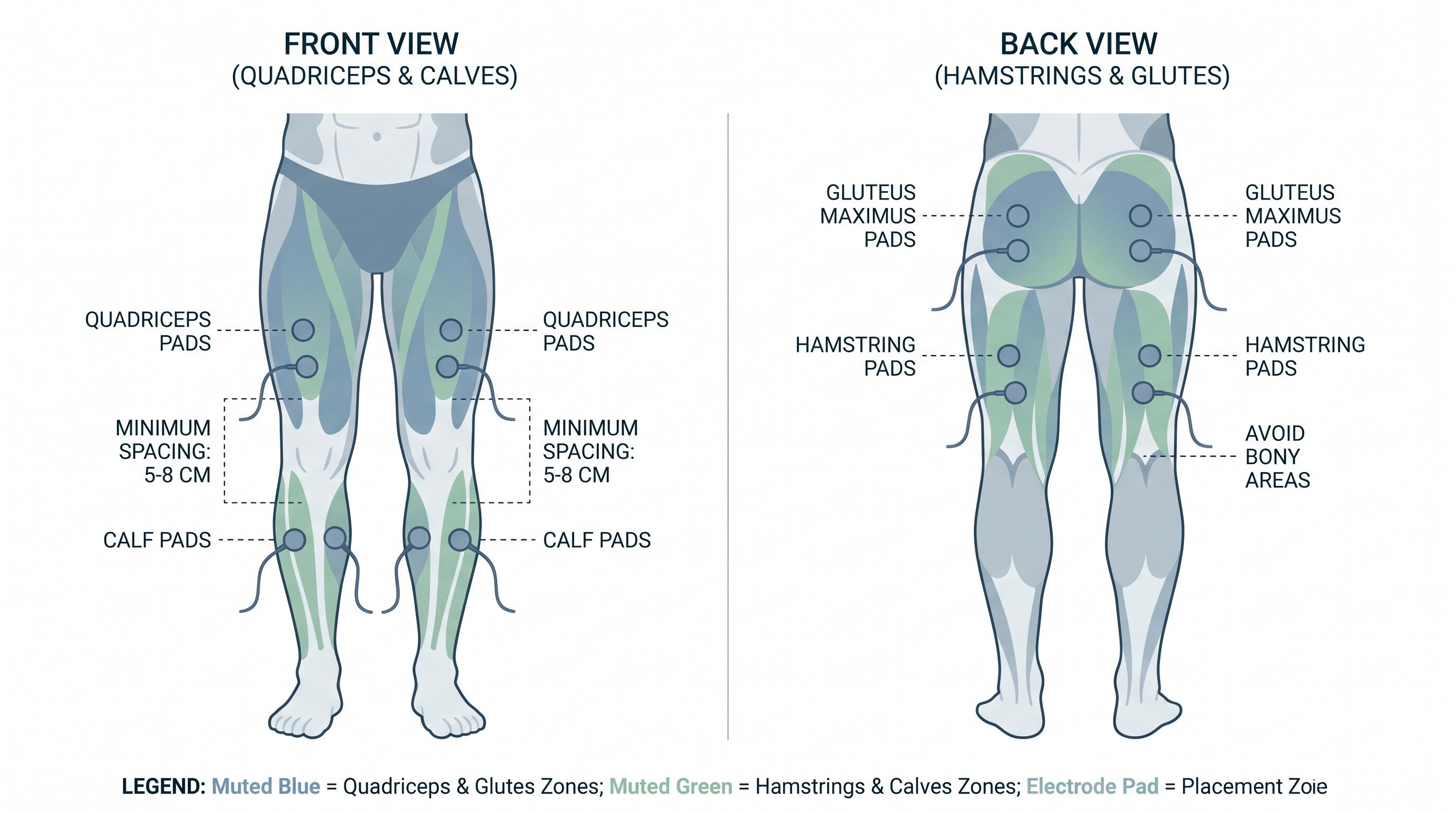
ALT: EMS electrode pad placement guide for legs and glutes showing correct positioning for muscle stimulation and home physical therapy training
Advanced Considerations: Getting the Most From Your EMS Lower Body Sessions
Handling Plateaus and Progressing Safely
Like any training modality, your body will adapt to EMS stimulation over time. If you notice that contractions feel less intense at your usual settings after several weeks, this is a sign that your muscles have adapted — a positive indicator of progress. To continue advancing, consider gradually increasing intensity, extending session duration, or exploring different electrode configurations to recruit additional muscle fibers.
A common misconception is that more intensity always equals better results. In reality, excessively high settings can cause muscle fatigue, post-session soreness, and even minor skin irritation. The optimal approach is progressive overload — modest, consistent increases in stimulation demand over weeks and months, mirroring the principles of conventional strength training.
Addressing the TENS vs. EMS Question for Lower Body Use
Many users searching for the best electrical stimulation device wonder whether TENS or EMS is the right choice for leg and glute applications. The answer depends on your primary goal: if you're primarily managing lower back pain that radiates into the glutes, or dealing with nerve-related discomfort in the legs, TENS therapy may provide more immediate relief through its pain gate mechanism. For this, understanding the best ways to get maximum pain relief from TENS therapy — including proper intensity settings and placement — is valuable, and you can explore the underlying science in The Science Behind Endorphin Release During TENS Therapy.
If your goal is muscle conditioning, recovery, or strength building, EMS is the modality of choice. Many iStim users ultimately benefit from combo TENS/EMS devices that allow them to shift between pain management and muscle training modes depending on the day's needs — offering versatility that single-mode devices cannot match.
Electrode Pad Care and Longevity
The quality and condition of your electrode pads directly affect the quality of stimulation you receive. Always store pads on their protective backing sheets after use, keep them away from heat and direct sunlight, and clean them only with a slightly damp cloth — never with alcohol or abrasive materials. Replacing pads when they lose adhesion is essential; compromised adhesion means uneven or insufficient contact, which can cause skin irritation and unreliable stimulation.
Frequently Asked Questions FAQ
Q1: How should I position EMS electrodes on my glutes for the best activation?
For optimal glute activation, place one electrode on the upper-outer portion of the gluteus maximus (roughly in line with the hip's widest point) and the second on the lower-center portion, about an inch above the gluteal fold. Avoid placing electrodes over the tailbone, hip joint, or lower back. This configuration encourages broad, even contractions throughout the muscle belly. Begin at low intensity and increase gradually until you feel strong but comfortable rhythmic contractions. Adjust placement if you notice asymmetrical stimulation or skin discomfort.
Q2: Is EMS safe to use on my legs and glutes every day?
For most healthy adults, light-to-moderate EMS sessions can be used daily, particularly for recovery-focused protocols at low intensity settings. However, muscles need time to recover from higher-intensity training sessions, just as they do with conventional exercise. If you're using EMS to enhance a strength-building program, rest days between intense sessions are recommended. Individuals with medical conditions, circulatory issues, or those in post-surgical rehabilitation should follow the guidance of their healthcare provider regarding frequency and intensity.
Q3: How long does it take to see results from EMS leg and glute training?
Most users begin to notice improved muscle tone and reduced post-exercise soreness within two to four weeks of consistent use, though individual results vary based on frequency, intensity, existing fitness level, and whether EMS is combined with conventional exercise. Research suggests that EMS used in conjunction with active training typically produces more significant strength and hypertrophy outcomes than passive EMS alone. For rehabilitation purposes, the timeline depends heavily on the underlying condition — always consult a qualified healthcare provider for expectations specific to your situation.
Summary
EMS technology for legs and glutes represents one of the most practical and evidence-supported tools available for at-home muscle training, recovery, and rehabilitation. Whether you're an athlete looking to push past performance plateaus, someone recovering from a lower body injury, or simply an adult trying to maintain functional strength and mobility, integrating EMS into your routine can deliver meaningful, measurable benefits.
The three core takeaways from this guide are:
- Electrode placement is everything — correct positioning over the muscle belly, combined with appropriate intensity settings, determines the quality and safety of every session.
- Progressive protocols outperform passive use — consistent, gradually intensifying EMS sessions, especially when paired with active training, yield far superior results to sporadic or static routines.
- Device quality matters — professional-grade equipment with reliable stimulation output, adjustable settings, and high-quality electrode pads ensures both safety and effectiveness over the long term.
Your next step is simple: identify your primary goal — recovery, conditioning, or rehabilitation — choose the right device and electrode configuration, and commit to a structured weekly schedule. EMS isn't a shortcut, but used correctly and consistently, it's a powerful accelerator for everything you're already working toward.
Ready to Strengthen Your Lower Body With Professional-Grade EMS?
Ready to take control of your pain relief and muscle recovery — without relying on medication? Explore iStim's full lineup of professional-grade TENS, EMS, and Kegel devices at https://istim.com/ and find the right solution tailored to your body's needs. Trusted by over 20,000 customers and built to clinical standards, iStim makes effective electrotherapy safe, simple, and accessible right from the comfort of your home.
References
- National Institutes of Health (NIH), National Library of Medicine. "Electrical Muscle Stimulation for Muscle Weakness and Atrophy: A Review of Clinical Evidence".
https://pubmed.ncbi.nlm.nih.gov/ - American Physical Therapy Association (APTA). "Electrophysical Agents in Physical Therapy Practice".
https://www.apta.org/ - U.S. Food and Drug Administration (FDA). "Electrical Muscle Stimulators: Consumer Information and Safety Guidance".
https://www.fda.gov/medical-devices/consumer-products/electrical-muscle-stimulators - National Strength and Conditioning Association (NSCA). "Neuromuscular Electrical Stimulation for Performance Enhancement and Rehabilitation".
https://www.nsca.com/ - Journal of Strength and Conditioning Research. "Effects of Electromyostimulation Training on Muscle Strength and Body Composition".
https://journals.lww.com/nsca-jscr
Note: Standards and clinical guidelines may be updated. Please check the latest official documents or consult a qualified professional advisor for the most current recommendations.
About iStim
iStim is a Los Angeles-based electrotherapy brand specializing in professional-grade TENS, EMS, and Kegel devices designed for safe and effective home use. With ISO-certified manufacturing and a growing community of 20,000+ verified customers, iStim is committed to empowering individuals with drug-free, clinically inspired solutions for pain relief, muscle stimulation, and pelvic floor health. Learn more at https://istim.com/.
Disclaimer: This article is intended for informational purposes only and does not constitute medical advice. Always consult a qualified healthcare professional before starting any new therapy or treatment program. iStim products are not intended to diagnose, treat, cure, or prevent any medical condition.
Leave a comment