

EMS for Cosmetic Muscle Toning: What Results Can You Realistically Expect?
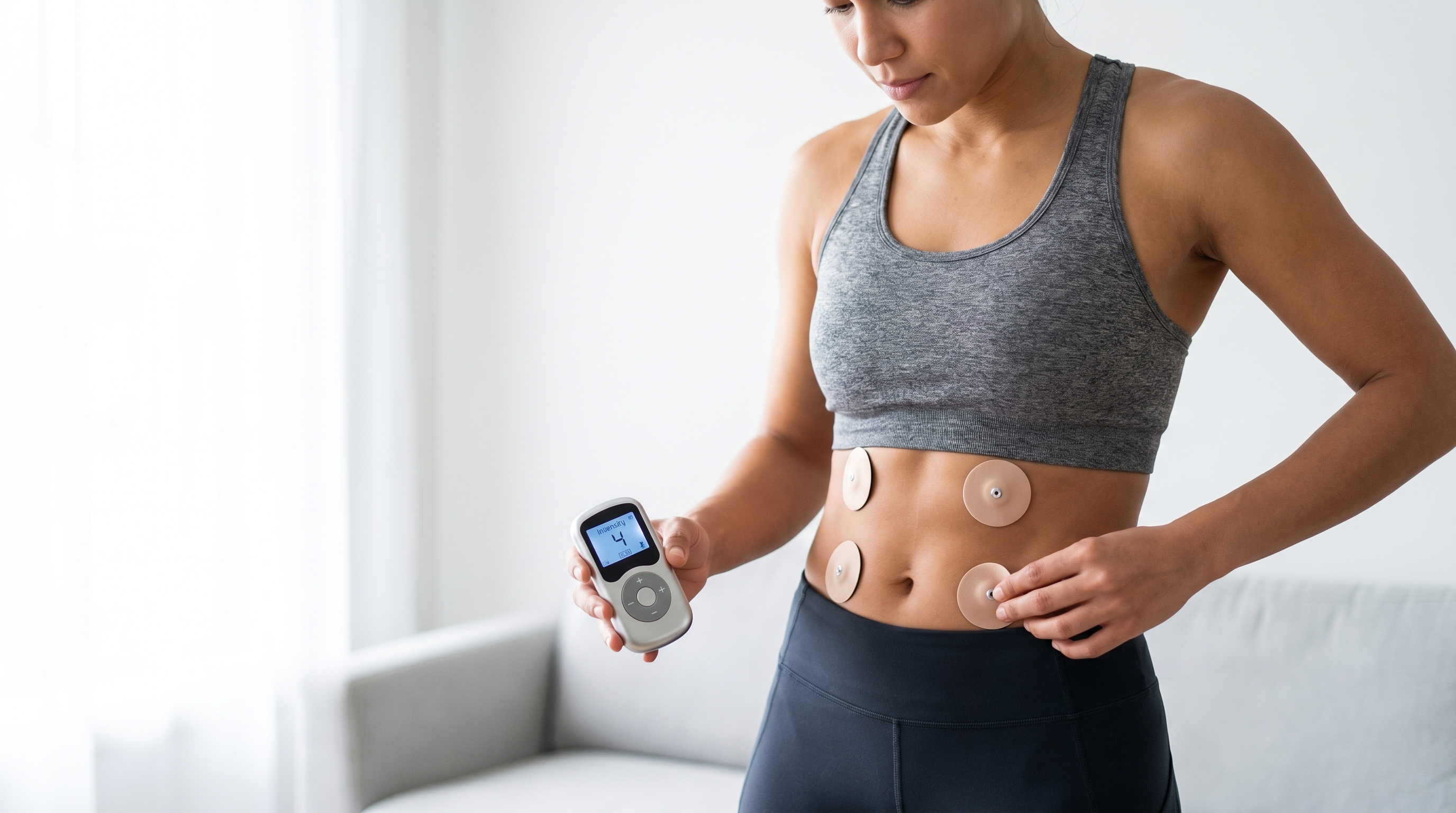
ALT: EMS device applied to abdomen for cosmetic muscle toning and realistic body sculpting results at home
EMS for Cosmetic Muscle Toning: What Results Can You Realistically Expect?
Key Conclusion: EMS (Electrical Muscle Stimulation) can genuinely support cosmetic muscle toning by triggering deep, involuntary muscle contractions that supplement — and in some cases enhance — traditional exercise. However, realistic expectations matter: EMS works best as a complementary tool alongside consistent physical activity and a balanced diet, not as a standalone shortcut. Users who combine EMS with active lifestyles report improved muscle definition, reduced recovery time, and better neuromuscular activation over consistent weeks of use.
If you've been scrolling through wellness content lately, you've almost certainly encountered EMS-powered fitness devices promising sculpted abs, toned arms, and firm glutes — all with minimal effort. The claims are bold, the before-and-after photos are compelling, and the technology sounds impressively clinical. But what does the science actually say? And more importantly, what can a real person with a real schedule realistically achieve?
EMS technology has a decades-long history in physical therapy and professional sports rehabilitation. Today, it's making a significant transition into cosmetic wellness and at-home fitness, driven by more accessible, consumer-grade devices. Understanding how EMS works — and where its limits lie — is essential before investing time, money, and hope into any toning program. This guide cuts through the marketing noise and gives you an honest, evidence-informed answer.
Who Is EMS Muscle Toning For — and Who Should Be Cautious?
✅ Applicable Scenarios:
- Adults seeking to supplement gym workouts with deeper muscle activation for improved tone and definition
- Individuals in post-injury or post-surgical recovery who need gentle muscle re-engagement under professional guidance
- Postpartum women looking to reconnect with weakened core and pelvic floor muscles
- Sedentary individuals beginning a fitness journey who need low-impact muscle stimulation
- Athletes using EMS for muscle recovery, warm-up, and performance enhancement
- People managing mild muscle atrophy due to reduced mobility or aging
❌ Not Applicable/Cautions:
- Individuals with implanted electronic devices such as pacemakers or defibrillators — EMS can interfere with these devices
- People who are pregnant, unless specifically directed by a licensed healthcare provider
- Anyone with active skin infections, open wounds, or irritated skin in the electrode placement area
- Individuals with epilepsy, deep vein thrombosis, or certain heart conditions should consult a physician first
- EMS should never be applied directly over the carotid arteries, across the chest, or near the head and neck without professional supervision
Understanding the Science Behind EMS and Muscle Toning
Electrical Muscle Stimulation works by delivering controlled electrical impulses through electrode pads placed on the skin. These impulses mimic the signals your central nervous system naturally sends to your muscles during voluntary exercise, causing the muscle fibers to contract and relax rhythmically. What makes EMS uniquely valuable for toning is its ability to recruit deep muscle fibers — particularly slow-twitch Type I and fast-twitch Type II fibers — that are often underactivated during standard voluntary workouts.
During a typical gym session, most people engage roughly 30–40% of their available muscle fibers in any given movement. EMS, when properly calibrated, can push that recruitment rate significantly higher, causing a more thorough, fatigue-inducing contraction than many voluntary exercises can achieve on their own. This is one of the key reasons EMS has been widely adopted in professional sports rehabilitation. For an in-depth look at how elite athletes leverage this technology, see EMS for Athletes: How Professional Sports Teams Use Electrical Muscle Stimulation, which outlines the protocols used by high-performance programs.
From a cosmetic standpoint, consistent EMS stimulation encourages muscle hypertrophy (growth and thickening of muscle fibers), improved neuromuscular efficiency, and enhanced local blood circulation. To understand the physiological mechanisms involved, How EMS Helps Muscles Contract, Recover, and Grow Stronger offers a thorough breakdown. These combined effects produce the visible toning results many users seek — though they don't happen overnight, and they don't happen through EMS alone.
The cosmetic fitness market has exploded in recent years, with EMS suit studios, wearable devices, and at-home units becoming increasingly mainstream. According to market research, the global EMS fitness market has experienced consistent year-over-year growth, reflecting both rising consumer interest in non-pharmaceutical wellness tools and growing clinical validation of the technology. For consumers comparing non-invasive alternatives across different device categories, understanding how EMS fits within the broader electrotherapy landscape — alongside TENS therapy — is valuable context.
How to Get Started with EMS Toning: A Practical Three-Step Approach
Getting Real Results Starts with the Right Foundation
Step 1: Choose the Right Device and Understand Your Goals
Not all EMS devices are created equal. Consumer-grade devices designed for cosmetic toning vary widely in output quality, electrode compatibility, and program options. Look for a device with adjustable intensity levels, multiple pre-set programs for different muscle groups, and high-quality reusable electrode pads. Before your first session, take 10–15 minutes to read the device manual thoroughly, identify your target muscle groups (abdomen, thighs, arms, glutes), and set a realistic goal — whether that's improving definition, accelerating post-workout recovery, or rebuilding muscle tone after a period of inactivity.
Step 2: Master Proper Electrode Placement for Your Target Muscles
Electrode placement is arguably the most critical factor determining whether your EMS session produces meaningful results or minimal effect. For abdominal toning, pads are typically placed on either side of the rectus abdominis muscle. For thigh toning, electrodes are positioned along the quadriceps or hamstrings. Always place electrodes on clean, dry skin, avoid bony prominences, and ensure the pads adhere fully for consistent current delivery. Improper placement not only reduces effectiveness but can cause skin irritation or uneven stimulation. Allow approximately 10–20 minutes per targeted area per session as a general guideline for beginners.
Step 3: Build a Consistent, Progressive Schedule
EMS toning is not a one-session fix. Like conventional resistance training, results require progressive overload and consistency. Begin at a comfortable intensity — you should feel strong muscle contractions but not pain — and gradually increase intensity across sessions as your muscles adapt. Aim for sessions several times per week, always allowing adequate rest between EMS treatments on the same muscle group to permit recovery. Combine EMS sessions with voluntary exercise, adequate protein intake, and quality sleep. Tracking your intensity settings and session frequency in a simple journal can help you monitor progress and adjust the program as needed.
EMS Toning vs. Alternative Body Toning Approaches: An Honest Comparison
Understanding where EMS fits relative to other toning strategies helps set practical expectations and guides smarter choices about how to combine methods.
The table below compares EMS toning with traditional strength training and passive cosmetic treatments across key dimensions. Note that specific device specifications vary by product — consult your provider for device-specific data.
| Comparison Dimension | EMS Toning | Traditional Strength Training | Passive Cosmetic Treatments (e.g., body wraps, massage) |
|---|---|---|---|
| Muscle fiber recruitment depth | High — activates deep fibers | Moderate to high — depends on exercise form | Low — minimal direct muscle activation |
| Active effort required | Low to moderate | High | Very low |
| Time to visible results | Typically weeks to months with consistency | Typically weeks to months with consistency | Temporary or minimal lasting effect |
| Suitability for injury recovery | High — can be used with limited mobility | Low to moderate — depends on injury | Moderate — comfort-focused, not rehabilitative |
| At-home accessibility | High with consumer devices | Moderate — requires equipment or gym | High for some treatments |
| Cost over time | Moderate (device + electrode pads) | Variable (gym fees or equipment) | Can be high (recurring appointments) |
| Scientific support for muscle toning | Strong — supported by clinical research | Strong — well-established | Limited for lasting muscle change |
| Complementary to active exercise | Highly complementary | Self-contained | Generally not additive |
As the table illustrates, EMS shines most brightly as a complement to active training rather than a replacement. It fills gaps that voluntary exercise cannot easily address — particularly in reaching deep muscle fibers and enabling training during recovery periods.
How Long Does It Actually Take to See EMS Toning Results?
This is the question every new EMS user asks, and the honest answer is: it depends — significantly — on your baseline fitness, frequency of use, diet, and whether you're combining EMS with active exercise.
For individuals who are already moderately active and using EMS consistently as a supplement to their existing routine, subtle improvements in muscle firmness and definition are often noticeable within four to six weeks. Users beginning from a low baseline of fitness or muscle tone may see changes in functional strength and muscle engagement feel within two to three weeks, though visual definition typically takes longer to emerge.
Research published in sports medicine literature consistently shows that EMS-induced hypertrophy follows a similar timeline to conventional resistance training hypertrophy — which means there is no magic shortcut. What EMS can do is intensify the stimulus your muscles receive during each session, potentially accelerating adaptation when paired with good nutrition and rest.
It's worth addressing a common misconception head-on: EMS alone will not burn significant fat. Because fat loss is primarily driven by caloric deficit and cardiovascular activity, EMS sessions targeting the abdomen will not melt away subcutaneous fat sitting above the muscle. What EMS will do is strengthen and define the underlying muscle tissue — making the muscle more prominent and toned once body composition improves through a broader wellness approach.
For those wondering whether they'll achieve better results faster with EMS or regular training alone, the answer from both research and clinical practice is consistent: combining both approaches outperforms either in isolation. EMS enhances neuromuscular activation and deep fiber recruitment; voluntary exercise drives metabolic adaptation, cardiovascular health, and skill-based movement patterns. Together, they create a more comprehensive stimulus for the body to adapt and tone.
EMS, Pelvic Floor Toning, and Women's Health
One area where EMS toning delivers particularly well-documented, life-changing cosmetic and functional results is pelvic floor rehabilitation and strengthening. For postpartum women, women over 40, and individuals managing stress urinary incontinence, the pelvic floor muscles are often weakened and difficult to engage voluntarily — even with consistent Kegel exercises.
Dedicated pelvic floor EMS devices address this challenge directly by delivering targeted stimulation to the pelvic floor musculature, helping users identify, engage, and strengthen muscles that may feel disconnected after childbirth or hormonal changes. If you're exploring pelvic floor health solutions, the iStim V2 Kegel Exerciser is designed specifically for this purpose, and How to Use the iStim V2 Kegel Exerciser: A Complete Setup and Usage Guide provides a comprehensive overview of setup, program selection, and usage protocols.
The toning benefits here extend beyond aesthetics: stronger pelvic floor muscles reduce leakage episodes, improve core stability, and enhance quality of life in measurable ways. For women experiencing symptoms of pelvic floor weakness, this represents one of the most impactful applications of EMS toning technology available for at-home use.

ALT: Woman applying EMS electrode pads for targeted muscle toning and pelvic floor strengthening at home with professional-grade device
Advanced Considerations: Maximizing Your EMS Toning Program
Handling Plateaus and Adjusting Your Protocol
Like any training stimulus, the body adapts to EMS over time. If you've been using the same intensity, frequency, and electrode placement for several weeks without noticing further progress, it may be time to introduce variation. Options include increasing stimulation intensity (within comfortable limits), switching to different program modes (some devices offer burst, continuous, or modulated frequencies), changing electrode placement to target different portions of a muscle group, or increasing session frequency for lagging muscle groups.
Common Misconceptions Worth Clarifying
One of the most persistent myths about EMS toning is that it works identically to surgical or injectable cosmetic procedures. It does not. EMS is a functional tool that builds and tones real muscle tissue through physiological adaptation — it does not dissolve fat cells, tighten skin elasticity, or produce the dramatic structural changes associated with cosmetic surgery. Managing this distinction helps users stay motivated by the real, meaningful improvements EMS delivers rather than feeling disappointed by outcomes it was never designed to produce.
Another common misunderstanding involves safety. EMS for cosmetic toning is well-established as safe for healthy adults when used according to device instructions. For a broader perspective on electrotherapy safety, Using EMS to Boost Local Blood Circulation and Reduce Muscle Fatigue explains how EMS supports healthy circulation and muscle recovery — reinforcing that when used appropriately, the physiological effects are beneficial and well-supported.
Integrating EMS into a Holistic Wellness Routine
For users interested in addressing both pain relief and muscle toning, combination TENS/EMS devices offer practical versatility. TENS (Transcutaneous Electrical Nerve Stimulation) works differently from EMS — it targets nerve fibers to interrupt pain signals rather than driving muscle contractions. Understanding when to deploy each mode is important for getting maximum value from a multi-function device.
Frequently Asked Questions FAQ
Q1: How should I position EMS electrodes for the best abdominal toning results?
Electrode placement is critical for effective abdominal toning. Place one pad on each side of the central abdominal region, along the rectus abdominis muscle belly — not on the spine or over the sides of the torso. The skin should be clean and dry before application. Avoid placing electrodes over metal implants, scarred tissue, or irritated skin. Experimenting slightly with pad position across a few sessions can help you identify the placement that produces the strongest, most symmetrical contraction for your anatomy.
Q2: Is EMS toning safe to use every day on the same muscle group?
Daily EMS sessions on the same muscle group are generally not recommended, especially at high intensities. Like conventional resistance training, EMS induces micro-stress in muscle fibers that requires recovery time — typically 24 to 48 hours between sessions targeting the same area. Overuse can lead to excessive muscle soreness, fatigue, or diminished results. For best outcomes, build a schedule that alternates muscle groups or includes rest days, and always listen to your body's response. If you experience prolonged soreness or discomfort, reduce intensity or frequency.
Q3: How long does it typically take to see visible EMS toning results with consistent use?
Most users following a consistent EMS toning program — several sessions per week, combined with regular exercise and balanced nutrition — begin noticing improved muscle firmness and definition within approximately four to eight weeks. Functional improvements such as stronger contractions and reduced muscle fatigue may be felt within the first two to three weeks. Timeline varies based on individual fitness baseline, intensity settings, and lifestyle factors. Results are cumulative: the longer and more consistently you use EMS as part of a holistic approach, the more pronounced the toning outcomes tend to become.
Summary
EMS muscle toning is a scientifically validated, accessible technology that offers genuine cosmetic and functional benefits — provided users approach it with realistic expectations and a commitment to consistency. Here are the three core takeaways:
- EMS enhances muscle activation and definition by recruiting deeper muscle fibers than many voluntary exercises can reach, accelerating toning when combined with regular physical activity and good nutrition.
- Results are real but not instant — visible toning typically emerges over weeks of consistent use, with functional improvements in muscle engagement often felt sooner. EMS does not burn fat on its own, but it builds the muscle tone that becomes visible as overall body composition improves.
- Safety and proper technique matter — correct electrode placement, appropriate intensity settings, and adequate recovery time between sessions are essential for both safety and effectiveness. Consulting with a healthcare provider is always advisable, particularly for users with pre-existing health conditions.
The most powerful EMS toning programs are those integrated into a broader wellness lifestyle — pairing electrostimulation sessions with active exercise, quality nutrition, restful sleep, and in some cases complementary electrotherapy tools for pain management and recovery.
Ready to Experience Professional-Grade EMS Toning at Home?
Ready to take control of your pain relief and muscle health from the comfort of home? iStim offers a full range of professional-grade TENS, EMS, and Kegel devices designed to deliver real, drug-free results — trusted by over 20,000 satisfied customers. Explore the complete lineup and find the right device for your needs at https://istim.com/.
References
- National Institutes of Health (NIH). "Electrical Stimulation for Muscle Strength and Rehabilitation: Evidence Review".
https://www.ncbi.nlm.nih.gov/pmc/articles/PMC5592013/ - American College of Sports Medicine (ACSM). "Neuromuscular Electrical Stimulation and Skeletal Muscle Hypertrophy".
https://www.acsm.org/education-resources/trending-topics-resource-pages/resistance-training - U.S. Food & Drug Administration (FDA). "Electrical Muscle Stimulators: What You Should Know".
https://www.fda.gov/medical-devices/consumer-products/electrical-muscle-stimulators - Journal of Strength and Conditioning Research. "Effects of Neuromuscular Electrical Stimulation on Muscle Strength and Body Composition in Healthy Adults".
https://journals.lww.com/nsca-jscr/pages/default.aspx - Physiopedia. "Neuromuscular Electrical Stimulation (NMES)".
https://www.physio-pedia.com/Neuromuscular_Electrical_Stimulation
Note: Standards may be updated; please check the latest official documents or consult professional advisors.
About iStim
iStim is a Los Angeles-based electrotherapy brand specializing in professional-grade TENS, EMS, and Kegel devices for home use, backed by ISO-certified Taiwanese manufacturing and trusted by 20,000+ customers for safe, drug-free pain relief and muscle stimulation. Learn more at istim.com.
Disclaimer: This article is produced by the iStim content team and is intended for informational purposes only. It does not constitute medical advice, diagnosis, or treatment. Always consult a qualified healthcare professional before starting any new therapy or treatment program. © iStim. All rights reserved.
Leave a comment