

EMS for Athletes: How Professional Sports Teams Use Electrical Muscle Stimulation
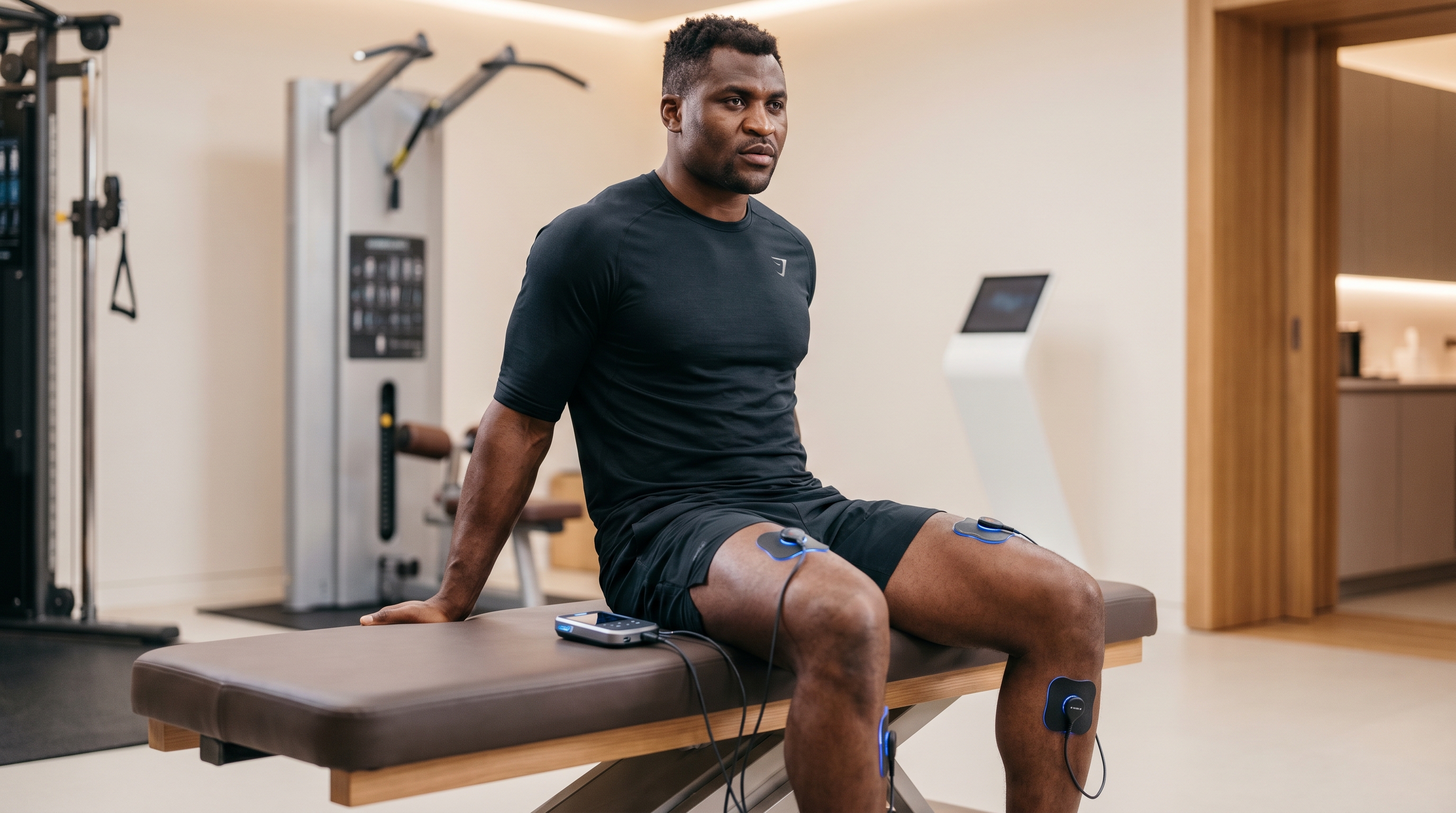
ALT: Professional athlete using EMS electrical muscle stimulation device for post-game muscle recovery and performance optimization
How Elite Athletes Are Using EMS — And Why You Don't Need a Team Physio to Benefit
Key Conclusion: Electrical muscle stimulation (EMS) has become a cornerstone of professional sports recovery and performance training worldwide. Used by elite teams across the NFL, NBA, and Olympic programs, EMS technology activates deep muscle fibers, accelerates post-exercise recovery, reduces injury risk, and supports neuromuscular re-education — all without relying on pharmaceutical interventions. Today, professional-grade EMS devices are no longer limited to clinic settings; they're accessible to health-conscious individuals seeking drug-free muscle recovery at home.
What was once locked inside the training rooms of elite sports franchises is now available to everyday athletes, weekend warriors, and anyone dealing with chronic muscle fatigue or injury rehabilitation. Electrical muscle stimulation has transitioned from a specialized physiotherapy tool into a mainstream wellness technology — and the science behind its professional applications helps explain why it works so effectively.
This growing adoption reflects two key trends: a shift toward drug-free recovery protocols among professional sports organizations, and rapid improvements in the portability and usability of EMS devices. Whether you're a competitive runner managing post-race soreness or a 50-year-old returning to fitness after a knee injury, understanding how professional teams use EMS can help you apply the same principles to your own recovery.
Who Can Benefit from EMS Therapy — and Who Should Exercise Caution
✅ Applicable Scenarios:
- Recreational and competitive athletes looking to speed up muscle recovery between training sessions
- Individuals undergoing rehabilitation for sports injuries, including strains, sprains, and post-surgical muscle atrophy
- Adults experiencing chronic muscle tension, back pain, or general physical fatigue who prefer drug-free alternatives
- Postpartum individuals seeking to rebuild core and pelvic floor strength under professional guidance
- Older adults (40–65) working to maintain muscle tone and neuromuscular function as part of a broader wellness plan
❌ Not Applicable/Cautions:
- Individuals with implanted electronic devices such as pacemakers or defibrillators should not use EMS without explicit medical clearance
- Pregnant individuals should avoid EMS application over the abdomen or lower back without consulting a healthcare provider
- EMS should not be applied over open wounds, rashes, areas of impaired sensation, or directly over the throat or chest near the heart
- People with epilepsy, active deep vein thrombosis, or active malignancies should consult their physician before use
The Science Behind EMS in Professional Sports: From Training Rooms to Living Rooms
Electrical muscle stimulation works by delivering controlled electrical impulses through electrodes placed on the skin, directly stimulating motor neurons and causing muscle contractions. Unlike voluntary exercise where the brain sends signals to the muscles, EMS bypasses the central nervous system to activate muscle fibers directly — including deeper fast-twitch fibers that are difficult to recruit through conventional training alone.
This mechanism has made EMS a prized tool among professional sports medicine teams for decades. Soviet-era sports scientists were among the first to document EMS-enhanced athletic performance in the 1970s, and the technology quickly spread through elite European football clubs, Olympic programs, and eventually North American professional leagues. Today, nearly every major sports franchise employs some form of electrotherapy within its athletic training protocol.
The applications in professional settings are diverse and well-documented. Teams use EMS for:
- Pre-competition activation: Short, high-frequency sessions warm up muscle tissue and improve neuromuscular readiness before competition or practice
- Post-competition recovery: Low-frequency EMS modes help clear metabolic waste (including lactic acid) from fatigued muscles, significantly reducing soreness and downtime
- Injury rehabilitation: EMS helps maintain and rebuild muscle mass in injured athletes who are unable to perform conventional strength training
- Neuromuscular re-education: Following injury or surgery, EMS retrains muscles to fire correctly, restoring coordination and functional movement patterns
What makes this relevant to the general consumer market is that the underlying physiology is universal. The same neuromuscular pathways that benefit a professional linebacker also govern recovery in a recreational cyclist, a postpartum mother rebuilding core strength, or a 55-year-old managing chronic lower back pain.
Research published by the National Institutes of Health confirms that EMS-induced muscle contractions can produce functional strength gains and accelerate recovery when used correctly. The key distinction between professional-grade results and suboptimal outcomes lies largely in device quality, proper electrode placement, and protocol adherence — areas where iStim's professional-grade approach to home EMS distinguishes itself from basic consumer devices.
Integrating EMS Into Your Recovery Protocol: A Three-Step Framework
Getting Started with EMS the Right Way
Step 1: Identify Your Primary Goal and Select the Appropriate Mode
Before beginning any EMS session, clarify your primary objective. Are you targeting post-workout muscle soreness, working through injury rehabilitation, or supporting general muscle conditioning? Most quality EMS devices — including those in the iStim lineup — offer multiple program modes calibrated for different purposes: recovery, strength, endurance, and massage. Selecting the correct mode for your goal (typically taking 2–5 minutes to review your device manual and program options) is the single most important factor in achieving effective results. Using a strength-training mode when your goal is recovery, for example, can leave muscles more fatigued rather than refreshed.
Step 2: Position Electrodes Correctly for Your Target Muscle Group
Proper electrode placement is critical for both safety and efficacy — one of the best practices for safe TENS and EMS unit electrode placement. For large muscle groups like the quadriceps or hamstrings, place one electrode on the motor point (typically toward the center-upper portion of the muscle belly) and the second electrode distally along the same muscle. Electrode pads should always be placed on clean, dry, intact skin and should never be positioned over bony prominences, joints, the spine, or sensitive areas like the throat or chest. A typical setup takes 5–10 minutes and should always begin with the intensity at its lowest setting before gradually increasing to a comfortable level. iStim devices are designed to make this process intuitive, with clear guidelines to support correct placement.
Step 3: Follow a Structured Session Protocol and Monitor Your Response
Professional athletic trainers don't apply EMS randomly — they follow structured protocols. For recovery sessions, a duration of 20–30 minutes at low-to-medium intensity is commonly used, while activation sessions before training tend to be shorter and higher intensity. Begin conservatively, especially if you're new to EMS, and track how your muscles respond over multiple sessions. Mild muscle twitching and a warm sensation are normal; sharp pain, skin irritation, or unusual discomfort are signals to reduce intensity or reposition electrodes. Adjust progressively as your tolerance and familiarity with the technology improves.
EMS Applications Compared: Professional Use vs. Clinical Use vs. At-Home Use
Understanding how EMS is deployed across different settings can help you make informed decisions about which approach fits your needs and lifestyle.
| Comparison Dimension | Professional Sports Setting | Clinical / Physical Therapy | At-Home Use (e.g., iStim) |
|---|---|---|---|
| Primary Purpose | Performance enhancement + rapid recovery | Injury rehabilitation + neuromuscular re-education | Recovery, pain relief, muscle conditioning |
| Supervision Level | Athletic trainers and sports physios on-site | Licensed physical therapists | Self-guided with device guidelines |
| Session Frequency | Daily or multiple times per week | Prescribed by clinician | Flexible; typically 3–5x per week |
| Device Quality | Professional clinical-grade equipment | Medical-grade devices | Professional-grade home devices (ISO-certified) |
| Accessibility | Restricted to team athletes | Requires clinic visits and appointments | Available anytime, from home |
| Cost Structure | Covered by team/organization | Insurance or out-of-pocket per session | One-time device investment |
| Portability | Clinic-based, often stationary | Clinic-based | Fully portable for home or travel use |
This comparison illustrates why at-home EMS devices have become increasingly appealing: they bridge the gap between professional-level technology and everyday accessibility, offering a cost-effective, flexible alternative to repeated clinical visits.
How Professional Teams Actually Use EMS: A Deeper Look at the Protocols
Pre-Game Activation: Priming Muscles for Peak Performance
One of the most well-established uses of EMS in professional sports is pre-competition muscle activation. Before high-intensity competition, athletic trainers apply EMS to key muscle groups — typically the quadriceps, hamstrings, and glutes for field sports, or the shoulders and upper back for throwing and overhead athletes — using short, higher-frequency stimulation protocols.
The goal isn't to fatigue the muscles but to increase neural drive and blood flow, essentially "waking up" the neuromuscular system ahead of the physical demands of competition. Research suggests this approach can improve peak power output and reduce the risk of early-game muscle strains. For the home user, a similar approach can be applied before a morning run, a gym session, or a recreational sports game.
Post-Competition Recovery: Clearing the Fatigue
After a grueling game or training session, professional athletes often face a compressed recovery window — sometimes as short as 24 to 48 hours before the next competition. EMS recovery protocols using low-frequency stimulation help facilitate blood flow through fatigued muscle tissue, accelerating the clearance of metabolic byproducts like lactate and reducing the duration and severity of delayed onset muscle soreness (DOMS).
This recovery application is arguably the most transferable to everyday users. Whether you're a dedicated cyclist, a CrossFit enthusiast, or simply someone who spent the weekend hiking with your family, EMS recovery sessions can meaningfully reduce the time your muscles need to bounce back — allowing you to maintain training consistency without the risk of overtraining.
Rehabilitation: Maintaining Muscle During Injury Downtime
Perhaps the most clinically significant application of EMS in professional sports is injury rehabilitation. When an athlete sustains a significant injury — an ACL tear, a hamstring strain, or a rotator cuff injury — enforced rest leads rapidly to muscle atrophy, particularly in the injured limb. This atrophy is not merely cosmetic; it creates functional asymmetries that increase re-injury risk and extend total rehabilitation timelines.
EMS allows sports medicine teams to maintain muscle activation and slow atrophy even when an athlete cannot perform voluntary exercise. The muscle receives stimulation, protein synthesis is supported, and neuromuscular pathways remain active — all without the mechanical load that could compromise healing tissue.
For everyday individuals recovering from orthopedic surgery, a sports injury, or an extended period of immobilization, the same principles apply. EMS can be a valuable adjunct to physical therapy, helping bridge the gap between passive recovery and active rehabilitation.
Neuromuscular Re-Education: Retraining the Brain-Muscle Connection
After injury or surgery, the relationship between the brain and the affected muscle group is often disrupted. The muscle may become inhibited — reluctant to fire voluntarily even when structurally capable of doing so. This phenomenon, sometimes called "arthrogenic muscle inhibition," is a significant obstacle in post-injury rehabilitation.
EMS addresses this directly by stimulating the muscle to contract independently, reinforcing the neural pathway between the motor cortex and the muscle. Over repeated sessions, voluntary motor control often improves alongside EMS-assisted activation. This is one reason why physical therapists and sports medicine physicians frequently incorporate EMS into formal rehabilitation programs.
For consumers dealing with postpartum pelvic floor dysfunction or chronic muscle inhibition following back injury, this same neuromuscular re-education principle underlies the therapeutic benefit of devices like iStim's Kegel pelvic floor stimulators, which help retrain muscle groups that have become deconditioned or functionally impaired.
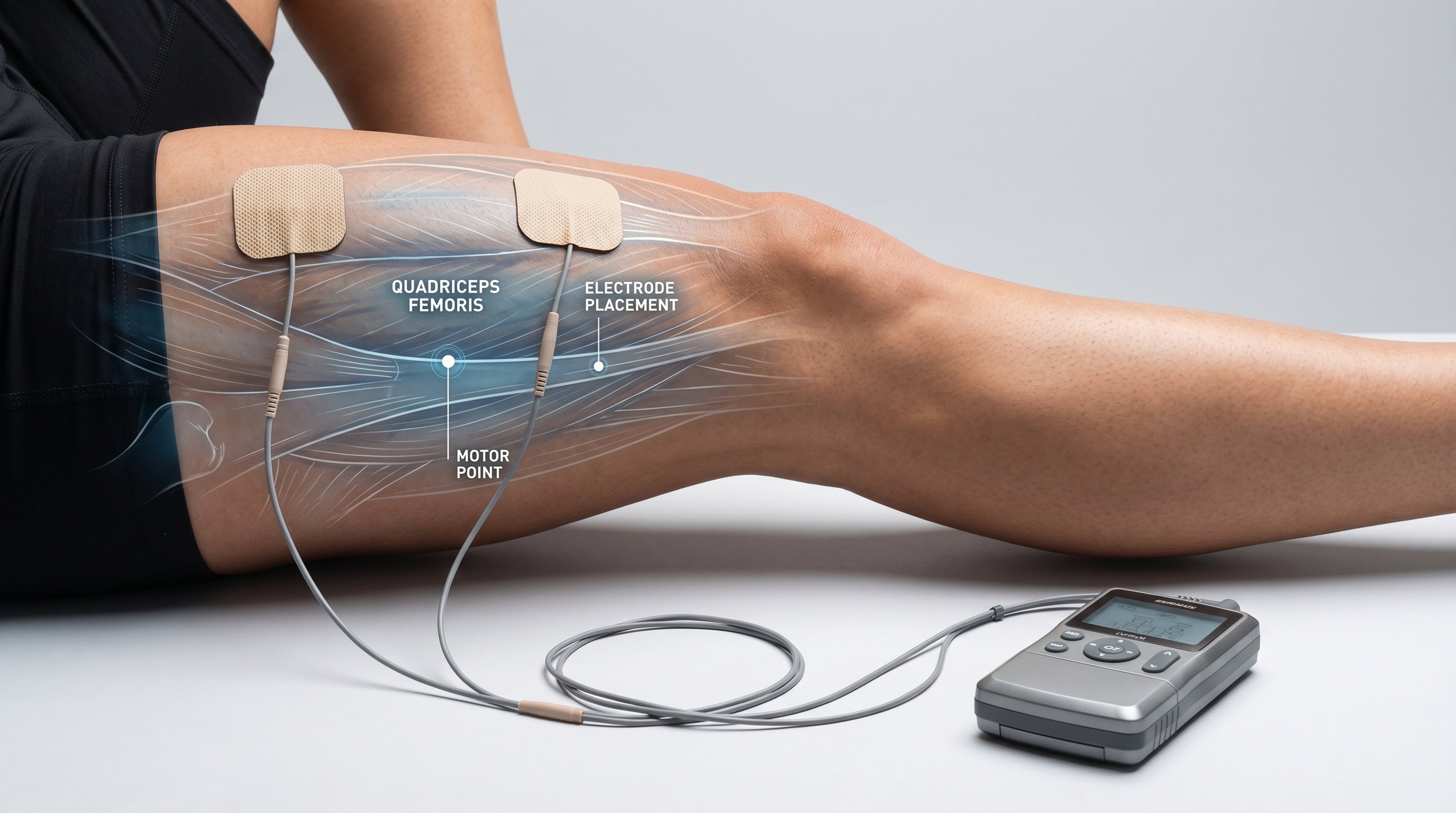
ALT: EMS electrode placement on quadriceps for athletic recovery, showing professional-grade electrical muscle stimulation technique used by sports teams and home users
Advanced Considerations: Getting the Most from EMS Without the Guesswork
Addressing Common Misconceptions About EMS
Misconception 1: "More intensity equals better results."
This is perhaps the most pervasive misconception among first-time EMS users. Professional athletic trainers emphasize that effective EMS is about appropriate intensity — not maximum intensity. Sensations should be noticeable and produce visible muscle twitching, but should never cause pain or discomfort. Excessive intensity can cause muscle damage, skin irritation, and soreness that counteracts the recovery benefits you're seeking.
Misconception 2: "EMS alone will build significant muscle without exercise."
EMS is a powerful adjunct to training and rehabilitation — not a replacement for voluntary exercise. While it can slow atrophy during injury-enforced rest and support neuromuscular activation, the most significant strength and hypertrophy gains occur when EMS is combined with conventional resistance training and progressive overload. Professional teams use EMS to complement their training programs, not substitute them.
Misconception 3: "All EMS devices are essentially the same."
The quality of EMS devices varies significantly across the market. Key differentiators include waveform accuracy, intensity range, program variety, and manufacturing standards. iStim's commitment to ISO-certified manufacturing ensures that its devices meet rigorous quality benchmarks — a meaningful distinction when you're looking for professional-grade outcomes from an at-home device.
Special Situations Worth Noting
Combining EMS with TENS for Comprehensive Recovery: For individuals dealing with both muscle fatigue and pain — common in chronic back pain or post-injury recovery — combining EMS with TENS (Transcutaneous Electrical Nerve Stimulation) can address both components simultaneously. Some iStim devices are dual-mode, offering both EMS and TENS functionality within a single unit for comprehensive at-home electrotherapy.
Older Adults and EMS: Adults aged 50 and above may require slightly longer adaptation periods and benefit from starting with lower intensities. However, EMS is particularly valuable in this demographic for combating age-related muscle loss (sarcopenia) and maintaining neuromuscular function — goals that align closely with healthy aging and independence.
Frequently Asked Questions FAQ
Q1: How do professional sports teams integrate EMS into their weekly training schedule?
Most professional teams incorporate EMS at multiple points in their weekly cycle. Recovery sessions typically follow high-intensity games or practices and use low-frequency protocols to facilitate muscle repair. Activation sessions are performed before training or competition to prime neuromuscular readiness. Rehabilitation sessions may occur daily for injured athletes. For home users, a practical starting schedule is 3–4 sessions per week, alternating between recovery and activation modes depending on your training demands and goals.
Q2: Is EMS safe to use at home without professional supervision?
EMS is generally safe for most healthy adults when used according to manufacturer guidelines and with appropriate precautions. Following best practices for EMS electrode placement — avoiding sensitive areas, starting at low intensity, and keeping sessions within recommended durations — significantly minimizes risk. However, individuals with medical devices like pacemakers, active medical conditions, or who are pregnant should consult a healthcare provider before use. iStim's professional-grade devices include clear usage guidance to support safe independent use at home.
Q3: How long does it typically take to notice recovery benefits from regular EMS use?
Most users report noticeable reductions in muscle soreness and improved recovery speed within the first several sessions, particularly when used consistently after training. Neuromuscular and rehabilitative benefits — such as improved muscle activation after injury — may take several weeks of regular use to become pronounced. Professional athletic trainers typically evaluate EMS outcomes over 4–6 week periods when used as part of structured rehabilitation programs, though individual response varies based on baseline fitness, injury status, and session consistency.
Summary
EMS is no longer an exclusive tool reserved for elite sports franchises and clinical physiotherapy suites. The same technology that helps professional athletes recover faster, train smarter, and return from injury more reliably is now available in professional-grade home devices that empower everyday individuals to take ownership of their recovery and muscle health.
Three core takeaways stand out from understanding the professional application of EMS:
- EMS works through fundamental physiology — the mechanisms that benefit elite athletes (improved blood flow, neuromuscular activation, atrophy prevention) are universal and apply equally to recreational athletes, injury recovery patients, and health-conscious adults.
- Protocol and quality matter more than brand perception — achieving meaningful results requires proper electrode placement, appropriate mode selection, and consistent use. Professional-grade devices with documented manufacturing standards, like those from iStim, provide the reliability needed to replicate clinical outcomes at home.
- EMS is most powerful as part of a holistic approach — when combined with appropriate exercise, nutrition, and rest, EMS accelerates recovery timelines and supports long-term musculoskeletal health in ways that no single intervention can achieve alone.
The next step is simple: assess your recovery goals, explore the device options that match your needs, and begin applying evidence-based EMS protocols within your own wellness routine.
Ready to Experience Professional-Grade EMS Recovery at Home?
Ready to take control of your pain relief and muscle recovery — naturally and effectively? Explore iStim's full range of professional-grade TENS, EMS, and Kegel devices at https://istim.com/ and find the right solution tailored to your needs. Join over 20,000 satisfied customers who trust iStim for safe, drug-free electrotherapy from the comfort of home.
References
- National Institutes of Health / National Library of Medicine. "Electrical Stimulation for Muscle Strength and Recovery: A Systematic Review".
https://pubmed.ncbi.nlm.nih.gov/ - American Physical Therapy Association (APTA). "Electrophysical Agents: Clinical Practice Guidelines".
https://www.apta.org/ - National Athletic Trainers' Association (NATA). "Electrotherapy in Athletic Training: Position Statement and Clinical Guidelines".
https://www.nata.org/ - U.S. Food and Drug Administration (FDA). "Electrical Muscle Stimulators: What Consumers Should Know".
https://www.fda.gov/medical-devices/consumer-products/electrical-muscle-stimulators - Journal of Strength and Conditioning Research / National Strength and Conditioning Association (NSCA). "Applications of Neuromuscular Electrical Stimulation in Sport and Rehabilitation".
https://www.nsca.com/
Note: Standards and clinical guidelines may be updated periodically. Please verify the latest official documents or consult a qualified healthcare professional for personalized advice.
About iStim
iStim is a Los Angeles-based electrotherapy brand specializing in professional-grade TENS, EMS, and Kegel devices engineered for safe and effective home use, backed by ISO-certified Taiwanese manufacturing. With a growing community of 20,000+ Amazon customers, iStim is a trusted name in drug-free pain relief and muscle stimulation therapy.
© iStim. All rights reserved. This article is intended for informational purposes only and does not constitute medical advice. Always consult a qualified healthcare professional before starting any electrotherapy program.
Leave a comment