

Cervical Traction Device vs Inflatable Neck Collar
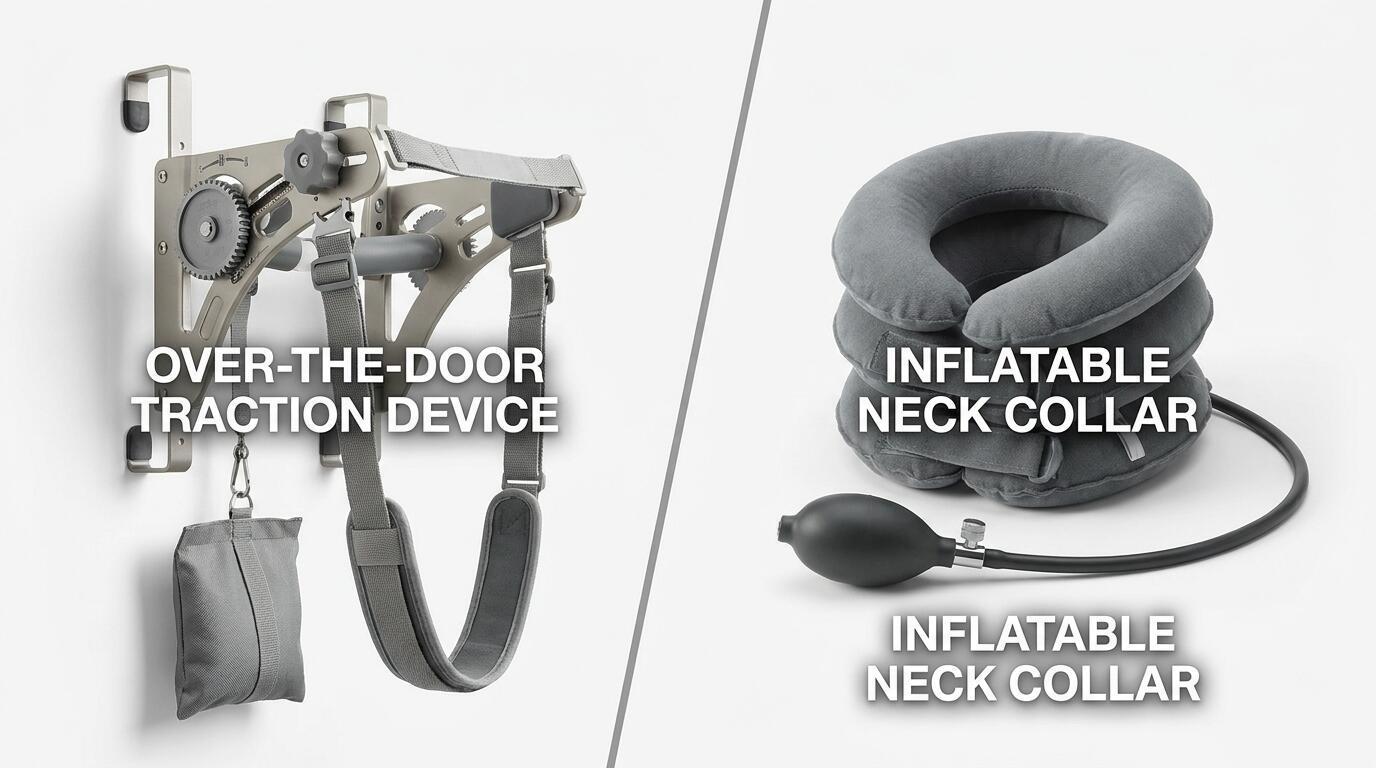
ALT: Cervical traction device vs inflatable neck collar side-by-side comparison for neck pain relief at home
Which Is Better for Neck Pain: Cervical Traction Device vs Inflatable Neck Collar?
Key Conclusion: When comparing a cervical traction device vs inflatable neck collar, the right choice depends on your specific condition, comfort preferences, and therapeutic goals. Cervical traction devices typically provide measurable, consistent decompression of the spinal discs and nerve roots, while inflatable neck collars offer a gentler, more portable option for mild tension relief. Neither is universally superior — understanding the differences helps you make a smarter, safer decision for your neck health.
Neck pain is one of the most common musculoskeletal complaints worldwide, affecting desk workers, athletes, aging adults, and anyone who has experienced whiplash, herniated discs, or cervical spondylosis. As more people seek drug-free, at-home solutions, two popular devices keep coming up in the conversation: cervical traction devices and inflatable neck collars.
Both claim to decompress the cervical spine, but they work differently, serve different needs, and carry different risk profiles. This article breaks down the key distinctions so you can choose the option that truly fits your situation — without wasting money on the wrong tool.
Who Should Read This: Applicable Scenarios and Cautions
✅ Applicable Scenarios:
- Adults experiencing chronic neck pain, stiffness, or cervicogenic headaches seeking non-pharmaceutical relief
- Individuals recovering from minor cervical disc issues or nerve compression who have received clearance from a healthcare provider
- Desk workers or frequent device users dealing with tech neck and postural strain
- Seniors managing everyday cervical discomfort looking for gentle, home-friendly options
- Athletes or post-injury patients in the maintenance or recovery phase of rehabilitation
❌ Not Applicable / Cautions:
- People with severe cervical instability, recent spinal surgery, or fractures — do not use any traction or stretching device without explicit physician approval
- Individuals with osteoporosis, rheumatoid arthritis affecting the cervical spine, or spinal cord compression symptoms (numbness, tingling in hands, loss of coordination) should consult a specialist before use
- Pregnant individuals should seek medical advice before using cervical traction or inflatable collar devices
- Do not use either device as a substitute for professional medical diagnosis or treatment of serious spinal conditions
Why So Many People Are Confused About Cervical Neck Traction Options
The neck pain device market has exploded in recent years. A quick search reveals dozens of products — over-the-door pulleys, water-filled bags, foam neck rolls, rigid traction units, and soft inflatable collars — all claiming to "decompress your spine" and "relieve pain instantly." For the average consumer, sorting through these options without a physical therapist's guidance can feel overwhelming.
This confusion is compounded by the fact that the terms "cervical traction device" and "inflatable neck collar" are sometimes used interchangeably in marketing language, even though they function quite differently. One applies a controlled mechanical force to physically separate the vertebrae; the other provides proprioceptive support and mild elongation through air pressure.
According to the American Physical Therapy Association, cervical traction is a recognized clinical intervention for conditions like cervical radiculopathy and disc herniation, often administered in controlled clinical settings before being prescribed for home use. Inflatable collars, by contrast, have roots in soft cervical immobilization — traditionally used post-injury for short-term support rather than active decompression.
If you are researching which tool is right for your neck, it helps to start with a clear understanding of what each device actually does — and what it cannot do. For a broader overview of how to evaluate your options before making a purchase, this guide on How to Compare Neck Traction Devices Before Buying is an excellent starting point.
The rise of remote work and increased screen time has made cervical complaints even more prevalent among adults under 50 — a demographic that previously saw far lower rates of neck dysfunction. This shift has pushed demand for accessible, home-use solutions that do not require clinic visits, insurance approvals, or prescription medications.
Understanding Each Device: How They Work and When to Use Them
Three-Step Quick Start: Choosing the Right Device for You
Step 1: Identify Your Primary Symptom
Start by clarifying whether your neck pain is structural or postural. Structural issues — such as disc herniation, nerve root compression, or foraminal stenosis — often benefit more from mechanical cervical traction that physically creates space between vertebrae. Postural tension from prolonged sitting or screen time may respond well to either device. Write down your top three symptoms (e.g., radiating arm pain, stiffness, headaches) and share them with your healthcare provider before purchasing. This step typically takes 10–15 minutes of honest self-assessment and a brief medical consultation.
Step 2: Assess Your Lifestyle and Portability Needs
Consider where and when you plan to use the device. If you need something you can use at your desk during breaks, an inflatable neck collar offers low-profile portability. If you prefer a structured therapy session lying down for focused decompression, a cervical traction device — whether over-the-door or recumbent-style — may deliver more consistent results. Think about your daily schedule and whether you can realistically commit to a set routine. This evaluation should take no more than 5–10 minutes but will significantly impact your satisfaction with whichever product you choose.
Step 3: Review Safety Criteria and Start Conservatively
Regardless of which device you select, always begin at the lowest available tension or inflation setting and increase gradually over several sessions. Follow the manufacturer's recommended session duration and never exceed it, especially in the first week. If you experience increased pain, dizziness, numbness, or tingling during use, stop immediately and consult a healthcare professional. Conservative starting protocols protect your cervical structures and give your body time to adapt to the new mechanical stimulus. Most users find a comfortable working level within one to two weeks.
Head-to-Head Comparison: Cervical Traction Device vs Inflatable Neck Collar
Both devices aim to relieve cervical discomfort, but their mechanisms, ideal users, and practical applications differ meaningfully. The table below summarizes the most important comparison points to help guide your decision.
| Comparison Dimension | Cervical Traction Device | Inflatable Neck Collar | Notes |
|---|---|---|---|
| Primary Mechanism | Mechanical distraction — physically separates cervical vertebrae via controlled force | Air pressure inflation — gently elongates the neck and provides proprioceptive support | Traction creates measurable joint space; collar provides mild support |
| Best Suited For | Disc herniation, nerve root compression, cervical radiculopathy, foraminal narrowing | Mild neck tension, postural fatigue, tech neck, short-term support after minor strain | Traction preferred for structural issues; collar for functional/postural relief |
| Ease of Use | Moderate — requires proper positioning and setup | High — inflate with bulb pump, wear around neck | Collar is simpler for most users |
| Portability | Low to moderate (depends on design) | High — lightweight, compact, travel-friendly | Collar wins on portability |
| Adjustability | High — tension typically adjustable in increments | Moderate — inflation level adjustable, but less precise feedback | Traction offers more clinical-grade control |
| Safety Profile | Requires careful setup; not suitable for all conditions | Generally gentler; still contraindicated in certain conditions | Both require medical clearance for serious conditions |
| Session Duration | Typically 15–30 minutes per session (consult provider) | Typically 15–20 minutes per session (consult provider) | Always follow device instructions |
| Price Range | Generally moderate to high | Generally low to moderate | Traction devices often represent a higher initial investment |
| Clinical Evidence | Supported by multiple clinical studies for radiculopathy | Limited clinical evidence for decompression; more evidence for immobilization | Traction has stronger research backing for disc-related conditions |
Deep Dive: What Makes Each Device Unique
How Cervical Traction Devices Work
Cervical traction operates on a straightforward biomechanical principle: by applying a distracting force along the axis of the spine, the device temporarily increases the space between cervical vertebrae. This decompression can reduce pressure on spinal discs and nerve roots, which is why it has been used clinically for decades to address conditions like cervical radiculopathy — a condition in which compressed nerve roots cause pain, tingling, or weakness that radiates into the shoulder and arm.
Home cervical traction devices come in several forms. Over-the-door models use a pulley system with a water-filled or weighted bag to create consistent traction force. Recumbent or inflatable pump-based traction units allow the user to lie down and use a hand pump to gradually increase the distracting force. More advanced devices feature adjustable neck angles to target specific spinal segments.
The key advantage of mechanical traction is precision. When used correctly, a quality device delivers a reproducible level of force at a consistent angle — parameters that matter clinically. Peer-reviewed research has demonstrated benefits for cervical radiculopathy patients who use properly calibrated home traction as an adjunct to physical therapy. For those researching the most effective options available, this detailed breakdown of the Best Cervical Traction Device for Home Use provides well-researched recommendations across different user needs and budgets.
The primary limitation of cervical traction devices is their learning curve. Proper head positioning, angle of pull, and force level all influence both effectiveness and safety. Using too much force or an incorrect angle can exacerbate symptoms rather than relieve them.
How Inflatable Neck Collars Work
Inflatable neck collars, sometimes marketed as "air neck traction devices," use a different approach. The collar wraps around the neck and is inflated using a hand bulb pump. As the air chambers expand, the collar elongates slightly, providing upward support under the chin and base of skull. This creates a mild traction-like effect while also restricting cervical movement.
The sensation is generally described as supportive rather than forceful — more like a gentle lift than a mechanical pull. For people with mild postural tension, muscle fatigue from prolonged sitting, or tech neck, this gentle support can temporarily relieve pressure and reduce muscle guarding.
One practical benefit of inflatable collars is their portability and ease of use. Many users wear them briefly at a desk or during travel. Because the inflation level is controlled by the user and the force applied is relatively low, many people find them less intimidating than traditional traction devices.
However, it is important to note that the research evidence for inflatable collars as true decompression tools is more limited. The force they generate is typically lower and less measurable than dedicated traction devices, which means they may be less effective for structural conditions involving significant disc or nerve compression.
The Role of TENS and EMS in Neck Pain Management
While traction and collar devices address mechanical decompression, many users find that combining cervical support with electrotherapy provides more comprehensive relief. TENS (Transcutaneous Electrical Nerve Stimulation) devices can be used alongside a traction routine to modulate pain signals and reduce muscle spasm in the cervical region. EMS (Electrical Muscle Stimulation) can support the recovery of weakened neck and upper back muscles that contribute to poor posture and recurring pain.
iStim's professional-grade TENS and EMS devices are designed for exactly this kind of complementary home therapy — delivering clinical-quality electrical stimulation in a user-friendly format. Many neck pain sufferers find that addressing both the structural component (via traction) and the neuromuscular component (via TENS/EMS) produces more lasting relief than either approach alone.
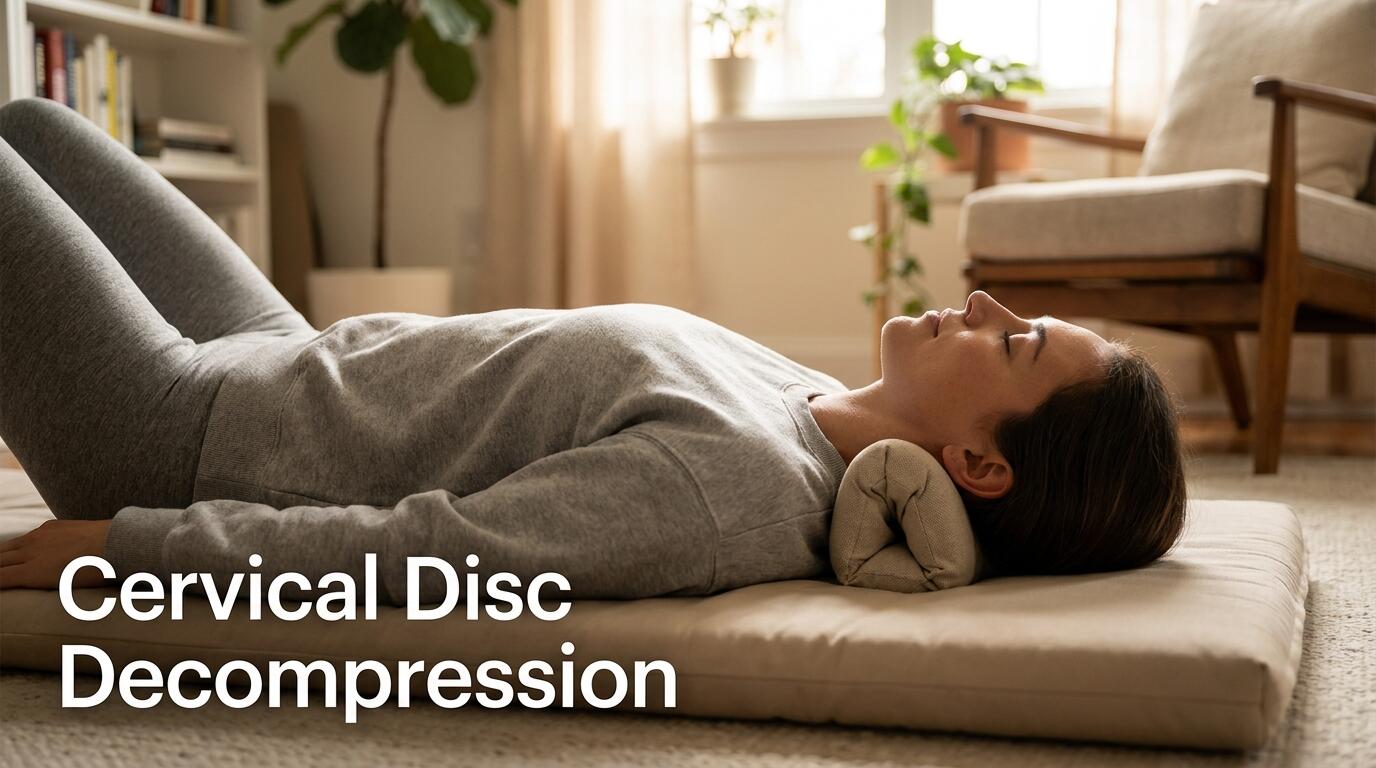
ALT: Home user applying a cervical traction device for cervical disc decompression and drug-free neck pain relief
Advanced Considerations: Making the Right Long-Term Choice
Special Situations Worth Understanding
Post-surgery or post-injury recovery: If you have had cervical spine surgery or experienced a whiplash injury, neither a traction device nor an inflatable collar should be used without specific guidance from your surgeon or rehabilitation specialist. The timing and force parameters must be individualized based on your healing status.
Combination with electrotherapy: As mentioned above, pairing traction with a TENS device can be highly effective for neck pain management. TENS works by interrupting pain signals at the spinal cord level (the gate control theory of pain) and by promoting the release of endorphins. Using TENS before a traction session can help relax the cervical musculature, potentially making traction more effective and comfortable. Desk workers in particular may benefit from this combined approach — learn more about solutions designed specifically for this group by visiting Best Neck Stretcher for Desk Workers.
Chronic vs. acute pain: For acute neck pain (e.g., sudden onset after sleeping awkwardly or a minor strain), rest and gentle movement are often first-line recommendations. Cervical traction should generally not be started during an acute inflammatory phase. Inflatable collars may provide some comfort during this period, but their use should be time-limited to avoid muscle deconditioning from prolonged immobilization.
Common Misconceptions to Address
Misconception 1: "More traction force means faster results." This is incorrect and potentially dangerous. Applying excessive force to the cervical spine can strain ligaments, worsen disc injuries, or irritate nerve roots. Start conservatively and progress only under guidance.
Misconception 2: "An inflatable collar is just as effective as a traction device for disc herniation." While inflatable collars offer real benefits for postural tension and mild discomfort, they typically do not generate the consistent, measurable force needed to meaningfully decompress herniated discs or significantly relieve nerve root compression. For structural conditions, a purpose-built cervical traction device is generally the more appropriate tool. You can explore a wider range of product considerations by reading about the Best Neck Traction Device on Amazon: What to Look For.
Misconception 3: "You only need to use these devices once or twice to see results." Cervical traction and decompression therapies generally require consistent use over several weeks to produce lasting benefit. Most clinical protocols recommend multiple sessions per week for several weeks, combined with exercise and postural correction.
Frequently Asked Questions FAQ
Q1: How do I decide whether to buy a cervical traction device or an inflatable neck collar?
The decision depends primarily on the nature of your neck condition. If you have been diagnosed with cervical disc herniation, nerve root compression, or foraminal stenosis, a cervical traction device generally offers more clinically supported decompression. If your primary complaint is postural fatigue, mild stiffness, or tension headaches from desk work, an inflatable collar may be sufficient and more convenient. Always consult a healthcare provider to confirm which is appropriate for your specific diagnosis before purchasing either device.
Q2: Is it safe to use a cervical traction device every day at home without professional supervision?
Daily home traction can be safe when used correctly and within recommended parameters, but it is not suitable for everyone. People with certain conditions — including spinal instability, osteoporosis, severe disc degeneration, or rheumatoid arthritis — should avoid unsupervised use. For most users cleared by a physician or physical therapist, following the device manufacturer's guidelines on session duration and force levels is essential. Starting with shorter, lower-intensity sessions and progressively increasing as tolerated is the safest approach.
Q3: How long does it typically take to notice improvement from cervical traction or an inflatable collar?
Results vary based on condition severity and consistency of use. Many users report a reduction in neck discomfort and improved range of motion within two to four weeks of consistent, guided use of a cervical traction device. Inflatable collars may provide more immediate subjective relief during use, but long-term structural benefit develops more gradually. For best results, device use should be combined with postural correction, appropriate exercise, and — when indicated — complementary therapies such as TENS for pain modulation.
Summary
Choosing between a cervical traction device and an inflatable neck collar is not simply a matter of price or convenience — it is a clinical decision that should reflect your specific condition, goals, and safety profile.
Three key takeaways to guide your decision:
- Match the device to the diagnosis. Cervical traction devices are better supported by clinical evidence for structural conditions like disc herniation and radiculopathy. Inflatable collars are more appropriate for mild postural tension and temporary support.
- Prioritize safety over speed. Both devices carry risks when misused. Starting conservatively, following manufacturer guidelines, and obtaining medical clearance for serious conditions protects your long-term spinal health.
- Consider a complementary approach. Many users achieve better outcomes by combining mechanical decompression with electrotherapy tools like TENS and EMS, addressing both the structural and neuromuscular dimensions of neck pain.
Whatever path you choose, consistency, correct technique, and professional guidance are the foundations of successful at-home neck pain management.
Ready to Explore Complementary Drug-Free Solutions?
Ready to take control of your pain relief and muscle health — naturally and without drugs? iStim offers a full range of professional-grade TENS, EMS, and Kegel devices designed for safe, effective home use. Visit https://istim.com/ to explore the complete product lineup and find the right electrotherapy solution for your needs.
References
- American Physical Therapy Association. "Neck Pain: Clinical Practice Guidelines".
https://www.apta.org/ - National Institute of Neurological Disorders and Stroke (NINDS). "Neck Pain Fact Sheet".
https://www.ninds.nih.gov/ - Bono CM, et al. "An Evidence-Based Clinical Guideline for the Diagnosis and Treatment of Cervical Radiculopathy from Degenerative Disorders." The Spine Journal, North American Spine Society.
https://www.spine.org/ - Cochrane Library. "Traction for low-back pain with or without sciatica" (related cervical methodology reference).
https://www.cochranelibrary.com/ - MedlinePlus, U.S. National Library of Medicine. "Neck Pain".
https://medlineplus.gov/neckinjuriesanddisorders.html
Note: Standards and clinical guidelines may be updated periodically. Please check the latest official documents or consult a qualified healthcare professional for the most current recommendations.
About iStim
iStim is a Los Angeles-based electrotherapy brand specializing in professional-grade TENS, EMS, and Kegel devices engineered for home use, backed by ISO-certified Taiwanese manufacturing and trusted by 20,000+ customers for drug-free pain relief and muscle stimulation. Learn more at istim.com.
© iStim. All rights reserved. This article is intended for informational purposes only and does not constitute medical advice. Always consult a qualified healthcare professional before beginning any new treatment or therapy program.
Leave a comment