

Cervical Spondylosis and Neck Traction: What Physical Therapists Recommend
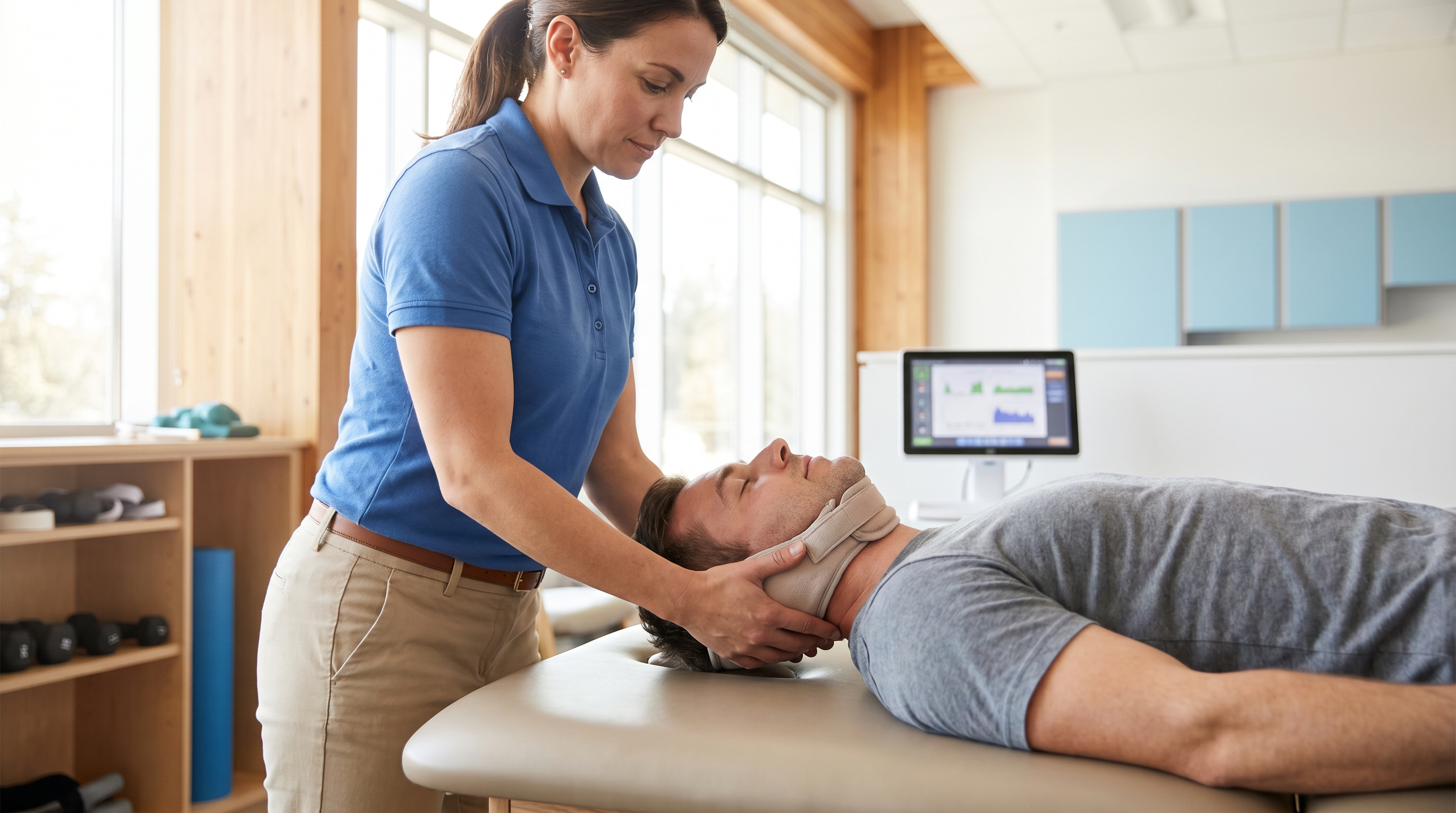
ALT: Physical therapist demonstrating cervical spondylosis neck traction techniques for drug-free pain relief at home
Cervical Spondylosis and Neck Traction: Understanding What Physical Therapists Actually Recommend
Key Conclusion: Cervical spondylosis is a progressive, age-related condition affecting the cervical spine that causes neck pain, stiffness, and sometimes radiating arm discomfort. Physical therapists frequently recommend a combination of manual therapy, cervical traction, targeted exercise, and adjunct modalities — including TENS-based electrotherapy — to manage symptoms without relying on medication. This multi-modal approach is widely considered the gold standard for conservative, drug-free neck pain management in clinical and home settings alike.
Living with cervical spondylosis can feel like carrying a weight on your shoulders — quite literally. The stiffness that greets you each morning, the ache that deepens after hours at a desk, and the occasional shooting pain down your arm are daily reminders that your cervical spine is under stress. The good news is that physical therapists have developed evidence-informed protocols that go far beyond "rest and take ibuprofen." Understanding these recommendations empowers you to take an active role in your own recovery — and opens the door to lasting, drug-free relief.
This article breaks down what physical therapists recommend for cervical spondylosis, with particular focus on neck traction, complementary electrotherapy (TENS/EMS), and how to safely integrate these strategies into your daily routine.
Who Should Read This: Applicable Conditions and Cautions
✅ Applicable Scenarios:
- Adults aged 30–70 experiencing chronic or recurring neck pain, stiffness, or cervical radiculopathy (nerve-related arm pain/tingling)
- Post-injury or post-surgical patients cleared by a physician for conservative rehabilitation
- Individuals with diagnosed cervical spondylosis, cervical disc herniation, or cervical osteoarthritis seeking non-pharmaceutical options
- Fitness enthusiasts and desk workers looking to prevent or manage early-stage cervical degeneration
- Patients currently undergoing physical therapy who want to extend their care effectively at home
❌ Not Applicable / Cautions:
- Individuals with severe spinal instability, recent vertebral fractures, or undiagnosed neck trauma should not attempt traction or electrotherapy without explicit medical clearance
- Those with active infections, tumors, or inflammatory conditions affecting the cervical spine (e.g., rheumatoid arthritis in active flare) should consult a specialist before proceeding
- Pregnant individuals or those with implanted electronic devices (e.g., pacemakers) should avoid TENS/EMS therapy near the neck and chest without physician guidance
- Patients experiencing sudden-onset severe neurological symptoms (weakness, loss of coordination, bladder/bowel changes) should seek emergency care immediately
Understanding Cervical Spondylosis: A Growing Global Concern
Cervical spondylosis — also called cervical osteoarthritis or degenerative disc disease of the neck — is among the most prevalent musculoskeletal conditions in adults over 40. According to the American Academy of Orthopaedic Surgeons, more than 85% of adults over age 60 show radiological evidence of cervical spondylosis, though not all experience symptoms.
The condition arises from age-related wear and tear on the intervertebral discs, joints, and vertebrae of the cervical spine. As discs lose hydration and height, bone spurs (osteophytes) may develop, and the foraminal spaces through which nerve roots exit can narrow — causing the characteristic pain, stiffness, and sometimes radicular symptoms that millions live with daily.
Factors accelerating cervical degeneration include prolonged poor posture (the so-called "tech neck" epidemic), repetitive overhead work, previous neck injuries, and genetics. With screen time at an all-time high, cervical spondylosis is increasingly presenting in adults in their 30s and early 40s — a demographic that was historically less affected.
The encouraging reality is that conservative management — led by physical therapy — successfully controls symptoms in the vast majority of patients. Surgery is rarely necessary. Physical therapists are trained to assess the specific pattern of cervical dysfunction and design individualized treatment plans that may include manual therapy, cervical traction, therapeutic exercise, postural re-education, and adjunct electrotherapy modalities such as TENS (Transcutaneous Electrical Nerve Stimulation).
Understanding these options in depth helps patients become true partners in their own care — reducing dependence on pain medications and improving long-term function.
What Physical Therapists Recommend: A Practical, Step-by-Step Approach
Three-Step Home Management Protocol for Cervical Spondylosis
Step 1: Assess Your Symptoms and Establish a Baseline
Before any intervention, physical therapists emphasize the importance of honest self-assessment. Note the location, intensity (on a 0–10 scale), and character of your neck pain (aching, sharp, burning, radiating). Identify aggravating and relieving positions or activities. Track morning stiffness duration. This information — shared with your PT or physician — guides the selection of appropriate therapies. Establishing a baseline typically takes 5–10 minutes of daily self-monitoring for one to two weeks before beginning formal treatment.
Step 2: Begin Cervical Traction and Targeted Therapeutic Exercise
With medical clearance, introduce gentle cervical traction — either manually (performed by a PT) or via a home traction device — to decompress cervical disc spaces and relieve nerve root pressure. Simultaneously, begin a PT-prescribed exercise program targeting deep cervical flexor strength (the muscles that stabilize the neck from within), upper thoracic mobility, and shoulder girdle flexibility. Sessions typically last 20–40 minutes and should be performed consistently, often daily for home exercises and two to three times weekly for in-clinic treatments. Never exceed traction force or duration without professional guidance.
Step 3: Integrate Adjunct Electrotherapy for Ongoing Pain Control
Once your therapeutic exercise and traction routine is established, integrate TENS electrotherapy as a drug-free pain management tool between PT sessions. TENS devices work by delivering mild electrical impulses through electrode pads placed on the skin near the source of pain, interrupting pain signals before they reach the brain (the "gate control" mechanism) and stimulating the release of endorphins. Use under PT guidance for electrode placement specifics, avoiding the front of the neck (carotid sinus area). EMS may also be introduced to support cervical and upper trapezius muscle conditioning. Regular, disciplined use — typically 20–30 minutes per session — can significantly reduce reliance on over-the-counter analgesics.
Comparing the Main Physical Therapy Approaches for Cervical Spondylosis
Physical therapists draw from a toolkit of evidence-based interventions. Understanding how they compare helps you have more productive conversations with your care team and make informed decisions about home-based adjuncts.
| Comparison Dimension | Cervical Traction | Manual Therapy & Mobilization | TENS / Electrotherapy |
|---|---|---|---|
| Primary Mechanism | Mechanical decompression of disc spaces and nerve roots | Restores joint mobility, reduces muscle guarding | Interrupts pain signals; stimulates endorphin release |
| Delivery Setting | Clinic or home (with appropriate device) | Primarily clinic-based (PT hands-on) | Clinic or home (portable devices available) |
| Evidence Level | Moderate evidence for radiculopathy relief | Strong evidence for short-term pain and mobility | Moderate-to-strong evidence for pain reduction |
| Suitable For | Disc herniation, foraminal stenosis, radiculopathy | Joint stiffness, muscle guarding, hypomobility | Chronic/acute neck pain, muscle tension, post-PT maintenance |
| Safety Considerations | Contraindicated with instability, fracture, severe myelopathy | Requires skilled assessment; avoid high-velocity in advanced spondylosis | Avoid carotid sinus, anterior neck; consult PT for electrode placement |
| Home Use Feasibility | Possible with PT-approved devices | Not recommended without training | High — portable, user-friendly devices widely available |
| Drug-Free | ✅ Yes | ✅ Yes | ✅ Yes |
Each of these interventions has its place, and most effective physical therapy plans combine two or more. The progression typically moves from passive/manual techniques (to reduce acute pain and restore mobility) toward active strategies (exercise, postural training, and home electrotherapy) that build long-term resilience.
Deep Dive: Cervical Traction — What It Is, How It Works, and What to Expect
What Is Cervical Traction?
Cervical traction is a therapeutic technique in which a gentle pulling force is applied to the neck to create separation between cervical vertebrae. This decompression reduces pressure on compressed intervertebral discs, widens the foraminal openings where nerve roots exit the spinal canal, and stretches tight muscles and ligaments surrounding the cervical spine.
Traction can be applied in several ways. Manual traction is performed by a physical therapist using their hands to apply a calibrated pulling force — highly skilled and immediately adjustable based on patient feedback. Mechanical traction uses a clinical device to apply sustained or intermittent traction with measured force. Home cervical traction devices (typically over-the-door units or inflatable collars) allow patients to continue decompressive therapy between clinic visits, once properly instructed.
What Does the Research Say?
Clinical guidelines and systematic reviews consistently support cervical traction as an effective component of conservative management for cervical radiculopathy — the condition where nerve root compression causes arm pain, numbness, or weakness. A 2013 systematic review published in the Journal of Orthopaedic & Sports Physical Therapy concluded that mechanical cervical traction, when combined with other physical therapy interventions, produced meaningful improvements in neck pain and arm symptoms compared to sham or no treatment.
For pure axial neck pain without radiculopathy, the evidence is somewhat more mixed — which is why physical therapists individualize recommendations rather than applying a one-size-fits-all approach.
Practical Tips for Safe Cervical Traction
Physical therapists emphasize several important safety principles when recommending home traction:
- Always get proper instruction first. Before using any home traction device, have a licensed physical therapist assess your specific cervical condition, demonstrate correct technique, and prescribe appropriate force levels. Self-directed traction without guidance carries real risks.
- Start with lower force and shorter duration. Most home protocols begin conservatively and increase gradually based on symptom response. More is not always better.
- Position matters. The angle of traction (flexion vs. neutral) significantly affects which spinal levels are targeted. Your PT will specify the correct position for your condition.
- Discontinue immediately if symptoms worsen. Increased pain, new neurological symptoms (tingling, weakness), or dizziness are signals to stop and consult your provider.
- Traction is not appropriate for everyone. Those with cervical myelopathy (spinal cord compression), severe osteoporosis, spinal instability, or active infection should not use traction.
Integrating TENS with Your Traction Program
Many physical therapists pair TENS therapy with traction as a complementary pain management strategy. TENS does not physically decompress the spine — instead, it modulates pain perception at the neurological level, making it an ideal drug-free adjunct for managing the chronic ache that persists between traction sessions.
For cervical pain specifically, electrode placement is critical. Physical therapists typically recommend placing pads on the upper trapezius, along the paravertebral muscles of the cervical and upper thoracic spine, or on the shoulder blade area for referred arm symptoms — always avoiding the anterior neck (throat) where major blood vessels and nerves run. Devices like those offered by iStim provide adjustable intensity levels and multiple treatment modes, allowing users to fine-tune stimulation for their comfort and therapeutic needs.
The combination of mechanical decompression through traction and neurological pain modulation through TENS represents a powerful, fully drug-free approach to cervical spondylosis management — one that many physical therapists actively recommend for motivated home users.

ALT: Physical therapist explaining cervical traction and TENS electrotherapy combination for cervical spondylosis neck pain relief at home
Advanced Considerations: Navigating Complex Cases and Common Misconceptions
Special Situations Requiring Extra Caution
Cervical Myelopathy vs. Radiculopathy
These two conditions are frequently confused. Radiculopathy (nerve root compression) responds well to traction and conservative care. Myelopathy (spinal cord compression) — characterized by hand clumsiness, gait instability, or balance problems — is a more serious condition where traction is contraindicated and surgical evaluation is often necessary. If you're unsure which applies to you, a physician or physical therapist can differentiate through careful clinical examination and, when needed, MRI imaging.
Coexisting Temporomandibular Joint (TMJ) Dysfunction
Many patients with cervical spondylosis also experience jaw pain and TMJ dysfunction due to the biomechanical connections between the cervical spine, skull base, and mandible. Cervical traction performed with chin-strap devices may aggravate TMJ symptoms. Occipital traction techniques or modified positioning are often used in these cases — another reason individualized PT assessment is essential.
Older Adults with Osteoporosis
Age-related bone density loss is common in the same population most affected by cervical spondylosis. Physical therapists working with older adults carefully adjust traction forces and prioritize gentle manual therapy and exercise over aggressive mechanical loading. If you have known osteoporosis, ensure your provider is aware before beginning any traction program.
Common Misconceptions Clarified
Myth: "If traction helps, more traction is better."
This is a dangerous misconception. Excessive force or duration can temporarily worsen symptoms or, in rare cases with underlying instability, cause harm. Follow your PT's prescribed parameters precisely.
Myth: "TENS only masks pain — it doesn't treat the underlying problem."
While TENS does not regenerate discs or remove bone spurs, effective pain control is itself therapeutic. It allows patients to engage more actively in rehabilitative exercise — the core mechanism driving structural improvement — and reduces the cycle of pain-guarding-stiffness that perpetuates cervical dysfunction. Pain management is a legitimate and important treatment goal.
Myth: "Cervical spondylosis always gets worse over time."
Many patients experience stable or improving symptoms with appropriate conservative management. Radiological findings often appear more alarming than the clinical picture. Staying active, maintaining good posture, and engaging in regular therapeutic exercise are proven strategies for slowing progression and maintaining function.
Frequently Asked Questions FAQ
Q1: How should I position my neck during cervical traction for maximum benefit?
The optimal traction angle depends on which cervical levels are affected and whether you have radiculopathy. Most clinical protocols use approximately 15–25 degrees of cervical flexion for upper and mid-cervical disc conditions, as this position opens the foramina most effectively. However, your physical therapist may recommend a neutral or slightly different angle based on your specific MRI or clinical findings. Never assume a traction angle without professional guidance — positioning significantly affects both effectiveness and safety.
Q2: Is TENS therapy safe to use on the neck for cervical spondylosis pain?
TENS is generally safe for cervical area use when electrode placement guidelines are followed carefully. The critical rule is to avoid placing electrodes on the anterior (front) of the neck, near the carotid arteries or throat, which can affect blood pressure and heart rate. Placement on the posterior neck, upper trapezius, and shoulder girdle area is typically well-tolerated. People with pacemakers or implanted electronic devices should not use TENS without explicit medical clearance. Always start at the lowest intensity and increase gradually.
Q3: How long does it typically take to see results from physical therapy for cervical spondylosis?
Most patients with cervical spondylosis notice meaningful improvement in pain and function within four to eight weeks of consistent physical therapy. Cervical radiculopathy cases may take somewhat longer — sometimes 12 or more weeks — particularly when nerve symptoms are prominent. Home programs integrating traction, therapeutic exercise, and adjunct TENS therapy tend to accelerate progress when applied diligently. Long-term maintenance — continuing home exercises and periodic use of electrotherapy — helps sustain gains and prevent recurrence.
Summary
Cervical spondylosis is a highly manageable condition when approached with the right combination of evidence-based interventions. Physical therapists — the leading clinical authority on conservative musculoskeletal care — consistently recommend three core pillars:
- Cervical traction to mechanically decompress nerve roots and disc spaces, particularly for radiculopathy presentations
- Therapeutic exercise and manual therapy to restore mobility, build deep cervical stability, and correct postural dysfunction driving ongoing stress on the cervical spine
- Adjunct TENS electrotherapy for drug-free, on-demand pain control that supports active rehabilitation without medication side effects
The most important step you can take right now is to seek an individualized assessment from a licensed physical therapist who can determine which of these approaches — and in what combination — is right for your specific cervical condition. Once your program is established, integrating a high-quality home TENS or EMS device allows you to extend clinic-quality care into your daily life, accelerating recovery and maintaining results long-term.
Do not allow cervical spondylosis to dictate the quality of your life. With the right tools, expert guidance, and consistent effort, most people achieve meaningful, lasting relief — without relying on pharmaceutical pain management.
Ready to Take the Next Step Toward Drug-Free Neck Pain Relief?
Ready to experience drug-free pain relief and muscle stimulation from the comfort of your home? Visit iStim at https://istim.com/ to explore their full lineup of professional-grade TENS, EMS, and Kegel devices — trusted by 20,000+ customers and built to deliver real results. Whether you're managing chronic neck pain from cervical spondylosis, recovering from a cervical injury, or strengthening supporting musculature, iStim has a clinically inspired solution designed for you.
References
- American Academy of Orthopaedic Surgeons. "Cervical Spondylosis (Arthritis of the Neck)."
https://orthoinfo.aaos.org/en/diseases--conditions/cervical-spondylosis-arthritis-of-the-neck/ - National Institute of Neurological Disorders and Stroke (NINDS). "Neck Pain Fact Sheet."
https://www.ninds.nih.gov/health-information/patient-caregiver-education/fact-sheets/neck-pain-fact-sheet - Journal of Orthopaedic & Sports Physical Therapy. "Cervical Traction for Managing Neck Pain: A Systematic Review."
https://www.jospt.org/ - American Physical Therapy Association (APTA). "Physical Therapist's Guide to Cervical Radiculopathy."
https://www.choosept.com/guide/physical-therapy-guide-cervical-radiculopathy - National Center for Biotechnology Information (NCBI) / PubMed. "Transcutaneous Electrical Nerve Stimulation for Neck Pain: Evidence Review."
https://pubmed.ncbi.nlm.nih.gov/
Note: Standards and clinical guidelines may be updated. Please check the latest official documents or consult a qualified healthcare professional for the most current recommendations.
About iStim
iStim is a Los Angeles-based electrotherapy brand specializing in professional-grade TENS, EMS, and Kegel devices engineered for safe and effective home use, backed by ISO-certified Taiwanese manufacturing and trusted by over 20,000 Amazon customers. iStim is dedicated to empowering individuals with drug-free, clinically inspired solutions for pain relief, muscle recovery, and pelvic floor health.
Disclaimer: This article is provided for informational and educational purposes only and does not constitute medical advice. The content is copyright © iStim (https://istim.com/). All rights reserved. Please consult a qualified healthcare professional before starting any electrotherapy program.
Leave a comment