

Can a TENS Unit Help with Sciatica? What to Expect and How to Use It
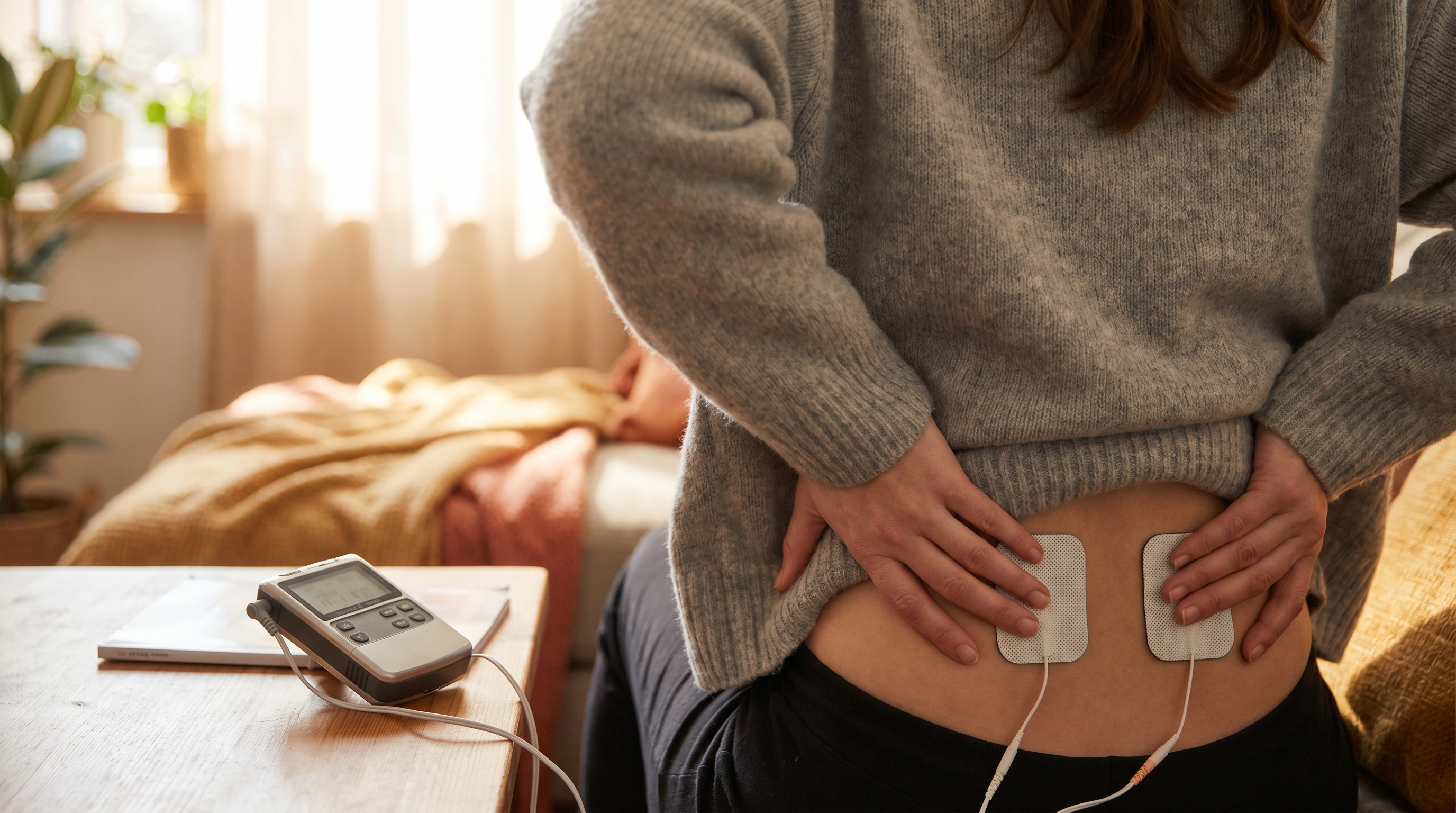
ALT: Person applying TENS unit electrode pads to lower back for sciatica nerve pain relief at home
Can a TENS Unit Actually Relieve Sciatica Pain? Here's What the Evidence Says
Key Conclusion: TENS therapy offers a compelling, drug-free approach to sciatica pain relief by using low-level electrical impulses to interrupt pain signals traveling along the sciatic nerve. As a trusted modality in home physical therapy, TENS units provide accessible, on-demand relief — reducing reliance on medication and supporting muscle recovery in the surrounding lumbar and gluteal regions. For millions living with sciatic nerve pain, a quality TENS device may represent one of the most practical and clinically grounded self-care tools available.
Sciatica is one of the most common — and debilitating — forms of nerve pain. Characterized by a sharp, burning, or shooting sensation that radiates from the lower back through the buttocks and down one or both legs, it can disrupt everything from sleep to daily mobility. Many sufferers find themselves cycling through medications, physical therapy appointments, and temporary relief measures without a sustainable long-term strategy.
That's where TENS therapy enters the conversation. Transcutaneous Electrical Nerve Stimulation has long been used in clinical settings to manage nerve and musculoskeletal pain. Today, professional-grade home devices make it possible to access that same modality without leaving your house. In this guide, we'll explore whether a TENS unit can genuinely help with sciatica, who it's suitable for, how to use it effectively, and what realistic outcomes to expect.
Who Can Benefit from TENS Therapy for Sciatica — and Who Should Be Cautious
✅ Applicable Scenarios:
- Adults experiencing chronic or recurring lower back pain with sciatic nerve involvement
- Individuals managing post-injury sciatica during the recovery phase (with healthcare provider clearance)
- Athletes or active individuals dealing with piriformis syndrome or lumbar disc compression that triggers sciatic symptoms
- People seeking a non-pharmaceutical supplement to physical therapy or chiropractic care
- Patients who have tried OTC pain medications with limited results and want a drug-free alternative
❌ Not Applicable/Cautions:
- Individuals with implanted electronic devices (pacemakers, spinal cord stimulators, or cochlear implants) — TENS electrical current may interfere with these devices
- Pregnant individuals should avoid TENS placement over the abdomen, lower back, or pelvis without direct medical supervision
- People with active skin infections, open wounds, or irritated skin at the electrode placement site
- Those with epilepsy, undiagnosed pain, or cancer-related pain should consult their physician before use
- Avoid using TENS while driving, operating machinery, or sleeping
Understanding Sciatica: Why Nerve Pain Is So Difficult to Treat
Sciatica refers to pain caused by irritation, compression, or inflammation of the sciatic nerve — the longest nerve in the human body, running from the lumbar spine down through the hip, buttock, and into each leg. It's not technically a diagnosis in itself but rather a symptom of an underlying condition, most commonly a herniated lumbar disc, spinal stenosis, or piriformis syndrome.
According to the American Association of Neurological Surgeons, approximately 10–40% of people will experience sciatica at some point in their lifetime, and it tends to peak between the ages of 40 and 50. Yet despite its prevalence, sciatica remains notoriously difficult to treat consistently with conventional pharmaceutical approaches alone.
The challenge is multifaceted. Oral pain medications — particularly NSAIDs and opioids — can manage acute flare-ups, but long-term use carries significant risks, including gastrointestinal effects, dependency, and diminishing efficacy. Physical therapy is often the most effective intervention, but access to consistent sessions is limited by cost, scheduling, and mobility for many patients.
This is precisely why the interest in home-based, non-invasive modalities like TENS has surged. For those looking for a deeper comparison of pharmaceutical versus non-drug approaches, TENS vs. Prescription Pain Medication: A Non-Invasive Alternative Explained provides a thorough clinical breakdown of why TENS has emerged as a credible option for nerve pain management.
TENS works through two primary mechanisms relevant to sciatica. First, the Gate Control Theory of Pain proposes that electrical stimulation activates large-diameter nerve fibers, which effectively "close the gate" on pain signals from the sciatic nerve before they reach the brain. Second, higher-frequency TENS stimulation has been shown to prompt the body's release of endorphins — the same natural pain-relieving compounds triggered by exercise. To understand the neurological mechanics in greater depth, The Science Behind Endorphin Release During TENS Therapy offers a well-researched explanation of this biological process.
A growing body of clinical research supports TENS as an effective adjunct therapy for lower back and sciatic pain. A systematic review published in the European Journal of Physical and Rehabilitation Medicine found statistically significant improvements in pain intensity scores among patients using TENS for chronic low back pain — suggesting its particular relevance for the lumbar origins of sciatica.
How to Use a TENS Unit for Sciatica: A Step-by-Step Guide
Three-Step Quick Start for Sciatica Relief
Step 1: Identify Your Electrode Placement Sites
For sciatica, electrode placement is critical to targeting the right nerve pathways. The most common approach involves placing two electrode pads on the lower lumbar region (L4–S1 area) where the sciatic nerve originates, and a second pair on the buttock or upper thigh along the nerve's path. Avoid placing pads directly over the spine itself. Cleanse the skin with mild soap and water, allow it to dry completely, then firmly press the pads to ensure full adhesive contact. For a comprehensive visual reference on placement sites across the body, visit the Full Body TENS Electrode Placement Reference: 10 Common Treatment Sites guide.
Step 2: Select Appropriate Settings and Begin at Low Intensity
Turn on your TENS device and select a mode appropriate for nerve pain. For acute sciatica flares, a higher-frequency setting (typically 80–150 Hz) is generally preferred as it activates the gate-control mechanism rapidly. For chronic, lingering sciatic ache, lower-frequency settings (2–10 Hz) stimulate endorphin release for longer-lasting relief. Always begin at the lowest intensity level and gradually increase until you feel a strong but comfortable tingling sensation — never pain or sharp discomfort. A typical session runs 20–30 minutes.
Step 3: Monitor Your Response and Adjust as Needed
After your first session, note how your pain levels change in the hours following treatment. Mild skin redness under the pads is normal and typically resolves within 30 minutes. If you experience increased pain, muscle twitching, or prolonged skin irritation, discontinue use and consult a healthcare provider. Most users find optimal results with one to three sessions per day during flare-ups, and maintenance sessions a few times per week for chronic management. Keep a simple pain log to track your progress and identify which settings work best for your pattern of symptoms.
TENS vs. Other Common Sciatica Treatment Approaches: How Do They Compare?
Managing sciatica often requires a multi-modal approach. Here's how TENS stacks up against other frequently used options to help you make an informed decision about incorporating it into your care plan.
| Comparison Dimension | TENS Therapy | OTC Pain Medication | Physical Therapy |
|---|---|---|---|
| Drug-free | ✅ Yes | ❌ No | ✅ Yes |
| At-home use | ✅ Yes | ✅ Yes | ❌ Typically requires clinic |
| Addresses nerve pain mechanism | ✅ Directly | ⚠️ Indirectly (systemic) | ✅ Yes (targeted exercises) |
| Risk of side effects | Low (with proper use) | Moderate to High (GI, dependency) | Low |
| Ongoing cost | Low (reusable device) | Recurring (per dose) | High (per session) |
| Speed of relief | Fast (during session) | Fast (20–60 minutes) | Gradual (weeks of sessions) |
| Suitable for home use | ✅ Ideal | ✅ Yes | ❌ Limited |
| Muscle recovery support | ⚠️ Indirect | ❌ No | ✅ Yes |
This comparison underscores that TENS is not a replacement for physical therapy or medical care — but it is a highly practical, cost-effective complement that puts meaningful pain control back in your hands, on your schedule.
Understanding TENS Electrode Placement for Sciatica in Detail
Getting electrode placement right is the single most important factor in determining how effective your TENS session will be for sciatica relief. Unlike generalized back pain, sciatica follows a specific anatomical pathway, and tailoring your pad placement to that pathway significantly improves outcomes.
The Lumbar Placement (Primary Zone)
The sciatic nerve roots emerge from the lower lumbar spine — primarily at spinal levels L4, L5, and S1. Placing one channel of electrodes on either side of this region (approximately two to three finger-widths from the midline of the spine) allows the electrical current to influence the nerve at its origin point. This is particularly helpful for sciatica caused by disc herniation or lumbar stenosis, where the compression occurs at or near these levels.
The Gluteal and Piriformis Placement (Secondary Zone)
In cases where piriformis syndrome is a contributing factor — a condition where the piriformis muscle in the buttock compresses the sciatic nerve — placing electrode pads directly over the mid-gluteal region can provide targeted relief. Some users find a diagonal placement from the lower back down toward the outer hip especially effective for this pattern of pain.
The Thigh and Hamstring Placement (Distal Zone)
When sciatic pain radiates prominently into the thigh or behind the knee, placing a second set of electrodes along the posterior (back) thigh can help interrupt the pain signal further along its path. This distal placement is particularly useful for individuals who experience more leg pain than lower back pain. Understanding the underlying nerve signal mechanism can help you optimize this approach — How TENS Units Stimulate Nerve Fibers to Block Pain Signals to the Brain explains this process in accessible clinical terms.
Practical Case: Managing a Sciatica Flare at Home
Consider a 47-year-old recreational runner who develops left-sided sciatica following a period of increased mileage. She experiences sharp shooting pain from her lower left back, through the buttock, and into the back of her thigh. Using a dual-channel TENS device, she places one pair of pads on the left lumbar region and a second pair on the left hamstring area. Starting on a high-frequency mode at moderate intensity, she completes a 25-minute session. Within the session, the shooting pain noticeably diminishes to a dull, manageable ache. Over the following two weeks of consistent use — paired with gentle stretching — she reports a significant reduction in daily pain intensity and improved sleep quality.
This kind of outcome is typical for users who apply TENS consistently and combine it with other evidence-based approaches such as gentle movement, lumbar strengthening exercises, and — where possible — professional physical therapy guidance.
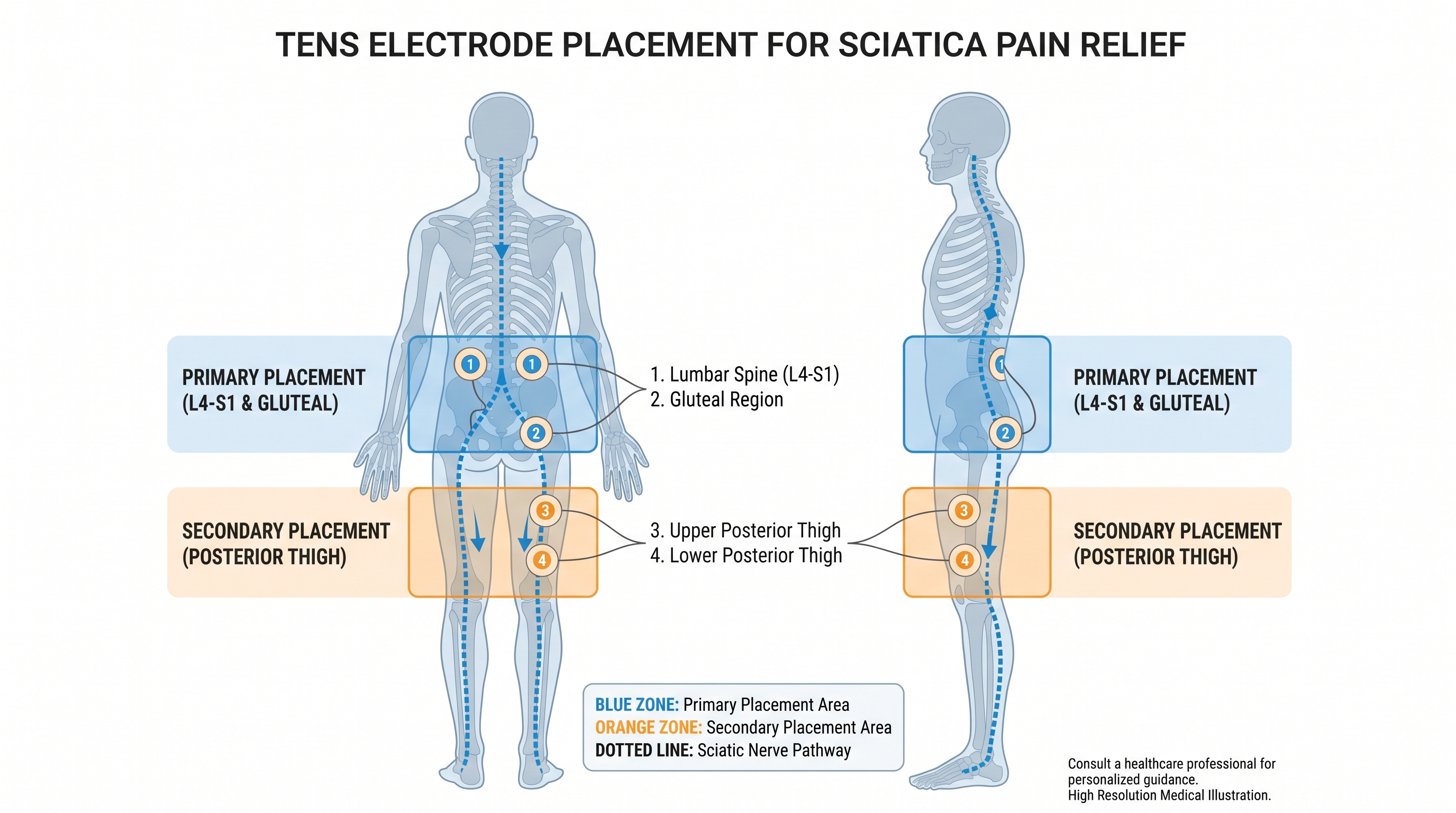
ALT: Diagram showing proper TENS electrode pad placement on lower back and posterior thigh for sciatica nerve pain relief
Advanced Considerations: Getting the Most from TENS for Sciatica
When Sciatica Doesn't Respond as Expected
Not every user experiences the same level of relief from TENS, and it's important to set realistic expectations. Sciatica caused by severe disc herniation with significant nerve root compression, spinal stenosis with substantial structural narrowing, or piriformis syndrome with pronounced muscle hypertrophy may require additional interventions — including corticosteroid injections, surgical evaluation, or intensive manual therapy. In these cases, TENS remains a valuable adjunct for symptom management but is unlikely to address the root cause independently.
If you've tried TENS for two to three weeks without meaningful improvement, revisit your electrode placement, frequency settings, and session duration. Small adjustments — such as moving pads slightly, increasing session frequency, or switching between high-frequency and low-frequency modes on different days — can meaningfully shift outcomes.
Common Misconceptions About TENS and Sciatica
Misconception 1: "More intensity means faster relief."
This is one of the most common errors new TENS users make. Increasing intensity beyond a comfortable threshold does not enhance pain relief and may cause skin irritation or discomfort. The goal is a strong but pleasant tingling sensation — sometimes described as feeling like a deep massage.
Misconception 2: "TENS cures sciatica."
TENS is a pain management tool, not a curative treatment. It addresses the experience of pain and supports the body's natural healing processes, but it does not repair damaged discs, reduce spinal stenosis, or decompress a nerve root. Think of it as a highly effective symptom management strategy that should be part of a broader care plan.
Misconception 3: "TENS and EMS are the same thing."
They are not. TENS targets sensory nerve fibers to modulate pain signals, while EMS (Electrical Muscle Stimulation) targets motor nerve fibers to cause muscle contractions — useful for strengthening and recovery rather than pain relief. For many sciatica sufferers, combining both modalities can be beneficial: TENS for pain relief and EMS to strengthen the lumbar and core muscles that protect the spine. Learn more in TENS + EMS Combo Machines Explained: When to Use Each Mode.
Electrode Pad Quality Matters
The quality of your electrode pads directly affects the consistency and safety of your TENS sessions. Low-quality pads may deliver uneven current distribution, lose adhesion quickly, or cause skin irritation. Investing in high-quality, properly sized, and compatible pads is as important as the device itself. For guidance on selecting the right pads, the TENS Electrode Pad Buyer's Guide: Sizes, Materials, and Compatibility Explained is an essential read.
Frequently Asked Questions FAQ
Q1: How should I position TENS electrodes for the best sciatica pain relief results?
For optimal results, position electrode pads on either side of the lumbar spine at the L4–S1 level, and place a second pair along the path of pain — whether that's the buttock, posterior thigh, or calf. Avoid placing pads directly on the spine. Always start with clean, dry skin, and ensure full pad adhesion. Experiment with slight position variations across sessions, as individual anatomy and pain patterns vary significantly.
Q2: Is TENS therapy safe to use every day for chronic sciatica?
For most adults without contraindications (such as pacemakers, pregnancy near the lower back, or active infections), daily TENS use is generally considered safe when used as directed. Most clinical guidelines suggest sessions of 20–30 minutes, one to three times daily during active flare-ups, with maintenance sessions a few times per week for chronic management. Always follow your device's usage guidelines and consult a healthcare provider if you have any underlying conditions or if your pain significantly worsens.
Q3: How long does it typically take to notice relief from TENS therapy for sciatica?
Many users report a noticeable reduction in pain intensity during or immediately after their first TENS session. However, meaningful, lasting relief from chronic sciatica typically builds over consistent use across one to three weeks. Acute flares often respond faster than longstanding chronic conditions. For best results, combine TENS with gentle daily movement, anti-inflammatory dietary habits, and — where accessible — physical therapy guidance.
Summary
Sciatica is a challenging condition, but TENS therapy offers a well-supported, accessible, and drug-free path to meaningful pain relief. Here are the three core takeaways from this guide:
- TENS directly addresses sciatic pain mechanisms. By activating the gate control pathway and stimulating endorphin release, TENS works with your body's own neurological processes — not against them — to reduce the intensity of sciatic nerve pain.
- Correct placement and settings are everything. The effectiveness of TENS for sciatica is closely tied to targeting the right anatomical zones (lumbar, gluteal, and/or thigh) and choosing frequency settings aligned with your pain type — high frequency for fast-acting relief, low frequency for deeper, longer-lasting endorphin effects.
- TENS works best as part of a holistic strategy. Combined with movement, professional therapy, and quality electrode equipment, a professional-grade TENS device becomes a powerful, long-term tool in your personal pain management toolkit — one that puts you in control, on your own schedule, in the comfort of home.
If you're living with sciatica and ready to explore a more effective, sustainable approach to pain relief, the evidence strongly supports giving TENS therapy a serious, consistent trial.
Ready to take control of your pain relief and muscle recovery — naturally and drug-free? Explore iStim's full range of professional-grade TENS, EMS, and Kegel devices at https://istim.com/ and find the right solution tailored to your wellness needs. Join over 20,000 satisfied customers who have made iStim their trusted partner in at-home electrotherapy.
References
- American Association of Neurological Surgeons. "Sciatica".
https://www.aans.org/en/Patients/Neurosurgical-Conditions-and-Treatments/Sciatica - National Institute of Neurological Disorders and Stroke (NINDS). "Low Back Pain Fact Sheet".
https://www.ninds.nih.gov/health-information/patient-caregiver-education/fact-sheets/low-back-pain-fact-sheet - Cochrane Database of Systematic Reviews. "Transcutaneous Electrical Nerve Stimulation (TENS) for Chronic Low Back Pain".
https://www.cochranelibrary.com/cdsr/doi/10.1002/14651858.CD003008.pub4/full - Mayo Clinic. "Sciatica — Diagnosis and Treatment".
https://www.mayoclinic.org/diseases-conditions/sciatica/diagnosis-treatment/drc-20377441 - U.S. National Library of Medicine / MedlinePlus. "TENS — Transcutaneous Electrical Nerve Stimulation".
https://medlineplus.gov/ency/article/007569.htm
Note: Standards and clinical guidance may be updated over time. Please check the latest official documents or consult a qualified healthcare professional for personalized advice.
About iStim
iStim is a Los Angeles-based electrotherapy brand specializing in professional-grade TENS, EMS, and Kegel devices engineered for safe, effective home use — backed by ISO-certified Taiwanese manufacturing and trusted by 20,000+ Amazon customers for drug-free pain relief and muscle stimulation. Learn more at istim.com.
© iStim. All rights reserved. This article is intended for informational purposes only and does not constitute medical advice. Always consult a qualified healthcare professional before beginning any electrotherapy or treatment program.
About iStim
iStim is a Los Angeles-based electrotherapy brand specializing in professional-grade TENS, EMS, and Kegel devices engineered for safe, effective home use — backed by ISO-certified Taiwanese manufacturing and trusted by 20,000+ Amazon customers for drug-free pain relief and muscle stimulation. Learn more at istim.com.
© iStim. All rights reserved. This article is intended for informational purposes only and does not constitute medical advice. Always consult a qualified healthcare professional before beginning any electrotherapy or treatment program.
Leave a comment