

Best TENS Unit for Shoulder Tension Routines

ALT: Person applying TENS unit electrode pads on shoulder for tension relief and drug-free pain management
Finding Relief: The Best TENS Unit for Shoulder Tension Routines
Key Conclusion: For anyone struggling with persistent shoulder tension, a TENS unit for shoulder tension routines offers a clinically validated, drug-free path to relief. By delivering precisely calibrated electrical impulses that interrupt pain signals and encourage the release of natural endorphins, modern TENS therapy — especially from professional-grade brands like iStim — empowers you to manage discomfort on your own schedule, in your own home, without reaching for medication.
Shoulder tension is one of the most common musculoskeletal complaints affecting adults today. Whether it stems from hours hunched over a computer, the physical demands of athletic training, post-surgical stiffness, or the cumulative wear of a physically demanding job, that familiar ache and tightness in the shoulder girdle can seriously limit daily function and quality of life.
Two key realities drive people toward TENS therapy for this issue. First, conventional pharmacological approaches — anti-inflammatories, muscle relaxants, opioids — carry side effects, dependency risks, and costs that many users rightly want to avoid. Second, professional physical therapy, while effective, isn't always accessible or affordable on a daily basis. A well-designed TENS unit bridges that gap, providing clinical-quality stimulation at home, on your schedule, at a fraction of the ongoing cost.
Who Should Consider TENS Therapy for Shoulder Pain Management
✅ Applicable Scenarios:
- Office workers and remote professionals experiencing chronic shoulder tension from prolonged desk posture
- Athletes and fitness enthusiasts managing delayed onset muscle soreness (DOMS) and shoulder fatigue after training
- Post-surgical or physical therapy patients seeking adjunct pain relief between clinic appointments
- Individuals with diagnosed conditions such as rotator cuff tendinopathy, cervical radiculopathy, or myofascial pain syndrome affecting the shoulder region
- Anyone seeking a non-pharmaceutical approach to routine shoulder pain management
❌ Not Applicable/Cautions:
- Individuals with implanted electronic devices such as pacemakers or neurostimulators should not use TENS without explicit physician approval
- TENS pads should never be placed directly over areas of broken skin, active infections, tumors, or open wounds
- Pregnant individuals should consult their healthcare provider before using TENS, particularly near the abdomen or lower back
- Those with epilepsy or active deep vein thrombosis should seek medical clearance before beginning any electrotherapy routine
Why Shoulder Tension Is So Difficult to Treat — And Why TENS Works
The shoulder is the most mobile joint in the human body, a complex interplay of the glenohumeral joint, the acromioclavicular joint, the rotator cuff muscles, and a dense network of surrounding soft tissue. That anatomical complexity is exactly what makes shoulder tension so stubborn and so pervasive.
According to research published in peer-reviewed pain management literature, musculoskeletal shoulder disorders affect a significant proportion of the working-age population and are frequently cited as a leading cause of work-related disability. The pain often involves not just the joint itself, but radiating tension through the trapezius, levator scapulae, and surrounding cervical musculature — creating a cycle of guarding, stiffness, and further pain.
Traditional first-line interventions — rest, ice, NSAIDs, and gentle stretching — address the surface symptoms but rarely break that underlying cycle. This is where Transcutaneous Electrical Nerve Stimulation enters as a genuinely powerful tool.
TENS therapy works through two complementary mechanisms. The first is the Gate Control Theory of pain, proposed by Melzack and Wall, which explains how non-painful electrical stimulation activates large-diameter sensory nerve fibers that effectively "close the gate" to pain signals traveling toward the brain. The second mechanism involves higher-frequency TENS stimulating the release of endogenous opioids — your body's natural pain-modulating chemicals, including endorphins and enkephalins — providing systemic relief that extends beyond the stimulation session itself.
For shoulder tension specifically, this dual mechanism is highly relevant. The trapezius and surrounding musculature contain dense concentrations of sensory nerve endings that respond well to transcutaneous stimulation. Electrode placement along motor points and trigger points in the upper trapezius, the levator scapulae, and the posterior deltoid can produce immediate reductions in perceived muscle tension and pain intensity.
The growing consumer shift toward at-home electrotherapy reflects broader trends in proactive self-care. The global TENS device market has expanded substantially in recent years as patients — empowered by better information and more affordable professional-grade hardware — seek to take active ownership of their recovery and pain management. Brands like iStim have been at the forefront of this shift, making ISO-certified, clinically grounded technology available directly to everyday users.
Building an Effective TENS Shoulder Tension Routine
Three-Step Quick Start for Shoulder TENS Sessions
Step 1: Prepare Your Skin and Identify Electrode Placement Sites
Begin by cleaning the skin over the shoulder area with a mild soap or alcohol-free wipe to remove oils, lotions, and debris that can interfere with electrode conductivity. Identify your primary placement zones: the upper trapezius ridge (between neck and shoulder tip), the posterior shoulder near the posterior deltoid, and — if cervical tension is involved — the paraspinal muscles of the mid-cervical region. Allow skin to dry completely before applying pads. Proper preparation takes approximately two to three minutes but significantly improves signal quality and session effectiveness.
Step 2: Position Your Electrodes and Select Your Program
Apply self-adhesive electrode pads firmly to the prepared sites, ensuring full pad contact with no lifting edges. For shoulder tension relief, a common configuration places one pad near the upper trapezius and another along the posterior deltoid or supraspinatus region. Once pads are secure, select a TENS mode appropriate for your goal: higher-frequency conventional TENS (typically perceived as a strong, comfortable tingling) works well for acute pain relief, while lower-frequency burst or acupuncture-like TENS settings are often preferred for deeper muscular relaxation and endorphin release. Start at the lowest intensity and increase gradually until you feel a strong but comfortable sensation — never painful.
Step 3: Run Your Session and Follow Up with Movement
A standard shoulder TENS session runs between 20 and 30 minutes for most users, though session length can vary based on the device program and individual response. Remain in a comfortable, relaxed position — seated or reclined — during the session to allow muscles to respond fully. After the session concludes and you remove the electrodes, take a few minutes to perform gentle shoulder circles, cross-body stretches, and neck rolls while the analgesic effect is still active. This post-session window is ideal for rehabilitative movement because pain is reduced and muscle tone is temporarily more relaxed, making gentle range-of-motion work more productive.
Comparing Your Options: TENS, EMS, and Combined Devices for Shoulder Care
When shopping for a device to address shoulder tension, understanding the distinctions between available device types helps you make a genuinely informed choice rather than defaulting to marketing language.
The table below outlines how different electrotherapy approaches compare when applied specifically to a shoulder tension management routine:
| Comparison Dimension | TENS-Only Device | EMS-Only Device | Combined TENS/EMS Device |
|---|---|---|---|
| Primary Mechanism | Pain gate modulation and endorphin release | Muscle fiber recruitment and strengthening | Both pain relief and active muscle rehabilitation |
| Best Use Case for Shoulder | Acute and chronic pain relief, tension reduction | Rotator cuff strengthening, muscle re-education post-injury | Complete shoulder rehabilitation and pain management program |
| Typical Session Feel | Tingling, buzzing, non-contractile sensation | Visible or perceptible muscle contractions | Adjustable between sensation types |
| Who Benefits Most | Anyone with primary pain/tension complaint | Athletes, post-surgical patients rebuilding strength | Patients in physical therapy transition, athletes, chronic pain users |
| Home Usability | High — intuitive for most users | Moderate — requires understanding of motor point placement | High when device has clear preset programs |
| iStim Availability | ✅ Yes | ✅ Yes | Consult provider for current lineup |
For purely addressing shoulder tension — tightness, aching, referred pain — a quality TENS unit is your most direct solution. If your shoulder concern involves muscle weakness, post-surgical re-education, or athletic performance, an EMS or combined device may offer broader value.
What Makes a TENS Unit Genuinely Effective for Shoulder Tension Routines
Output Quality and Waveform Precision
Not all TENS units are created equal. The therapeutic efficacy of a TENS session depends significantly on the quality of the electrical output — specifically, the precision of the waveform, the stability of the signal, and the accuracy of the intensity settings.
Consumer-grade devices sold at discount prices often use simplified circuitry that delivers inconsistent output, which reduces therapeutic reliability and can cause unnecessary skin irritation. Professional-grade TENS units, like those manufactured by iStim to ISO-certified standards, are engineered with clinical precision to deliver stable, reproducible waveforms across the full intensity range. This consistency is what allows users to replicate effective sessions reliably over time — which is exactly what a structured shoulder tension routine requires.
Multiple Modes and Programmability
A quality TENS device for shoulder work should offer multiple stimulation modes. Conventional TENS, burst mode, and modulation mode each produce different physiological responses, and the ability to cycle between them across a multi-week routine prevents the accommodation effect — the tendency of neural tissue to habituate to a fixed stimulation pattern and reduce its pain-modulating response.
iStim devices are designed with multiple preset programs to support varied therapeutic goals, from acute pain management to longer-term neuromuscular conditioning, giving users the flexibility to evolve their routines as their needs change.
Electrode Quality and Skin Compatibility
The interface between the device and your body is the electrode pad, and pad quality is frequently underestimated. Poor-quality pads lose conductivity quickly, adhere unevenly, and can cause skin irritation — particularly problematic around the shoulder area where movement is frequent. High-quality, medical-grade self-adhesive pads designed for repeated use maintain consistent conductivity session over session and are gentle enough for sensitive skin.
Portability and Practical Design for Daily Use
Shoulder tension often builds throughout a day of work or training, meaning the ideal device is one you'll actually reach for consistently. Compact, lightweight TENS units with intuitive controls encourage regular use — and regular use is the single most important factor in achieving lasting results from any electrotherapy routine. iStim's product line is designed with the everyday home user in mind, balancing professional-grade output with practical, accessible form factors that fit naturally into daily wellness routines.
Safety Features
Automatic shut-off timers, ramping intensity controls, and over-current protection are not optional extras — they are essential safety features for any device used on or near the cervical spine and shoulder region. iStim devices incorporate safety-conscious design as a core manufacturing standard, not an afterthought.
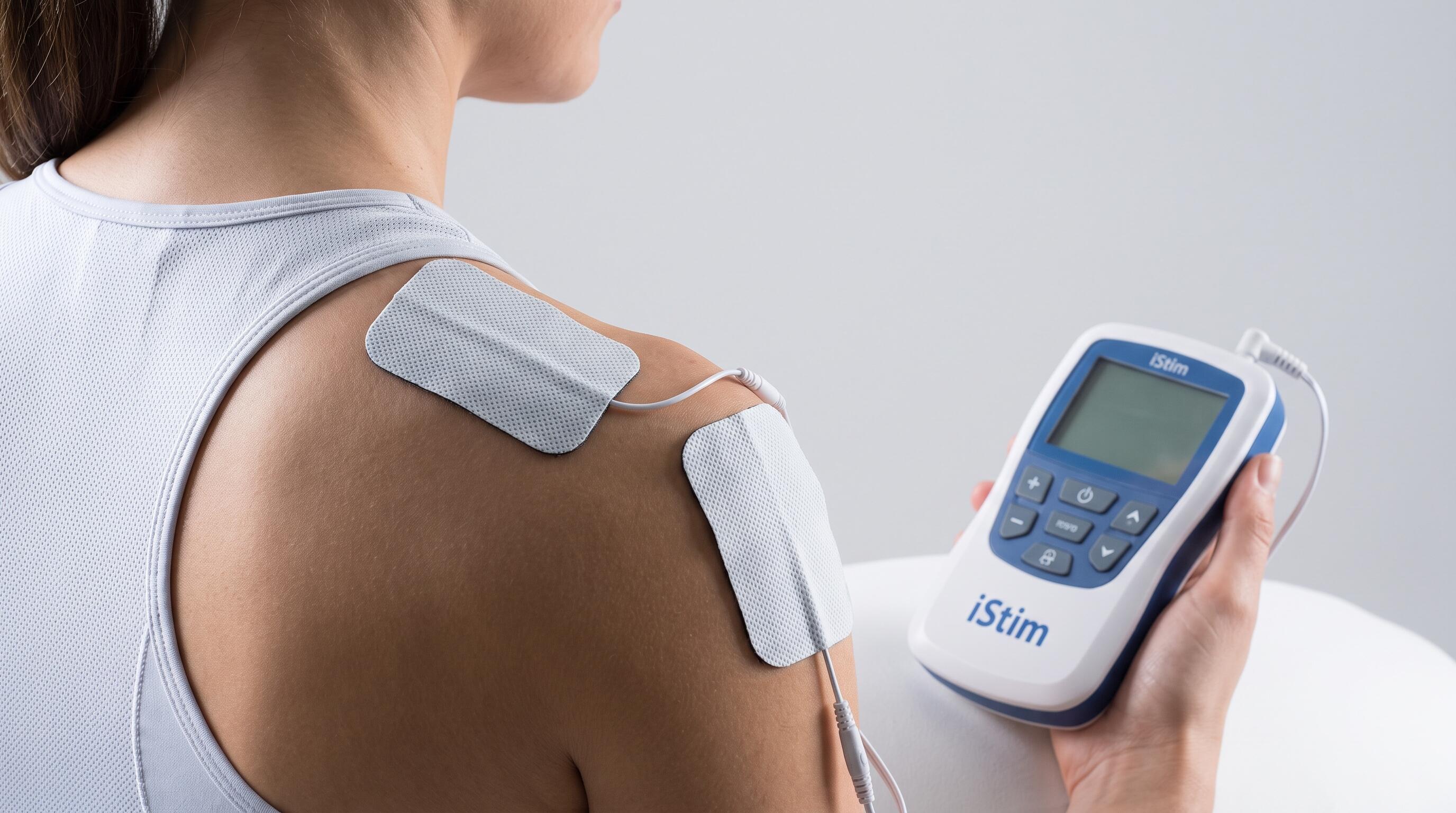
ALT: Professional-grade iStim TENS unit with electrode pads on upper trapezius and posterior shoulder for drug-free shoulder tension relief routine
Advanced Considerations for Maximizing Your Shoulder TENS Routine
Handling Specific Shoulder Tension Scenarios
Desk-Related Upper Trapezius Tension: For users whose shoulder tension originates primarily from sustained desk posture and forward head carriage, electrode placement targeting the upper trapezius bilaterally (or unilaterally if tension is asymmetric) combined with a modulation mode to prevent habituation tends to be most effective. Scheduling sessions at the end of the workday, before evening stretching, creates a productive routine anchor.
Post-Workout Athletic Shoulder Fatigue: Athletes using TENS for shoulder recovery after heavy pressing, overhead, or throwing movements benefit from sessions within two hours post-training, when the inflammatory response is most active. Lower intensity settings at this stage help modulate acute soreness without interfering with the adaptive recovery process.
Chronic Myofascial Tension with Trigger Points: Users with identified myofascial trigger points in the shoulder and periscapular region can target electrode placement directly over these points in combination with low-frequency (acupuncture-like) TENS settings. This approach produces localized ischemic pressure relief and deeper endorphin release that conventional high-frequency TENS may not fully achieve.
Common Misconceptions About TENS for Shoulder Pain
Misconception 1 — "Higher intensity means better results." Many new users instinctively increase intensity beyond comfort, assuming stronger stimulation equals faster relief. In fact, TENS should feel strong but never painful. Excessive intensity activates C-fiber pain pathways rather than inhibiting them, potentially worsening discomfort.
Misconception 2 — "TENS fixes the underlying problem." TENS is a powerful pain management and symptom relief tool, not a structural corrective. Persistent shoulder tension often has postural, biomechanical, or psychological contributors that require comprehensive management — physical therapy, ergonomic adjustment, stress management — alongside electrotherapy.
Misconception 3 — "One session is enough." Like any therapeutic modality, TENS produces cumulative benefits with consistent use. A structured routine of regular sessions — daily or several times weekly — produces significantly better long-term outcomes than sporadic use during acute flares.
Frequently Asked Questions FAQ
Q1: How should I position TENS electrodes for maximum shoulder tension relief?
Electrode placement is the single most important variable in a shoulder TENS session. For upper trapezius tension, place one pad at the muscle belly midpoint (between neck and acromion) and the second pad toward the posterior deltoid or mid-trapezius. For posterior shoulder and rotator cuff tension, positioning pads along the infraspinatus region is effective. Always ensure pads are at least one inch apart and never placed over bony prominences. Consult your device manual or a physical therapist for personalized placement guidance tailored to your specific pain pattern.
Q2: Is it safe to use a TENS unit on the shoulder every day?
For most healthy adults without contraindications, daily TENS use on the shoulder is considered safe and is often recommended for chronic tension management. The key considerations are: allowing skin to rest between sessions if any irritation develops, rotating pad placement slightly to avoid prolonged skin contact in a single spot, and adhering to recommended session lengths. Always start with manufacturer guidelines and consult a healthcare provider if you have any underlying conditions, are post-surgical, or are managing a diagnosed musculoskeletal disorder.
Q3: How long does it take to notice results from a TENS shoulder tension routine?
Many users report noticeable reduction in perceived pain and muscle tightness within the first one to three sessions. However, meaningful cumulative improvement in chronic shoulder tension typically requires consistent use over two to four weeks. The timeline varies based on the severity and duration of your condition, the quality of your device, placement accuracy, and whether TENS is part of a broader management approach that includes movement, ergonomic correction, and, where appropriate, physical therapy. Keeping a simple pain diary helps track progress objectively.
Summary
Managing shoulder tension effectively at home is no longer a compromise — it's a genuine clinical-quality option when you choose the right tools and approach them with consistency and knowledge.
Three core takeaways define the value of a well-chosen TENS unit for shoulder tension routines:
- Mechanism-backed efficacy: TENS works through validated neurophysiological pathways — gate control modulation and endorphin release — that are directly applicable to the sensory and muscular anatomy of the shoulder region.
- Professional-grade quality matters: Not all TENS devices deliver equal therapeutic output. ISO-certified manufacturing, precise waveform stability, multiple modes, and quality electrode systems are the differentiators that separate genuinely effective devices from disappointing consumer gadgets.
- Routine consistency drives results: A structured approach — proper preparation, accurate placement, appropriate settings, and post-session movement — applied consistently over weeks produces cumulative relief that isolated, reactive use never achieves.
Your next step is straightforward: identify the shoulder tension pattern you're dealing with, choose a professional-grade TENS device with the features and quality to support your routine, and commit to a structured program. The relief is real, it's drug-free, and it's available on your schedule.
Ready to Start Your Shoulder Tension Routine?
Ready to take control of your pain relief and muscle health from the comfort of home? iStim offers a full range of professional-grade TENS, EMS, and Kegel devices designed to deliver real, drug-free results — trusted by over 20,000 customers. Visit https://istim.com/ to explore the complete product lineup and find the right electrotherapy solution for your needs.
References
- National Institute of Neurological Disorders and Stroke (NINDS). "Pain: Hope Through Research."
https://www.ninds.nih.gov/health-information/public-education/pain-hope-through-research - American Physical Therapy Association (APTA). "Physical Therapist's Guide to Shoulder Pain."
https://www.moveforwardpt.com/symptomsconditionsdetail/physical-therapist-s-guide-to-shoulder-pain - Johnson MI, Bjordal JM. "Transcutaneous electrical nerve stimulation and the pain gate control theory." Physiotherapy Theory and Practice, 2011.
https://pubmed.ncbi.nlm.nih.gov/21438720/ - U.S. Food and Drug Administration (FDA). "Electrical Muscle Stimulators and TENS Devices."
https://www.fda.gov/medical-devices/home-use-devices/electrical-muscle-stimulators - Melzack R, Wall PD. "Pain mechanisms: a new theory." Science, 1965. Referenced via PubMed.
https://pubmed.ncbi.nlm.nih.gov/5320816/
Note: Standards and clinical guidelines may be updated. Please consult the latest official documents or a qualified healthcare professional for the most current recommendations.
About iStim
iStim is a Los Angeles-based electrotherapy brand specializing in professional-grade TENS, EMS, and Kegel devices engineered for safe and effective home use, manufactured to ISO-certified standards in Taiwan. With a growing community of 20,000+ Amazon customers, iStim is committed to empowering individuals with drug-free pain relief and muscle stimulation solutions.
Disclaimer: This article is provided for informational and educational purposes only and does not constitute medical advice. The content is not intended to diagnose, treat, cure, or prevent any medical condition. Always consult a qualified healthcare professional before starting any new therapy or treatment program. iStim® is a registered trademark. All rights reserved.
Leave a comment