

Best Non-Inflatable Neck Traction Device
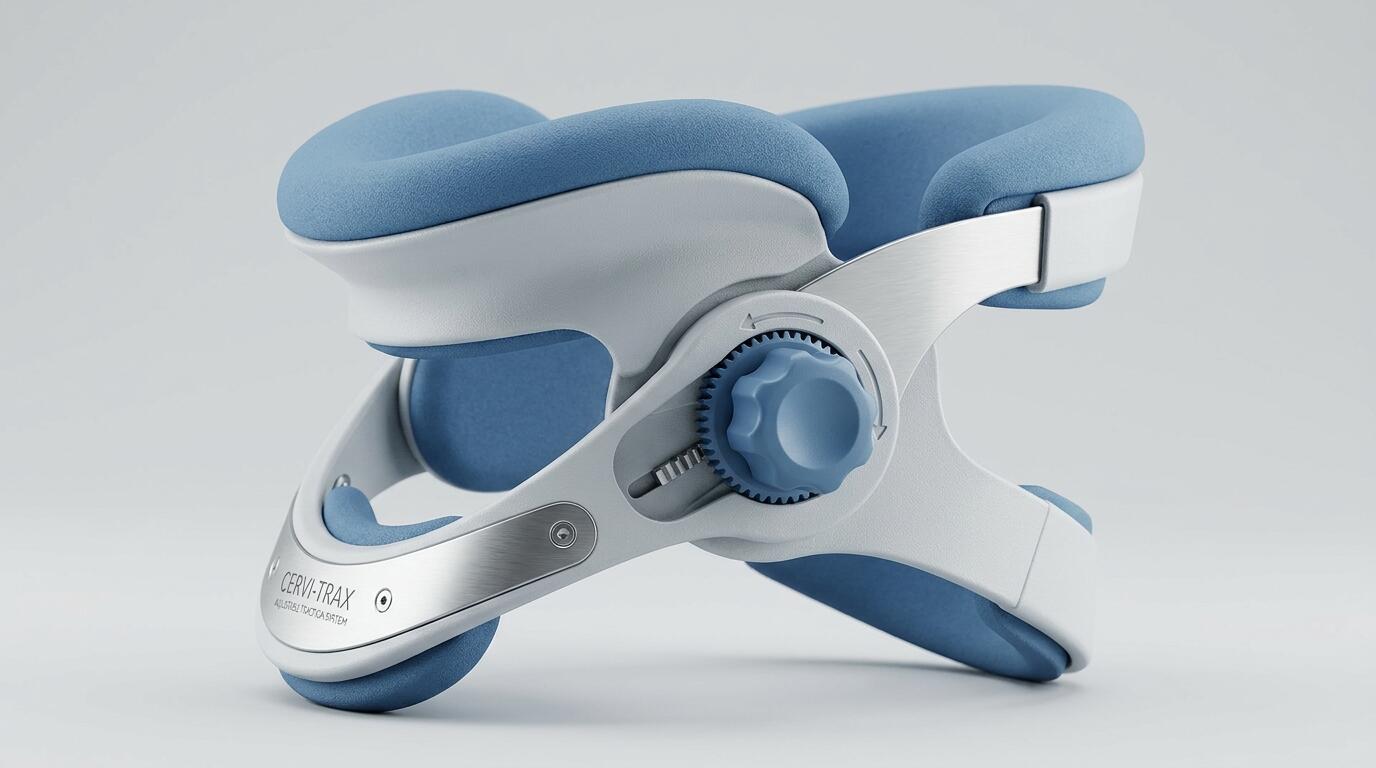
ALT: Best non-inflatable neck traction device for drug-free cervical pain relief at home
Why a Non-Inflatable Neck Traction Device May Be the Smarter Choice for Cervical Pain Relief
Key Conclusion: A non-inflatable neck traction device offers a structurally superior, more consistent, and medically aligned approach to cervical decompression compared to air-bladder alternatives. Unlike inflatable collar alternatives that rely on variable air pressure, rigid or semi-rigid traction systems deliver measured, repeatable force that mirrors clinical traction protocols — making them a preferred choice for adults managing herniated discs, cervicogenic headaches, and chronic neck tension at home.
Living with persistent neck pain is more than a physical inconvenience — it disrupts sleep, limits productivity, and gradually erodes quality of life. For millions of adults, the search for a drug-free, at-home solution leads them to neck traction therapy. But not all traction devices are created equal. The category has expanded rapidly, and the distinction between inflatable and non-inflatable designs has become one of the most important — and most misunderstood — decisions a consumer must make. This article explores why rigid or semi-rigid mechanical traction systems are increasingly recognized as the gold standard for home cervical decompression, how to choose and use them correctly, and what to look for when evaluating your options.
Who Should Consider a Non-Inflatable Neck Traction Device
✅ Applicable Scenarios:
- Adults experiencing chronic cervical disc compression, herniated or bulging discs, or cervical spondylosis who want consistent, repeatable decompression therapy at home
- Post-injury rehabilitation patients cleared by a physician or physical therapist to begin gentle traction as part of a structured recovery plan
- Individuals suffering from cervicogenic headaches, upper back stiffness, or nerve impingement stemming from poor posture or sedentary work habits
- Fitness enthusiasts and athletes experiencing neck strain from heavy training who need structured decompression between sessions
❌ Not Applicable / Cautions:
- Individuals with spinal instability, osteoporosis, rheumatoid arthritis affecting the cervical spine, or recent neck surgery — always obtain physician clearance before beginning any traction therapy
- Those experiencing acute neck trauma, fracture, or severe radiculopathy with rapidly worsening neurological symptoms; in these cases, seek immediate medical evaluation before using any mechanical device
- Pregnant individuals or those with vascular conditions affecting the neck should consult a healthcare provider before use
The Problem with Neck Pain and Why Traction Therapy Matters
Neck pain is one of the most prevalent musculoskeletal complaints worldwide. According to the Global Burden of Disease Study, neck pain consistently ranks among the top causes of years lived with disability globally. The modern lifestyle — characterized by prolonged screen use, sedentary office work, and poor ergonomics — has made cervical compression a near-universal experience.
The cervical spine comprises seven vertebrae that support the full weight of the skull while maintaining the flexibility needed for daily movement. When the intervertebral discs between these vertebrae become compressed — whether through poor posture, injury, degenerative disc disease, or aging — the result is pain, stiffness, and sometimes radiating nerve symptoms into the shoulders, arms, and hands.
Cervical traction therapy works by gently elongating the spine, creating negative pressure within the disc space. This process, known as decompression, can help retract herniated disc material, reduce nerve root irritation, relieve muscle spasm, and restore healthier disc hydration over time. It is a well-established clinical modality used by physical therapists, chiropractors, and orthopedic specialists.
The challenge has always been bringing this clinical benefit into the home setting affordably and safely. For years, consumers were limited to two primary options: professional in-clinic traction machines, or inexpensive inflatable neck collars. The gap between these two extremes — in both cost and effectiveness — is significant. This is precisely where the best non-inflatable neck traction devices have emerged to fill a critical need.
Unlike air-bladder collars that simply push the chin upward with unregulated air pressure, mechanical traction systems use structured frames, pulley systems, or spring-loaded mechanisms to deliver calibrated, consistent elongation force along the cervical axis. The therapy more closely mirrors what a trained physical therapist achieves manually or with professional traction equipment.
As awareness grows among health-conscious adults about the limitations of passive or poorly controlled traction, demand for more clinically grounded home devices has surged. Physical therapists increasingly recommend structured non-inflatable options for home maintenance between clinical visits, and online communities dedicated to chronic pain management frequently discuss the superiority of mechanical designs over inflatable collar alternatives.
How to Choose and Use the Best Non-Inflatable Neck Traction Device
Three-Step Quick Start for Mechanical Neck Traction at Home
Step 1: Evaluate Your Cervical Condition and Get Clinical Clearance
Before purchasing or using any neck traction device, the single most important step is consulting your physician, physical therapist, or chiropractor. Share your symptoms, imaging results if available, and your intention to use home traction. A qualified provider can confirm whether traction is appropriate for your specific condition, recommend an appropriate force range, and identify any contraindications. This step typically takes one appointment and can prevent injury from inappropriate use. Do not skip this step, particularly if you have a history of spinal conditions or recent trauma.
Step 2: Select the Right Device Type for Your Lifestyle and Condition
Non-inflatable neck traction devices fall into several categories: over-door pulley systems, seated mechanical traction frames, reclining supine traction devices, and chin-and-occiput harness systems. Evaluate each based on your living space, mobility, comfort preferences, and the recommended positioning from your healthcare provider. Supine (lying-down) devices are generally preferred for relaxation and muscle release, while upright systems are useful for targeted daytime decompression. Read user reviews, verify return policies, and cross-reference with your provider's recommendation before committing to a device.
Step 3: Begin with Conservative Settings and Track Your Progress
When you begin using your chosen device, start at the lowest available traction setting or force level and use it for brief initial sessions — typically around 5–10 minutes. Gradually increase duration and force only as tolerated and as advised by your provider. Keep a simple log noting session length, force level, and your comfort or symptom response. Share this log during follow-up appointments. Many users find meaningful relief within several weeks of consistent, properly calibrated use, though individual results vary based on diagnosis, compliance, and baseline condition severity.
Comparing Non-Inflatable Neck Traction Devices to Other Cervical Relief Options
Choosing a cervical decompression approach requires understanding how different solutions compare across the dimensions that matter most to home users: consistency of force, positioning flexibility, durability, cost over time, and clinical alignment.
| Comparison Dimension | Non-Inflatable Mechanical Traction Device | Inflatable Collar (Air-Bladder) | In-Clinic Motorized Traction |
|---|---|---|---|
| Force Consistency | High — mechanical tension is measurable and repeatable | Low — air pressure fluctuates and is difficult to calibrate | Very High — computer-regulated and clinician-monitored |
| Positioning Options | Moderate — supine or seated depending on design | Limited — primarily upright | Supine or seated; therapist-controlled |
| Portability | Moderate — some designs are compact and travel-friendly | High — lightweight and collapsible | None — clinic-based only |
| Durability | High — rigid or semi-rigid materials resist wear | Low to Moderate — bladders are prone to leaks and degradation | High — commercial-grade equipment |
| Cost Over Time | Moderate one-time investment; no consumables | Low initial cost; may need frequent replacement | High — per-session clinical fees accumulate rapidly |
| Clinical Alignment | Good — mirrors physical therapy principles | Poor — pressure is non-directional and unregulated | Excellent — professional standard |
| Ease of Use at Home | Moderate — learning curve for initial setup | High — simple to put on | Not applicable for home use |
This comparison reveals why non-inflatable designs represent the most practical midpoint between under-powered consumer products and inaccessible clinical equipment. For chronic pain sufferers committed to a consistent home therapy routine, the investment in a well-designed mechanical device pays dividends in treatment reliability.
Understanding the Key Features of a High-Quality Non-Inflatable Traction Device
Structural Integrity and Force Delivery
The defining advantage of a non-inflatable neck traction device lies in its structural architecture. Rather than relying on air pressure — which is inherently unstable and difficult to measure — mechanical systems use rigid or semi-rigid materials, calibrated springs, pulleys, or graduated weight systems to generate traction force. This means every session can be set to a consistent tension level, allowing users and their healthcare providers to track therapeutic parameters meaningfully over time.
When evaluating a device, look for one that specifies its force range clearly and allows for incremental adjustments. A device with too few tension settings limits the user's ability to progress safely; one without clear calibration markers makes it impossible to maintain consistency between sessions.
Positioning: Supine vs. Upright Traction
The position in which traction is applied significantly affects therapeutic outcome. Supine traction — performed lying on your back — is widely considered more effective for muscle relaxation and disc decompression because gravity assists in releasing paraspinal muscle tension. When the body is horizontal and supported, the muscles surrounding the cervical spine are less recruited, allowing the traction force to act more directly on the joint structures.
Upright or seated traction, while more convenient for daytime use, requires the muscles to remain partially activated to maintain posture, which can reduce the therapeutic benefit. Some advanced non-inflatable devices are specifically engineered for supine use with structured head supports and graduated force application — these tend to align most closely with the techniques used in physical therapy clinics.
Material Quality and Ergonomic Design
A neck traction device is only as good as the comfort and safety of its contact surfaces. Look for medical-grade padding on chinrests and occipital supports, breathable and washable fabric components, and hardware that is free of sharp edges or pressure points. Devices that position the head in slight flexion (approximately 15–20 degrees forward) tend to be more anatomically effective for most types of cervical disc pathology, as this position opens the posterior disc space where most herniations occur.
Over-Door vs. Free-Standing vs. Supine Designs
Over-door pulley systems are among the most commonly sold non-inflatable options and involve a harness attached to a door via a pulley and counterweight. These are cost-effective and relatively easy to set up, though they require a suitable door and are best used in seated positions. Free-standing frames offer more positional versatility but are typically larger and more expensive. Supine devices are the most clinically refined and tend to offer the most relaxed, reproducible treatment experience for home users.
A Practical Case: Managing Work-from-Home Cervical Pain
Consider a 42-year-old marketing professional working eight hours daily at a home desk, who develops progressive cervical pain and intermittent right-arm tingling consistent with C5–C6 disc irritation. After physical therapy evaluation, she is cleared for home traction and begins using a supine non-inflatable traction device three times per week. Within six weeks of consistent use at a moderate tension setting, she reports significant reduction in arm tingling and improved tolerance for prolonged sitting. Her physical therapist notes improved cervical ROM at follow-up. This type of outcome — while not guaranteed — reflects the potential of well-applied home traction when properly supervised.
For those also managing muscle tension, fatigue, or rehabilitation goals beyond the cervical spine, pairing neck traction with an evidence-based electrotherapy approach can be complementary. iStim's professional-grade EMS and TENS devices are designed to address muscle recovery and nerve-related pain across a range of conditions, offering a drug-free adjunct to mechanical decompression therapy.
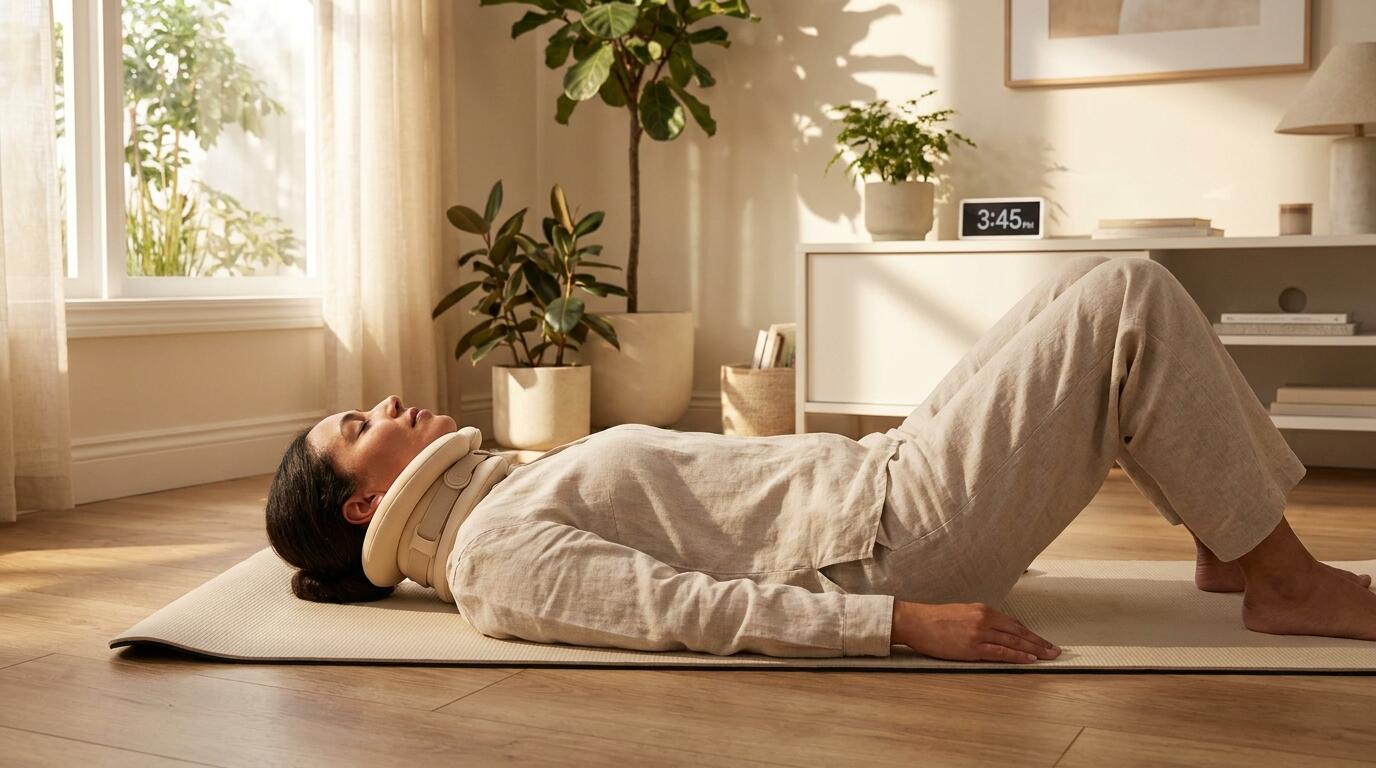
ALT: Person using a non-inflatable neck traction device in supine position for cervical disc decompression and drug-free pain relief at home
Advanced Considerations: Optimizing Your Non-Inflatable Traction Therapy
Handling Special Situations
When symptoms temporarily increase: It is not uncommon for first-time traction users to experience mild soreness or temporary symptom fluctuation during the first few sessions. This often reflects tissue adaptation. However, any sharp, shooting pain, sudden numbness, tingling escalation, or dizziness during or after a session should prompt immediate cessation and physician consultation. These symptoms may indicate that traction is contraindicated for your specific condition or that the force level needs adjustment.
Combining traction with other modalities: Many physical therapists recommend combining cervical traction with heat therapy before sessions (to relax muscles and increase tissue extensibility) and gentle range-of-motion exercises afterward (to reinforce the gains from decompression). Cold therapy following sessions can help manage any mild post-session inflammation. Some users also incorporate TENS therapy for nerve pain management alongside their traction routine — a strategy supported by the complementary mechanisms of these two modalities.
Frequency and long-term use: Most clinical protocols suggest cervical traction sessions of 15–30 minutes, performed three to five times per week, with reassessment every four to six weeks. Long-term maintenance traction — at reduced frequency once symptoms stabilize — is commonly recommended for those with chronic degenerative conditions. The key is to treat home traction as a structured therapeutic tool, not a passive comfort measure.
Common Misconceptions Clarified
Misconception: "More traction force means faster results." In reality, excessive traction force can aggravate symptoms, cause muscle guarding, and in rare cases contribute to joint injury. Always progress gradually and within the range recommended by your provider.
Misconception: "Inflatable neck collars provide the same benefit." Inflatable collar alternatives generate upward pressure that pushes on the mandible and occiput, but this force is non-directional, variable, and poorly calibrated — a fundamentally different mechanism from true axial cervical traction. The clinical literature on traction therapy is based primarily on controlled, measurable force application, not air pressure estimation.
Frequently Asked Questions FAQ
Q1: How do I know if a non-inflatable neck traction device is better than an inflatable collar for my condition?
The primary distinction is force control and clinical alignment. Inflatable collar alternatives rely on unpredictable air pressure that is difficult to calibrate, while non-inflatable mechanical devices deliver consistent, measurable traction force that mirrors physical therapy protocols. If your physician or physical therapist has recommended cervical traction at a specific force level or duration, a structured mechanical device is far more likely to deliver that therapeutic dose reliably. Always discuss your specific condition with your provider before selecting a device.
Q2: Is it safe to use a neck traction device every day at home without professional supervision?
Daily use without professional oversight carries risk, particularly during the initial weeks of therapy. While many individuals do progress to regular home use successfully, the safest approach involves starting under the guidance of a physical therapist or physician who can assess your response, refine the parameters, and identify any warning signs. Once a safe routine is established and well-tolerated, many providers support ongoing home use with periodic clinical check-ins. Never use any traction device during an acute flare without first consulting your healthcare provider.
Q3: How long does it typically take to notice improvement from cervical traction therapy?
Response timelines vary by individual, diagnosis, and protocol adherence. Many users with cervical disc-related pain report noticeable improvement in symptoms within four to eight weeks of consistent, properly calibrated use — typically three to five sessions per week. More complex or chronic conditions may require longer treatment courses. It is important to track your symptoms and share progress with your healthcare provider to ensure the therapy is working as intended and to adjust parameters as needed.
Summary
Navigating the world of cervical decompression therapy can feel overwhelming, but the core principles are clear. Three key takeaways from this guide:
First, a non-inflatable neck traction device delivers measurable, consistent traction force that mirrors clinical physical therapy protocols — a meaningful advantage over inflatable collar alternatives that rely on variable, poorly controlled air pressure.
Second, the best outcomes come from a structured approach: physician or physical therapy clearance first, appropriate device selection second, and gradual, consistent use with careful symptom monitoring throughout.
Third, non-inflatable mechanical traction is not a standalone cure — it is most effective as part of a broader drug-free pain management strategy that may include electrotherapy, targeted exercise, ergonomic correction, and ongoing professional guidance.
Your next step is to consult your healthcare provider about whether cervical traction is appropriate for your condition, identify the device type best suited to your lifestyle and treatment goals, and commit to a structured home routine. The investment in the right device and the right approach pays dividends in consistent, drug-free relief.
Ready to take control of your pain relief and muscle health from the comfort of home? Explore iStim's full range of professional-grade TENS, EMS, and Kegel devices at https://istim.com/ and find the right drug-free solution tailored to your needs. Join over 20,000 satisfied customers who trust iStim for safe, effective, and clinically inspired electrotherapy.
References
- World Health Organization. "Musculoskeletal Conditions: Neck Pain Overview".
https://www.who.int/news-room/fact-sheets/detail/musculoskeletal-conditions - National Institute of Neurological Disorders and Stroke (NINDS). "Neck Pain Information Page".
https://www.ninds.nih.gov/health-information/disorders/neck-pain - American Physical Therapy Association (APTA). "Cervical Traction: Clinical Practice Guidelines".
https://www.apta.org/ - PubMed / National Library of Medicine. Cerezo-Téllez E, et al. "Effectiveness of Dry Needling for Chronic Nonspecific Neck Pain: A Randomized, Single-Blinded, Clinical Trial". PAIN. Published reference on cervical pain management modalities.
https://pubmed.ncbi.nlm.nih.gov/ - Mayo Clinic. "Neck Pain: Diagnosis and Treatment".
https://www.mayoclinic.org/diseases-conditions/neck-pain/diagnosis-treatment/drc-20375587
Note: Standards and clinical guidelines may be updated. Please consult the latest official documents or a qualified healthcare professional for the most current guidance.
About iStim
iStim is a Los Angeles-based electrotherapy brand specializing in professional-grade TENS, EMS, and Kegel devices engineered for safe and effective home use, backed by ISO-certified Taiwanese manufacturing and a growing community of 20,000+ trusted customers.
© iStim. All rights reserved. This article is intended for informational purposes only and does not constitute medical advice. Always consult a qualified healthcare professional before beginning any electrotherapy or pain management program.
Leave a comment