

Best Neck Stretching Device for At-Home Use
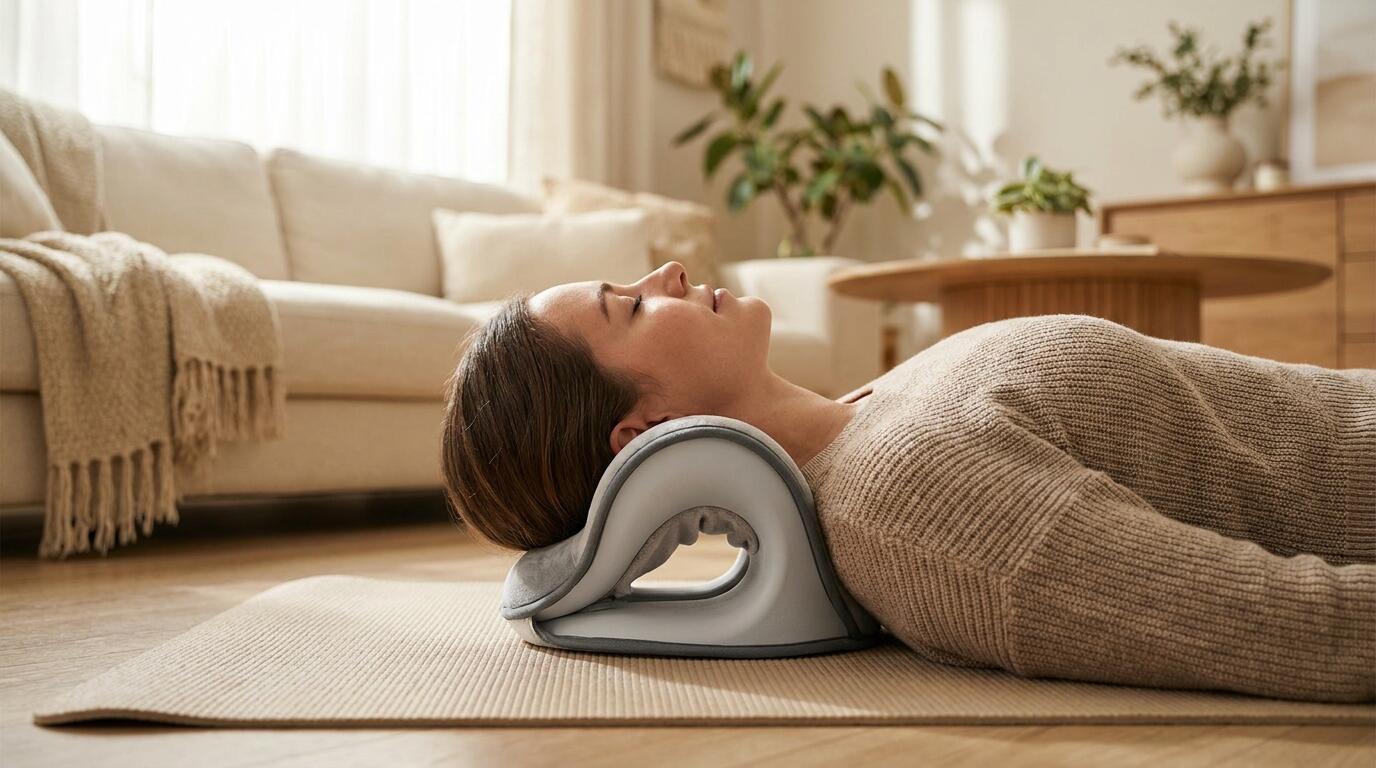
ALT: Person using the best neck stretching device for at-home cervical pain relief and muscle relaxation
Why a Neck Stretching Device May Be the Missing Piece in Your Pain Relief Routine
Key Conclusion: A high-quality neck stretching device offers a targeted, non-invasive approach to relieving cervical tension, stiffness, and chronic neck pain from the comfort of home. By decompressing vertebrae, elongating tight muscles, and improving spinal alignment, the right home neck stretcher can complement physical therapy, reduce dependence on pain medications, and support long-term neck health — making it one of the most practical investments for modern pain management.
Neck pain has quietly become one of the most widespread musculoskeletal complaints of the 21st century. From desk workers hunched over laptops to individuals recovering from whiplash injuries, millions of people deal with cervical discomfort that disrupts sleep, work, and quality of life. The challenge is finding relief that is accessible, safe, and effective without requiring a clinic visit every time symptoms flare.
This is where a dedicated cervical traction and stretching tool enters the picture. The best neck stretching device for home use combines therapeutic stretch, gentle traction, and ergonomic support to address the root causes of neck tension — not just mask the symptoms. When paired with a broader electrotherapy approach, such as TENS therapy for nerve-related pain, results can be even more meaningful.
Who Should (and Should Not) Use a Neck Stretching Device at Home
✅ Applicable Scenarios:
- Adults experiencing chronic neck stiffness, tension headaches, or upper back tightness linked to prolonged sitting or screen use
- Post-injury or post-physical therapy patients looking to maintain cervical mobility and prevent regression
- Fitness enthusiasts and athletes seeking faster recovery from neck strain after overhead lifting, contact sports, or high-intensity training
- Individuals with mild to moderate cervical spondylosis or disc-related compression seeking non-surgical decompression support
❌ Not Applicable/Cautions:
- Individuals with severe cervical instability, recent spinal surgery, fractures, or acute herniated discs should consult a physician before use
- People with osteoporosis, rheumatoid arthritis affecting the cervical spine, or vascular conditions involving the neck should seek professional guidance first
- Pregnant individuals should avoid unsupervised cervical traction without explicit healthcare provider approval
The Growing Demand for At-Home Neck Care Solutions
Modern life has engineered a near-perfect storm for neck problems. The average adult now spends many hours each day looking at screens — from smartphones held below eye level to desktop monitors that encourage forward head posture. Clinicians commonly refer to this as "tech neck" or "text neck," a postural pattern in which the head shifts forward relative to the shoulders, dramatically increasing the mechanical load placed on the cervical spine and surrounding muscles.
The consequences are significant. Research published through the National Institute of Neurological Disorders and Stroke notes that neck pain is among the most common causes of work-related disability and contributes heavily to lost productivity and healthcare utilization. For many sufferers, the cycle is frustrating: pain leads to reduced mobility, reduced mobility leads to muscle weakness and further stiffness, and the discomfort becomes chronic.
Traditionally, managing cervical pain meant repeated visits to physical therapists, chiropractors, or orthopedic specialists. While professional care is invaluable — and should always be the foundation of any serious treatment plan — between-visit maintenance and home-based prevention have become increasingly important. This demand has driven a growing market for consumer cervical traction tools, inflatable neck stretchers, foam cervical rolls, and traction collars designed to bring clinically inspired therapy into the living room.
But the market is not without its challenges. Many products promise dramatic results without meaningful engineering behind them. Understanding what distinguishes an effective neck stretching device from a gimmick requires a closer look at the mechanisms, design features, and appropriate use protocols that support genuine therapeutic benefit.
At iStim, our broader philosophy of professional-grade, drug-free pain management informs how we think about this space. Our TENS and EMS devices are specifically designed to complement physical modalities — meaning electrotherapy and mechanical stretching tools can work synergistically to address both the neurological and muscular dimensions of chronic neck pain.
How to Get Started with a Neck Stretching Device: A Three-Step Protocol
Setting Up Your Cervical Stretching Routine
Step 1: Assess Your Baseline Neck Mobility
Before beginning any stretching or traction routine, take two to three minutes to gently assess your current range of motion. Slowly rotate your head left and right, tilt toward each shoulder, and flex your chin toward your chest. Note which movements feel restricted or uncomfortable. This baseline check — which takes only a few minutes — helps you track progress over time and identify directions that require extra care during initial sessions.
Step 2: Position and Calibrate Your Neck Stretching Device
Follow the manufacturer's instructions carefully for your specific device. Most cervical traction units or inflatable stretchers require you to lie supine (on your back) or sit in a supported upright position. Begin with the lowest resistance or inflation setting available, particularly in the first week of use. The sensation should feel like a gentle elongation of the neck — never sharp, pinching, or radiating pain. A single session in the introductory phase typically lasts no longer than ten to fifteen minutes.
Step 3: Integrate Complementary Therapies Before or After Stretching
For maximum benefit, consider pairing your cervical stretching session with heat application beforehand to relax muscles, and TENS therapy afterward to address any residual nerve-related discomfort. Heat loosens the soft tissue around the cervical vertebrae, allowing the stretching device to work more effectively and comfortably. Post-stretch TENS electrode placement along the upper trapezius and cervical paraspinal muscles can further reduce muscle hypertonicity and support pain-free recovery. Building this three-part sequence into a consistent daily or every-other-day routine is the most reliable path to lasting results.
Comparing the Main Types of At-Home Neck Stretching Devices
Choosing the right cervical traction or stretching tool requires understanding the meaningful differences between product categories. The table below outlines the primary options available on the consumer market and their key distinctions.
| Comparison Dimension | Inflatable Cervical Collar | Over-Door Traction Unit | Foam Cervical Traction Roll |
|---|---|---|---|
| Primary Mechanism | Pneumatic inflation lifts the chin and elongates the cervical spine | Weighted pulley system applies upward traction force | Passive lordotic curve restoration through foam contour support |
| Traction Control | Adjustable via hand pump; variable resistance | Adjustable via water bag weight increments | Fixed; no active traction, relies on gravity and positioning |
| Ease of Use at Home | High — portable and usable in any room | Moderate — requires door anchor setup | Very high — simply place and lie back |
| Best Suited For | Mild to moderate disc compression, daily decompression maintenance | Clinician-recommended moderate traction programs | Posture correction, light daily stretching, beginner use |
| Portability | Excellent | Limited | Excellent |
| Relative Cost | Low to moderate | Moderate | Low |
| Consult Provider Before Use | Yes, especially for higher inflation levels | Yes — weight and duration must be guided by a professional | Generally lower risk, but consult for cervical conditions |
Each device type has its appropriate context. For most home users without a formal traction prescription, a combination of a well-designed inflatable collar for active decompression and a foam roll for passive lordosis restoration provides a practical and progressive approach.
Understanding What Makes a Neck Stretching Device Truly Effective
The Science of Cervical Traction and Decompression
Cervical traction, at its core, works by applying a distracting force to the cervical spine — gently separating the vertebral bodies and reducing compressive loading on intervertebral discs and facet joints. This mechanical separation has several interconnected therapeutic effects: it reduces intradiscal pressure, which can alleviate nerve root compression; it stretches the paraspinal muscles and posterior ligaments, which tends to decrease muscle spasm; and it promotes nutrient and fluid exchange within the disc itself, supporting tissue health over time.
Clinical studies have explored the benefits of cervical traction for conditions including cervical radiculopathy, degenerative disc disease, and chronic neck pain with or without headache. A systematic review published in the journal Physical Therapy found that intermittent cervical traction combined with exercise and manual therapy produced meaningful pain and disability improvements compared to exercise alone — highlighting the value of traction as part of a multimodal approach rather than a standalone solution.
What to Look for in a Quality Home Neck Stretcher
When evaluating a home neck stretcher, several design and construction factors separate effective devices from ineffective ones.
Adjustability is paramount. A device that allows you to modulate the degree of traction or stretch — whether through pump inflation pressure, angle adjustment, or resistance settings — enables you to match the intensity to your tolerance and progress safely over time. Fixed-force devices carry higher risk of misuse, particularly for individuals new to cervical traction.
Material quality and structural integrity matter more than they might appear. A device designed to support the cervical spine must maintain its shape and function under repeated use without deforming or losing resistance. Soft, low-quality foam or poorly reinforced inflatable bladders can become unpredictable in their force delivery after minimal use.
Ergonomic fit across a range of neck sizes and contours is also critical. The cervical spine's natural lordotic curve — the gentle inward curve visible from the side — must be respected and ideally supported by the device geometry. Tools that force the neck into a flat or reversed position can worsen symptoms rather than relieve them.
Finally, ease of hygiene maintenance is a practical consideration for daily home use. Removable, washable covers or wipe-clean surfaces ensure that the device remains sanitary across extended use periods.
Combining Electrotherapy with Cervical Stretching for Enhanced Results
One of the most underutilized strategies in home-based neck care is pairing mechanical stretching with electrotherapy. TENS (Transcutaneous Electrical Nerve Stimulation) devices work by delivering low-level electrical impulses through surface electrodes placed on the skin, modulating pain signals via the gate control mechanism and stimulating the release of endogenous endorphins.
For individuals dealing with neck pain that has a significant nerve component — radiating into the shoulders, tingling into the arms, or manifesting as persistent headaches — TENS therapy can address the neurological dimension that a purely mechanical stretching device cannot reach on its own. Placing TENS electrodes along the upper trapezius, cervical paraspinal muscles, and suboccipital area before or after a cervical traction session creates a complementary treatment window that addresses both muscle and nerve-related contributors to pain.
iStim's professional-grade TENS devices are engineered precisely for this kind of targeted, home-based application — with multiple intensity levels and programmable modes that allow users to customize their experience safely. To learn more about how TENS therapy supports pain relief, visit istim.com and explore the full range of clinical-quality electrotherapy solutions.
A Practical Use Case: The Remote Worker with Chronic Upper Neck Tension
Consider a 42-year-old marketing professional who works eight to ten hours daily at a desk and has developed persistent tension at the base of the skull, radiating into the upper shoulders. She has tried ergonomic pillows and regular stretching with partial relief, but the tension returns within hours of sitting down to work.
A structured approach combining a foam cervical roll used first thing in the morning for passive lordosis support, followed by a ten-minute inflatable cervical traction session three to four times per week, and a post-stretch TENS session along the trapezius and cervical paraspinals, produced a meaningful reduction in daily tension headache frequency and improved her ability to rotate her head comfortably within several weeks. This kind of individualized, consistent, multi-modal protocol is what transforms occasional use of a neck stretching device into a genuine lifestyle intervention.
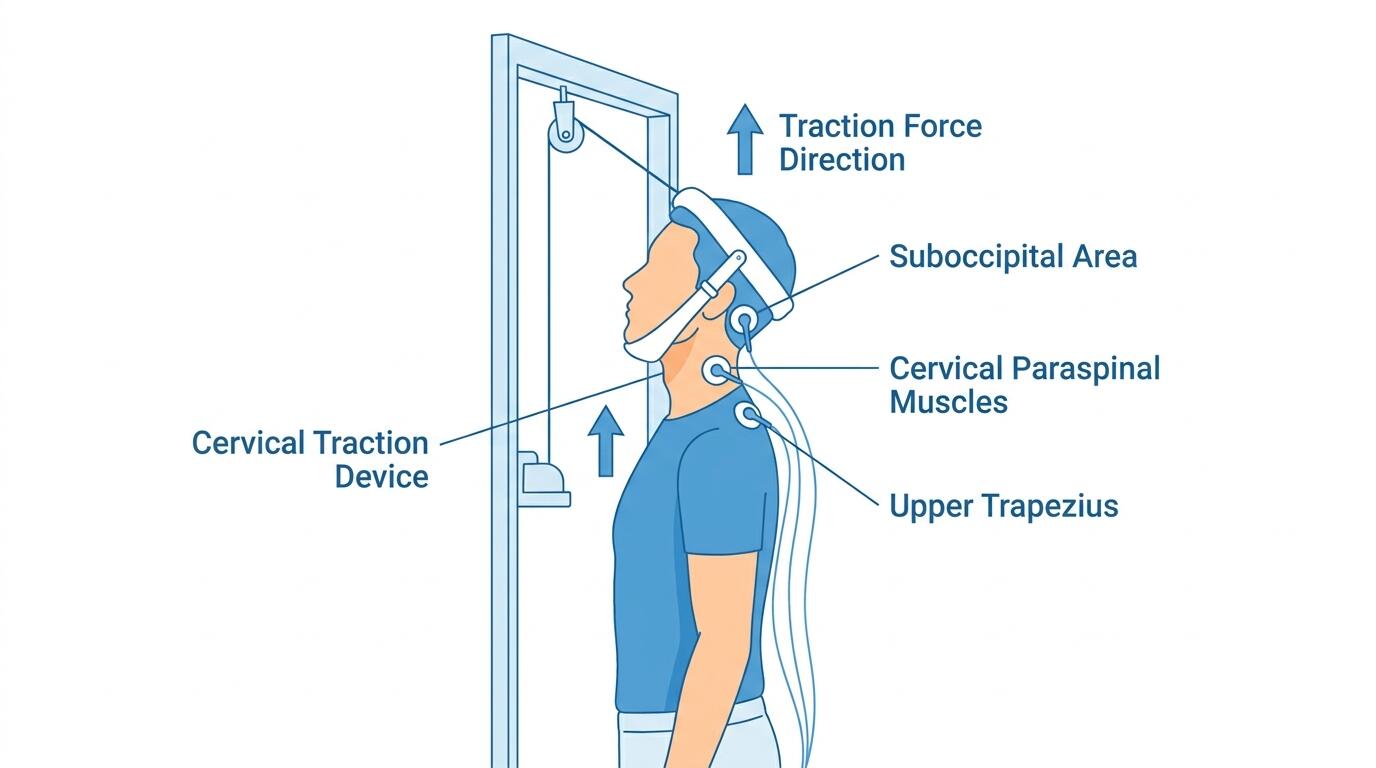
ALT: Diagram showing proper neck stretching device positioning combined with TENS electrode placement for cervical pain management at home
Advanced Considerations: Getting the Most from Your Cervical Stretching Practice
Special Situations That Require Adapted Approaches
Cervical radiculopathy with arm symptoms: If your neck pain is accompanied by numbness, tingling, or weakness radiating into one or both arms, this suggests nerve root involvement. In this context, very low traction forces applied in a slightly flexed neck position (approximately 20 to 30 degrees) are typically better tolerated than neutral or extended positions. Always obtain medical clearance before beginning traction for radiculopathy.
Post-whiplash recovery: Following a whiplash injury, the cervical ligaments and muscles may remain sensitive and vulnerable for weeks to months. During this period, passive approaches like foam cervical rolls are generally safer than active traction devices. Introduce inflatable traction only after formal clearance from a physiotherapist or physician.
Chronic tension-type headaches: Many tension headaches originate from trigger points in the suboccipital muscles and upper trapezius. A cervical stretching device that specifically elongates these areas — combined with TENS therapy targeting those trigger point zones — can significantly reduce headache frequency without pharmaceutical intervention.
Common Misconceptions About Neck Stretching Devices
Misconception 1: More traction is better. In reality, the therapeutic window for cervical traction is relatively narrow. Excessive force or duration can trigger protective muscle spasm that worsens pain rather than relieving it. Begin conservatively and progress gradually.
Misconception 2: Neck stretching devices replace professional care. These devices are best understood as tools for maintenance and adjunct therapy — not substitutes for physical therapy evaluation, chiropractic assessment, or medical diagnosis.
Misconception 3: Results should be immediate. Genuine therapeutic change in connective tissue and neuromuscular patterns takes consistent, repeated input over weeks. Setting realistic expectations — gradual improvement over four to eight weeks rather than instant relief — leads to better adherence and outcomes.
Frequently Asked Questions FAQ
Q1: How do I choose the best neck stretching device for home use?
The best choice depends on the nature of your neck discomfort, your experience with cervical traction, and your lifestyle. Beginners or those with mild postural tension often do well starting with a foam cervical roll, which passively restores the natural curve without active traction. Those with more significant disc compression or clinician-recommended traction needs may benefit from an adjustable inflatable collar. When in doubt, discuss your specific condition with a physical therapist who can match the device type and parameters to your diagnosis.
Q2: Is it safe to use a neck stretching device every day?
For most low-force passive devices like foam cervical rolls, daily use is generally well tolerated by healthy adults without acute cervical pathology. Active traction devices — particularly inflatable collars — are typically recommended for use every other day or a few times per week, especially during the initial months of use. Daily overuse of active traction can desensitize tissues or trigger muscle guarding. Always listen to your body: if symptoms worsen after a session, reduce frequency or force and consult a healthcare provider.
Q3: How long does it typically take to feel results from regular cervical stretching?
Most consistent users report noticeable improvements in daily stiffness and range of motion within two to four weeks of regular use, with more substantial reductions in chronic pain occurring over six to eight weeks. The timeline varies based on the underlying condition, session frequency, traction intensity, and whether complementary approaches like TENS therapy and targeted exercise are used alongside the device. Those combining cervical traction with a multimodal program — including posture correction and muscle strengthening — tend to see faster and more durable results.
Summary
Neck pain is not inevitable, and powerful, non-pharmaceutical solutions are more accessible than ever for home-based management. A quality neck stretching device — chosen thoughtfully based on your specific condition, properly calibrated, and used consistently within a broader wellness protocol — can meaningfully reduce cervical compression, restore mobility, ease chronic tension, and improve daily quality of life.
Three core takeaways stand out from this guide:
- Mechanism matters: Understanding whether your pain is primarily muscular, postural, or disc/nerve-related helps you select the right type of cervical stretching tool and avoid approaches that could worsen your condition.
- Consistency outperforms intensity: Regular, moderate use of a well-designed device yields better results than aggressive or infrequent traction. A sustainable routine built around gentle progressive loading is the most reliable path to long-term improvement.
- Combination therapy amplifies results: Pairing cervical stretching with TENS electrotherapy, targeted exercise, and ergonomic adjustments creates a synergistic effect that addresses neck pain from multiple physiological angles simultaneously.
Whether you are recovering from an injury, managing the effects of years at a desk, or simply seeking a proactive way to maintain cervical health as you age, the right tools and a structured approach can make a profound difference.
Ready to take control of your pain relief and muscle health from the comfort of home? Explore iStim's full range of professional-grade TENS, EMS, and Kegel devices at https://istim.com/ and find the right drug-free solution tailored to your needs. Join over 20,000 satisfied customers who trust iStim for safe, effective, and clinically inspired electrotherapy.
References
- National Institute of Neurological Disorders and Stroke (NINDS). "Neck Pain Fact Sheet".
https://www.ninds.nih.gov/health-information/disorders/neck-pain - American Physical Therapy Association (APTA). "Neck Pain: Clinical Practice Guidelines".
https://www.apta.org/ - Bier JDN, et al. "Clinical Practice Guideline for Physical Therapy Assessment and Treatment in Patients with Nonspecific Neck Pain." Physical Therapy, Oxford University Press.
https://academic.oup.com/ptj/article/98/3/162/4823654 - National Center for Complementary and Integrative Health (NCCIH), U.S. Department of Health & Human Services. "Neck Pain: What You Need to Know".
https://www.nccih.nih.gov/health/neck-pain-what-you-need-to-know - Cochrane Library. "Cervical Traction for Neck Pain and Cervical Radiculopathy".
https://www.cochranelibrary.com/
Note: Standards and clinical guidelines may be updated. Please check the latest official documents or consult a qualified healthcare professional for the most current recommendations.
About iStim
iStim is a Los Angeles-based electrotherapy brand specializing in professional-grade TENS, EMS, and Kegel devices engineered for safe and effective home use, backed by ISO-certified Taiwanese manufacturing and a growing community of 20,000+ trusted customers.
© iStim. All rights reserved. This article is intended for informational purposes only and does not constitute medical advice. Always consult a qualified healthcare professional before beginning any electrotherapy or pain management program.
Leave a comment