

Best Neck Decompression Device for Home Therapy Routines
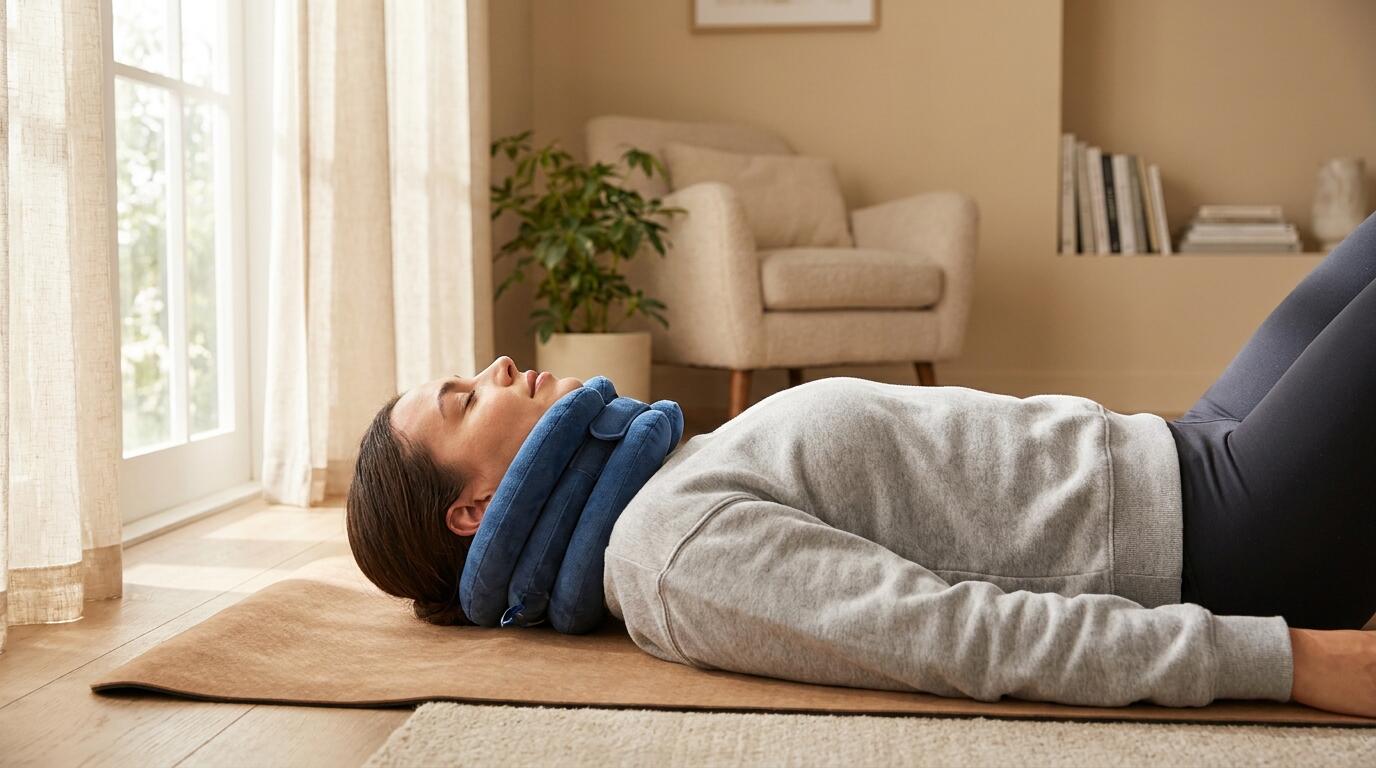
ALT: Person using a neck decompression device at home for cervical pain relief therapy
Finding Relief: What Makes the Best Neck Decompression Device for Home Use
Key Conclusion: Choosing the best neck decompression device for home use comes down to understanding your specific condition, committing to a consistent cervical decompression routine, and pairing mechanical traction with targeted electrotherapy methods. The right combination can meaningfully reduce cervical compression, relieve nerve impingement, and restore functional mobility — all without leaving your living room or relying on prescription medication.
Neck pain is one of the most common musculoskeletal complaints among adults worldwide, and the search for effective, accessible home therapy solutions has never been more urgent. Whether you're recovering from a cervical herniated disc, managing chronic tension from hours at a desk, or simply dealing with the cumulative wear of a busy lifestyle, the right cervical support device can be a genuine turning point in your recovery journey.
This guide walks you through everything you need to know: how to evaluate your options, how to build a structured home routine, and how to integrate complementary electrotherapy tools — like TENS therapy — to amplify your results safely and effectively.
Who Benefits from Cervical Decompression at Home
✅ Applicable Scenarios:
- Adults with cervical spondylosis, disc herniation, or degenerative disc disease seeking drug-free symptom relief between clinical visits
- Remote workers and students experiencing chronic tension headaches, neck stiffness, or upper back pain linked to prolonged screen time and poor posture
- Post-injury or post-surgical patients cleared by their physician for gentle cervical traction and soft tissue recovery exercises at home
- Fitness enthusiasts and athletes looking to manage neck muscle fatigue and prevent injury-related downtime after intense training sessions
❌ Not Applicable/Cautions:
- Individuals with acute spinal instability, fractures, osteoporosis, rheumatoid arthritis of the cervical spine, or advanced spinal cord compression — these conditions require direct clinical supervision before any traction device is used
- Anyone experiencing sudden or worsening neurological symptoms (numbness, tingling radiating into the arms, loss of coordination) should seek immediate medical evaluation rather than attempting self-directed decompression therapy
Understanding the Problem: Why Cervical Compression Is So Common
The cervical spine — the seven vertebrae running from the base of the skull down to the upper chest — is one of the most mobile and most vulnerable sections of the human spine. Its remarkable range of motion is also its greatest liability: years of repetitive movement, poor postural habits, sedentary work environments, and age-related disc changes all conspire to compress the spaces between vertebrae, irritate nearby nerve roots, and generate the characteristic ache, stiffness, and radiating discomfort that millions of people deal with daily.
According to the American Academy of Physical Medicine and Rehabilitation, neck pain is the fourth leading cause of disability globally. Studies suggest that up to 70% of people will experience clinically significant neck pain at some point during their lifetimes, and a substantial proportion of those cases become chronic or recurrent without adequate intervention.
Traditionally, the clinical approach to cervical compression has centered on in-office manual therapy, prescription anti-inflammatories, and supervised mechanical traction. While all of these remain valuable tools, they also carry limitations: they're time-consuming, often expensive, and not always accessible to people managing busy schedules or living far from specialized physical therapy centers. This gap has fueled growing consumer interest in home-use cervical decompression devices — a market that has expanded significantly over the past decade as both the technology and the clinical evidence base have matured.
What has changed most meaningfully in recent years is the integration of multiple therapeutic modalities. Many health-conscious users are now pairing traditional cervical traction with electrotherapy approaches — specifically TENS (Transcutaneous Electrical Nerve Stimulation) and EMS (Electrical Muscle Stimulation) — to address not just the mechanical compression itself, but also the muscle guarding, soft tissue inflammation, and pain signaling that typically accompany it. This multi-modal approach reflects the growing consensus in physical rehabilitation that effective pain management requires treating the whole symptom complex, not just one isolated variable.
Building Your Home Cervical Decompression Routine
Three-Step Quick Start for Home Neck Therapy
Step 1: Assess Your Baseline and Consult Your Care Provider
Before introducing any cervical decompression device into your routine, take time to clearly document your symptoms: the location and quality of pain, any radiating sensations into the shoulders or arms, your range of motion limitations, and what activities aggravate or relieve your discomfort. Share this baseline with a physician or physical therapist. Even a single telehealth consultation can confirm whether at-home cervical traction is appropriate for your specific diagnosis and help you avoid contraindicated positions or intensities. This step typically takes one to two days and is the most important investment you can make in the success of your home therapy.
Step 2: Select and Set Up Your Decompression Device
Once cleared, choose a neck decompression device suited to your condition and living situation. Options range from inflatable cervical collars and over-the-door traction units to more sophisticated posture pump-style devices. Set up in a comfortable, distraction-free space — ideally lying down or seated as specified by your device's instructions. Begin with the lowest traction setting and shortest recommended session duration. Your initial sessions should feel gently relieving, not uncomfortable. Allow your neck muscles to adapt over the first one to two weeks before gradually progressing intensity according to your body's feedback and your provider's guidance.
Step 3: Integrate Complementary Electrotherapy for Enhanced Results
After completing your cervical decompression session, the surrounding musculature — the trapezius, levator scapulae, suboccipitals, and sternocleidomastoid — is typically more relaxed and receptive to secondary treatment. This is an ideal window to apply a TENS device to the neck and upper shoulder region. TENS therapy works by delivering gentle electrical pulses that interrupt pain signals traveling along nerve pathways and encourage the release of natural endorphins. When layered into a cervical decompression routine, it can meaningfully extend the pain relief window beyond the session itself and reduce the muscle re-guarding that often causes discomfort to return quickly after traction alone. Allow approximately 20–30 minutes for this adjunct electrotherapy phase, following your device's recommended settings for the cervical and upper back region.
Comparing Home Neck Decompression Approaches
Understanding the landscape of available options helps you make a genuinely informed decision. Below is a practical comparison of the three most common approaches used in home-based cervical decompression routines:
| Comparison Dimension | Inflatable Cervical Collar | Over-the-Door Traction Unit | Posture Pump / Air Decompression Device |
|---|---|---|---|
| Traction Mechanism | Gentle pneumatic lift via inflation | Halter-style pull using body weight and angle | Targeted air bladder expansion between vertebral levels |
| Ease of Use at Home | Very high — portable and simple | Moderate — requires door setup and positioning | Moderate to high — requires learning curve |
| Positional Flexibility | Used seated or standing | Typically seated near a door | Lying down (most models) |
| Cost Range | Generally low to moderate | Low to moderate | Moderate to higher investment |
| Complementary TENS Integration | Easily combined post-session | Easily combined post-session | Easily combined post-session |
| Best Suited For | Mild compression, postural fatigue, travel use | Moderate disc compression, herniation recovery | Moderate to significant disc-related compression |
No single device is universally superior — the best neck decompression device for your home routine is the one that aligns with your diagnosis, your lifestyle, and your ability to use it consistently and safely.
Electrotherapy as a Powerful Partner to Cervical Decompression
Why TENS Belongs in Your Neck Recovery Protocol
The relationship between mechanical cervical decompression and TENS therapy is more synergistic than most users initially realize. Cervical compression creates a cascade of problems: the disc or bony structure physically encroaches on nerve space, the surrounding muscles respond by contracting protectively, and those sustained muscle contractions perpetuate pain and restrict movement — creating a cycle that mechanical traction alone often cannot fully break.
TENS therapy addresses the neurological and muscular dimensions of this cycle directly. By delivering carefully calibrated electrical impulses through electrode pads placed on the skin's surface, TENS devices activate sensory nerve fibers that effectively "crowd out" pain signals before they reach the brain — a mechanism described by the gate control theory of pain, first proposed by Melzack and Wall. Simultaneously, sustained TENS stimulation encourages endorphin release, providing a secondary analgesic effect that outlasts the session itself.
For neck-specific applications, TENS electrode placement is typically along the upper trapezius, the posterior cervical musculature, and sometimes extending to the medial shoulder blade region depending on where referred pain is concentrated. Professional-grade devices like those in the iStim lineup offer multiple adjustable waveform modes and intensity settings, allowing users to customize stimulation to the sensitivity of the cervical region — which, due to its proximity to critical neurovascular structures, warrants more conservative settings than the lower back or large limb muscles.
EMS for Cervical Muscle Reconditioning
Beyond pain relief, many neck pain sufferers discover that the deep stabilizing muscles of the cervical spine have become weakened or inhibited — a common consequence of prolonged pain and guarding. EMS (Electrical Muscle Stimulation) works differently from TENS by targeting motor nerves rather than sensory ones, producing actual muscle contractions that help re-educate and strengthen the cervical support musculature over time.
Incorporating short EMS sessions targeting the posterior cervical and periscapular muscles as part of a broader cervical decompression routine can accelerate functional recovery and reduce the likelihood of symptom recurrence. As with TENS, intensity and duration should begin conservatively in the cervical region and advance gradually based on individual tolerance.
A Practical Cervical Therapy Week
A sustainable home therapy week for someone managing cervical compression might look like this:
- Daily: 10–20 minutes of gentle cervical mobility warm-up (chin tucks, slow rotation, shoulder rolls)
- Daily or alternating days: 15–20 minute cervical decompression device session at prescribed traction level
- Post-decompression, 3–5 days per week: 20–30 minute TENS session on the cervical and upper trapezius region
- 2–3 days per week: Brief EMS session targeting posterior neck and periscapular muscles for reconditioning
This structured cervical decompression routine is realistic for most working adults and delivers cumulative benefit that isolated, ad-hoc sessions rarely achieve.
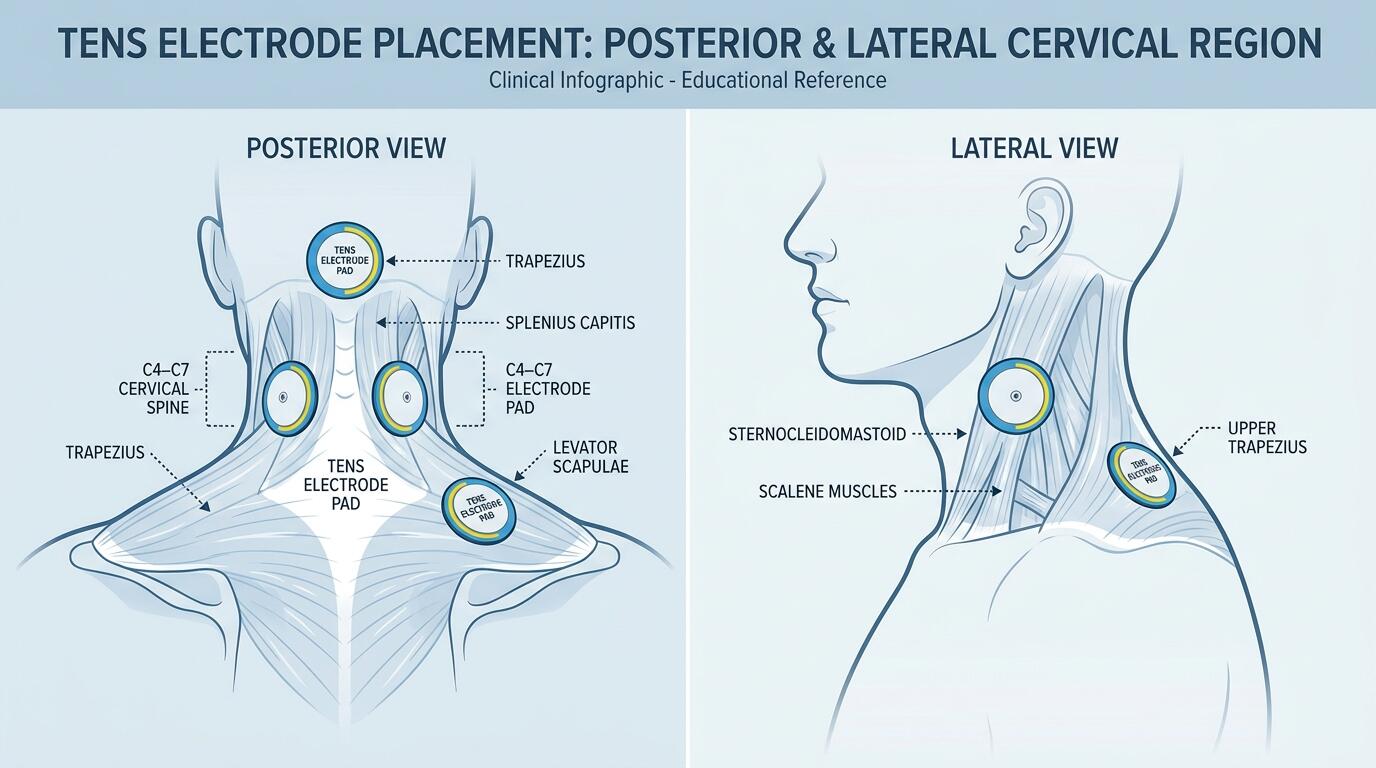
ALT: Diagram showing TENS electrode placement on cervical spine and upper trapezius for neck decompression pain management routine
Advanced Considerations for Cervical Decompression at Home
Special Situations Worth Understanding
Managing Acute Flare-Ups Within a Long-Term Routine
Even well-designed home therapy programs encounter acute symptom flares — periods where pain intensity increases suddenly, often triggered by poor sleep position, unusual activity, or stress. During a flare, it is generally advisable to reduce or pause traction entirely and rely on TENS therapy's analgesic properties to manage acute pain before gradually reintroducing decompression sessions. Applying ice to the cervical region for the first 48 hours of a flare before transitioning to gentle heat can also help modulate the inflammatory response.
Cervical Decompression During Post-Surgical Recovery
Patients recovering from anterior cervical discectomy and fusion (ACDF) or other cervical spine procedures require a physician's explicit clearance before using any traction device. The surgical stabilization timeline varies considerably depending on procedure type and individual healing, and premature introduction of traction forces can compromise surgical outcomes. TENS therapy, however, is often introduced earlier in the post-surgical timeline under physical therapist guidance for soft tissue pain management, making it a particularly valuable tool during the recovery period before traction is permissible.
Common Misconceptions to Address
A widespread misunderstanding is that more traction force equals faster results. In reality, excessive traction — particularly in the cervical region — can aggravate nerve irritation and even cause ligamentous strain. The evidence base for cervical traction consistently supports low-force, sustained application over high-force, short-duration sessions.
Another common misconception is that TENS therapy "cures" the underlying structural problem. TENS is a highly effective pain management and muscle relaxation tool, but it works most powerfully as part of a comprehensive program that addresses posture, movement habits, sleep ergonomics, and the physical dimensions of cervical alignment — areas where a consistent cervical decompression routine makes the crucial difference.
Frequently Asked Questions FAQ
Q1: How do I know if a neck decompression device is right for my specific condition?
The most reliable way to determine whether cervical traction is appropriate is to obtain an imaging-based diagnosis (X-ray or MRI) and review it with a physician or physical therapist. Conditions like cervical disc herniation, foraminal stenosis, and spondylosis frequently respond well to home decompression therapy when introduced correctly. However, certain diagnoses — including spinal instability, severe osteoporosis, and advanced cord compression — require direct clinical management. A brief professional consultation protects you from inappropriate use and helps you design a program with realistic expectations and safe parameters.
Q2: Is it safe to combine TENS therapy with cervical neck decompression in the same session?
Most practitioners recommend using TENS therapy after — rather than simultaneously with — cervical traction, for two practical reasons. First, the mechanics of most cervical decompression devices make simultaneous electrode placement awkward or impossible. Second, the window immediately following traction, when muscles are most relaxed, tends to produce the strongest analgesic response to TENS stimulation. Starting TENS within 10–15 minutes of completing a decompression session is a widely accepted and clinically reasonable practice for managing cervical pain in home routines.
Q3: How long does it typically take to notice results from a consistent cervical decompression routine?
Most users engaged in a structured cervical decompression routine — combining traction sessions with TENS therapy and appropriate mobility work — report meaningful improvement in pain intensity and range of motion within two to four weeks of consistent daily or near-daily practice. Structural changes, such as reduced disc protrusion confirmed on imaging, occur over longer timelines of weeks to months and are typically assessed in clinical follow-up rather than through symptom experience alone. Consistency matters far more than individual session intensity in determining long-term outcomes.
Summary
Cervical compression and neck pain are complex problems that deserve thoughtful, multi-dimensional solutions. The best neck decompression device for home use is not a single magic tool — it is the right combination of mechanical traction, targeted electrotherapy, and consistent practice woven into a sustainable daily routine.
Three core principles stand out from everything covered in this guide:
- Match device selection to diagnosis: Inflatable collars, over-the-door traction, and posture pump devices each serve distinct populations. Understanding your specific condition — ideally with professional guidance — prevents misuse and accelerates recovery.
- Layer electrotherapy for amplified results: TENS devices address the neurological and muscular dimensions of cervical pain that traction alone cannot fully resolve. Used consistently after decompression sessions, quality TENS therapy extends relief, reduces muscle re-guarding, and supports long-term functional recovery.
- Commit to a structured cervical decompression routine: Sporadic use produces sporadic results. A realistic weekly schedule that integrates mobility warm-up, traction, TENS, and progressive muscle reconditioning creates the cumulative benefit that transforms a pain management strategy into lasting rehabilitation.
The path to meaningful, drug-free neck pain relief is available to you at home — you simply need the right tools and a plan worth following.
Ready to take control of your pain relief and muscle health from the comfort of home? Explore iStim's full range of professional-grade TENS, EMS, and Kegel devices at https://istim.com/ and find the right drug-free solution tailored to your needs. Join over 20,000 satisfied customers who trust iStim for safe, effective, and clinically inspired electrotherapy.
References
- American Academy of Physical Medicine and Rehabilitation. "Neck Pain Clinical Overview."
https://www.aapmr.org/about-physiatry/conditions-treatments/pain-neuromuscular-medicine-rehabilitation/neck-pain - National Institute of Neurological Disorders and Stroke (NINDS). "Low Back Pain Fact Sheet — Cervical Spine."
https://www.ninds.nih.gov/health-information/patient-caregiver-education/fact-sheets/low-back-pain-fact-sheet - Cochrane Library. "Traction for Low-Back Pain with or without Sciatica and Cervical Traction Evidence Review."
https://www.cochranelibrary.com/ - Mayo Clinic. "Cervical Spondylosis — Diagnosis and Treatment."
https://www.mayoclinic.org/diseases-conditions/cervical-spondylosis/diagnosis-treatment/drc-20370792 - American Physical Therapy Association (APTA). "Clinical Practice Guidelines for Neck Pain."
https://www.apta.org/patient-care/evidence-based-practice-resources/cpg
Note: Standards and clinical guidelines may be updated. Please check the latest official documents or consult professional advisors for current recommendations.
About iStim
iStim is a Los Angeles-based electrotherapy brand specializing in professional-grade TENS, EMS, and Kegel devices engineered for safe and effective home use, backed by ISO-certified Taiwanese manufacturing and a growing community of 20,000+ trusted customers.
© iStim. All rights reserved. This article is intended for informational purposes only and does not constitute medical advice. Always consult a qualified healthcare professional before beginning any electrotherapy or pain management program.
Leave a comment