

Best Cervical Traction Device for Home Use
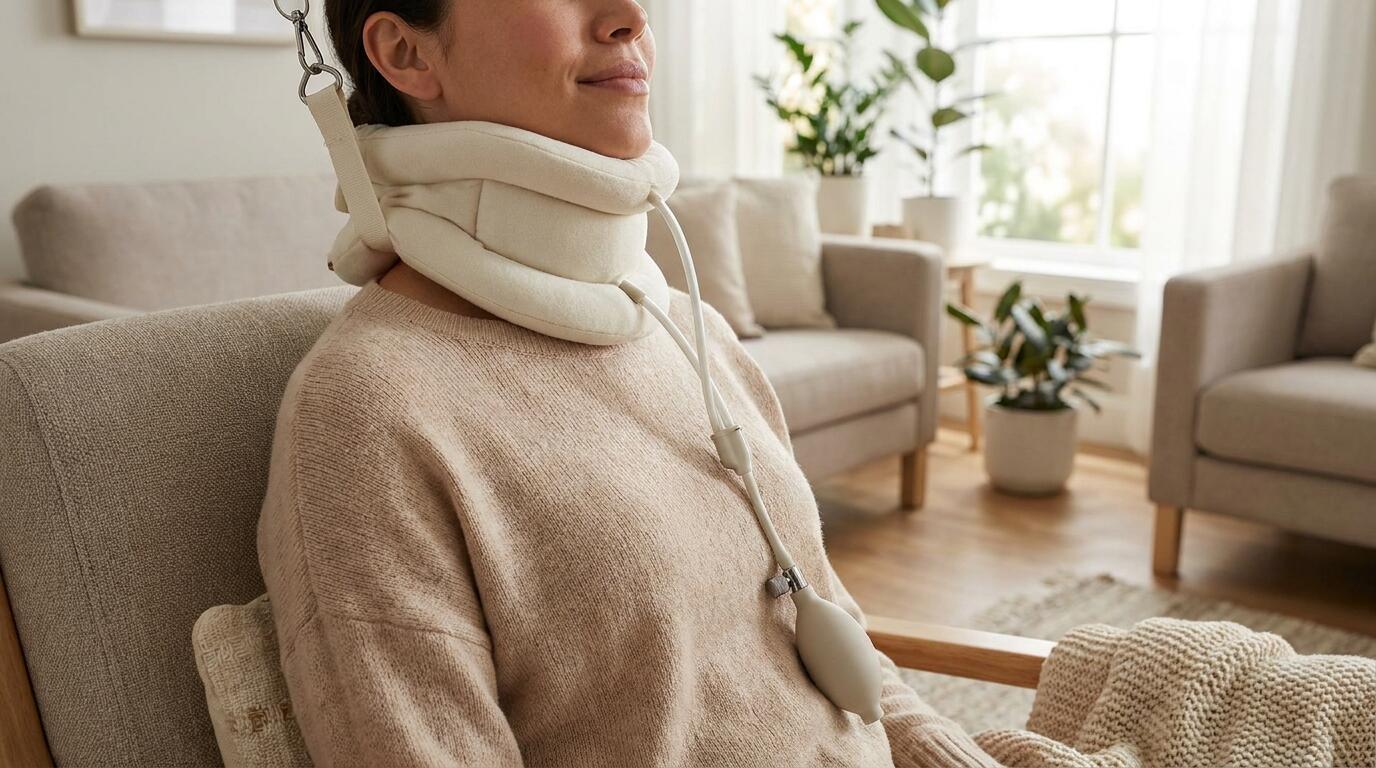
ALT: Person using the best cervical traction device for home use to relieve neck pain and stiffness
What Is the Best Cervical Traction Device for Home Use — and Why It Matters
Key Conclusion: Finding the best cervical traction device for home use can be a transformative step for anyone living with chronic neck pain, herniated discs, or cervical muscle tension. These devices gently decompress the cervical spine, reduce nerve impingement, and promote natural healing — all without medication. When chosen thoughtfully and used consistently, a quality home cervical traction tool offers a clinically grounded, cost-effective alternative to frequent in-office therapy sessions.
Neck pain is one of the most prevalent musculoskeletal complaints worldwide, affecting people across virtually every age group and lifestyle. Whether it stems from prolonged screen time, a previous injury, degenerative disc changes, or postural imbalances, cervical discomfort has a way of disrupting daily life in profound ways — from interrupted sleep to reduced concentration and limited mobility.
The good news is that home-based cervical traction has emerged as a practical, evidence-supported approach that puts relief directly in the hands of the individual. Paired with complementary modalities like TENS therapy, it forms a powerful non-pharmacological strategy for long-term neck health management.
Who Should (and Should Not) Use a Cervical Traction Device at Home
✅ Applicable Scenarios:
- Individuals experiencing chronic neck pain due to poor posture, prolonged desk work, or screen-related tension
- People recovering from cervical disc herniation, nerve impingement, or mild spinal compression as recommended by a healthcare provider
- Those with diagnosed cervical spondylosis or osteoarthritis seeking non-pharmaceutical pain management between physical therapy sessions
- Adults managing muscle stiffness and reduced range of motion in the upper cervical spine
- Patients who have already used in-clinic traction and are looking for an approved continuation of that care at home
❌ Not Applicable/Cautions:
- Individuals with cervical instability, spinal fractures, tumors, or recent neck surgery — cervical traction can worsen these conditions significantly
- People with advanced osteoporosis, rheumatoid arthritis affecting the cervical spine, or vascular conditions such as vertebrobasilar insufficiency should avoid traction without explicit medical clearance
- Pregnant individuals should consult their OB-GYN and a physiotherapist before using any traction or decompression device
- Anyone experiencing acute, severe, or worsening neurological symptoms (numbness, shooting pain down the arms) should seek medical evaluation before attempting home traction
Understanding Cervical Traction: The Science and the Need
The cervical spine is an engineering marvel — seven vertebrae supporting the weight of the head while enabling a wide range of motion. But this complexity also makes it vulnerable. According to the World Health Organization, neck pain ranks among the leading causes of disability globally, with significant economic and quality-of-life consequences.
Cervical traction works by applying a gentle, sustained or intermittent pulling force along the axis of the neck, creating space between vertebrae. This decompression can relieve pressure on intervertebral discs, reduce nerve root compression, stretch tight paraspinal muscles, and improve circulation to affected tissues.
Traditionally, traction was delivered exclusively in clinical settings — physical therapy clinics, chiropractic offices, or pain management centers — using motorized tables or pulley systems. These sessions are effective but come with significant practical limitations: scheduling constraints, transportation requirements, ongoing co-pays, and the sheer inconvenience of multiple weekly appointments.
Over the past decade, the home traction market has expanded considerably, driven by both technological improvements and a broader consumer shift toward proactive, self-managed healthcare. Devices range from simple over-the-door neck traction units and inflatable cervical collars to more sophisticated mechanical and air-powered apparatuses designed to replicate clinical-grade decompression at home.
For those also managing associated neck pain through electrotherapy, iStim's professional-grade TENS devices offer a complementary pathway — delivering drug-free electrical nerve stimulation that can be used before or after traction to help manage pain signals and support muscle relaxation. You can explore the full range at istim.com.
What separates a good home traction device from a mediocre one comes down to several interrelated factors: adjustability of force and angle, comfort and material quality, ease of use without assistance, durability, and clinical backing. Understanding these factors is what allows consumers to make a truly informed choice — rather than simply defaulting to the most marketed option.
How to Choose and Use the Best Cervical Traction Device at Home
Getting Started: A Three-Step Practical Guide
Step 1: Consult Your Healthcare Provider Before Beginning
Before purchasing or using any cervical traction device, schedule a brief consultation with your physician, physical therapist, or chiropractor. Share your diagnosis or symptom history, and ask specifically whether home cervical traction is appropriate for your condition. Your provider can advise on the appropriate traction force range, session duration, frequency, and positioning angle. This step typically takes one appointment and is essential for ensuring that your chosen device will help — not harm. Do not skip this step, especially if your neck symptoms involve radiating pain or neurological changes.
Step 2: Select the Right Type of Device for Your Needs and Lifestyle
With your provider's guidance in hand, evaluate devices based on your specific condition, living situation, and ability to self-apply. There are three primary categories to consider: over-the-door pulley systems, inflatable cervical collars, and mechanical or adjustable foam-based traction units. Each has distinct advantages in terms of traction angle, portability, ease of use, and force control. Look for devices with documented clinical use, adjustable traction levels, and ergonomic design. This research phase may take a few days, but it is well worth the investment of time. Allow approximately 30–60 minutes to compare options and verify product credentials.
Step 3: Establish a Consistent, Graduated Home Routine
Once your device arrives, begin with the lowest recommended traction force and shortest session duration advised by your provider — typically starting conservatively and building gradually over one to two weeks. Use the device in a stable, quiet environment where you can remain still. Many users find sessions of 10–20 minutes to be effective when performed consistently. Track your symptoms in a simple journal: note pain levels, any discomfort during or after sessions, and changes in mobility. Report any unusual symptoms to your healthcare provider immediately. Consistency, patience, and proper positioning are the three pillars of effective home traction therapy.
Comparing the Main Types of Home Cervical Traction Devices
Choosing the right device type requires understanding how each approach works, who it is designed for, and where its limitations lie. The table below offers a practical comparison of the three most common home-use categories based on general clinical and consumer knowledge.
| Comparison Dimension | Over-the-Door Pulley Traction | Inflatable Cervical Collar | Mechanical/Adjustable Traction Unit |
|---|---|---|---|
| Traction Force Control | Adjustable via weights or straps | Limited; pressure varies with inflation | Precise, often dial- or lever-adjusted |
| Ease of Self-Application | Moderate; requires setup and positioning | High; easy to put on and inflate | Moderate to High depending on design |
| Portability | Low; requires a door and setup | High; compact and travel-friendly | Moderate; some units are bulky |
| Clinical Replication | Moderate; angle and force depend on user setup | Low; primarily supportive rather than decompressive | High; closest to in-clinic motorized traction |
| Best Suited For | Budget-conscious users with provider guidance | Mild tension relief and postural support | Users seeking consistent, measurable outcomes |
| Comfort Level | Variable; halter can cause jaw discomfort | Generally comfortable | High when properly fitted |
| Cost Range | Generally lower | Generally lower to moderate | Generally moderate to higher |
Understanding this landscape allows you to align the device category with your clinical needs, budget, and lifestyle — rather than choosing based on marketing alone.
Key Features to Look For in a Quality Cervical Traction Device
Adjustable Traction Angle and Force
One of the most clinically significant features in any home cervical traction device is the ability to adjust both the angle of pull and the amount of force applied. Research in physical therapy suggests that different cervical conditions respond better to different angles — for example, flexion-based traction (pulling the chin slightly toward the chest) tends to be more effective for disc-related issues, while neutral or slight extension may benefit facet joint conditions.
A device that locks you into a single, non-adjustable angle limits its therapeutic versatility and may not deliver optimal outcomes for your specific pathology. When evaluating options, prioritize units that allow at least some degree of angle customization and clearly defined force increments.
Material Quality and Ergonomic Design
Comfort is not merely a luxury in cervical traction — it is a therapeutic necessity. If a device is uncomfortable to wear or causes secondary tension in the jaw, shoulders, or scalp, users are unlikely to use it consistently. And consistency, above all else, drives outcomes.
Look for devices made with hypoallergenic, skin-safe materials, well-padded contact surfaces, and secure but non-restrictive fastening systems. Over-the-door halter designs in particular vary enormously in quality; higher-end models use padded occipital and chin supports that distribute force more evenly, minimizing the jaw discomfort that plagues lower-quality versions.
Safety Mechanisms and Clear Usage Guidelines
The best home traction devices are built with safety as a foundational design principle. This includes clearly defined maximum force limits, easy-release mechanisms that allow users to quickly disengage during a session if needed, and comprehensive, professionally written usage instructions.
Devices sold without clear clinical guidance, maximum force specifications, or contraindication warnings should be approached with significant caution. Always favor brands and products that are transparent about both their capabilities and their limitations.
Complementary Use with Electrotherapy for Enhanced Results
Many physical therapists and pain specialists recommend combining cervical traction with complementary modalities for enhanced outcomes. TENS (Transcutaneous Electrical Nerve Stimulation) therapy, for example, can be used prior to a traction session to relax tight paraspinal muscles and reduce baseline pain, making the traction itself more comfortable and potentially more effective.
iStim's professional-grade TENS devices are designed with precisely this kind of multi-modal approach in mind — offering drug-free pain relief through clinically calibrated electrical stimulation, suitable for home use even without clinical supervision. Applied to the upper trapezius or cervical paraspinal muscles before traction, a TENS session can prime the tissues for better response. Learn more about iStim's TENS solutions at istim.com.
Durability and Long-Term Value
A cervical traction device is an investment in your long-term musculoskeletal health. Unlike a disposable or single-use product, a quality traction unit should be designed for sustained, repeated use over months or even years. Evaluate construction quality, the reputation of the manufacturer, availability of replacement parts, and customer service responsiveness before committing to a purchase.
Reading verified customer reviews — particularly those that describe long-term use rather than just initial impressions — is one of the most reliable ways to assess real-world durability.
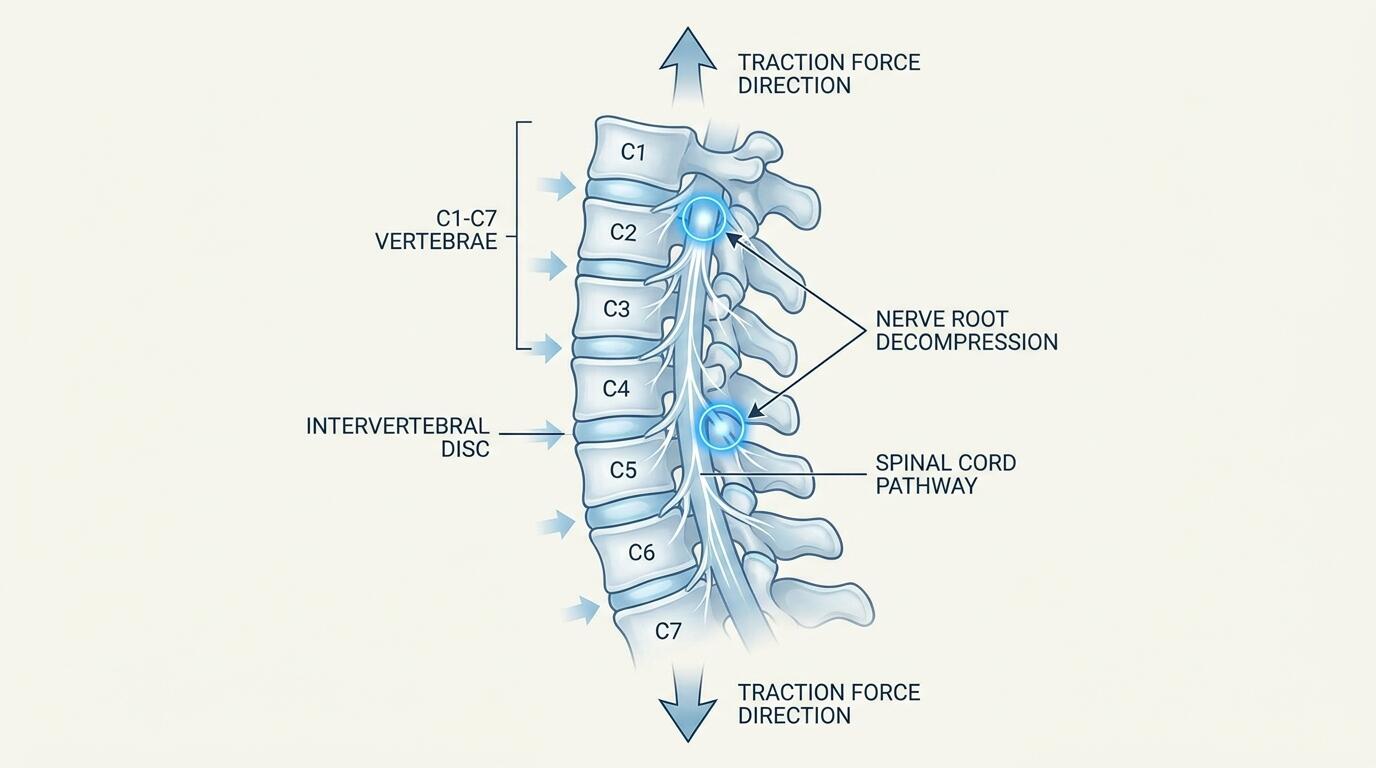
ALT: Anatomical diagram of cervical spine decompression during best home cervical traction device use, showing vertebral spacing and nerve relief
Advanced Considerations: When Home Traction Needs Extra Thought
Managing Flare-Ups During Home Traction
Some users experience a temporary increase in discomfort during the first few sessions — a phenomenon sometimes called a "traction reaction." This can result from muscles and joints adapting to new mechanical forces. In most cases, reducing the applied force and session duration resolves this quickly.
However, if sharp pain, increased numbness, or tingling in the arms worsens during or after a session, stop immediately and contact your healthcare provider. This is not a normal adaptation response and may indicate that traction is contraindicated for your specific condition, or that your positioning needs to be corrected.
Common Misconceptions About Cervical Traction
Misconception 1: "More traction force means faster results."
This is one of the most dangerous myths in home traction use. Higher force does not linearly correlate with better outcomes. Excessive force can strain ligaments, compress neural structures, or cause muscle guarding — all counterproductive. Always begin conservatively and progress only with clinical guidance.
Misconception 2: "Cervical traction permanently fixes disc herniations."
Home traction is a pain management and functional improvement tool — not a curative procedure. It can reduce disc bulge and nerve compression over time with consistent use, but it works best as part of a comprehensive rehabilitation plan that includes exercise, posture correction, and potentially other modalities like TENS or manual therapy.
Misconception 3: "Any neck pain is suitable for traction."
As outlined earlier, several cervical conditions are absolute contraindications to traction. Self-diagnosing and self-prescribing traction without professional input is a genuine safety risk. The device's effectiveness is entirely dependent on appropriate patient selection.
Integrating Home Traction into a Broader Wellness Plan
The most successful home traction users tend to be those who view it as one component of a broader, proactive approach to cervical health. This typically includes ergonomic workplace adjustments, targeted strengthening exercises for the deep neck flexors and shoulder stabilizers, regular stretching, stress management (as psychological tension often manifests in the neck and shoulders), and the strategic use of complementary devices like TENS units for ongoing pain modulation.
Frequently Asked Questions FAQ
Q1: How long does it take to see results from a home cervical traction device?
Most users who use home cervical traction consistently and correctly begin to notice meaningful improvements in pain levels and mobility within two to four weeks. However, this varies considerably based on the underlying condition, the severity of symptoms, the quality and appropriateness of the device, and adherence to proper technique. Disc-related conditions may respond more gradually than pure muscle tension. Working with a physical therapist to monitor progress objectively can help you stay on track and adjust your protocol as needed.
Q2: Is it safe to use a cervical traction device every day?
Daily use may be appropriate for some individuals — particularly those with chronic, non-acute conditions — but it is not universally recommended for everyone. Frequency should be guided by your healthcare provider based on your diagnosis and response to treatment. Many protocols suggest beginning with three to four sessions per week and adjusting from there. Rest days allow tissues to recover and adapt. Overuse can lead to ligament laxity, increased muscle tension as a protective response, or delayed soreness, so conservative progression is always the wiser approach.
Q3: How much should I expect to spend on a quality home cervical traction device?
Home cervical traction devices span a broad price range. Simple over-the-door designs are typically the most affordable entry point, while more sophisticated mechanical units with precise adjustability sit at a higher price point. When evaluating cost, consider the long-term value: a durable, clinically aligned device used consistently over months will almost always deliver better cost-per-outcome than a cheaper option replaced multiple times or abandoned due to discomfort. Always weigh initial cost against build quality, adjustability, and clinical credibility.
Summary
Home cervical traction represents one of the most accessible and evidence-informed tools available for non-pharmacological neck pain management. When approached correctly — with professional guidance, an appropriate device selection, and a consistent graduated protocol — it can meaningfully reduce pain, improve range of motion, and enhance quality of life for a broad range of cervical conditions.
Three core principles stand out from everything discussed in this article:
First, no device — however well-designed — replaces proper medical evaluation. The foundation of effective home traction is a clear clinical picture, provided by a qualified healthcare professional who can confirm its appropriateness for your specific condition.
Second, device quality and adjustability are non-negotiable. The best home cervical traction devices offer precise force control, ergonomic comfort, safety mechanisms, and clinical transparency. These features directly determine both your safety and your outcomes.
Third, cervical traction works best as part of a multi-modal approach. Integrating complementary tools — particularly TENS electrotherapy for pre-traction muscle relaxation and ongoing pain management — amplifies the benefits of each individual modality and supports more comprehensive, sustained recovery.
Whether you are managing a herniated disc, chronic postural tension, or recovering from a cervical injury, the path forward is one of informed, consistent, and patient self-care.
Ready to take control of your pain relief and muscle health from the comfort of home? Explore iStim's full range of professional-grade TENS, EMS, and Kegel devices at https://istim.com/ and find the right drug-free solution tailored to your needs. Join over 20,000 satisfied customers who trust iStim for safe, effective, and clinically inspired electrotherapy.
References
- World Health Organization. "Musculoskeletal Conditions: Neck Pain Overview".
https://www.who.int/news-room/fact-sheets/detail/musculoskeletal-conditions - National Institute of Neurological Disorders and Stroke (NINDS). "Low Back Pain Fact Sheet — Neck and Cervical Spine Information".
https://www.ninds.nih.gov/health-information/patient-caregiver-education/hope-through-research/low-back-pain-hope-through-research - Cheng, C.H., et al. "Cervical Traction: Effect on the Clinical Outcomes of Patients with Cervical Disc Herniation." Journal of Physical Therapy Science, 2014.
https://www.ncbi.nlm.nih.gov/pmc/articles/PMC4181992/ - American Physical Therapy Association (APTA). "Clinical Practice Guidelines for Neck Pain".
https://www.apta.org/ - MedlinePlus — U.S. National Library of Medicine. "Neck Pain and Cervical Traction Therapy".
https://medlineplus.gov/neckinjuriesanddisorders.html
Note: Standards and clinical guidelines may be updated; please verify references against the latest official documents or consult a qualified healthcare professional.
About iStim
iStim is a Los Angeles-based electrotherapy brand specializing in professional-grade TENS, EMS, and Kegel devices engineered for safe and effective home use, backed by ISO-certified Taiwanese manufacturing and a growing community of 20,000+ trusted customers.
© iStim. All rights reserved. This article is intended for informational purposes only and does not constitute medical advice. Always consult a qualified healthcare professional before beginning any electrotherapy or pain management program.
Leave a comment