

Best 4 Channel TENS Unit: Why Channels Matter
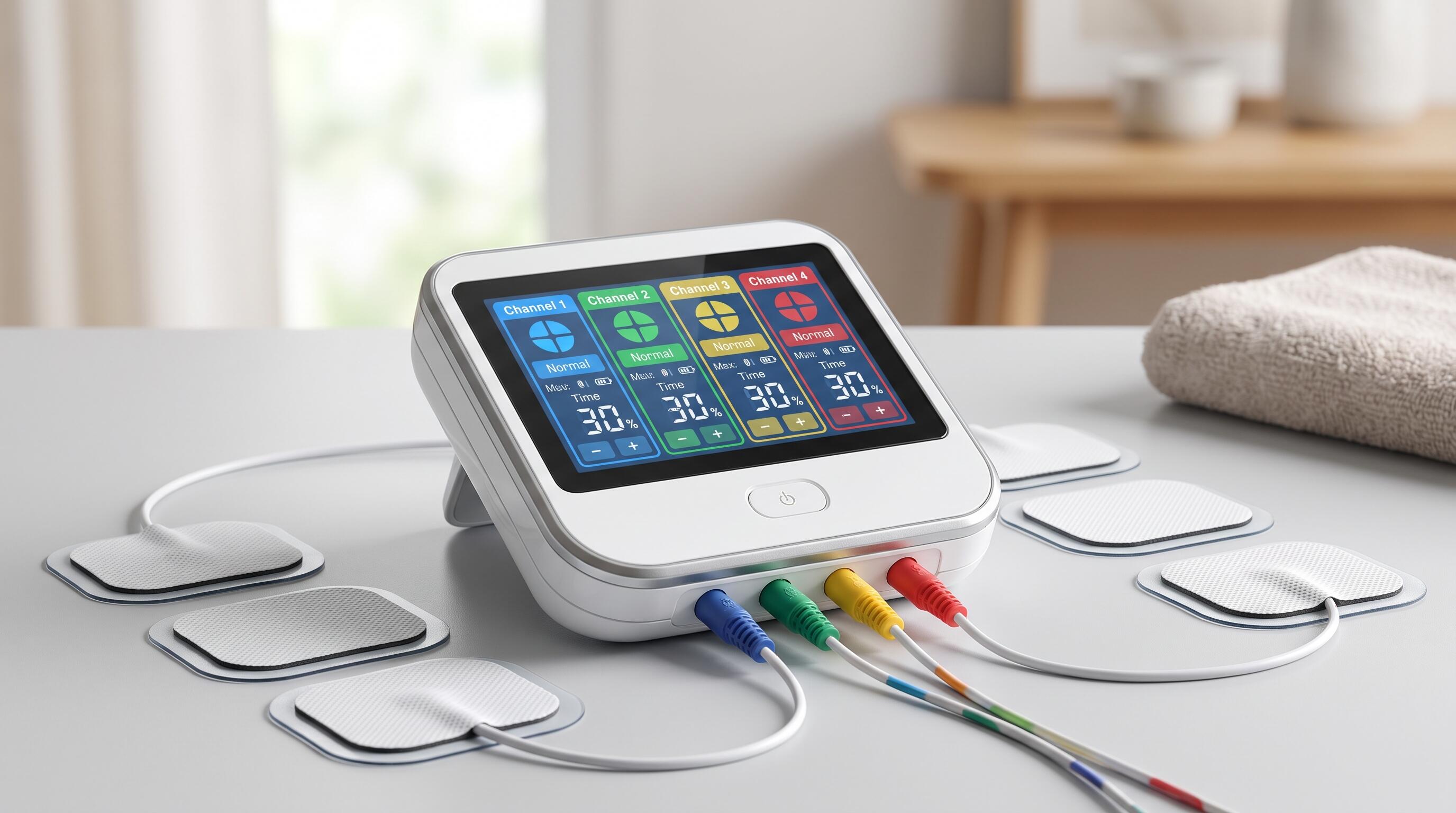
ALT: Best 4 channel TENS unit for simultaneous dual-area pain relief and muscle stimulation at home
Why the Number of Channels in a TENS Unit Changes Everything
Key Conclusion: When it comes to effective electrotherapy at home, not all TENS units are created equal. The best 4 channel TENS unit gives you the ability to target multiple muscle groups or pain zones at the same time — doubling your treatment coverage without doubling your therapy time. For chronic pain sufferers, post-injury recovery patients, and fitness enthusiasts alike, four-channel capability represents a meaningful clinical upgrade that translates directly into faster, more comprehensive relief.
If you've been researching TENS therapy, you've likely noticed that devices come in different channel configurations — 2-channel, 4-channel, and occasionally more. But what does that actually mean in practice? A channel, in the context of TENS and EMS devices, refers to an independent output circuit that controls a pair of electrode pads. More channels mean more electrode pairs operating simultaneously, each potentially targeting a different area of the body.
For someone dealing with lower back pain that radiates down through the hips and thighs, or a fitness enthusiast wanting to work both the quadriceps and hamstrings in a single session, the difference between two channels and four channels is the difference between a partial solution and a comprehensive one. This article breaks down exactly why channel count matters, how to choose the right device, and what makes a four-channel TENS unit worth considering as your go-to home therapy tool.
Who Should Consider a 4-Channel TENS Unit
✅ Applicable Scenarios:
- Individuals experiencing pain or tension across multiple body regions simultaneously (e.g., lower back and legs, shoulders and neck)
- Post-surgery or post-injury rehabilitation patients who need to stimulate larger muscle groups bilaterally (both sides of the body at once)
- Fitness enthusiasts and athletes using a 4 channel muscle stimulator for EMS-based recovery sessions covering multiple muscle groups
- Postpartum women managing pelvic floor recovery alongside lower back discomfort
- Aging adults dealing with widespread chronic pain conditions such as fibromyalgia or arthritis who benefit from broader coverage
- Busy individuals seeking time-efficient therapy sessions that cover more ground in fewer minutes
❌ Not Applicable / Cautions:
- Individuals with implanted electronic devices such as pacemakers or defibrillators — electrotherapy is contraindicated without explicit physician approval
- People with active infections, open wounds, or broken skin in the area where electrode pads would be placed
- Pregnant women should not use TENS over the abdomen or lower back without direct medical supervision
- Those without a basic understanding of electrode placement — improper use of multiple channels simultaneously increases the importance of following placement guidelines correctly
Understanding TENS Therapy and Why Channel Count Is More Than a Spec
Transcutaneous Electrical Nerve Stimulation — commonly known as TENS — works by delivering low-voltage electrical impulses through electrode pads placed on the skin. These impulses interfere with pain signals traveling to the brain while simultaneously encouraging the release of endorphins, the body's natural pain-relieving chemicals. The result is drug-free, non-invasive pain relief that has been used in clinical settings for decades.
The growing demand for at-home electrotherapy has been remarkable. Millions of people living with chronic pain conditions, sports injuries, and the physical demands of aging are turning to TENS devices as an alternative — or complement — to pharmaceutical pain management. According to research published in clinical rehabilitation literature, TENS has demonstrated effectiveness for conditions ranging from osteoarthritis and lower back pain to postoperative recovery and neuropathic discomfort.
But here's where most consumer guides fall short: they focus almost entirely on intensity levels, waveform modes, or device portability. They rarely explain that channel count is arguably the most functionally important specification on the device. A single channel controls one pair of electrodes. Two channels control two pairs. Four channels control four pairs — meaning you can place up to eight electrode pads on your body and run all four circuits independently, simultaneously.
This matters because pain and muscle dysfunction rarely respect the boundaries of a single isolated region. Lower back pain often co-occurs with hip tightness. Shoulder injuries frequently involve both the rotator cuff and the upper trapezius. Post-surgical rehabilitation of the knee often requires addressing both the quadriceps and the hamstrings. A two-channel device addresses one region at a time. A four-channel device can address two bilateral regions — or four independent areas — within a single session.
The clinical implications of this are significant. Broader coverage means more complete pain management. Bilateral simultaneous stimulation is often preferred in physical therapy settings because it promotes balanced muscle activation and reduces compensation patterns. For home users replicating clinic-quality therapy, having four channels isn't a luxury — it's a meaningful functional advantage.
Choosing and Using the Best 4 Channel TENS Unit: A Practical Guide
Three-Step Quick Start for Your 4-Channel TENS Device
Step 1: Map Your Treatment Zones
Before you power on the device, spend two to three minutes identifying which areas of your body need treatment. With four independent channels, you have the flexibility to address up to four separate zones — or to concentrate multiple electrode pairs on a single large muscle group for deeper stimulation. Draw or mentally map where each pair of electrode pads will go, keeping in mind that pads should be placed on clean, dry skin and should never be positioned across the chest or near the face or head. Clear planning before placement reduces setup time and ensures each channel is working purposefully.
Step 2: Connect Electrodes and Configure Channels Independently
Attach your electrode pads to the lead wires and connect each lead to its designated channel output on the device. Most quality four-channel TENS units allow you to adjust intensity independently per channel — this is important because different body regions may require different stimulation levels. For example, a large muscle group like the lower back may tolerate higher intensity, while a more sensitive area like the calf may need lower output. Start each channel at its lowest setting and increase gradually until you feel a comfortable tingling sensation — never to the point of pain. This step typically takes five to ten minutes the first time as you calibrate each channel.
Step 3: Select Your Mode and Begin Your Session
With pads placed and channels calibrated, select the appropriate therapy mode for your goal. TENS modes are generally used for pain relief and work by targeting nerve pathways, while EMS modes are designed to stimulate muscle contractions for recovery and strengthening. Many four-channel devices offer multiple pre-programmed modes. Start with a standard pain relief mode for 20–30 minutes if you're new to TENS therapy. Observe how each treatment zone responds and adjust intensity as needed during the session. After your session, power off the device before removing pads, and store electrodes properly to maintain adhesion quality.
Comparing TENS Unit Configurations: 1-Channel vs. 2-Channel vs. 4-Channel
Understanding the difference between device configurations helps you make an informed purchase decision. The table below outlines how channel count affects real-world therapy capability.
| Comparison Dimension | 1–2 Channel TENS | Standard 2-Channel TENS | 4-Channel TENS |
|---|---|---|---|
| Electrode Pairs | 1–2 pairs (2–4 pads) | 2 pairs (4 pads) | 4 pairs (up to 8 pads) |
| Simultaneous Treatment Areas | 1 region | 1–2 regions | Up to 4 independent regions |
| Bilateral Treatment | Not typically supported | Limited | Fully supported |
| Time Efficiency | Lower — requires repositioning | Moderate | High — covers more in one session |
| Complexity of Use | Simple | Moderate | Moderate — requires more planning |
| Best For | Spot treatment, occasional use | General home pain relief | Chronic pain, rehab, athletic recovery |
| Typical User Profile | Beginners, light users | Everyday home users | Active rehab patients, chronic pain sufferers |
This comparison makes clear that four-channel devices are not simply "more expensive two-channel units" — they represent a genuinely different class of therapy capability. For users with complex or widespread pain, the upgrade is functionally significant.
How to Maximize Results: Channel Strategy, Placement, and Modes
Independent Channel Control Is the Key Feature to Prioritize
Not all four-channel devices are equal in terms of control. Some lower-end units offer four channels but require all channels to operate at the same intensity — which limits their practical utility. When evaluating the best 4 channel TENS unit, prioritize devices that allow each channel to be adjusted independently. This gives you the flexibility to customize stimulation based on the sensitivity and size of each treatment area, mimicking the kind of personalized adjustment that physical therapists make during in-clinic sessions.
Bilateral Placement for Symmetrical Recovery
One of the most clinically valuable applications of a four-channel device is bilateral treatment — placing electrode pairs symmetrically on both sides of the body. For example, placing two channels on the left and right sides of the lower back simultaneously promotes balanced muscle stimulation and avoids the asymmetrical compensation patterns that can develop when you treat only one side at a time. Athletes recovering from training and post-surgical patients rebuilding strength benefit particularly from this approach.
For a real-world example: consider someone recovering from a knee replacement who needs to rebuild quadriceps strength on the surgical side while also managing pain and swelling. A four-channel device allows them to use two channels for EMS muscle stimulation on the quad, while simultaneously using the remaining two channels for TENS pain relief above and below the knee joint — all in a single session.
Combining TENS and EMS Modes Across Channels
Some advanced four-channel units allow different modes to operate on different channel pairs simultaneously. This means you can run a TENS pain-relief protocol on channels 1 and 2 while running an EMS muscle-stimulation protocol on channels 3 and 4. For post-workout recovery, this is particularly valuable — you can address soreness and inflammation in one muscle group while actively promoting recovery contractions in another. Always consult your device manual and, when appropriate, a physical therapist to ensure you're using the correct mode combinations safely.
Electrode Pad Quality and Longevity
With four channels comes the need for more electrode pads — up to eight at once. Pad quality matters significantly for both efficacy and safety. High-quality pads maintain consistent adhesion, deliver even current distribution, and minimize skin irritation. Over time, pads lose their adhesive properties and should be replaced regularly. iStim designs its electrode pads for reliable, comfortable contact that supports consistent signal delivery across all active channels.
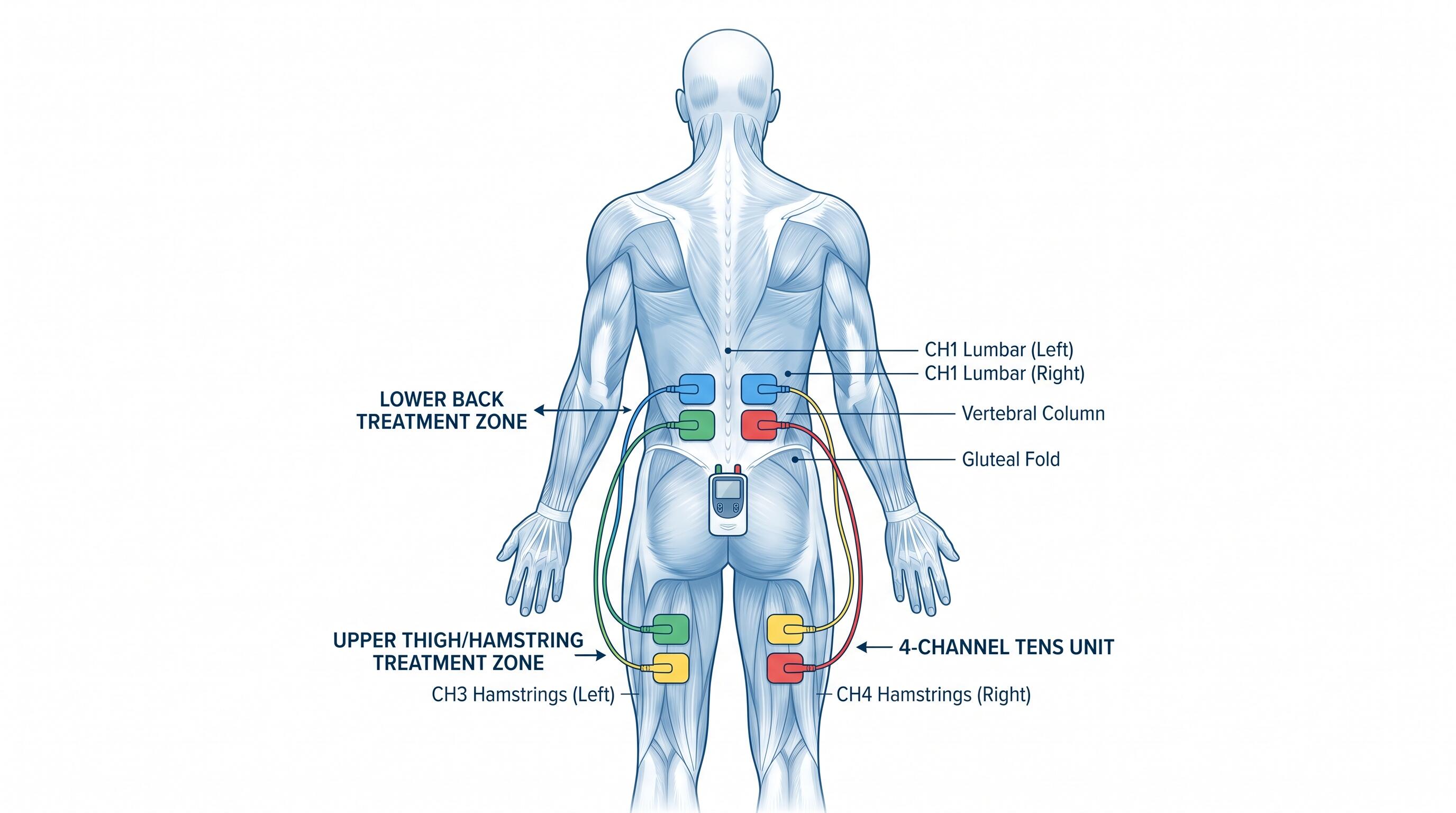
ALT: Four-channel TENS unit electrode placement for bilateral lower back and thigh pain relief and muscle stimulation
Advanced Considerations: Getting the Most From Multi-Channel Therapy
Handling Special Situations
When pain is asymmetrical: Not all users have symmetric pain patterns. With independent channel control, you can run higher intensity on one side and lower on the other — essential for conditions where one side of the body is more acutely affected than the other. This personalization is one of the defining advantages of a multi-channel device.
When transitioning from clinic to home: Patients who have completed formal physical therapy often want to continue their progress at home. A four-channel TENS unit is the closest analog to clinical equipment in a home-friendly form factor. If your physical therapist used multi-channel stimulation during your sessions, ask them for guidance on replicating that protocol at home with your device.
For progressive fitness applications: EMS-based muscle stimulation using a four-channel device can be incorporated into warm-up and recovery routines. Applying stimulation to multiple muscle groups pre-exercise may enhance neuromuscular activation, while post-exercise EMS has been associated with reduced delayed onset muscle soreness (DOMS) in research literature.
Common Misconceptions
"More channels always means more intensity": Channel count and intensity are completely separate parameters. Four channels does not mean more powerful stimulation per electrode — it means more simultaneous treatment coverage. Each channel's intensity is set independently.
"Four-channel devices are too complicated for home use": Modern four-channel TENS units designed for home use are built with intuitive interfaces, clear labeling, and preset modes that remove the technical complexity. With a brief learning curve — typically one or two sessions — most users become comfortable with multi-channel setup.
"I don't need four channels unless I'm a serious athlete": Chronic pain sufferers, postpartum women, and aging adults often have the most to gain from four-channel devices because their conditions frequently involve multiple body regions simultaneously.
Frequently Asked Questions FAQ
Q1: How do I know which is the best 4 channel TENS unit for my specific condition?
The best four-channel TENS unit for you depends on your primary goal — pain relief, muscle recovery, or both. Look for a device with independent channel intensity control, multiple preset modes covering both TENS and EMS protocols, and high-quality electrode compatibility. iStim's professional-grade devices are designed to meet these criteria with clinic-inspired engineering. When in doubt, consult your healthcare provider or physical therapist to align your device selection with your treatment needs.
Q2: Is it safe to run all four channels simultaneously on different body areas?
For most healthy adults without contraindications, running all four channels simultaneously is safe when electrode pads are placed correctly according to the manufacturer's guidelines. Avoid crossing current paths over the heart, spine, or head. Always start at low intensity and increase gradually. If you experience unusual discomfort, muscle cramping beyond expected stimulation, or skin irritation, stop use and consult a healthcare professional. Safety improves significantly when users take time to learn proper placement for each channel.
Q3: How long does a typical four-channel TENS session take, and how often should I use it?
Most standard TENS therapy sessions last between 20 and 40 minutes. With a four-channel device, you can complete what might otherwise require multiple separate sessions in a single sitting, making therapy more time-efficient. For chronic pain management, daily sessions are commonly recommended; for muscle recovery, use is typically tied to your exercise schedule. Always follow the guidelines provided with your specific device and consider periodic check-ins with a physical therapist or physician to assess your progress and adjust frequency as needed.
Summary
Choosing the right electrotherapy device comes down to understanding what your body actually needs — and then finding a device capable of meeting those needs efficiently and safely. Three core insights from this guide stand out:
Channel count directly determines treatment coverage. A four-channel TENS unit doesn't just offer marginally better results than a two-channel device — it enables a fundamentally different kind of therapy. Bilateral treatment, multi-region coverage, and combined TENS/EMS protocols become possible when you have four independent output circuits at your disposal.
Independent channel control is the defining quality differentiator. The best four-channel devices let you customize stimulation per area, per session, per need. This is what separates a truly professional-grade home device from a basic consumer unit that happens to have more connections.
Multi-channel therapy is not just for athletes or clinics. Chronic pain patients, postpartum women, aging adults, and anyone managing complex physical recovery stand to benefit enormously from the broader, more personalized coverage that four channels provide.
The next step is straightforward: evaluate your treatment goals, assess which body regions need consistent attention, and choose a device that gives you the control and coverage to address them comprehensively.
Ready to take control of your pain relief and muscle wellness — naturally and effectively? Explore iStim's full range of professional-grade TENS, EMS, and Kegel devices at https://istim.com/ and find the right solution tailored to your needs. Join over 20,000 satisfied customers who trust iStim for drug-free, clinically inspired therapy from the comfort of home.
References
- National Institutes of Health — National Library of Medicine. "Transcutaneous Electrical Nerve Stimulation (TENS) for Pain Management".
https://www.ncbi.nlm.nih.gov/books/NBK537188/ - American Physical Therapy Association. "Electrophysical Agents in Physical Therapist Practice".
https://www.apta.org/ - Mayo Clinic. "TENS (Transcutaneous Electrical Nerve Stimulation)".
https://www.mayoclinic.org/tests-procedures/tens/about/pac-20393886 - Cochrane Database of Systematic Reviews. "Transcutaneous electrical nerve stimulation (TENS) for chronic pain in adults".
https://www.cochranelibrary.com/ - U.S. Food & Drug Administration (FDA). "General Wellness: Policy for Low Risk Devices".
https://www.fda.gov/regulatory-information/search-fda-guidance-documents/general-wellness-policy-low-risk-devices
Note: Standards and clinical recommendations may be updated. Please check the latest official documents or consult professional advisors for the most current guidance.
About iStim
iStim is a Los Angeles-based electrotherapy brand specializing in professional-grade TENS, EMS, and Kegel devices engineered for safe and effective home use, backed by ISO-certified Taiwanese manufacturing. With a growing community of 20,000+ Amazon customers, iStim is committed to making drug-free pain relief and muscle stimulation accessible to everyone.
© iStim. All rights reserved. This article is intended for informational purposes only and does not constitute medical advice. Always consult a qualified healthcare professional before starting any new therapy or treatment program.
Leave a comment