

A Home Neck Pain Routine: Cervical Traction + TENS + Stretching Protocol
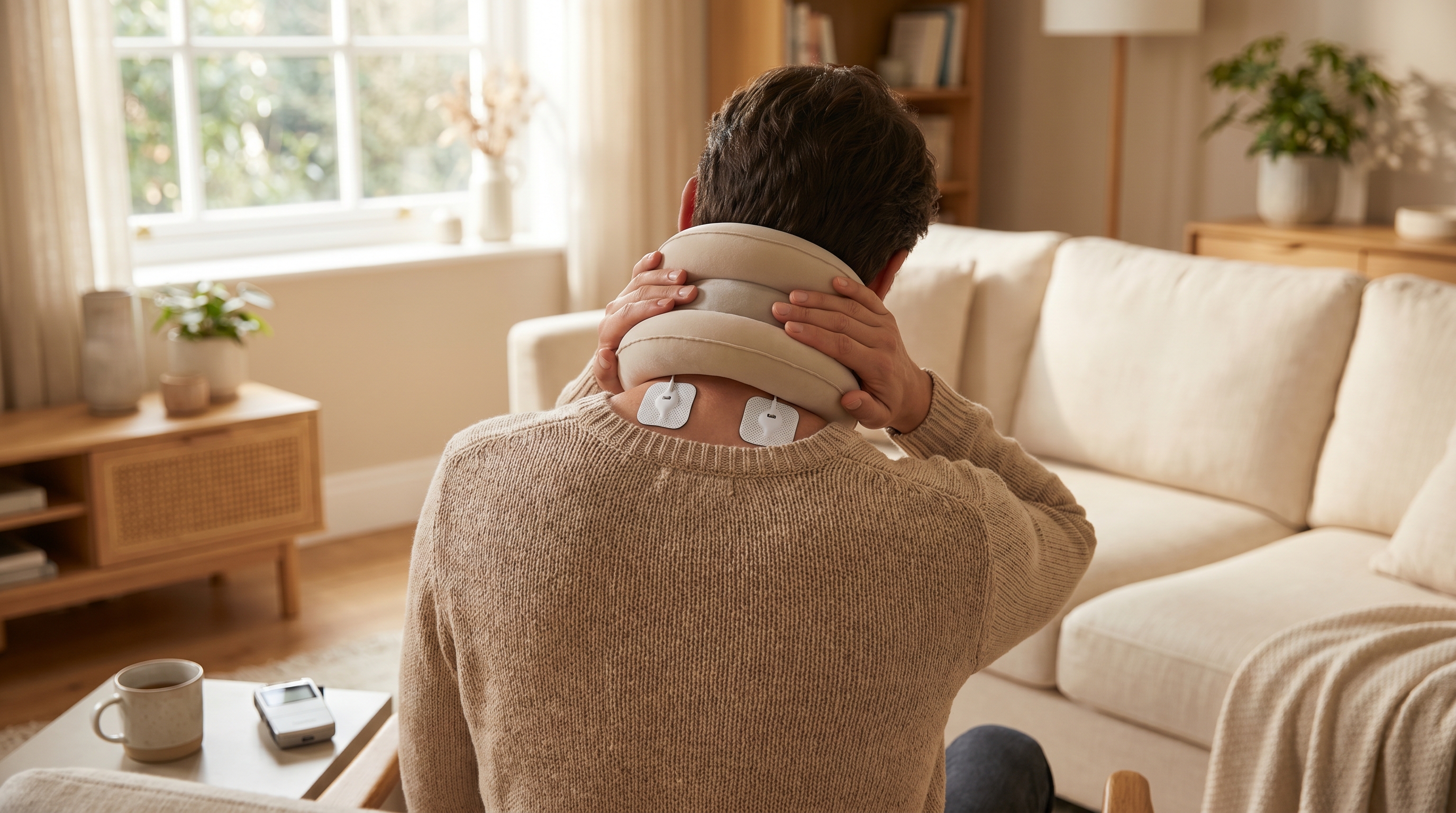
ALT: Home neck pain routine combining cervical traction, TENS therapy, and stretching for drug-free cervical pain relief
Why Your Neck Keeps Hurting — And What a Smarter Home Routine Can Do About It
Key Conclusion: Chronic neck and cervical pain affects millions of adults, yet most people cycle through temporary fixes without addressing the root causes. A structured home routine that combines cervical traction, TENS therapy, and targeted stretching can interrupt the pain-tension cycle, decompress compressed discs, and restore mobility — all without relying on medication. This three-modality approach is emerging as one of the most effective, evidence-supported strategies for drug-free neck pain management at home.
Neck pain is deceptively common. Whether it stems from hours spent at a desk, poor sleeping posture, a previous injury, or a chronic condition like cervical spondylosis, that persistent stiffness and ache at the base of your skull can drain your energy and limit your daily function. The frustrating reality is that most people reach for pain relievers or spend money on repeated massage appointments — solutions that offer temporary relief but rarely address what's driving the discomfort.
The good news is that home-based cervical care has evolved significantly. With the right combination of cervical traction to decompress the spine, TENS (Transcutaneous Electrical Nerve Stimulation) to interrupt pain signals, and deliberate stretching to restore flexibility and muscle balance, you can build a routine that delivers real, lasting results. This guide walks you through exactly how to do it — safely, effectively, and on your own schedule.
Who Should Follow This Protocol — And Who Should Proceed with Caution
✅ Applicable Scenarios:
- Adults experiencing chronic neck stiffness, tension headaches, or mild cervical disc compression from desk work or poor posture
- Post-injury or post-physical-therapy patients cleared by their provider to continue self-managed cervical care at home
- Athletes and active individuals managing cervical strain from training, contact sports, or overhead movements
- Individuals with diagnosed cervical spondylosis or early-stage degenerative disc changes looking for non-pharmaceutical daily management
- Anyone transitioning from clinical physical therapy to an independent home maintenance routine
❌ Not Applicable/Cautions:
- Individuals with severe cervical instability, recent spinal surgery, or fractures — traction and electrical stimulation should not be applied without direct medical clearance
- People with active cancer in the cervical region, implanted electronic devices (such as pacemakers), or open wounds/skin conditions at electrode placement sites should avoid TENS therapy without consulting a physician
- Pregnant individuals should consult their healthcare provider before using any cervical traction device or electrical stimulation near the neck and upper spine
- Those experiencing radiating arm pain, numbness, or weakness that is new or worsening should seek a medical evaluation before beginning any home cervical protocol
Understanding the Cervical Pain Cycle: Why One Solution Is Never Enough
Neck pain rarely has a single cause. For most sufferers, it exists within a feedback loop: tight, overworked muscles create compression on cervical joints and discs, which triggers pain signals, which causes the surrounding muscles to guard and contract further — tightening the loop. Understanding this cycle is the key to breaking it.
Cervical compression is at the heart of many neck complaints. The cervical spine consists of seven vertebrae stacked with small cushioning discs between them. When posture is poor — as it often is with prolonged sitting or "tech neck" — these discs bear uneven pressure, and the facet joints lose their ideal alignment. Over time, this contributes to stiffness, reduced range of motion, and nerve irritation that can radiate into the shoulders and upper arms.
This is where cervical traction becomes valuable. By gently elongating the cervical spine, traction creates a temporary decompressive effect — slightly widening the disc space and reducing pressure on spinal nerves. Clinical physical therapists have used traction for decades, and portable home traction devices now make it accessible for daily or near-daily use. Research published by the National Institutes of Health has indicated that mechanical traction combined with exercise therapy can produce meaningful short- to medium-term improvements in cervical radiculopathy symptoms.
Pain signals, however, are not purely mechanical. Even when structural compression is addressed, the nervous system can remain in a sensitized, overactive state — continuing to broadcast pain even after the physical trigger has been reduced. This is precisely where TENS therapy plays a critical role. To understand the science behind it, What Is TENS Therapy and How Does It Relieve Pain Without Drugs? provides an excellent foundation — explaining how electrical stimulation modulates pain perception through both the gate control theory and endorphin release mechanisms.
Completing the loop is targeted stretching. Tight suboccipital muscles at the base of the skull, shortened pectorals that pull the shoulders forward, and weak deep cervical flexors that fail to support the head — these muscular imbalances both cause and perpetuate cervical pain. Stretching alone cannot resolve them, but as part of a multi-modal protocol performed after traction and TENS have primed the tissues, it can be remarkably effective.
The convergence of these three approaches is not accidental — it mirrors what evidence-based physical therapy programs do in clinical settings, translated into a practical, repeatable home format.
The Complete Home Cervical Protocol: Step-by-Step
Three-Step Quick Start
Step 1: Cervical Traction (10–15 Minutes)
Begin your session with cervical traction to create disc space and reduce nerve root compression before any other modality is applied. Use a home cervical traction device — either an over-door pulley system or an inflatable cervical collar — according to the manufacturer's instructions. Start with minimal traction force and build gradually over several sessions. Keep your head in a neutral or very slightly flexed position (not extended). Most individuals begin to feel relief within five to ten minutes. Discontinue immediately if you experience increased pain, tingling, or dizziness, and consult a healthcare provider.
Step 2: TENS Therapy (20–30 Minutes)
Immediately following traction, while your cervical tissues are decompressed and more receptive, apply your TENS device. Place electrode pads on either side of the cervical spine — never directly over the spine itself — targeting the paraspinal muscles and the upper trapezius. If you're selecting a device, the TENS Unit Buyer's Guide: What to Look for in a Home Electrotherapy Device can help you identify the right unit for cervical and upper back use. Begin at a low intensity and increase gradually to a comfortable, non-painful level. A session of 20 to 30 minutes is typically sufficient for effective pain modulation. iStim's professional-grade TENS devices offer multiple preset programs specifically designed to support pain relief applications like this.
Step 3: Targeted Cervical Stretching (10–15 Minutes)
With pain signals temporarily modulated and muscles more relaxed from TENS, perform your stretching sequence while the window of opportunity is open. Move through each stretch slowly and intentionally, holding each position for 20 to 30 seconds and repeating two to three times per side. The sequence below covers the key muscle groups involved in cervical pain. This final step locks in the mobility gains created by traction and capitalizes on the muscle relaxation achieved through electrical stimulation.
How the Three Modalities Compare for Cervical Pain Management
Different neck pain sufferers will have different needs, and understanding how each modality contributes — and where it has limitations — helps you use the protocol more strategically. The table below compares the three core components.
| Comparison Dimension | Cervical Traction | TENS Therapy | Cervical Stretching |
|---|---|---|---|
| Primary Mechanism | Mechanical decompression of disc space and facet joints | Electrical interruption of pain signals via nerve modulation | Lengthening shortened muscles; improving range of motion |
| Pain Relief Speed | Moderate — relief builds during and after session | Fast — many users feel relief within minutes of starting | Gradual — cumulative benefit over consistent practice |
| Best For | Disc compression, nerve root irritation, cervical radiculopathy | Acute and chronic pain flares, muscle tension headaches, post-traction comfort | Postural correction, muscle imbalance, long-term mobility improvement |
| Requires Equipment | Yes — traction device needed | Yes — TENS unit and electrode pads | No — bodyweight only |
| Can Be Used Daily | Yes, with gradual build-up | Yes — safe for daily home use | Yes — recommended daily |
| Complementary Role in Protocol | Opens the session; prepares tissues | Bridges traction and stretching; reduces pain sensitivity | Closes the session; consolidates gains |
Detailed Stretching Sequence for Cervical Pain Relief
Once your TENS session concludes, your muscles are primed and your nervous system is in a more receptive state. Move immediately into this stretching sequence for maximum benefit.
Suboccipital Release (Base of Skull)
The suboccipital muscles — four small but powerful muscles at the junction of skull and cervical spine — are chronically overworked in forward-head posture. Begin by sitting or lying down with your head in neutral. Gently tuck your chin toward your chest (chin tuck), feeling a lengthening sensation at the base of your skull. Hold for 20 to 30 seconds. This movement also activates the deep cervical flexors, which are typically weakened in people with chronic neck pain.
Perform 3 repetitions. Many people feel an almost immediate sense of decompression from this simple movement when performed after traction and TENS.
Upper Trapezius and Levator Scapulae Stretch
The upper trapezius runs from the base of your skull to your shoulder, and the levator scapulae connects the cervical spine to the shoulder blade. Both are notorious "tension holders" that shorten in response to stress and poor posture.
Sit upright. Gently tilt your right ear toward your right shoulder while keeping your left shoulder relaxed and down. For a deeper stretch targeting the levator scapulae, rotate your chin slightly toward your right armpit. Hold 20 to 30 seconds per side, 2 to 3 repetitions. Never pull your head with your hand — use gravity and breath to guide the stretch.
Scalene Stretch
The scalenes run along the sides of the neck and can compress the brachial plexus nerve bundle when tight — contributing to arm tingling and shoulder tension. Gently tilt your head to one side, then slightly rotate it upward to bias the anterior or middle scalene. A gentle hand placed (not pulling) on your temporal bone can increase the stretch. Hold 20 to 30 seconds per side.
Pectoral Doorway Stretch
Forward-head posture is almost always accompanied by shortened pectorals pulling the shoulders inward. Stand in a doorway with forearms resting on the frame, elbows at shoulder height. Lean gently forward until you feel a stretch across the front of the chest and shoulders. Hold 20 to 30 seconds, 2 to 3 repetitions. Releasing this anterior tension is critical to allowing the cervical spine to move back into a more vertical, balanced alignment.
Deep Cervical Flexor Activation (Endurance Component)
Rather than a passive stretch, this is an active stabilization exercise that retrains the deep neck muscles. Lie on your back with your knees bent. Perform a gentle chin tuck (as above), then lift your head approximately one to two centimeters off the surface, keeping the chin tucked. Hold for 5 to 10 seconds. Repeat 8 to 10 times. This is the movement equivalent of core stabilization for the neck, and it's consistently included in evidence-based cervical rehabilitation programs.
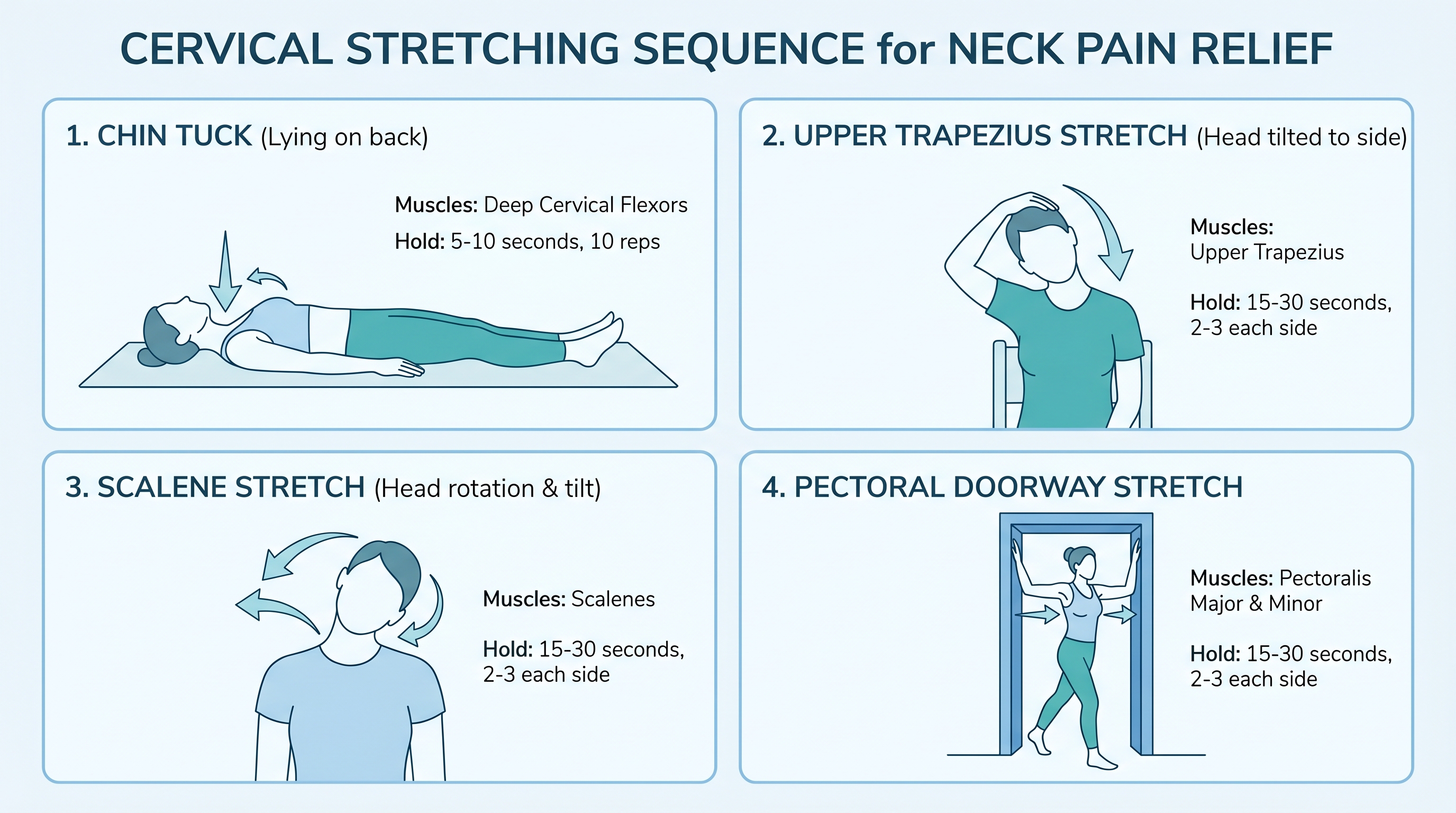
ALT: Step-by-step cervical stretching routine for home neck pain relief, including chin tuck, upper trapezius stretch, scalene stretch, and pectoral doorway stretch
Advanced Considerations: Optimizing Your Cervical Routine Over Time
Adjusting TENS Electrode Placement for Cervical Radiculopathy
When cervical pain radiates into the shoulders, upper arms, or involves nerve compression symptoms, electrode placement strategy matters more. In addition to placing pads on either side of the cervical paraspinal muscles, some users find benefit from adding pads along the upper trapezius or just below the base of the skull (avoiding direct contact with the carotid arteries and throat). If you're new to electrode placement for neck applications, reviewing resources like How to Use a TENS Unit for Chronic Back Pain: Electrode Placement Guide can offer transferable guidance, as the principle of paraspinal placement applies across the spine.
Common Misconception: "Traction Alone Will Fix My Disc"
Cervical traction is a valuable tool, but it is not a cure. It creates a temporary mechanical environment that can reduce pain and nerve irritation — but without addressing the muscular imbalances and movement patterns that caused the problem, compression will return. This is why the full three-modality protocol is significantly more effective than traction in isolation. Think of traction as opening a window; TENS and stretching are what you do while the window is open.
Misconception: "More Intensity Is Better with TENS"
Many first-time TENS users assume higher intensity equals better results. In fact, the therapeutic sweet spot for pain relief is typically a strong but comfortable sensation — one you can feel clearly but that causes no pain, muscle jumping, or discomfort. For cervical applications especially, keeping intensity conservative protects sensitive cervical structures and prevents reflex muscle guarding that could counteract the relaxation you're trying to achieve.
When to Reassess with a Professional
If you've followed this protocol consistently for four to six weeks and pain is not improving — or if you experience new symptoms such as increasing arm weakness, difficulty with fine motor control, or loss of bladder/bowel control — seek immediate medical evaluation. These can indicate cord compression that requires clinical intervention beyond home therapy.
Frequently Asked Questions FAQ
Q1: How often should I perform this cervical traction, TENS, and stretching routine for the best results?
Most individuals benefit from performing this full protocol three to five times per week, with rest days interspersed to allow tissue recovery. Daily TENS and stretching sessions are generally safe for most people, while cervical traction frequency should build gradually — starting with three sessions per week and progressing as your body adapts. Consistency over four to eight weeks is where most users report meaningful improvements in pain levels, range of motion, and daily comfort. Always listen to your body and reduce frequency if soreness increases.
Q2: Is TENS therapy safe to use on the neck area, and are there any special precautions?
TENS therapy is generally considered safe for neck and cervical use when applied correctly. The critical safety rules are: never place electrode pads directly over the spine, throat, or carotid arteries; never use TENS if you have a pacemaker or implanted electronic device; and always start at the lowest intensity, building gradually. iStim's professional-grade TENS devices are built to deliver consistent, controlled output — making them well-suited for sensitive areas like the cervical spine when used according to the device instructions.
Q3: How long does it typically take to see results from a combined cervical pain home routine?
Many users notice immediate post-session relief — particularly after TENS therapy — from the very first use. However, meaningful structural improvement in cervical mobility, reduction in chronic stiffness, and long-term pain reduction typically require four to eight weeks of consistent practice. The combination of traction, TENS, and stretching accelerates this timeline compared to any single modality used alone. If you're looking for the best TENS device for nerve pain relief to complement your cervical routine, iStim's lineup at istim.com offers professional-grade options designed for home users.
Summary
Chronic neck pain doesn't have to be managed with medication or expensive clinic visits alone. A structured home routine that integrates three proven modalities — cervical traction, TENS therapy, and targeted stretching — addresses the full pain cycle: mechanical compression, nervous system sensitization, and muscular imbalance.
The three core takeaways from this protocol are:
- Sequence matters. Traction first opens disc space, TENS then modulates pain signals, and stretching capitalizes on the relaxed, decompressed state to restore mobility. Each step amplifies the next.
- Consistency delivers results. Unlike one-off treatments, this routine builds cumulative benefit over weeks. Tissues become more flexible, pain thresholds improve, and postural muscles grow stronger.
- Professional-grade equipment makes a difference. Using a reliable, consistent TENS device — not a low-quality generic unit — ensures you're delivering the therapeutic electrical parameters that actually move the needle on pain relief. For a comprehensive understanding of how TENS works at the neurological level, What Is EMS (Electrical Muscle Stimulation) and How Is It Different from TENS? clarifies the distinction between modalities and helps you choose the right therapy for your specific needs.
Your next step is simple: identify which component of the protocol you're currently missing, and start there. If you don't yet have a TENS device, that's your most impactful first investment for cervical pain relief at home.
Ready to Build Your Home Cervical Pain Routine?
Ready to take control of your pain relief and muscle recovery — naturally and without medication? iStim offers a full range of professional-grade TENS, EMS, and Kegel devices designed for effective, safe home therapy trusted by thousands of real users. Explore the complete lineup and find the right device for your needs at https://istim.com/.
References
- National Institute of Neurological Disorders and Stroke (NINDS). "Neck Pain Fact Sheet".
https://www.ninds.nih.gov/health-information/patient-caregiver-education/fact-sheets/neck-pain-fact-sheet - National Center for Biotechnology Information, U.S. National Library of Medicine. "Cervical Traction for Managing Neck Pain: A Systematic Review".
https://www.ncbi.nlm.nih.gov/pmc/articles/PMC4095614/ - American Physical Therapy Association (APTA). "Neck Pain Clinical Practice Guidelines".
https://www.apta.org/patient-care/evidence-based-practice-resources/clinical-practice-guidelines - National Institutes of Health — National Center for Complementary and Integrative Health (NCCIH). "Chronic Pain: What You Need to Know".
https://www.nccih.nih.gov/health/chronic-pain-what-you-need-to-know - PubMed Central. "Transcutaneous Electrical Nerve Stimulation (TENS) for Chronic Pain — Cochrane Review Overview".
https://pubmed.ncbi.nlm.nih.gov/
Note: Standards and clinical guidelines may be updated; please check the latest official documents or consult a qualified healthcare professional for current recommendations.
About iStim
iStim is a Los Angeles-based electrotherapy brand specializing in professional-grade TENS, EMS, and Kegel devices engineered for home use, backed by ISO-certified Taiwanese manufacturing and a growing community of 20,000+ satisfied Amazon customers. iStim is dedicated to empowering individuals with drug-free, clinically inspired solutions for pain relief, muscle stimulation, and pelvic floor health.
Disclaimer: This article is provided for informational and educational purposes only and does not constitute medical advice. Always consult a qualified healthcare professional before starting any new therapy or treatment program. © iStim. All rights reserved. Visit istim.com for more information.
Leave a comment