

4-Channel TENS/EMS: How to Treat Multiple Body Areas Simultaneously

ALT: Person using a 4-channel TENS EMS device to treat lower back, shoulder, knee, and leg pain simultaneously at home
Why 4-Channel TENS/EMS Changes Everything About Multi-Area Pain Relief
Key Conclusion: A 4-channel TENS/EMS device allows you to place up to four independent electrode pairs on different muscle groups or pain points at the same time — delivering simultaneous, targeted electrical stimulation across your entire body in a single session. For anyone managing chronic pain, recovering from injury, or rebuilding muscle strength, this capability dramatically reduces treatment time while improving coverage, consistency, and therapeutic outcomes without a single pill.
If you've ever wished you could treat your lower back and your knee at the same time — or address both shoulder tension and calf cramps in one sitting — you're not alone. Single-channel TENS devices have long required patients to treat one area, then move electrodes, then treat the next. That means doubling or tripling your session time just to cover common multi-site pain patterns.
Multi-channel electrotherapy changes that equation entirely. By running up to four independent output channels simultaneously, these devices let you design a whole-body treatment plan that mirrors how a physical therapist might approach your session — addressing the root problem and the compensatory areas that develop around it. For busy adults managing chronic pain, post-surgical recovery, or muscle conditioning alongside demanding daily schedules, that efficiency isn't just convenient — it's clinically meaningful.
Who Should Consider a 4-Channel TENS/EMS Device?
✅ Applicable Scenarios:
- Chronic pain sufferers dealing with multiple simultaneous pain sites, such as lower back pain combined with hip or leg discomfort from compensatory posture
- Post-injury or post-surgery rehabilitation patients who need to stimulate weakened muscles while managing pain in adjacent areas
- Fitness enthusiasts and athletes performing EMS-assisted muscle conditioning on large bilateral muscle groups (both quads, both hamstrings) in a single session
- Women using combined pelvic floor and lower back stimulation protocols for postpartum recovery and core rehabilitation
- Anyone using TENS for pain management who wants to reduce total daily treatment time without sacrificing coverage
❌ Not Applicable/Cautions:
- Individuals with implanted electronic devices such as pacemakers or defibrillators — electrical stimulation is contraindicated and should never be used without physician clearance
- People with open wounds, skin infections, or damaged skin in electrode placement areas — electrodes should never be placed on compromised tissue
- Pregnant women (unless specifically directed by a healthcare provider) should avoid electrical stimulation across the abdominal or pelvic region
- Those with undiagnosed pain conditions — always consult a qualified healthcare professional before beginning any electrotherapy program
- Children under 18 without direct medical supervision
Understanding the Science Behind Multi-Channel Electrotherapy
TENS (Transcutaneous Electrical Nerve Stimulation) and EMS (Electrical Muscle Stimulation) are two of the most clinically validated forms of non-pharmaceutical pain management and muscle rehabilitation available today. While they operate on related principles, they serve distinct purposes — and understanding both helps you get the most from a 4-channel device.
TENS works by delivering low-voltage electrical impulses through the skin to interrupt pain signals traveling along nerve pathways. According to the gate control theory of pain, these impulses effectively "close the gate" on pain transmission to the brain, providing relief that can last well beyond the treatment session itself. Research consistently demonstrates TENS as a viable option for managing chronic pain conditions including osteoarthritis, fibromyalgia, neuropathic pain, and musculoskeletal pain — all without the side effects associated with long-term medication use.
EMS, by contrast, targets muscle tissue directly. By mimicking the electrical signals the nervous system uses to initiate muscle contractions, EMS can activate muscle fibers that may be weakened, inhibited, or difficult to voluntarily engage — particularly after surgery, injury, or prolonged immobilization. This makes EMS invaluable for muscle re-education, strength rebuilding, and recovery acceleration.
The significance of combining these modalities across four independent channels lies in a concept clinicians call global treatment approach. Pain rarely exists in isolation. A person with chronic lower back pain typically develops compensatory tension in the glutes, hamstrings, and even the upper back. Treating only the primary site while ignoring these connected areas is like fixing a leak in one pipe while others slowly corrode. A 4-channel device allows you to simultaneously address the entire kinetic chain — delivering pain relief to the primary site while stimulating and rehabilitating the surrounding muscle groups that bear the compensatory load.
The growing consumer electrotherapy market reflects this shift in thinking. More home users than ever before are moving beyond basic single-pad TENS units toward professional-grade, multi-channel systems that replicate clinical protocols. This is precisely where iStim's approach — bringing ISO-certified, clinical-quality technology into the home setting — positions users for genuinely superior outcomes.
How to Use a 4-Channel TENS/EMS Device for Whole-Body Treatment
Three-Step Quick Start for Multi-Area Therapy
Step 1: Map Your Treatment Zones
Before attaching a single electrode, take five minutes to identify your primary pain or rehabilitation sites and any secondary areas of compensatory tension. Sketch or mentally note which four zones need attention — for example: lower back (channels 1–2) and both outer thighs (channels 3–4). Pairing channels to bilateral muscle groups ensures balanced stimulation. This planning step is often skipped by beginners but makes the difference between scattered results and a coherent therapeutic protocol. Estimated time: 5 minutes.
Step 2: Prepare Skin and Place Electrodes
Clean and dry each treatment area thoroughly before applying electrode pads. Proper skin preparation improves conductivity, enhances comfort, and extends electrode pad lifespan significantly. Place electrode pairs parallel to the muscle fibers for EMS protocols, or on either side of the pain site for TENS applications. Ensure pads lie flat against the skin with no lifted edges. Never place electrodes across the heart, on the throat or carotid artery area, over the spine, or on the head or face. Estimated time: 5–10 minutes.
Step 3: Program Channels and Begin Session
Start each channel at the lowest intensity setting, then gradually increase until you feel a strong but comfortable sensation — never painful. For TENS pain relief, you should notice a tingling or buzzing sensation without muscle contraction. For EMS muscle stimulation, you should feel clear, rhythmic contractions. Adjust channels independently to match the sensitivity and depth of each treatment zone. A standard session typically runs 20–30 minutes per area, and with four channels running simultaneously, you're effectively completing the equivalent of a 2-hour single-channel session in one go. Monitor how your body responds and never fall asleep during active stimulation.
Comparing Treatment Approaches: Single-Channel vs. Dual-Channel vs. 4-Channel TENS/EMS
Choosing the right device configuration depends on your specific health goals, the complexity of your pain patterns, and how much time you can realistically dedicate to daily therapy. Here's how the three primary options compare:
| Comparison Dimension | Single-Channel | Dual-Channel (2-Ch) | 4-Channel |
|---|---|---|---|
| Simultaneous treatment areas | 1 site per session | 2 sites per session | Up to 4 sites per session |
| Session efficiency | Low — must relocate pads for each area | Moderate | High — full-body protocols in one session |
| Ideal use case | Isolated, single-site pain (e.g., wrist, elbow) | Bilateral limb treatment or two-area management | Multi-site chronic pain, comprehensive rehab, athletic conditioning |
| Complexity of setup | Minimal | Low | Moderate — requires planning and more pads |
| Versatility for chronic pain | Limited | Moderate | Excellent for whole-body kinetic chain treatment |
| Suitability for post-surgical rehab | Basic | Good | Best — can address primary site and compensatory areas |
| Cost-effectiveness over time | Lower upfront, higher time cost | Balanced | Best value for users with multiple treatment areas |
For anyone managing more than one active pain site, or pursuing a structured rehabilitation program, the 4-channel configuration delivers a return on investment — both financially and therapeutically — that single or dual-channel devices simply cannot match.
Advanced Placement Strategies and Best Practices for Maximum Therapeutic Benefit
Whole-Body Protocols: Thinking Like a Physical Therapist
One of the most important shifts in mindset for home TENS/EMS users is learning to think in terms of muscle chains rather than isolated spots. When physical therapists design electrotherapy protocols, they consider the relationship between agonist and antagonist muscles, compensatory tension patterns, and the neurological pathways connecting distant body regions.
With four channels available, you have the tools to replicate this approach at home. A common example: a patient recovering from knee surgery might use channels 1–2 for quadriceps EMS (muscle re-education and strengthening) while using channels 3–4 for TENS on the medial knee joint for pain control. This dual approach simultaneously rebuilds the muscle that protects the joint while controlling the pain that would otherwise limit range of motion during rehabilitation exercises.
Managing Chronic Pain Across Multiple Sites
Can EMS devices help with chronic pain management? Yes — and the mechanism goes beyond simple muscle stimulation. Regular EMS use increases local circulation, reduces inflammation, promotes endorphin release, and prevents the muscle atrophy that frequently worsens chronic pain over time. When paired with TENS on adjacent channels, the combined effect creates a comprehensive pain management environment that addresses both the neurological pain signal and the muscular dysfunction contributing to it.
For people managing conditions like fibromyalgia, where pain is distributed across multiple body regions, the ability to address several sites in a single session without medication is genuinely life-changing. The best ways to get maximum pain relief from TENS therapy consistently involve proper electrode placement, appropriate frequency selection (higher frequencies for acute pain relief, lower frequencies for endorphin-mediated chronic pain management), and consistent daily use rather than sporadic treatment.
Pelvic Floor Rehabilitation and Women's Health Applications
For women focused on pelvic floor recovery — particularly postpartum healing or managing stress urinary incontinence — combining pelvic floor stimulation with lower back and abdominal support channels on a 4-channel device creates a holistic core rehabilitation protocol. Recommended pelvic floor devices for postpartum healing increasingly include electrical stimulation as a clinically supported modality. Internal or external pelvic floor electrodes can be assigned to one channel pair while the remaining channels address the deep lumbar muscles and glutes that form the structural foundation of the entire pelvic floor system.
Best practices for pelvic floor stimulator usage and safety tips always begin with professional guidance — ideally from a pelvic floor physical therapist who can help establish appropriate frequency, intensity, and session duration for your specific recovery stage. For postpartum users, clearance from your OB-GYN or midwife before initiating any electrical stimulation to the pelvic region is essential.
Electrode Pad Maintenance: The Overlooked Factor
Even the most sophisticated 4-channel protocol will underperform if electrode pads are worn, dry, or improperly stored. High-quality, reusable electrode pads maintain optimal adhesion and conductivity session after session when cared for correctly. After each session, reapply the protective film, store pads in a sealed bag away from heat and direct sunlight, and avoid touching the gel surface with fingers. Clean skin before every application. Well-maintained pads deliver consistent stimulation intensity — which directly impacts both comfort and therapeutic efficacy.
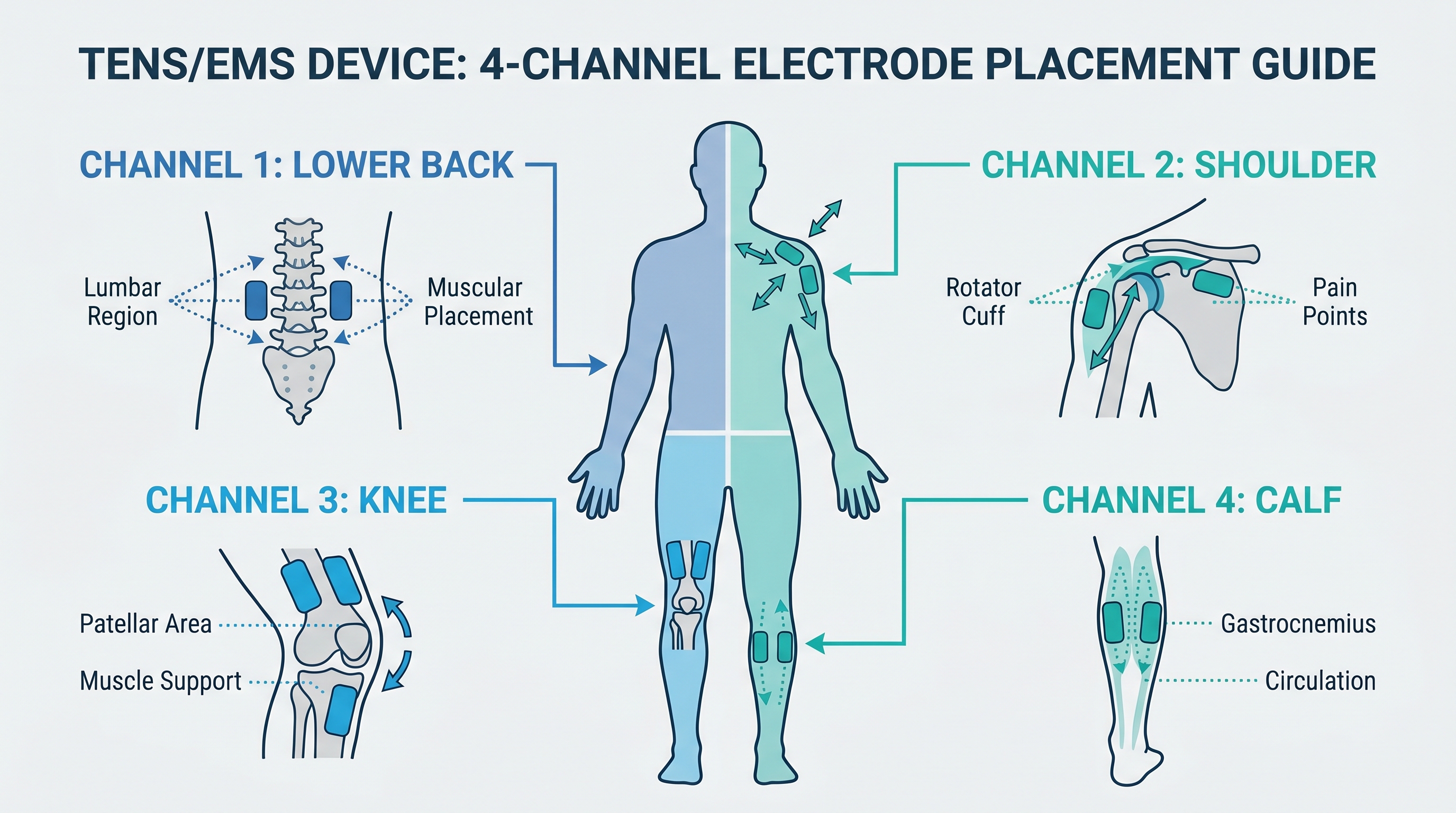
ALT: Illustrated guide showing correct 4-channel TENS EMS electrode placement on lower back, knee, shoulder, and calf for simultaneous multi-area treatment
Advanced Considerations: When and How to Optimize Your 4-Channel Protocol
Frequency and Mode Selection for Different Goals
Not all electrotherapy sessions should be programmed the same way. High-frequency TENS (typically in the range used for conventional TENS) works primarily through the gate control mechanism and is most effective for immediate, acute pain relief during a session. Low-frequency TENS (sometimes called acupuncture-like TENS) stimulates the production of endogenous opioids — your body's natural pain-relieving chemicals — making it better suited for chronic pain management with effects that accumulate over consistent use.
EMS modes, meanwhile, typically vary burst patterns and pulse widths to mimic different phases of natural muscle recruitment — from gentle warm-up contractions to high-intensity strengthening pulses. When using a 4-channel device, you can run TENS modes on channels assigned to pain management while simultaneously running EMS modes on channels targeting muscle rehabilitation — a dual-modality approach that maximizes every minute of your session.
Addressing Common Misconceptions
Misconception 1: "More intensity means more benefit."
This is one of the most common mistakes new users make. Effective TENS and EMS work within a comfortable therapeutic window — not at the maximum tolerable intensity. Forcing unnecessarily high intensity can cause skin irritation, muscle soreness, and reduced session tolerance. Start low, build gradually, and work at an intensity that feels productive and comfortable.
Misconception 2: "TENS only works during the session."
Research and clinical experience consistently show that well-administered TENS therapy can produce pain relief that extends hours beyond the treatment window, particularly with regular use over time. Consistency matters far more than intensity.
Misconception 3: "4-channel devices are too complicated for home use."
Modern professional-grade home devices are designed with intuitive controls and pre-programmed modes that guide users through safe, effective protocols. The planning step matters more than technical complexity.
Frequently Asked Questions FAQ
Q1: How do I know which channel settings to use for different body areas?
Most professional-grade 4-channel TENS/EMS devices include pre-programmed modes designed for specific body regions and therapeutic goals — such as lower back pain, shoulder tension, knee rehabilitation, or muscle conditioning. Begin with the preset mode closest to your treatment area, then fine-tune intensity independently on each channel to match local sensitivity. Consulting the device manual and, when possible, a physical therapist for initial protocol guidance will help you establish an effective and safe routine tailored to your specific needs.
Q2: Is it safe to use all four channels at the same time every day?
For most healthy adults, daily use of a 4-channel TENS/EMS device at appropriate intensity levels is considered safe and well-tolerated. However, avoid placing electrodes over the same skin area for consecutive sessions without allowing skin to rest, and always follow the session duration guidelines in your device manual. People with underlying medical conditions — particularly cardiac conditions, epilepsy, or implanted devices — must obtain physician clearance before use. Start with shorter sessions and gradually increase duration as your body adapts.
Q3: How long does it take to notice results from multi-area TENS/EMS therapy?
Timeline varies based on the condition being treated, consistency of use, and individual physiology. Many users report meaningful pain relief from TENS within the first few sessions — sometimes immediately. EMS-based muscle rehabilitation typically requires several weeks of consistent use to produce measurable strength and function improvements, aligning with the principles of progressive muscle adaptation. For chronic pain management, the cumulative benefit of daily or near-daily TENS use typically becomes most pronounced after two to four weeks of consistent treatment.
Summary
A 4-channel TENS/EMS device represents a genuine leap forward in accessible, drug-free pain management and muscle rehabilitation for home users. Three core takeaways stand out:
First, the ability to treat multiple body areas simultaneously isn't just about convenience — it's about clinical accuracy. Pain and dysfunction rarely exist in isolation, and addressing the full kinetic chain in a single session produces more comprehensive, lasting results than treating one site at a time.
Second, the combination of TENS for pain control and EMS for muscle rehabilitation on independent channels within the same session mirrors the professional approach used by physical therapists — bringing clinical-quality outcomes into the home setting without a clinic visit or a prescription.
Third, consistency and proper technique matter far more than intensity. Understanding electrode placement, mode selection, and session structure empowers you to build a protocol that adapts to your changing needs — whether you're managing a chronic condition, recovering from surgery, conditioning for athletic performance, or supporting postpartum pelvic floor healing.
The path forward is straightforward: educate yourself, plan your treatment zones, start conservatively, and build a routine you can maintain. The results, for the tens of thousands of people already using professional-grade home electrotherapy devices, speak for themselves.
Ready to take control of your pain relief and muscle health — without relying on drugs? iStim offers a full range of professional-grade TENS, EMS, and Kegel devices designed to deliver real results safely and effectively from the comfort of your home. Explore the complete lineup and find the right device for your needs at https://istim.com/.
References
- National Institute of Neurological Disorders and Stroke (NINDS). "Pain: Hope Through Research".
https://www.ninds.nih.gov/health-information/public-education/pain/pain-hope-through-research - American Physical Therapy Association (APTA). "TENS and Electrical Stimulation in Physical Therapy Practice".
https://www.apta.org/ - National Center for Complementary and Integrative Health (NCCIH), U.S. Department of Health & Human Services. "Chronic Pain: In Depth".
https://www.nccih.nih.gov/health/chronic-pain-in-depth - Johnson, M.I. (2014). "Transcutaneous Electrical Nerve Stimulation: Mechanisms, Clinical Application and Evidence." Reviews in Pain, National Library of Medicine.
https://pubmed.ncbi.nlm.nih.gov/ - American College of Sports Medicine (ACSM). "Electrical Muscle Stimulation and Exercise Science".
https://www.acsm.org/
Note: Standards and clinical guidelines may be updated. Please check the latest official documents or consult a qualified healthcare professional for the most current recommendations.
About iStim
iStim is a Los Angeles-based electrotherapy brand specializing in professional-grade TENS, EMS, and Kegel devices for home use, trusted by 20,000+ customers and manufactured to ISO-certified standards for safe, drug-free pain relief and muscle stimulation. Learn more at istim.com.
Disclaimer: This article is provided for informational and educational purposes only and does not constitute medical advice. The content is produced in partnership with iStim. Always consult a qualified healthcare professional before starting any new therapy or treatment. © iStim. All rights reserved.
Leave a comment