

2-Channel vs. 4-Channel TENS Units: Which Is Right for Your Needs?
ALT: 2-channel vs 4-channel TENS units comparison for drug-free pain relief and muscle recovery at home
Understanding 2-Channel vs. 4-Channel TENS Units: What the Difference Means for Your Pain Relief
Key Conclusion: Choosing between a 2-channel and 4-channel TENS unit can significantly impact the effectiveness of your at-home electrotherapy experience. 2-channel TENS units are ideal for targeted, localized pain relief — great for beginners and those treating a single area. 4-channel TENS units offer broader coverage and greater versatility, making them better suited for chronic pain sufferers, athletes, and post-rehabilitation patients who need to treat multiple areas simultaneously. Matching the right device to your specific needs is the cornerstone of effective, drug-free pain management.
When you're exploring TENS therapy for the first time — or upgrading your home pain management toolkit — the question of channel count is one that often creates confusion. More channels don't automatically mean better results for everyone, but they do open up meaningful possibilities for more complex therapy needs. Understanding what channels actually do, and how your personal pain profile aligns with each configuration, empowers you to make a smarter, more informed purchase.
This guide breaks down the functional differences between 2-channel and 4-channel TENS units, explores who benefits most from each, and helps you confidently identify the right device for your body and lifestyle. Whether you're managing chronic back pain, recovering from a sports injury, or simply looking for non-pharmaceutical relief, this comparison will give you the clarity you need.
Who Should Read This Guide
✅ Applicable Scenarios:
- Adults managing chronic or acute pain in one or more body areas seeking drug-free solutions
- Athletes and active individuals using electrotherapy for muscle recovery and performance support
- Post-surgery or post-injury rehabilitation patients following a physical therapist's guidance at home
- Individuals new to TENS therapy who want to understand device capabilities before purchasing
- Users currently using a 2-channel unit and wondering if upgrading to 4-channel would improve outcomes
❌ Not Applicable/Cautions:
- Individuals with implanted electronic devices such as pacemakers or defibrillators (TENS therapy is contraindicated; consult your cardiologist)
- People with epilepsy, active cancer, or open wounds at intended electrode sites — always seek medical clearance first
- Those expecting TENS therapy to replace prescribed medical treatment without professional consultation
What TENS Therapy Is and Why Channel Count Matters
Before diving into the comparison, it helps to understand the fundamental science behind electrotherapy. TENS, or Transcutaneous Electrical Nerve Stimulation, works by delivering mild electrical impulses through electrodes placed on the skin. These impulses interfere with pain signals traveling to the brain, providing relief through what's known as the gate control theory of pain — while also stimulating the release of endorphins, the body's natural painkillers.
If you're new to this therapy, What Is TENS Therapy and How Does It Relieve Pain Without Drugs? offers a thorough, beginner-friendly overview of the mechanism, safety profile, and clinical applications of TENS.
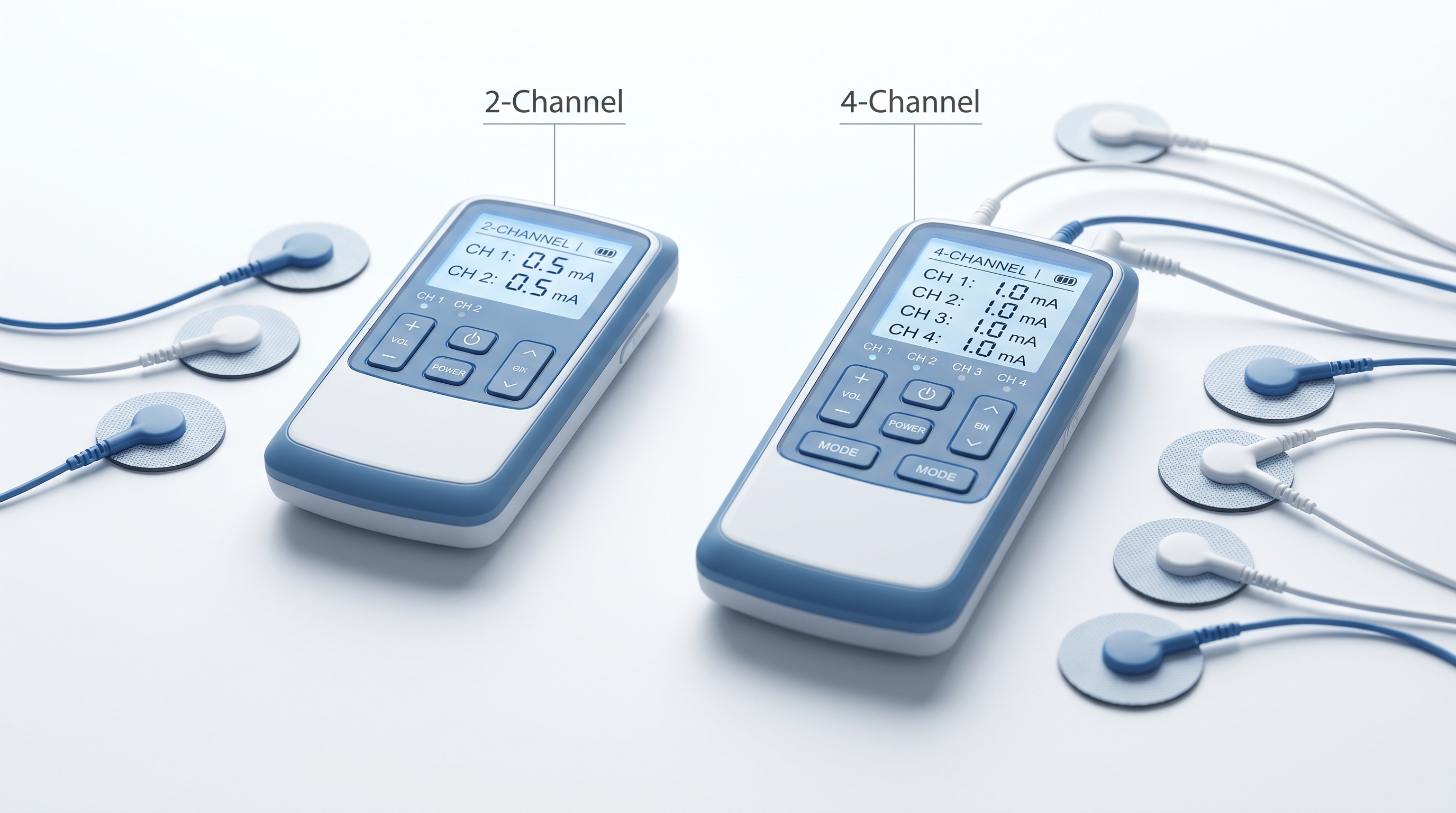
In the context of TENS devices, a channel refers to an independent electrical circuit that controls a pair of electrode pads. Each channel can typically be adjusted for intensity and sometimes for waveform or frequency independently of the others. So:
- A 2-channel TENS unit controls two pairs of electrode pads (4 pads total)
- A 4-channel TENS unit controls four pairs of electrode pads (8 pads total)
This distinction shapes the entire therapeutic experience. More channels mean more surface area coverage, greater flexibility in electrode placement, and the ability to target multiple pain zones simultaneously — all without repositioning pads mid-session.
The electrotherapy device market has grown substantially as consumers seek non-pharmaceutical alternatives to managing pain. According to research published by the National Institutes of Health and industry health reports, demand for home-use electrotherapy devices has accelerated dramatically as individuals look to reduce reliance on opioid painkillers and over-the-counter medications. This trend aligns with a broader shift toward empowered, self-directed wellness care — and understanding your device options is central to that empowerment.
For a thorough breakdown of what to look for when shopping for a home TENS device, the TENS Unit Buyer's Guide: What to Look for in a Home Electrotherapy Device is an excellent companion resource.
How to Choose Between 2-Channel and 4-Channel TENS Units
Getting Started: Three Steps to Identify Your Ideal Configuration
Step 1: Map Your Pain Profile
Before comparing devices, take 10–15 minutes to document your pain: Where does it occur? Is it localized (e.g., one knee) or widespread (e.g., lower back, both hips, and right shoulder)? Is the pain acute and occasional, or chronic and multi-site? Write down every area you'd want to treat in a single session. This self-assessment will immediately clarify whether a 2-channel or 4-channel device is more appropriate — and it's something you can revisit as your therapy needs evolve over time.
Step 2: Consider Your Therapy Goals and Session Style
Think about how you use — or plan to use — your TENS unit. Do you prefer short, targeted 20-minute sessions on one area while watching TV? Or do you want hands-free, extended sessions covering your back and legs simultaneously after workouts? Users with single-area needs and straightforward pain management goals tend to find 2-channel units perfectly sufficient. Those with active lifestyles or complex rehabilitation needs — where efficiency and coverage matter — typically benefit from the added capacity of a 4-channel configuration.
Step 3: Evaluate Your Budget and Long-Term Investment
4-channel TENS units generally carry a higher price point than their 2-channel counterparts, and they often come with additional electrode pads and lead wires. Consider whether the added functionality justifies the investment for your specific situation. If you're a beginner testing TENS therapy for the first time, starting with a quality 2-channel unit is a practical choice. If you're an experienced user or have a clinician's recommendation for multi-site treatment, the versatility of a 4-channel unit can represent strong long-term value.
2-Channel vs. 4-Channel TENS Units: A Side-by-Side Comparison
Understanding the distinctions between these two configurations helps you align your device with your therapeutic reality. Below is a structured comparison based on the key dimensions most relevant to home users:
| Comparison Dimension | 2-Channel TENS Unit | 4-Channel TENS Unit |
|---|---|---|
| Number of electrode pairs | 2 pairs (4 pads) | 4 pairs (8 pads) |
| Simultaneous treatment areas | 1–2 zones | Up to 4 zones |
| Best for | Localized, single-area pain | Multi-site, widespread pain |
| Session complexity | Simple, beginner-friendly | More versatile, moderate setup |
| Typical user profile | Beginners, single-area pain sufferers | Athletes, chronic pain, rehab patients |
| Portability | Generally compact and lightweight | Slightly larger; varies by model |
| Independent channel control | Yes (per channel) | Yes (per channel, more options) |
| Electrode pad requirement | 4 pads | 8 pads |
| Price range | Lower to moderate | Moderate to higher |
| Upgrade potential | Limited to 2 areas | Greater treatment flexibility |
Both configurations share core TENS benefits: drug-free pain relief, non-invasive application, adjustable intensity, and suitability for home use. The difference lies in the scope and flexibility of your treatment sessions.
Deep Dive: When Each Configuration Truly Shines
2-Channel TENS Units: Precision for Targeted Relief
A 2-channel TENS unit is the workhorse of home electrotherapy for a very large segment of users. Its simplicity is a genuine strength, not a limitation. For individuals managing a specific, recurring pain site — a painful knee, a stiff neck, or a sore shoulder from repetitive strain — a 2-channel device delivers everything necessary for effective therapy.
The setup is straightforward: attach two pairs of pads to the target area, select your program and intensity, and begin your session. Fewer leads mean less tangling, faster setup time, and a generally more intuitive experience — especially for users who are new to TENS therapy or less tech-comfortable.
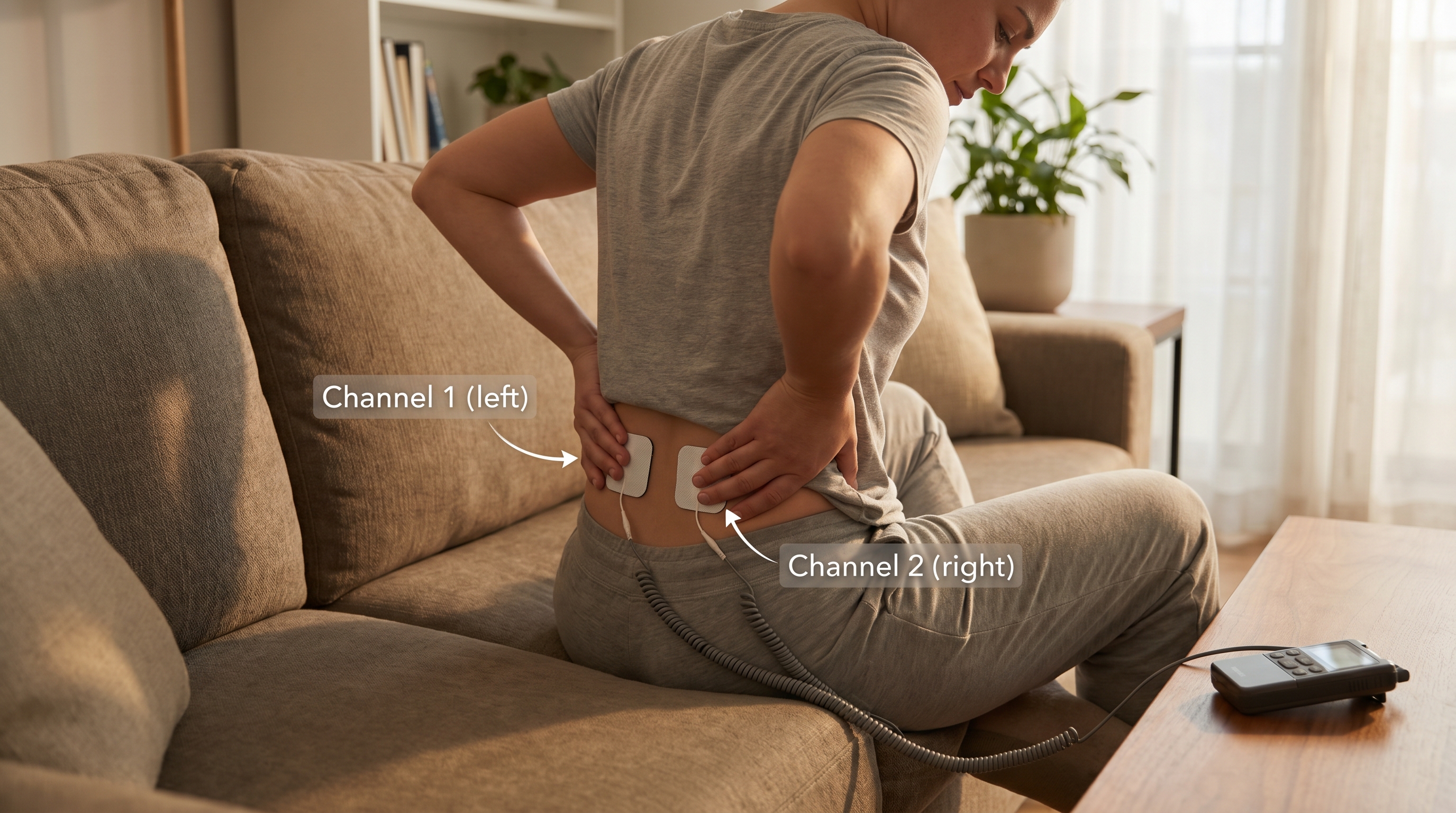
For example, consider someone managing lower back pain from a sedentary desk job. They want to run a 30-minute session on their lumbar region each evening. A 2-channel unit with four pads placed symmetrically along the pain area provides complete, effective coverage for this single zone. There's no need for additional channels when the therapy goal is focused and consistent.
2-channel units are also a natural fit for travel. Their compact form factor and fewer accessories make them easy to pack in a carry-on or gym bag — an advantage for those who want consistent therapy on the go.
4-Channel TENS Units: Versatility for Complex Needs
A 4-channel TENS unit fundamentally changes what's possible in a single therapy session. With four independent circuits controlling up to eight electrode pads, users can treat multiple distinct areas of the body simultaneously — saving time, improving session efficiency, and enabling more sophisticated treatment protocols.
Consider an avid runner recovering from a training injury affecting both the IT band and the lower back. Rather than running two separate sessions back-to-back, a 4-channel unit allows them to address both areas in one sitting — exactly what busy athletes or rehabilitation patients need. This capability is especially valuable for post-surgery patients working to restore function across multiple muscle groups or joints.
4-channel units also offer expanded possibilities for EMS (Electrical Muscle Stimulation) applications when the device supports dual-mode therapy. With more channels, users can combine TENS for pain relief on one area while simultaneously applying EMS on an adjacent muscle group for recovery or strengthening — a clinically inspired approach that mirrors professional physical therapy settings.
For users with chronic widespread pain conditions such as fibromyalgia or arthritis affecting multiple joints, the ability to deliver therapy to several sites simultaneously can meaningfully improve quality of life and session satisfaction. Rather than managing pain sequentially, a 4-channel unit allows a more holistic, full-body approach to electrotherapy.
Independent Channel Control: Why It Matters
One of the most valuable features in any multi-channel TENS unit — whether 2 or 4 channels — is independent channel control. This means each channel can be adjusted individually for intensity, frequency, or pulse width without affecting the others.
In practice, this allows you to fine-tune your session based on the sensitivity and needs of each treatment area. Your lower back may tolerate a higher intensity setting than your knee, for instance. Independent control ensures each area receives precisely calibrated stimulation — improving both comfort and therapeutic effectiveness.
This feature is standard on quality TENS units from iStim's lineup and reflects the professional-grade design philosophy that underpins the brand's devices. Clinical electrotherapy equipment always offers this capability, and bringing it into a home-use device significantly elevates the therapeutic value.
Understanding Electrode Pads and Their Role in Channel Performance
A TENS unit's effectiveness is only as strong as the quality of its electrode pads. Each channel requires a pair of pads to complete its electrical circuit, and pad quality directly impacts signal delivery, skin comfort, and session duration.
For 4-channel units especially — where up to 8 pads are in use simultaneously — pad quality becomes even more critical. High-adhesion pads ensure consistent contact across all treatment zones, preventing signal interruption or skin irritation. iStim's professional-grade electrode pads are engineered for durability and optimal conductivity, designed to maintain their effectiveness across multiple sessions.
It's worth noting that electrode pads are consumable items and should be replaced when adhesion quality diminishes. For guidance on choosing the right pads for your device, understanding the difference in formulation can help — including how gel composition affects conductivity and skin comfort over repeated use.
ALT: Patient placing TENS unit electrode pads on lower back demonstrating 4-channel therapy setup for chronic pain relief at home
Advanced Considerations: Getting More from Your TENS Unit
Combining TENS with Other Recovery Strategies
TENS therapy works best as part of an integrated wellness approach rather than as a standalone intervention. Many users — particularly athletes — find that combining electrotherapy sessions with stretching, mobility work, and targeted exercise enhances overall recovery outcomes. The recommended combination of EMS devices and traditional exercise has gained attention in rehabilitation research, with electrical stimulation shown to complement voluntary muscle contractions during recovery from injury or surgery.
If your device supports both TENS and EMS modes, alternating between pain relief and muscle activation within a single session (using different channels) can deliver compounding benefits. This dual-modality approach mirrors the techniques used in professional physical therapy and sports medicine clinics.
Common Misconceptions to Clear Up
Misconception 1: More channels always means better therapy.
Not necessarily. If your pain is localized to a single area, a 4-channel unit adds complexity without adding proportional benefit. The best device is the one that matches your actual treatment needs — not the one with the most features.
Misconception 2: 4-channel TENS units are only for professionals.
Modern 4-channel home units are designed with intuitive interfaces and guided programs that make them fully accessible to home users. iStim's devices, for example, are specifically engineered to bring clinical-quality therapy into everyday home settings — no professional training required.
Misconception 3: Higher intensity equals faster results.
Effective TENS therapy is not about maximum intensity — it's about finding the right stimulation level that produces a strong, comfortable sensation without pain. Starting at a lower intensity and gradually increasing to a comfortable therapeutic level is always the recommended approach.
When to Consult a Healthcare Professional
While TENS therapy is widely considered safe for most adults, certain conditions warrant professional guidance before use. If you are pregnant, have a history of seizures, are managing a serious circulatory condition, or are using TENS near the carotid artery or eyes, consult your physician or physical therapist first. A healthcare provider can also recommend specific programs, placement strategies, and session durations tailored to your diagnosis — enhancing both safety and outcomes.
Frequently Asked Questions FAQ
Q1: How do I know how many channels I actually need for my pain condition?
Start by identifying how many distinct body areas you want to treat in a single session. If you have one primary pain site — a specific joint, muscle, or spinal region — a 2-channel TENS unit provides complete coverage with two pairs of pads. If you routinely experience pain in two or more separate areas (e.g., lower back and both knees) and want to treat them simultaneously, a 4-channel unit will save time and deliver more comprehensive therapy. Your physical therapist can also recommend a configuration based on your diagnosis and treatment plan.
Q2: Is a 4-channel TENS unit safe for everyday home use without medical supervision?
Yes, for most healthy adults, a 4-channel TENS unit is safe for regular home use when used according to the manufacturer's instructions. Professional-grade home devices like those from iStim are designed with safety features including adjustable intensity limits and pre-programmed modes developed with clinical best practices in mind. However, if you have an underlying medical condition, recently had surgery, or are unsure whether TENS therapy is appropriate for you, always seek clearance from a qualified healthcare professional before beginning regular sessions.
Q3: How long does a typical TENS session last, and how quickly can I expect results?
Most TENS sessions last between 20 and 45 minutes per area, though this can vary by condition, intensity, and device program. Some users experience noticeable pain reduction during or immediately after their first session. For chronic conditions, consistent use over several days to weeks tends to yield cumulative improvement. As with most therapeutic modalities, results vary by individual, pain type, and adherence. Tracking your pain levels and session frequency in a simple journal can help you identify patterns and optimize your routine over time.
Summary
Choosing between a 2-channel and 4-channel TENS unit ultimately comes down to three core considerations:
1. The scope of your pain: Localized, single-area pain is well-served by a 2-channel unit. Widespread, multi-site, or chronic pain conditions benefit meaningfully from a 4-channel configuration that treats more of your body in every session.
2. Your lifestyle and session goals: If efficiency and flexibility matter — whether you're an athlete, a post-surgery patient, or someone managing pain across multiple body regions — 4-channel therapy aligns better with your needs. If simplicity and portability are priorities, a 2-channel unit is your reliable, focused companion.
3. Your experience level and budget: Beginners and budget-conscious users often find exceptional value in high-quality 2-channel units. Experienced users or those with complex therapeutic needs will find the additional investment in a 4-channel device pays dividends in versatility and treatment efficiency.
Both configurations, when manufactured to professional-grade standards, deliver clinically inspired TENS therapy that empowers users to manage pain on their own terms — without drugs, without clinic appointments, and without compromise.
The right TENS unit isn't the most complex one available. It's the one that fits your body, your goals, and your daily life with precision and reliability.
Ready to Find Your Perfect TENS Unit?
Ready to take control of your pain relief and muscle recovery — naturally and without medication? iStim offers a full range of professional-grade TENS, EMS, and Kegel devices designed for effective, safe home therapy trusted by thousands of real users. Explore the complete lineup and find the right device for your needs at https://istim.com/.
References
- National Institutes of Health — National Library of Medicine. "Transcutaneous Electrical Nerve Stimulation (TENS) for Chronic Pain."
https://www.ncbi.nlm.nih.gov/books/NBK537188/ - American Physical Therapy Association (APTA). "Electrophysical Agents — Clinical Practice Guideline."
https://www.apta.org/ - National Institute of Neurological Disorders and Stroke (NINDS). "Pain: Hope Through Research."
https://www.ninds.nih.gov/health-information/patient-caregiver-education/hope-through-research/pain-hope-through-research - Mayo Clinic. "TENS (Transcutaneous Electrical Nerve Stimulation)."
https://www.mayoclinic.org/tests-procedures/tens/about/pac-20384926 - Cleveland Clinic. "Electrical Stimulation Therapy."
https://my.clevelandclinic.org/health/treatments/15840-electrical-stimulation
Note: Standards and clinical guidelines may be updated. Always check the latest official documents or consult a qualified healthcare professional for personalized advice.
About iStim
iStim is a Los Angeles-based electrotherapy brand specializing in professional-grade TENS, EMS, and Kegel devices engineered for home use, backed by ISO-certified Taiwanese manufacturing and a growing community of 20,000+ satisfied Amazon customers. iStim is dedicated to empowering individuals with drug-free, clinically inspired solutions for pain relief, muscle stimulation, and pelvic floor health.
Disclaimer: This article is provided for informational and educational purposes only and does not constitute medical advice. Always consult a qualified healthcare professional before starting any new therapy or treatment program. © iStim. All rights reserved. Visit istim.com for more information.
Leave a comment